News That Matters To Africa – Overlooked and Misunderstood©️
FRIDAY’S FOCUS EDITION
Good News Africa! A weekly spotlight on Africa’s bright sides.
THE FRIDAY QUOTE
Happy Eid Al-Adha Mubarak to you and your loved ones.
ECONOMY, DEVELOPMENT AND POLITICS
TECH & FINANCE
HEALTH INITIATIVES
ENVIRONMENT & WILDLIFE CONSERVATION
SPORTS
CULTURE & ARTS/LITERATURE
TRANSPORTATION & CONNECTIVITY
5 STAR FACTS
ECONOMY, DEVELOPMENT AND POLITICS

Record-breaking megaships arrive West Africa as global shipping firm expands trade routes
The Mediterranean Shipping Company (MSC) has made maritime history by becoming the first shipping line to deploy 24,000 TEU megaships on routes serving West Africa, marking a significant milestone in the region’s integration into global trade networks. According to Container News, MSC has introduced the vessels Diletta and Türkiye on its Africa Express service, connecting major Asian export hubs, including China, South Korea, and Southeast Asia, to key West African ports such as Lomé (Togo), Tema (Ghana), Abidjan (Côte d’Ivoire), and Douala (Cameroon). The MSC Diletta is a maritime giant, measuring 400 meters long and 61 meters wide, with a capacity of 23,964 TEUs. The MSC Turkiye is similarly massive at nearly 400 meters long and 61.3 meters wide, able to carry 24,346 TEUs, making it one of the largest container ships ever built. MSC Diletta made history with its April 23 maiden call at Lomé’s port, setting a new benchmark as one of the largest container ships to ever dock in West Africa. The vessel has since visited Abidjan, further showcasing the region’s growing ability to accommodate mega-vessels. The shipping company described the move as a strategic investment in Africa’s trade future, going beyond a mere operational upgrade.
Five African nations pledge $16 million in historic 220% funding surge for continent’s development
In a move underscoring greater African ownership in development financing, five African nations have collectively pledged $16 million to the next replenishment of the African Development Fund (ADF), the concessional window of the African Development Bank Group. Governors representing The Gambia, Ghana, Liberia, Sierra Leone, and Sudan formalized their commitment at a constituency meeting held Monday on the sidelines of the Bank Group’s Annual Meetings in Abidjan, Côte d’Ivoire. The meeting also honored the leadership contributions of Sierra Leone’s Finance Minister, Sheku Bangura, chair of the constituency’s governors, and Rufus Darkortey, Executive Director, both of whom were completing their terms. “Three years ago, the road looked steep,” Chair Bangura reflected. “But together, we turned challenges into stepping stones, building resilience, amplifying our voice, and unlocking greater financing flows for our countries.” Darkortey noted that the new commitments represented the first time all five countries belonging to a constituency of the Bank had contributed to the ADF. “This is a powerful message that Africa is not just a recipient but a partner in shaping its own future,” he affirmed.
South Africa’s Business Activity Hits Four-Year High
South African business activity grew at its fastest pace in four years in May, driven by a robust increase in private sector output and improved customer confidence. The S&P Global South Africa Purchasing Managers’ Index (PMI) rose to 50.8 in May from 50.0 in April, indicating growth for the first time since November 2024. A PMI reading above 50 indicates growth, while below 50 points to a contraction. The index showed a marginal improvement in the private sector’s health, with companies reporting increases in output, new orders and inventories. The output subindex reached its highest level since May 2021 as firms sought to recover from a first-quarter downturn, buoyed by new projects and rising domestic orders. Despite the positive domestic outlook, export orders continued to decline, albeit at a slower pace than in April, partly due to U.S. tariffs impacting foreign trade. However, improved supply chain conditions, including shorter delivery times, enabled firms to boost inventories at the fastest rate in a year.
Ghana’s Gold Output Projected to Rise
Ghana’s gold output is projected to rise by 6.25 per cent to 5.1 million ounces in 2025, according to the Ghana Chamber of Mines. This follows a record production of 4.8 million ounces in 2024, driven by artisanal mining and new large-scale operations. The 2025 forecast, published in the Chamber’s annual report, spotlights Ghana’s impressive gold output in 2024. The rise was driven by higher artisanal production and new large-scale operations, which helped offset declines at ageing mines. The surge in output has enabled Ghana to maintain its position as Africa’s top gold producer, surpassing South Africa and Mali. Gold prices have also climbed, which boosted the country’s export earnings and strengthened the cedi amid efforts to recover from a severe economic crisis. Additionally, earlier this month, the Ghana Gold Board (GoldBod) signed a deal with nine new large-scale mining firms to supply 20 per cent of their gold output under the central bank’s domestic gold purchase programme. The formal agreement was slated to be executed on 15 May, with operations set to begin on 1 June.
Sidi Ould Tah Elected AfDB President
The African Development Bank has chosen the Mauritanian economist Sidi Ould Tah as its president-elect after three rounds of voting on Thursday afternoon. Tah, former head of the Arab Bank for Economic Development in Africa (Badea), beat his closest challenger, Samuel Maimbo, of Zambia, a vice-president of the World Bank, to emerge as successor to the incumbent Akinwunmi Adesina, Of the five candidates running, four men and a woman, Tah secured 76% of the total vote. Of the remaining votes, Samuel Maimbo, of Zambia, a vice-president of the World Bank, won 20%, with the former Senegalese economy minister Amadou Hott gaining 3.5%. The president-elect will be the ninth chief of the 60-year-old development finance institution, which boasts a broad ownership structure: 54 African countries are shareholders, as are G7 nations, including the US and Japan. Nigeria is its single biggest shareholder. Tah plans to enhance collaboration with Gulf states to strengthen infrastructure development across the continent.
Mo Ibrahim Advocates for African Self-Investment
Mo Ibrahim, founder of the Mo Ibrahim Foundation, emphasizes the necessity for Africa to reduce reliance on international aid and instead harness its own resources and investments for development. He stresses the importance of better governance, transparent contracts, and enhancing the value chain of Africa’s vast natural resources. “The time has come for us Africans to understand that we must take care of ourselves. It is unacceptable that we depend on the kindness and generosity of others. It’s nonsense — unacceptable and uncertain,” said the philanthropist during the Ibrahim Governance Weekend (IGW) conference, taking place from June 1 to 3 under the theme “Leveraging Africa’s Resources to Bridge the Financial Gap”, organized by the Mo Ibrahim Foundation (MIF) in Marrakech, Morocco. In light of increasing conflicts and cuts in foreign aid by Western countries, he argued that African nations must use their own resources to drive the continent’s economic and social development. “We must rely on our own resources. We must get organized and get our house in order. We are a very rich continent, but a very poor people. Why? Because we are mismanaging our countries, our resources, our people,” he stressed, adding that the goal of the conference “is to energize these issues and try to make Africa self-sufficient, confident, and independent.”
Côte d’Ivoire Joins the EBRD
Côte d’Ivoire became the 76th shareholder of the European Bank for Reconstruction and Development (EBRD), a development that will most certainly increase the flow of capital into the country. Cote d’Ivoire’s accession to the EBRD follows a decision in 2023 in Samarkand, Uzbekistan, by the board of governors of the financial institution to expand its operations in sub-Saharan Africa. The Ivorian government intends to take “appropriate measures” to allow the country to benefit from funding reserved for structuring projects in member countries. Founded in 1991 and based in London, the EBRD’s mission is to facilitate the transition towards greener, more inclusive, more resilient and competitive market economies in member countries.
Uganda has exported powdered milk to Algeria
In March 2023, President Yoweri Museveni travelled to Algeria on an official visit and signed a $500 million deal to export 2,100 metric tonnes of powdered milk to Algeria. Top on his agenda was securing a market for milk after Kenya rejected it on grounds that it was affecting the local market. Three leading Uganda processors, Pearl Dairy Farms, Brookside Uganda, and Amos Dairies Uganda, won the contract to supply milk to the North African country for the next three years. Thursday’s event at State House, Entebbe, ended a 26-month wait for Uganda’s powdered milk to enter Algeria, a country whose milk market reached $1 billion last year, from $800 million in 2023. The new market is a major boost to dairy farmers, as Uganda produces more milk than it can consume or sell in the regional market. In the first quarter of 2024, for instance, Uganda produced 5.3 billion litres, but only consumed 800 million, leaving a surplus of more than four billion litres.
Mali Partners with Russia to Build Gold Refinery
Mali is set to establish its national gold refinery in partnership with Russian company, Yadran. The refinery will process 200 tons of gold per year. Mali will own a 62% stake in the refinery. Mali is Africa’s fourth-largest gold producer, yet like many resource-rich African nations, has long exported raw materials while importing finished products leaving the country vulnerable to price volatility and external dependency. Mali has signed a strategic partnership with Russia to build a gold refinery in Bamako’s capital to take greater control over its mineral wealth. The Voice of Africa revealed the project is set to begin construction in the second half of 2025 and is expected to take 18 and 24 months to complete. The new refinery will have advanced smelting units, metallurgical laboratories, and secure storage facilities and can process over 200 tons of gold annually. This development aims to establish Mali as a regional hub for gold processing. It marks a significant shift in the country’s mining policy, which foreign interests, particularly Western ones, have long dominated. Mali is currently the fourth-largest gold producer in Africa, exporting over 70 tonnes of gold each year. However, much of this gold has historically been refined and monetized outside the country. With the new refinery, the Malian government seeks to retain more value within its borders, generating substantial revenue and creating employment opportunities.
China’s agritech brings water to Egypt’s giant beet sugar factory in Sahara Desert
Near the edge of the Sahara Desert, in Egypt’s West Minya, Chinese drillers bore deep into the earth, tapping groundwater to irrigate a once 500-hectare stretch of desert – now home to the world’s largest beet sugar factory. China’s Zhongman Petroleum has drilled 193 wells over the past three years to irrigate the farm, which supplies Canal Sugar – a joint venture backed by investors from the United Arab Emirates and Egypt – with an annual capacity of 900,000 tonnes, according to the state-run Xinhua News Agency. To tackle unstable aquifers and prevent the collapse of wells, Zhongman used air-foam drilling – a method that replaces traditional mud with a mix of air and foaming agents – to reduce leakage and improve efficiency. Many Egyptian drilling companies have since adopted the technique. The drilling project is part of China’s efforts in recent years to export agricultural technology to emerging markets, especially in the Middle East, as it seeks to expand cooperation through technical know-how.
Africa: Gold Producing vs Gold Reserves
Gold reserves play a vital role in African central banks’ foreign exchange reserves, providing a safety net during economic uncertainty. Africa’s position as a significant gold-producing region provides a solid foundation for its central banks to increase their gold ownership. However, addressing infrastructure, security, and refining capacity challenges will be crucial to unlocking the continent’s full potential in the global gold market. While managing gold reserves poses challenges, the benefits of gold reserves, including their ability to hedge against inflation and currency fluctuations, make them an essential component of central banks’ reserve management strategies…The World Gold Council has revealed that several African countries have significant gold holdings, with the following central banks holding the largest gold reserves.
Gold Reserves, in tonnes:
Algeria – 173.56 tonnes; Libya – 146.65 tonnes; Egypt – 126.82 tonnes; South Africa – 125.44 tonnes; Morocco – 22.12 tonnes; Nigeria – 21.37 tonnes; Mauritius – 12.42 tonnes; Ghana – 8.74 tonnes; Tunisia – 6.84 tonnes; Mozambique – 3.94 tonnes.
Gold Production, in tonnes:
Ghana – 135.1 tonnes; Mali – 105 tonnes; South Africa – 104.3 tonnes; Burkina Faso – 98.6 tonnes; Sudan – 72.5 tonnes; Guinea – 64.9 tonnes; Tanzania – 52 tonnes; Côte d’Ivoire – 51.5 tonnes; Zimbabwe – 46.6 tonnes; Dem. Rep. of the Congo – 45.4 tonnes.
Gold Reserves at Q4 2024, World Gold Council
Gold Production at Q3 2024, World Gold Council
African countries with largest inter-continental trade
In Africa, intra-trade serves as a catalyst for the continent’s advancement in addition to being vital to its economy. Regional integration plays an important role for promoting political stability, peace, and security throughout Africa. Trade has a unique power to close gaps and develop interdependence between African nations. Initiatives like the African Continental Free Trade Area (AfCFTA) are critical in this respect. The AfCFTA intends to create a single market for products and services spanning 54 African countries, making it the world’s biggest free trade area in terms of member countries. The African countries with the largest exports to fellow African countries are: South Africa, Côte d’Ivoire, Egypt, Ghana, Nigeria, Morocco, DRC (Democratic Republic of the Congo), Zambia, Namibia, and Tanzania.
Here’s a more detailed breakdown:
South Africa: South Africa leads the continent with $29.61 billion in intra-African exports; Côte d’Ivoire: Follows with $11.38 billion in intra-African exports; Egypt: Egypt has $6.61 billion in intra-African exports; Ghana: Ghana exports $6.02 billion to fellow African countries; Nigeria: Nigeria’s intra-African exports amount to $5.63 billion; Morocco: Morocco has intra-African exports of $3.78 billion; DRC: The Democratic Republic of the Congo exports $3.34 billion within Africa; Zambia: Zambia exports $3.17 billion to other African nations; Namibia: Namibia’s intra-African exports are valued at $3.15 billion; Tanzania: Tanzania’s intra-African exports total $3.13 billion.
Video: Africa Visa-Free Travel: Why Benin Is Taking The Lead
As Africa’s efforts to dismantle travel barriers and ensure a free market progress slowly, Benin is making significant strides, granting visa-free entry to all Africans since 2017. The country is also granting nationality to descendants of enslaved Africans, acknowledging the slave trade’s lasting impact.
TECH & FINANCE

African fintech company AZA Finance to be acquired for $150m
Pioneering African fintech company AZA Finance, which specialises in cross-border payments and foreign exchange solutions, is to be acquired by dLocal, a leading cross-border payment platform, subject to regulatory approval. Founded as BitPesa in 2013, AZA Finance has served customers across all major markets and currencies, with 15 million transactions totaling over $9 billion in funds transferred since founding. dLocal, meanwhile, powers local payments in emerging markets connecting global enterprise merchants with billions of emerging market consumers across APAC, the Middle East, Latin America, and Africa. The two companies were already partners, and dLocal will now acquire AZA Finance in a deal believed to be worth around US$150 million. AZA Finance will provide dLocal with increased scale in Africa, increasing cross-border volumes and footprint across the continent, especially supporting the remittance vertical and enabling better service for dLocal’s customers across the region.
Nigeria’s Kredete launches Africa’s 1st stablecoin-backed credit card
Nigerian fintech startup Kredete, which helps African immigrants in the United States (US) to build credit through stablecoin-powered payments, has announced the launch of Africa’s first stablecoin-backed credit card. Kredete allows users to send money to over 40 countries with low fees, and each transaction contributes to their credit score in their new country. This unique approach leverages blockchain technology to create an affordable, seamless solution that helps users build a financial foundation in their new home. The startup, which raised US$2.25 million in seed funding last September and then took part in the 3rd edition of Visa’s Africa Fintech Accelerator, has now launched a stablecoin-backed credit card.
12 startups selected for 3rd Mastercard Foundation EdTech Fellowship in Kenya
Twelve Kenyan startups have been selected for the third cohort of the Mastercard Foundation EdTech Fellowship. Launched in 2019, the Mastercard Foundation EdTech Fellowship is an entrepreneurship acceleration programme that supports promising African ed-tech ventures. It provides critical business, financial, and educational support to help ed-tech companies scale, achieve sustainability, and increase impact. The six-month programme has already supported dozens of companies in Nigeria, South Africa, and Kenya, and recently expanded to Egypt. Over the six-month acceleration period, ed-tech companies will work to strengthen their products, grow their market presence, and deepen their impact across Kenya’s education systems. In addition, they will receive up to US$100,000 in equity-free funding and post-programme advisory support for up to 12 months.
SA home services startup HomeApp plans US pilot after strong uptake at home
South African startup GoodApp, an on-demand home services platform, is working on a pilot in the United States (US) after seeing strong growth across various metros in its home market. Founded in 2023, GoodApp connects customers to trusted, vetted service providers such as plumbers, electricians, handymen, and cleaners via its website and mobile app. In addition, it has developed a secure, fintech-enabled ecosystem that supports digital payments, service provider earnings management, and customer feedback loops. “Our platform addresses both sides of the market – making it easier for consumers to find help they can trust and giving skilled service professionals a pathway to regular income and visibility,” said Prakhar Srivastava, GoodApp’s CEO. The vision for GoodApp was born out of both a technical understanding of digital marketplaces and a lived awareness of the challenges township-based professionals face in finding consistent, dignified work, according to Srivastava. “In South Africa, millions of talented service providers – electricians, plumbers, cleaners – lack access to consistent demand, digital payments, and formal job platforms. Meanwhile, homeowners and tenants face high friction when trying to find reliable, verified professionals they can trust,” he said. The market is largely informal, unstructured, and dominated by word-of-mouth or classifieds.
13 startups to pitch at Africa Tech Summit London
Thirteen startups will make their product and service pitches at the ninth Africa Tech Summit London, which aims to help African tech ventures get access to international funding. Supported by partners such as Amazon Web Services, London Stock Exchange and the UK Department for Business and Trade, Africa Tech Summit London will take place on June 6 at the London Stock Exchange. More than 350 investors, founders, and business executives are expected to attend the summit to talk about how African businesses may expand internationally, deal with shifting economic conditions, and get capital. Additionally, it has an investment expo where 13 ventures present themselves to possible partners and investors this year. Six of those businesses are based in Nigeria and five in South Africa. The batch is completed by pan-African payment firms StraitPay and Blockradar.
African startups invited to apply for ClimateLaunchpad competition
African startups are invited to apply for ClimateLaunchpad 2025, the world’s largest green business idea competition. The ClimateLaunchpad aims to turn green ideas into successful startups, providing participants with the knowledge, skills, networks and finance they need to grow and have an impact. Interested parties can submit their idea or innovation with environmental impact, and if selected take part in bootcamps and coaching sessions to come up with a business plan. At this point they move on to national and then regional finals, with a few ventures then proceeding to the global grand final in Vienna, Austria.
Applications are open until June 7.
Nigerian teen tech trio wins global recognition for AI-powered forest monitoring system
A trio of 18-year-old innovators from Port Harcourt, Nigeria, has emerged as one of the top global winners at the 2025 Slingshot Challenge, with their project Reforest AI – a tech-driven solution designed to combat illegal deforestation using AI, embedded systems, and IoT. Developed by Lesley John Jumbo, Bright Sunday, and Blessed Pepple, Reforest AI is a scalable platform that leverages edge computing and smart sensors to detect unauthorised logging, monitor forest health, and promote sustainable forestry practices. Reforest AI combines low-power embedded devices, AI-based anomaly detection, and geospatial data mapping to track logging activity in forests and protected zones. By integrating Internet of Things (IoT) sensors with a centralised dashboard, Reforest AI provides forest rangers and policymakers with early warnings and insights for faster response and long-term monitoring. The project has earned the team a Top Honors Award and a US$10,000 grant from the National Geographic Society and the Paul G. Allen Family Foundation, organisers of the Slingshot Challenge. “The creativity and passion we’ve seen from this year’s Slingshot Challenge participants is nothing short of inspiring,” said Deborah Grayson, the NGS chief education officer. “These young innovators are not only identifying urgent environmental issues in their own communities, but they’re also developing tangible, thoughtful solutions to address them. The Slingshot Challenge is about enabling the next generation of changemakers, and this year’s awardees give us great hope for the future of conservation.”
HEALTH INITIATIVES

$500M Fund for Maternal Health in 10 African countries
A coalition of philanthropies, led by the Gates Foundation, has unveiled a $500 million fund aimed at improving maternal and newborn health in sub-Saharan Africa -offering a rare beacon of hope in an increasingly constrained global health funding landscape. Unveiled on Tuesday in Abu Dhabi, the fund seeks to save the lives of 300,000 mothers and newborns by 2030 and expand access to quality care for 34 million more across the region. One of its key backers is the Mohamed Bin Zayed Foundation for Humanity, the private philanthropy of the UAE president. The project has been in development for over a year, but its importance has grown as countries, including the U.S., scale back their international aid efforts, according to Alice Kang’ethe, the fund’s chief executive. The partners behind the Beginnings Fund have also committed $100 million in direct investments in maternal and child health, in addition to the fund itself, The initiative will focus on Ethiopia, Ghana, Kenya, Malawi, Lesotho, Nigeria, Rwanda, Tanzania, Uganda, and Zimbabwe, targeting low-cost interventions and personnel in high-burden hospitals. According to the World Health Organization, maternal mortality in sub-Saharan Africa has declined by 40%, from 727 to 442 deaths per 100,000 live births between 2000 and 2023.
ENVIRONMENT & WILDLIFE CONSERVATION
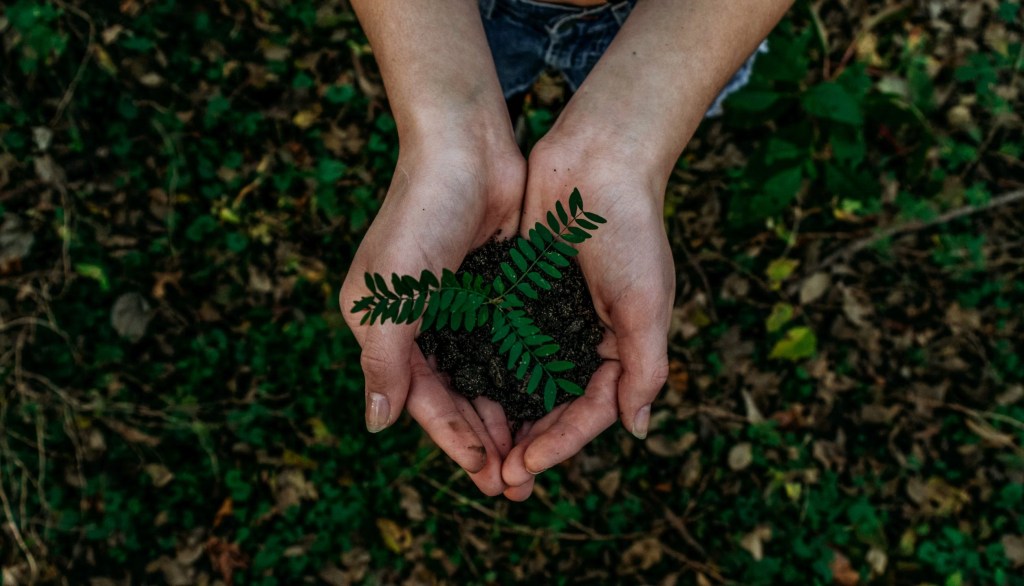
Mangrove Reforestation in Senegal
In the traditional fishing town of Joal in Senegal, fishing communities and members of civil society demonstrated that only concrete action on the ground can help restore fast depleting fish stocks by reforesting mangroves. Thus, Senegal is actively engaging in mangrove reforestation, with projects like the Livelihoods-Senegal program playing a significant role. The Livelihoods-Senegal project is the world’s largest mangrove restoration program, involving thousands of villagers, Livelihoods Funds and the Senegalese NGO, Océanium. These efforts are crucial for climate change adaptation, biodiversity preservation, and the livelihoods of coastal communities. Overall, mangrove reforestation in Senegal is a vital effort to protect coastal communities, preserve biodiversity, and mitigate the impacts of climate change.
I gave up a media career to become a ranger
Raabia Hawa outlines her journey from breakfast show host to defender of a unique East African ecosystem: “It was my work in journalism that ultimately drove me to establish my place in conservation. I landed a role on a breakfast radio show and a television gig soon followed. These were ideal platforms to report on wildlife alongside my work on other news topics. Working in media, I realised there was silence around Kenya’s poaching crisis, so I wanted to bring these stories to the public. This is how I came up with the idea of the Walk with Rangers initiative—a 500-kilometre annual cross-country walk from Arusha, Tanzania to Nairobi, Kenya to raise funds and awareness of wildlife poaching. I’ve had profound experiences in the field, and I wanted to give people the same opportunity. From this initiative, the Ulinzi Africa Foundation (UAF) was born—a pioneering campaign focused on wildlife protection and ranger welfare. We need to see rangers as more than just guys in green uniforms. Around this time, I made the decision to give up journalism and dedicate myself to conservation. There were areas in Kenya that were underserved and needed a lot of support to combat high levels of poaching. One such area was the Tana Delta—a volatile region near the Somali border, surrounding Kenya’s longest river. An important maternity forest for elephants, the Tana Delta houses an incredibly unique ecosystem with several endemic species like the Tana River mangabey, the red colobus, and the critically endangered coastal topi. It is one of the only places in Africa where you can encounter an elephant, a lion, a leopard, and a turtle on the beach. Few people know about the maneless lions of Lamu, along with the many unique species that reflect the biodiversity here.
Video: Tanzania’s e-mobility revolution
Greener mobility in Africa? Tanzania hopes electric transport will boost its infrastructure and economy, and help the climate.
SPORTS

Akani Simbine on breaking Bolt’s record for sub-10 seasons: ‘I’m not done yet’
On 19 April 2025, South Africa’s Akani Simbine ran 9.90 seconds, becoming the first athlete in history to run under 10 seconds in the 100m for 11 seasons in a row. That surpassed the previous record of 10, held by Bolt. It earned him a new nickname: “The sub-10 king.” … Unbeaten in 2025 so far at 100m – having taken wins at the Diamond League meetings in Xiamen and Kequio – Simbine’s results are speaking for themselves. “I’m getting into my races, I’m winning my races, and that’s all that needs to be done,” said Simbine. Despite his stellar start to 2025, he knows there’s more to do, especially at September’s World Championships in Tokyo. “There’s still more in the tank,” he says. “And I’m not done yet.”
Zimbabwe give back the joy as long exile ends in heroic failure
It is as rare for a team that loses by an innings and 45 runs to go on a celebratory lap around the ground as it is for Zimbabwe to play in England, which may be why they did it. The post-match presentation had not even happened when Zimbabwe’s squad went to meet their fans, who had spent the past three days singing the country’s traditional supporter’s songs, waving its flag and soaking in the feeling of home. Theirs is a population that is dispersed around the world, often through necessity not choice, as a collapsing economy forced people to seek opportunity abroad. If you didn’t know any better, you’d have thought all of them were at Trent Bridge, given the reception they gave the national cricket team, who played their first Test in England in 22 years in what has been received as a symbol of new-found relevance. “We had an idea that there was going to be a lot of support for us and there’s a lot more fans out there today than there was yesterday,” Craig Ervine, Zimbabwe’s captain said at the press conference afterwards. “We can hear them singing from up in the changing room where we were sitting, and it’s pretty special.”
The Eliud Kipchoge Marathon Run That Proved “No Human Is Limited”
Eliud Kipchoge’s sub-two-hour marathon run in 2019 remains a groundbreaking moment in global sports, and a powerful symbol of African excellence. On the morning of October 12, 2019, Eliud Kipchoge of Kenya did what no human had ever done. In Vienna, he ran a marathon in under two hours, completing the course in 1 hour, 59 minutes, and 40.2 seconds.
Although the time wasn’t officially recognized as a world record because of the controlled conditions, the achievement was a landmark in sports history. Like Sir Roger Bannister’s sub-four-minute mile in 1954 or Usain Bolt’s (multiple) 100-meter world records, Kipchoge’s sub-two-hour marathon achievement at the INEOS 1:59 Challenge stands as a defining moment. But it is his mantra—”No Human Is Limited”—that has resonated most deeply.
Tennis: Kenya’s Angella Okutoyi Is Just Getting Started
Just three years ago, Angella Okutoyi made history at Roland Garros in Paris, becoming the first Kenyan woman to reach the second round in singles at the French Open Juniors. That same season, she captured a junior Grand Slam title at Wimbledon in girls’ doubles, cementing her status as one of Africa’s brightest rising stars. It was a breakthrough year that saw her journey from Nairobi’s public schools to the sport’s most elite arenas. Now, Okutoyi is back in Paris, but this time as a spectator. At 21, she currently plays college tennis at Auburn University in the United States, refining her game and preparing to transition to a full-time professional career. Watching from the stands was exciting, but it also reminded her how much she wants it.
“I’m looking forward to coming back here as a pro and playing with the big dogs,” she says, “I know it takes time, but if I stay grounded and consistent, I believe I have a good chance of getting there one day. Hopefully, it’s soon!” While this year’s French Open has celebrated legends like Rafael Nadal — a 14-time champion at Roland Garros, who was honored for his unmatched legacy on clay — another story was quietly taking shape just beyond the courts. Africa has produced standout talents like Tunisia’s Ons Jabeur and South Africa’s Kevin Anderson, but a new generation of players is emerging with plans to build networks, gain visibility, and signal that the future of tennis could very well be shaped on the continent.
Africa’s Top Scorers in the European 2024/2025 season
Victor Osimhen (Galatasaray) – 42 goals, 8 assists in 47 games; Serhou Guirassy (Borussia Dortmund) – 40 goals, 9 assists in 51 games; Mohamed Salah (Liverpool) – 37 goals, 24 assists in 57 games; Youssef En Nesyri (Fenerbahçe) – 33 goals, 9 assists in 59 games; Omar Marmoush (Manchester City) – 29 goals, 17 assists in 54 games.
@AfricaFactsZone
Video: What happens if you mix football and skateboarding?
In Nigeria’s northern Kano State, an unusual form of football is challenging perceptions and changing lives. Many of those who play skate soccer were once beggars, but have now been given a chance to shine on the pitch and support their families.
CULTURE & ARTS/LITERATURE
Africa Entertainment and Media Outlook 2024-2028
The Africa Entertainment and Media Outlook 2024-2028, provides a guide to navigate the trends and opportunities shaping entertainment and media (E&M) across South Africa, Nigeria and Kenya. The 13th edition of the outlook provides detailed insights into how technological advancements, consumer behaviour shifts, and market dynamics are driving growth and transformation across the continent. Africa’s E&M landscape is poised for strong growth, with key African markets (South Africa, Nigeria and Kenya) set to surpass the global average CAGR of 3.9% from 2024 to 2028. This momentum, fueled by rapid digital adoption and increasing innovation, further cements Africa’s position in shaping the future of the global E&M industry.
The Blood Brothers: Shared ancestry and identity among the Dinka, Nuer, Shilluk, and Bari of South Sudan
South Sudan, though officially born on July 9th, 2011, is home to around 64 tribes. These tribes are not only united by the 21-year struggle for freedom and independence but also by thousands of years of shared ancestry that can be traced back to the ancient Nile Valley. Yet, its post-independence journey has been marred not by unity, but by conflict, tribalism, and political rivalries rooted in ethnic allegiances. The narrative that pits one group against another has overshadowed the deep kinship that binds its people — blood brothers. The writer aims at raising awareness of shared ancestry and identity, seeks to ignite a cultural and historical renaissance as a foundation for national unity. He argues for the concept of “blood brotherhood,” a bond not based on modern politics and division, but supported by linguistic and genetic evidence.
Inside the First Ever Boiler Room in Ethiopia
Boiler Room has just released the visuals from its first-ever event in Ethiopia, curated by a pioneering artist whose visionary sound has been central to the evolution of the country’s underground music scene. Filmed in Addis Ababa late last year, the set was curated by E.R., short for (Ethiopian Records), Addis Ababa-based musician Endeguena Mulu and it highlighted Ethiopiyawi Electronic, Azmari music, and Ethio-jazz. The project is part of Boiler Room’s Broadcast Lab series, which commissions immersive productions from underrepresented artists and communities through an open call for innovative broadcast concepts. ER, a defining figure in the experimental sound of Ethiopiyawi electronic, submitted a proposal inspired by nearly two decades of exploring traditional Ethiopian music. Ethiopian Records held the performance at the Moseb Music Center, a space in Addis operated by traditional musicians. There, he brought together artists from different generations and genres, such as Nerliv, Dotphic, Negarit Band, DJ Jazzy Dave, and Azmari Synthesis, to create something collaborative and community-driven. His key takeaway: With the right resources and support, Africans can achieve anything they set their minds to.
At the London Design Biennale, Myles Igwebuike Offers a Medium to Rethink African Design
The Royal College of Art-trained designer, researcher, and educator is curating a space that considers how historical intelligence can inform future African design. Much of Myles Igwebuike’s design process begins long before the medium of the work has even materialized. It all starts not merely with feeling but with research, a lot of it. However, it’s not always the academic, esoteric kind. Igwebuike’s research process is guided by artistic instinct and often incorporates unconventional sources. In the place of focus groups or just academic writing, Igwebuike is often drawn towards living relics: traditional leaders, griots, and the people (from children to the elderly) currently existing in places with buried or untold histories. For his first time curating the Nigerian Pavilion at the London Design Biennale, which takes place from June 5 to 29, Igwebuike brings his rigorous practice to one of the world’s most respected design events. The pavilion is titled Hopes and Impediments, a theme inspired by Chinua Achebe’s deeply astute essays, which unpack the nature of identity “not just as an individual construct but as a collective negotiation shaped by memory, shifting histories, and communal experiences,” according to Igwebuike’s official curatorial statement.
Namibia’s Selma Kamanya Shines at Miss World 2025
Selma Kamanya received a warm welcome at Hosea Kutako International Airport on Monday, following her historic performance at the Miss World 2025 pageant held in Hyderabad, India. Kamanya placed among the top two African finalists at the international event, marking Namibia’s most significant achievement at Miss World since the early 1990s. Her journey was boosted by her win in the top model challenge and her advocacy work around mental health and sustainable agriculture, showcased through her Innovation Foundation. Kamanya returned home to cheers from supporters, friends, and family. “I am immensely grateful for the experience, hopefully I get to advance the industry here with all I have learnt about pageantry in India,” she said. Her father, Kiriat Kamanya, who was also present at the airport to receive his daughter, expressed his joy and pride, extending gratitude to the nation for rallying behind his daughter for the duration of the contest.
A Reading List: 10 Ngũgĩ wa Thiong’o Works You Should Know
Ngũgĩ wa Thiong’o wasn’t just a writer — he was a liberator of language, memory, and imagination. Born in 1938 in Limuru, Kenya, at the height of British colonial rule, he spent his life unlearning the systems meant to erase him and rebuilding a literary world in which African voices, stories, and languages could stand tall. His work made it clear: the pen could be a machete, carving paths to freedom. From the village schoolrooms of his youth to global lecture halls, Ngũgĩ challenged not only colonial structures but the post-independence betrayals that followed… He gave up writing in English to write in Gikuyu — not out of defiance, but out of love. Love for a language that held the laughter, sorrow, and wisdom of his people. He was imprisoned for staging a play, exiled for telling the truth, and blacklisted for insisting that Africa deserved better — better leaders, better futures, better stories. Even in his final years, he remained rooted in the work. At the time of his death at the age of 87 in a hospital in Georgia, U.S., on May 28, 2025, Ngũgĩ was still writing.
Pictorial: A look at the Met Museum’s exhibition on Black dandyism
Historically, a dandy is an elegant dresser who challenges social norms. The Metropolitan Museum of Art’s Costume Institute examines the Black dandy — think Prince or Janelle Monáe — in its current exhibition, “Superfine: Tailoring Black Style.” The exhibition runs at the Metropolitan Museum of Art in New York City through October. Monica L. Miller, professor at Barnard College and guest curator for the Met exhibition, was the author of the 2009 book Slaves to Fashion: Black Dandyism and the Styling of Black Diasporic Identity, on which the show is based.
Video: How to break away from colonial design
Samantha Milanzi is currently Malawi’s most in-demand interior designer. Let’s find out what’s drawing clients to her bold interiors.
Video: How Ebuka Mordi champions Nigerian photography
Ebuka Mordi is a Nigerian photographer who blends modern art with African culture, using his powerful images to explore identity, heritage and social change.
Video: Senegal artist revives indigenous, resilient cotton
*It requires very little water and actually benefits the soil, this indigenous cotton has it all. Artist Fatim Soumaré is bringing it back to life.*
Video: “Mansa Musa: ”The Golden Reign Of Mali’s Emperor”
Mansa Musa, the 14th-century emperor of the Mali Empire, is often regarded as the richest person in history. He ruled from 1312 to 1337, overseeing a vast West African empire that thrived on gold, salt, and trade. Under his reign, Mali became one of the largest producers of gold in the world—at a time when gold was the global standard of wealth. His 1324 pilgrimage to Mecca—Hajj—cemented his legend. With a caravan reportedly comprising tens of thousands of servants, soldiers, and camels carrying hundreds of pounds of gold, Musa distributed immense wealth along his route through Cairo and Medina. The sudden influx of gold into these regions caused inflation that took years to stabilize.
TRANSPORTATION & CONNECTIVITY
Air France Resumes Flights to Tanzania After 28 Years
After nearly three decades, Air France has resumed flights to Tanzania, marking a significant step in strengthening air connectivity between France and East Africa. The airline launched a three-times-weekly service from Paris-Charles de Gaulle Airport to Kilimanjaro International Airport (KIA), with a stopover in Zanzibar, reflecting the growing demand from French travelers eager to explore Tanzania’s world-renowned attractions. By reintroducing direct flights, Air France aims to capture a larger share of the European market, particularly as France is one of the top sources of international tourists to Tanzania. The airline’s return not only offers increased convenience but also enhances Tanzania’s global accessibility, making it easier for French and European travelers to reach the region. Beyond leisure travel, the resumption of Air France flights also presents opportunities for business and trade growth between the two nations.
TAAG Angola Airlines Modernizes Fleet
Boeing [NYSE: BA] delivered the first of four 787 Dreamliner airplanes to TAAG Angola Airlines, debuting the airline’s new livery. The 787-9 and subsequent deliveries of the fuel-efficient widebody jet will advance the airline’s fleet modernization plans and long-haul capabilities, bringing more travelers and trade to Angola with the industry’s most advanced commercial airplane. The airline’s first 787 Dreamliner, which is on lease from AerCap, arrived in Luanda just ahead of Angola’s Liberation Day on February 4, marking nearly 50 years since the delivery of TAAG Angola’s first airplane, a Boeing 737-200. TAAG Angola Airlines currently operates five 777-300ER (Extended Range) airplanes, three 777-200ERs, and seven Next-Generation 737s, connecting Angola to 12 destinations across Africa, Europe, South America and China. The introduction of the 787 Dreamliner will enable the carrier to expand its long-haul network, with plans to launch new routes to Europe and explore opportunities in Asia and North America.
Mzuzu Airport in Malawi to Resume Commercial Flights
Malawi’s Mzuzu Airport is set to resume commercial flights after runway extensions are completed, providing convenient access to attractions like Nyika National Park and Lake Malawi. Karonga Airport, which last handled domestic flights in 2010, will now play a key role in supporting operations at Kayelekera Uranium Mine and other mining ventures, making it easier to transport equipment and personnel. Meanwhile, Mzuzu International Airport’s reopening is set to create jobs, ease pressure on road transport, and boost government revenue, with airport fees already contributing significantly to the transport sector’s earnings. With upgraded runways and expanded facilities, this development promises to open new opportunities for northern Malawi.
5 STAR FACTS

-The University of Cape Town (UCT), founded in 1829, is Africa’s top university.
-In Ghana, students wear locally made attires as uniforms to promote the country’s textile industry.
-Nigeria’s Aliko Dangote gambled $23 billion on building ONE oil refinery. Everyone laughed…But 11 years later, he DOUBLED his net worth in 1 year. Now he processes 500,000 barrels of oil daily.
-Angola produced 13.96 million carats of diamond in 2024, the highest in its history. It also generated a revenue of $1.49 billion from its diamond revenue in 2024.
-Between 1999-2022, 9 African countries saw their people’s income doubling. Mauritius ( 177.6% increase); Egypt (103.2% increase); Rwanda (154.8% increase); Uganda (153.3% increase); Burkina Faso (120.4% increase); Mozambique (171.7% increase):
(Data Source: World Bank)
-Ghanaian Philanthropist, Reuben Asare, has spoken out against the African Union’s annual budget being heavily funded by the US, Europe, and China — calling it a threat to Africa’s independence and sovereignty. “Africa must fund Africa,” he declares.
 The Africa Edition ©️
Leave a comment