News That Matters To Africa©️
FRIDAY’S FOCUS EDITION
Good News Africa! A weekly spotlight on Africa’s bright sides.
THE FRIDAY QUOTE
“Remember the Falklands war – Argentina vs UK ? Wasn’t it the equivalent of 2 bald men fighting over a comb…?”
I. ECONOMIC GROWTH AND DEVELOPMENT
II. HEALTH AND VACCINATION
III. ENVIRONMENTAL INITIATIVES & RENEWABLE ENERGY
IV. HISTORY & CULTURE
V. SPORTS
VI. ENTERTAINMENT & ART
VII. VIDEO & AUDIO
ECONOMIC GROWTH AND DEVELOPMENT

Gazprom’s uncovers 50 billion barrels of oil in Burkina Faso
In a discovery that has sent shockwaves across the continent, Russian energy giant Gazprom claims to have uncovered an astonishing 50 billion barrels of crude oil in Burkina Faso. If confirmed, this would rank among the largest oil finds in Africa’s history, potentially transforming the landlocked West African nation into a major energy player overnight. For a country long reliant on agriculture and gold mining, the implications are enormous—newfound oil wealth could reshape the economy, elevate geopolitical standing, and provide critical infrastructure funding. What would such a discovery mean for Burkina Faso’s economy, its renewable energy goals, and the future of its people? Here’s a breakdown of the potential benefits, drawbacks, and what this kind of oil boom could spell for a nation more often associated with agriculture and gold mining than fossil fuels.
Burkina Faso’s second sustainable cotton plant
Burkina Faso, one of West Africa’s largest cotton producers, is undergoing a transformation that promises to reshape the fabric of its economy. For years, the nation exported over 95% of its raw cotton without processing it locally—missing a significant opportunity for value addition, job creation, and rural development. Today, this is changing. Thanks to strategic government initiatives, foreign investment, and a shift toward climate-smart agriculture, Burkina Faso is beginning to reclaim control over its most prized cash crop. At the heart of this revival is the reopening of the iconic FASO FANI textile factory in Koudougou, which once symbolized the nation’s industrial pride. Now rebranded as FASOTEX, the revamped plant reflects Burkina Faso’s broader push toward rebuilding its textile capabilities. Alongside this milestone are two newly launched cotton processing plants in the economic hubs of Bobo-Dioulasso and Ouagadougou, equipped with modern equipment and backed by international partners and government incentives. These developments mark a decisive pivot from exporting raw cotton to processing it domestically—a move that could greatly enhance economic resilience and allow the country to retain a larger share of the profits from its cotton value chain.
Africa remains epicenter of Mobile Money
Sub-Saharan Africa drove the vast majority of growth in the global mobile money sector last year, according to a new report. The region saw $1.1 trillion in transactions processed through mobile money accounts out of a global total of nearly $1.7 trillion, the GSMA trade body found. “Sub-Saharan Africa remains the epicentre of mobile money,” the report said, driven by new registered accounts and rising monthly activity in East and West Africa. But a gender gap persists in eight of 12 surveyed countries, the report noted: Nigeria and Ethiopia stood out for lower mobile account ownership among women.
Somalia Secures $306.5 Million Debt Relief
Somalia has signed a $306.5 million debt relief deal with the Arab Monetary Fund (AMF), in what the government in Mogadishu called a critical milestone in its economic reform programme. The Horn of Africa country’s government is trying to revive its economy after it was battered by decades of civil war. It has also suffered from severe droughts, floods, and a locust infestation in recent years. Last year, it secured the cancellation of 99% of the debt Somalia owed to members of the Paris Club of creditor nations, a vital step in the war-scarred country’s efforts to rejoin the international financial system. The deal with Abu Dhabi-based AMF, which fosters financial stability and economic development in Arab member states, involves the restructuring of the debt owed by Somalia to the fund, the AMF said in a statement, without providing more details.
Report: East Africa to power Africa’s economic growth in 2025
East Africa will post the strongest economic growth this year to spearhead the continent’s 2025 growth prospect, compared to other regions on the continent. According to Afreximbank’s 2025 African Economic and Trade Outlook, the region is poised to lead the others with a GDP growth of 5.7 per cent. Notably, the other regions are also poised for an improvement in the period under review. Northern Africa is projected to grow by 3.8 per cent this year, from 3.2 per cent in 2024, eventually reaching 4.1 per cent in 2026. Southern Africa is projected to rise by 0.4 percentage points, reaching 2.6 percent this year and 3.0 per cent by 2027. In the central part of the continent, GDP growth is projected to experience a modest growth increment, from 3.9 per cent in 2024 to 4.2 per cent this year. Western Africa, on its part, is poised for a growth shift from 4.1 per cent last year to 4.4 per cent this year, followed by a stabilisation of approximately 4.2 per cent for 2026 and 2027. Generally, the continent’s growth prospect has been upgraded to 4.0 per cent this year, reaching 4.1 per cent in 2026 and 4.2 per cent in 2027.
Top 10 African countries with highest GDP growth in 2024
The International Monetary Fund (IMF) World Economic Outlook for April 2024 reveals a significant shift. Nine out of the top twenty economies projected for the fastest growth in 2024 are African nations1. Countries like Niger, Senegal, Libya, Rwanda, Côte d’Ivoire, Djibouti, Ethiopia, The Gambia, and Benin are set to lead the charge2. Notably, Niger is forecasted to be the third-fastest growing economy globally and the fastest in Africa, with a projected real GDP growth rate of 10.4%2. Senegal and Libya are also expected to see robust economic expansions, with growth rates of 8.3% and 7.8% respectively in 20242. Looking at the global stage, South Africa takes the lead with a projected GDP growth rate of 13.2% in 2024, followed closely by Egypt at 12.3%1. Algeria, Nigeria, and Ethiopia also make the list, showcasing Africa’s economic prowess1.
HEALTH AND VACCINATION

Malaria Vaccine Rollout in Cameroon
The world’s first routine vaccine programme against malaria was started in Cameroon on January 2025, in a move projected to save thousands of children’s lives across Africa. The symbolic first jab was given to a baby girl named Daniella, at a health facility near Yaoundé. Every year 600,000 people die of malaria in Africa, according to the World Health Organization (WHO). Children under five make up at least 80% of those deaths. Cameroon is offering the RTS,S vaccine free of charge to all infants up to the age of six months old. Patients require a total of four doses. Health officials say these will be given at the same time as other routine childhood vaccines to make it easier for parents. It comes after successful pilot campaigns in Kenya, Ghana and Malawi – where the vaccine caused a 13% drop in deaths of children of eligible age, says Unicef, external. The jab is known to be effective in at least 36% of cases, meaning it could save over one in three lives.
Over 50 million saved in Africa through vaccines
An estimated 51.2 million lives have been saved through vaccines in the African region over the past 50 years. For every infant life saved over that period, close to 60 years of life are lived, a new report by World Health Organization (WHO) finds. These achievements have been possible under the Expanded Programme on Immunization (EPI), a WHO initiative launched in 1974 as a global endeavour to ensure equitable access to life-saving vaccines for every child, regardless of their geographic location or socioeconomic status. Notable achievements have been made, including reduction in measles deaths, with an estimated 19.5 million deaths averted over the last 22 years. The region has also witnessed a sharp decline in meningitis deaths by up to 39% in 2019 compared with 2000. Maternal and neonatal tetanus has nearly been eliminated in the region, and in a historic public health achievement, the African region was declared free of indigenous wild poliovirus in 2022 following years of relentless work to protect every child from the virus.
How Rwanda stopped a Marburg outbreak
When lab tests confirmed an outbreak of a highly virulent virus in Rwanda’s capital, Kigali, health minister Dr Sabin Nsanzimana knew he had to think outside the box. Although it was the first time that the east African country was experiencing the Ebola-like outbreak, Nsanzimana had watched the virus kill dozens in neighbouring Tanzania and Equatorial Guinea in 2023. The virus spreads from person to person through contact with blood and other bodily fluids of infected individuals and can cause victims to haemorrhage, and Nsanzimana knew that there was no approved vaccine against the pathogen yet on the market. He needed to come up with a strategy to stop the virus — and very fast. He grabbed his phone and made several calls. Within 72 hours, the east African country had developed a comprehensive plan to identify, isolate and investigate suspected cases to control the outbreak. More…
Burkina Faso’s pharmaceutical plant: A game-changer for healthcare and economic growth
This bold step towards healthcare independence with the launch of Burkina Faso’s first pharmaceutical manufacturing plant, Propharm. This historic initiative is set to revolutionize medicine accessibility, affordability, and quality within the country and beyond. By focusing on locally produced essential generic drugs, the plant aims to reduce Africa’s heavy dependence on imported pharmaceuticals, which currently account for 97% of the continent’s medicine consumption. For years, African countries have grappled with exorbitant medicine prices, with generic drugs costing up to 30 times more than in developed nations. This steep pricing is largely due to import dependency, high transportation fees, and logistical constraints. Propharm’s entry into the market is a game-changer as it will significantly cut costs, ensuring essential medicines are accessible to millions. Among the first medicines to be produced at the facility are paracetamol, phloroglucinol (an antispasmodic), and oral rehydration salts with zinc, vital for treating common health conditions like fever, pain, and diarrhea. With these drugs now manufactured locally, Burkina Faso is taking a major step toward healthcare sovereignty.
ENVIRONMENTAL INITIATIVES & RENEWABLE ENERGY
Africa’s top climate negotiator says ‘no reverse gear’ on commitments
President Donald Trump’s administration pulled out of the landmark Paris Agreement on climate change for the second time earlier this year and also withdrew from clean energy partnerships it had signed with countries like South Africa. However, Ali Mohamed, the chair of the Africa Group of Negotiators said that the world has no choice but to press on with climate commitments despite the United States pulling out of a key international accord, given the threats posed by global warming and the progress already made. Mohamed, who is also Kenya’s special envoy for climate, added that “there is no reverse gear on this matter of climate change,” as the world gears up for the next round of global climate talks, COP30, in Brazil in November. “The rest of the world will definitely have to ensure that our overall commitments as a global community are maintained, that we don’t backslide.”
Ghana unveils West Africa’s largest floating solar project
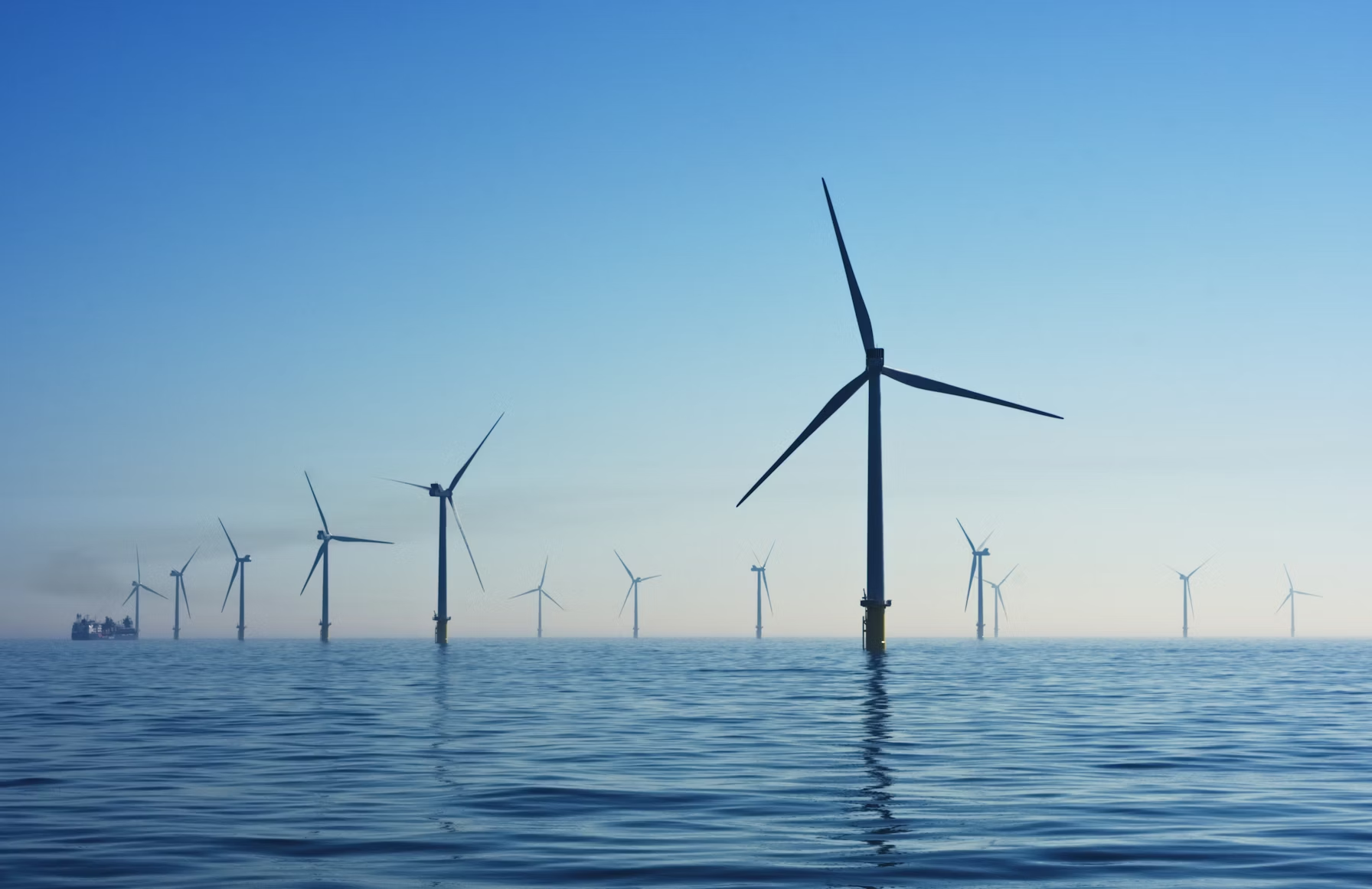
Ghana has launched West Africa’s largest floating solar project, marking a significant step towards increasing its renewable energy capacity. The country aims to raise its share of renewable energy from the current 1% to 10% by 2030. The pioneering 5-megawatt floating solar installation is situated on the Black Volta River and was engineered by Ghanaian engineers from the Bui Power Authority (BPA). This innovative project showcases Ghana’s commitment to leveraging clean energy and reducing its carbon footprint. The floating solar power plant is a groundbreaking solution that utilises photovoltaic modules on water bodies, optimising land use while enhancing the efficiency of the solar panels. Additionally, it helps conserve water by reducing evaporation from the surface. This technology can be deployed on ponds, lakes, reservoirs, or other water bodies.
Children’s tale takes root in West Africa’s fight to regrow its forests
A bedtime story written by a journalist for his daughter during lockdown has grown into a reforestation movement reaching 30,000 children in West Africa. In 2020, journalist Arnaud Wust wrote a children’s story during a Covid-19 lockdown that has since blossomed into Xam Xam – an organisation teaching school children in Senegal and Côte d’Ivoire about environmental protection through storytelling and tree planting. Named after the Wolof phrase meaning “knowledge sharing”, Xam Xam uses the children’s story Esther and Madiba Save Their Forest to teach children about the environment. Volunteers spend 10 days at a time visiting schools, sharing the story, giving out books, playing games and planting trees with the children. The organisation has planted nearly 800 trees since it started and In four years, the organisation has visited more than 100 schools and reached nearly 30,000 children.
The Flipflopi Project: Mitigating plastic pollution through heritage boat building
The Flipflopi Project – Mitigating Plastic Pollution through Heritage Boat Building – has established a first-of-its-kind plastic waste Material Recovery Facility and a Heritage Boat Building Training Centre in the UNESCO heritage site of Lamu Archipelago, Kenya. Communities in Lamu use various hardwoods, such as teak, mango and mahogany, to construct traditional boats/dhows to support their livelihoods. These communities are faced with the dual challenge of rising plastic pollution and a shrinking hardwood supply through deforestation. Guided by the principles of a circular economy, the project, together with key partners, is combatting both challenges simultaneously by constructing traditional sailing and motorised vessels, as well as artisanal furniture, from plastic waste collected from Lamu and Kenya Mainland as opposed to from hardwood. By combining indigenous knowledge with modern innovation, the project is effectively tackling ecosystem health and sustainability challenges while empowering the local community through collaboration, training and community involvement in the project.
Solar Mini-Grids in Kenya and Nigeria
A 2024 study revealed that the introduction of solar mini-grids in rural Kenya and Nigeria has led to significant improvements in economic activities, gender equality, and health outcomes, highlighting the transformative power of renewable energy. It was the first comprehensive analysis of the social and economic effects of solar mini-grids in rural African settings, specifically in Kenya and Nigeria. A group of 2,658 household heads and business owners connected to mini-grids over the last five years were interviewed both before and one year after their connection. These interviews focused on changes in gender equality, productivity, health, safety, and economic activity. The results show notable improvements in all areas. Economic activities and productivity increased significantly among the connected households and businesses. The median income of rural Kenyan community members quadrupled. Gender equality also improved, with women gaining more opportunities in decision making and business. Health and safety enhancements were linked to reduced use of hazardous energy sources like kerosene lamps. The introduction of solar mini-grids not only transformed the energy landscape but also led to broad socioeconomic benefits in these rural areas. The research highlights the substantial impact of decentralized renewable energy on the social and economic development of rural African communities. Its findings are crucial for policymakers, development agencies, and stakeholders focused on promoting sustainable energy and development in Africa.
Brazil to host Prince William’s Earthshot Prize
The Prince of Wales’ Earthshot Prize will be held in Brazil later this year, Kensington Palace has announced, in the same month the country hosts the COP30 UN climate change conference. The main awards ceremony, along with several days of events for nominees, investors and environmental leaders, will be held in Rio de Janeiro in November. The global environmental award, founded by the prince, gives £1m to five winners judged to offer the best solution to some of the world’s biggest climate challenges. The Earthshot Prize is a 10-year project with past ceremonies held in London, Boston, Singapore and Cape Town. Prince William said: “2025 marks the midway point of the Earthshot decade and each year we’ve witnessed the remarkable power of human ingenuity in addressing our planet’s most pressing challenges.” Fifteen projects will be shortlisted for a chance of winning the prizes. The judging panel has received 232 nominations from projects based in South America – more than double the number received from the region last year.
HISTORY & CULTURE
The return of Benin Bronzes could change how young Nigerians engage with history
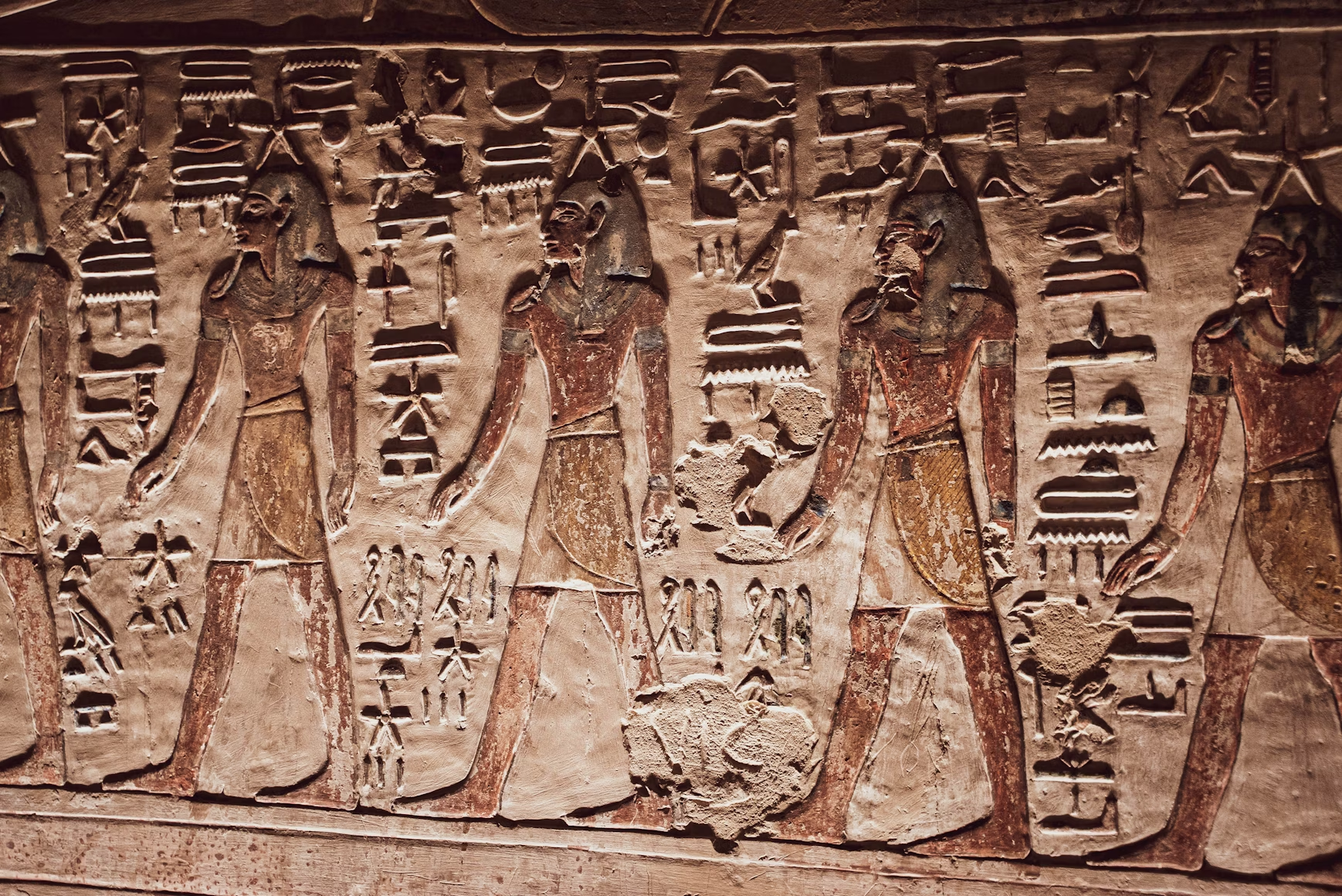
The story of the Benin Bronzes and their eventual looting is a part of Nigerian history that still immensely impacts everyday life. For years, it has formed a hole in the country’s history, splitting timelines between when these prized artifacts were an existing part of our culture and after they were looted by the British and sold to private collectors worldwide. This has resulted in generations deprived of the chance to grow up next to their historical artifacts. Art practitioners and curators believe the return of the Benin Bronzes are especially important at a time when young Nigerians have few means of engaging with the country’s rich history. In recent years, individuals and groups have been fighting for these bronzes to be returned to reenter Nigerian history, especially when young Nigerians have so few means of learning about them. While the efforts have been sluggish, the British Museum, for instance, refuses to relinquish control of the looted artifacts based on a 1963 permanent removal policy, but other headways have been made. This February, the Netherlands agreed to return 113 Benin Bronzes looted from Nigeria by the British troops in the late 19th century. It’s the largest return so far and the most significant. This is a crucial time for these bronzes to be returned; with a growing youth population, many without formal historical education, these returns could open a pathway toward historical education and preservation.
13 Traditional African clothing that identifies African tribes at a glance
Traditional African clothing represents one of—if not the biggest—symbols of the continent’s rich cultural heritage and diversity. Across the continent, different ethnic groups have their identifying traditional African clothing. They mostly wear these clothes for special occasions, traditional festivals, and special events. However, some creative designers are now combining traditional African clothing with other materials to make unique designs. Thus, some hitherto traditional African clothes are becoming everyday wear. More…
Francis Kere won the highest architecture honor, the first black man to have done so
Diebedo Francis Kere has made his mark in history. He is a globally recognized architect who employs pioneering designs and materials in developing sustainable and innovative building projects. Hailing from Africa, but having pieces of his spectacular works across the globe, Kere was the proud winner of the 2022 Pritzker Prize, having made his name with a schools and medical facilities in Africa, built by local communities with minimal resources. The distinguished black architect was born in 1965 in Burkina Faso, Kere took, in 2001, on the Gando Primary School project, his first architectural work. It was an expression of his ingenious design skills, and his drive to promote quality education locally. The project also garnered massive support from the community who physically helped in building the school. Kere’s Gando Primary School project was so influential that it earned him the Aga Khan Award for Architecture in 2004. The Pritzker Prize took this into consideration, along with other works by the architect. They included a spectacular National Assembly building each in Ouagadougou, Burkina Faso, and Porto-Novo, Republic of Benin; the Startup Lions Campus in Turkana County, Kenya; the National Park of Mali in Bamako, Mali; the Opera Village in Laongo, Burkina Faso and a host of others.’
Ghana-born is first Black Equerry in UK history
Ghanaian-Born Twumasi-Ankrah, looks set to step into the history books as the First Black Equerry in British History. An equerry is an officer from the armed forces who acts as a personal assistant to a senior member of the Royal Family. They are responsible for overseeing the monarch’s daily diary, accompanying them on official engagements, and managing state ceremonies. Equerries are often described as the monarch’s “eyes and ears” and are considered important figures within the Royal Household. The 38-year old Ankrah served previously in military capacities in Afghanistan, which adequately fits the bill as the position of the Queen’s Equerry basically demands that you have served in the armed forces. His academic path also included studying at Queen Mary University of London, before proceeding to the Royal Military Academy at Sandhurst.
Like mother, like daughter: 5 Nigerian matriarchs and the daughters they inspired
From NAFDAC to Netflix, these mothers paved the way for their daughters’ success in medicine, art, film, fashion, and cuisine.
SPORTS
Everything you need to know about the CAF Futsal Women’s Africa Cup of Nations Morocco 2025
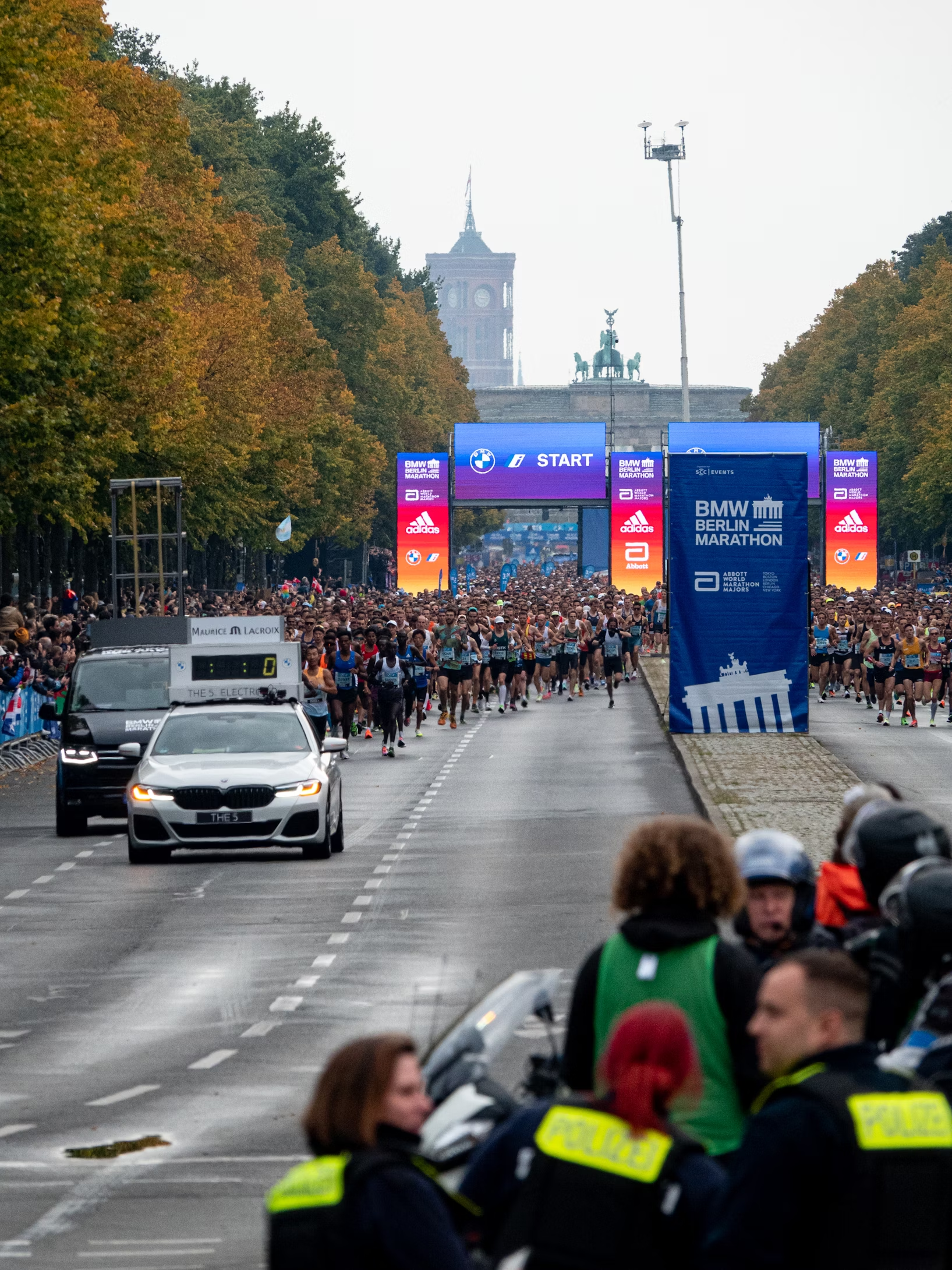
Scheduled from April 22 to 30, 2025, in Rabat, Morocco, this tournament marks the first edition of the Women’s Futsal Africa Cup of Nations, promoting women’s participation in sports across the continent. This inaugural edition will also serve as a qualifier for the first FIFA Women’s Futsal World Cup, which will be held in the Philippines from 21 November to 7December 2025. The two finalists of the tournament will earn their spot to represent Africa at this Women’s World Cup. Here is what you need to know about the competition.’
The 10 All-Time greatest African football players
From north to south of Africa, there is unending debate on who are the greatest African Soccer players of all time. Over the past three decades, Africa has produced soccer players that stunned the world. Consequently, picking ten out of the massive number of exceptional players is a difficult task—but it has to be done. The difficulty in making this selection also explains why there are conflicting lists on the Internet. However, to provide a more accurate assessment, individual and team national awards were used as well as individual and team club awards to make our pick.
What it’s like to … build a national skateboarding movement in Kenya
Skateboarding originated in 1950s California as a counterculture response to societal conformity. Over decades, it evolved from a rebellious pastime to a global phenomenon—now even an Olympic sport. However, in Kenya, where the activity lacks official recognition, public parks, and resources, that evolution is still unfolding. At the center of a grassroots movement working to bring the sport into the national spotlight is George Zuko, president of the Skateboarding Society of Kenya (SSK). Since 2017, Zuko has transformed SSK into a catalyst for East Africa’s skateboarding community. He organizes competitions, mentors youth, and builds regional networks where none existed before. His vision? Olympic qualification for Kenya by 2028. However, the road is steep equipment is expensive, skating spaces are scarce, and the Kenyan government still does not officially recognize skateboarding as a sport. Yet, Zuko remains convinced that skateboarding can do more than win medals. He believes it can transform young lives, carving out space for Kenyan youth within a global subculture that wasn’t built with them in mind.
ENTERTAINMENT & ART

Best 15 Must-Watch African Films of 2024
African cinema has undergone a renaissance in recent years, producing a wave of compelling films that captivate audiences worldwide. With the advent of advanced filmmaking technology and the rise of international platforms like Netflix and Amazon Prime, African filmmakers have been able to showcase their talents on a global stage. This has led to a surge in diverse and captivating stories that offer a unique perspective on life, culture, and society across the continent. From gripping crime thrillers to heartwarming dramas, African Films is flourishing, and audiences are taking notice.
Black Sherif releases ‘Iron Boy’ album
Ghanaian music star Black Sherif has set social media abuzz with the release of his highly anticipated second studio album, ‘Iron Boy’. The project, which officially dropped on April 3, 2025, has been met with widespread acclaim from fans and fellow celebrities alike. ‘Iron Boy’ follows Black Sherif’s debut album, ‘The Villain I Never Was’ in 2022, and his 2023 EP, ‘Take Care Of Yourself Blacko’. The album has sparked discussions about potential Grammy consideration, with some fans advocating for its submission. Notably, the album features collaborations with Nigerian stars Fireboy DML and Seyi Vibez, adding to its diverse appeal. With its deeply personal themes, compelling storytelling, and genre-blending sound, ‘Iron Boy’ is shaping up to be a defining moment in Black Sherif’s career. Fans and critics alike will be watching to see just how far this album takes him.
Remembering Amadou Bagayoko of the iconic duo Amadou & Mariam
The beloved Malian guitarist and singer, who passed away at 70, turned a lifelong bond into transcendent music that defied borders, genres, and expectations. Amadou Bagayoko of the Grammy-nominated duo Amadou & Mariam passed away on Friday, April 4. The 70-year-old singer and guitarist succumbed to a long illness, according to family. Alongside his wife, Mariam Doumbia, Amadou spent decades crafting a body of work that transcended language and genre, uniting traditional West African instruments such as the kora and the balafon with everything from James Brown’s funky antics to Pink Floyd’s psychedelia, reggae, electronica, and French pop. Amadou and Mariam started performing in the 1980s as Mali’s Blind Couple, initially singing songs to raise awareness about the plight of the differently-abled in their country. They developed a dedicated following over the years and cemented their presence on the West African music scene at 1989’s Afrique Etoile en Cote d’Ivoire show. Their European breakthrough came in the form of a performance at the Les Transmusicales de Rennes Festival in 1997, while their song “Je pense à toi” from 1998’s Sou Ni Tilé brought them wider acclaim when it was released internationally the following year… Amadou leaves behind his wife, three children, and a world forever changed by the music they made together.
MENA is the world’s fastest growing music industry
The Middle East and North Africa (MENA) is the world’s fastest-growing recorded music region for the second time in three years. According to the annual Global Music Report by the International Federation of the Phonographic Industry, the organization that represents the recording industry worldwide, the region saw a 22.8 percent revenue increase which surpassed $144 million in 2024. Upon the report’s publication, Lebanese American music journalist Danny Hajjar took to Instagram and asked: “What are we going to do with this information? What’s the point of growth if there’s zero discussion of strategy?” Hoping he could answer these questions for us, OkayAfrica reached out to Hajjar and his fellow Egyptian British music journalist Deana Hassanein Soni. The two co-host the podcast “Shik Shak Shook Ones” on which they dive into the hottest topics in music coming from the MENA region and its global diaspora communities. Coincidentally, their latest episode is called “The Music Industry Needs to Change.”
+234 Art Fair Is demystifying the patronage of Nigerian Art
+234 Art Fair brings together about 260 emerging artists from across Nigeria, encouraging attendees to rethink what art patronage means. For the five days that the fair will be open this year, people will mill about the white-washed walls where over 300 artworks are on display. They will visit the children’s gallery and observe the inventive works in the digital art section. More than anything, the fair will brim with art savants and people who have come to regard +234 as an avenue to discover fresh talent. An urgent necessity at a time like this. As global art institutions report financial difficulties and inflation triggers a decline in art sales and dwindling opportunities for emerging artists, art fairs like +234 make it especially important for emerging and even mid-tier artists in the country to find buyers or even a platform to show their work. While art spaces can sometimes be exclusionary, designing their programming to appeal to specific, often monied demographics, +234 seeks to change the culture around art patronage, especially with its second edition. The idea is to dismantle preconceived ideas of who should buy art. Instead, it introduces a culture where everyone sees themselves as patrons with a sense of duty to protect and support the arts.
Why Hollywood actress walked away for South Africa
“American Pie” star Shannon Elizabeth ditched living in Hollywood for a move to South Africa to support a cause close to her heart. Elizabeth spoke at the Steel City Con in Pittsburgh last Saturday, revealing she had moved to the country eight years ago to concentrate on her conservation charity, The Shannon Elizabeth Foundation. Elizabeth founded her organization, originally called Animal Avengers, in 2001, expanding its scope from dogs and cats to wild animals in Africa, according to the foundation’s website. “In order to be hands-on with her projects and to expand their scope and influence, Shannon moved to Africa in 2016 and now lives in Cape Town,” the website states.
VIDEO & AUDIO

10 Lessons by PLO Lumumba that can spark mental shift In Africa 2023
Africa cannot change unless Africans and their leaders have a mental shift. This is the belief of Professor Patrick Otieno Lumumba. He is one of the few Africans who continually strive to make the continent better. He speaks his truth without fear or favor—and it reverberates. Unlike other activists and pan-Africanists that speak about the concept of African Unity like a fairytale, PLO Lumumba talks in practical terms. Today we compile 10 lessons by PLO Lumumba that should help spark the much-needed mental and behavioral change in Africa.
Audio: African musicians push for local music production
For decades, many African artists have found that success often hinges on recording, producing, and touring overseas. However, a new generation of musicians is working to shift this dynamic, striving to develop a sustainable music industry within Africa while also supporting fellow artists in doing the same. The conversation around this shift was a key focus at the AfriCapitales festival in Paris on 28 March. At the event, academics from the revue Volume! presented their research on global phonographic production, examining how major recording hubs have historically shaped the music industry. A roundtable discussion brought together scholars and professionals from Africa’s music sector to explore how digital technology and evolving industry structures are reshaping the landscape.
Why Afroscope is among Accra’s best artists
Curator and author Nana Oforiatta Ayim takes us through her city Accra, Ghana, presenting an artist who uses all kinds of tech to express himself. He goes by the name of “Afroscope” and is making international waves.
(04:44)
 The Africa Edition ©️
Leave a comment