News That Matters To Africa©️
QUOTE OF THE DAY
“You’ll truly understand the meaning of life once you understand why the pizza is made round, packed in a square box, and then served as a triangle…”
HIGHLIGHTS
Congo says it will join peace talks
Nigeria refutes US claim of targeted killings of Christians
Trump expels South Africa’s Ambassador
France and Algeria rocked by ‘serious’ diplomatic crisis
UN Chief worries over rising anti-Muslim bigotry
Can Youssouf turn the AU around?
TOP NEWS
AFRICA-GENERAL NEWS
THE WEEK AHEAD
EASTERN AFRICA
DR CONGO War/Crisis:
Kinshasa says it will join peace talks with rebels on Tuesday
Democratic Republic of Congo will send a delegation to Angola on Tuesday for talks aiming to resolve a spiralling conflict against rebels in the east, the presidency said on Sunday. Angola said last week that direct peace talks between Congo and M23 rebels would begin in the Angolan capital Luanda on March 18. President Felix Tshisekedi, who has long ruled out dialogue with M23, had been considering changing his position after a string of defeats as regional support for Congo has waned. M23 made a series of demands after the talks were announced, including asking Tshisekedi to publicly express his commitment to negotiate with them directly.
Kagame on the West’s silence over Kinshasa-backed FDLR
President Paul Kagame said the genocidal FDLR still exists in DR Congo because the militia enjoys the support of the same people that backed its founders when they committed the Genocide against the Tutsi in 1994, and continue to shield and nurture them. The FDLR is a DR Congo-based terrorist group founded by members of the former Rwandan army and the Interahamwe militia that committed the 1994 Genocide against the Tutsi. They have re-organized, integrated into the Congolese army and supported attacks on Rwanda with an attempt to “overthrow” the government, Kagame added. He criticized “hypocritical” Western countries that promote the narrative that AFC/M23 rebels are backed by Rwanda when they deliberately neglect to state that FDLR is backed by Kinshasa government. Kagame pointed out that Rwanda has been constantly blamed for DR Congo’s problems by the international community, which ignores the security concerns Kigali has raised for years
Southern African bloc to withdraw troops from Congo in phases
Southern African leaders have announced they will pull their troops out of eastern Democratic Republic of Congo where they have been helping the government fight rebel forces. The troops were sent two years ago to support the Congolese army fight the Rwandan-backed M23 rebels, which has seized control of large parts of mineral-rich eastern DR Congo this year. At least 19 soldiers from South Africa, Malawi and Tanzania were killed when the M23 captured the region’s biggest city, Goma, in January. Thousands of people have been killed during the fighting and hundreds of thousands left without shelter after fleeing their homes. There have been concerns the fighting could escalate to a wider regional conflict. South Africa’s deployment was heavily criticised by the public and opposition following the killing of its soldiers. Announcing the withdrawal, South Africa’s President Cyril Ramaphosa said that the “situation is precarious, but the peace as it is now is holding”.
Rwandan foreign minister: ‘We have no soldiers on Congolese soil’
Since the March 23 Movement (M23) took control of Goma in late January and Bukavu in February, in the east of the Democratic Republic of Congo (DRC), there has been widespread international condemnation of Rwanda’s role in the conflict. Several UN reports have shown Kigali’s military support for this armed group, estimating that between 3,000 and 4,000 Rwandan soldiers are fighting alongside it. In an interview, Olivier Nduhungirehe, Rwanda’s minister of foreign affairs, justifies his country’s positions, more than three years after the resumption of the conflict and as Angola has just announced it would host direct negotiations between the DRC and the M23 on Tuesday, March 18.
EU to sanction nine people over Congo violence, diplomats say
The EU is expected to sanction nine individuals in connection with violence in the Democratic Republic of Congo, two EU diplomats said on Friday. They did not identify the people set to be listed, in keeping with the practice of not revealing such details before the sanctions are officially approved. EU foreign ministers are expected to approve the sanctions in Brussels next Monday. Rebels of the M23 group have seized east Congo’s two biggest cities since January in an escalation of a long-running conflict rooted in the spillover into Congo of Rwanda’s 1994 genocide and the struggle for control of Congo’s vast mineral resources.
The failed role of western mercenaries in the fall of Goma
In January, after the two-year siege of the Congolese city of Goma ended with victory for the M23 rebels, an ill-assorted group of nearly 300 white mercenaries were lined up to have their humiliating defeat televised. The day before, on 28 January, the M23 militia had captured the largest city in the eastern DRC. It was a spectacular defeat, not just for Congolese forces, but also for the Europeans whom the government had hoped would protect Goma. Congolese leaders have a history of employing white mercenaries. In late 2022, with the M23 surrounding Goma, the DRC government hired two private-military firms. One, named Agemira, was made up of about 40 former French security personnel who provided intelligence and logistical support to the Congolese army… The bulk of the mercenaries came from a second firm, predominantly Romanian, and numbered about 1,000. In security circles, they were known as “the Romeos”. The operation was sloppy, marred by pay disputes and equipment shortages… also untrained recruits, such as supermarket guards. The Romeos also worked closely with local militias and participated in combat.
ETHIOPIA/RWANDA
Rwanda latest to sign defence pact with Ethiopia
Field Marshal Berhanu Jula, Chief of General Staffs of Ethiopia National Defense Forces (ENDF), and Lieutenant General Mubarak Muganga, Army Chief of Staff of Rwanda have signed a defense cooperation on Thursday to collaborate in various military sectors…The agreement covers cooperation in areas including counterterrorism, training, and related military capacity building programs. Brigadier General Patrick Karuretwa, Director of Rwanda Defense Force’s International Military Cooperation, reinforced Maj. Gen. Teshome’s comments on the “strong and long-standing relationship” between the two. He also acknowledged Ethiopia as a country that has always been “quick to support Rwanda in times of need” and reaffirmed Rwanda’s commitment to strengthening its military ties with Ethiopia.
KENYA
Kenya’s ‘safe’ reputation tainted by forced deportations
Dozens of activists, political opponents and asylum seekers have been abducted while living in Kenya over the past year, before, in some cases, reappearing in neighbouring African countries and elsewhere in the world. None of the alleged victims are believed to have gone through a formal deportation process. Last July, 36 members of the Ugandan opposition party were arrested and deported to Uganda, while in October, four Turkish asylum seekers were abducted in Nairobi and returned to Turkey. One of the most high-profile abductions was the Ugandan opposition leader Kizza Besigye, who disappeared after attending a book launch in Kenya last November before reappearing in a Ugandan military prison a few days later. His wife claims he was driven over the border at night by Ugandan security operatives…Human rights campaigners say the spate of abductions in Kenya are part of a growing and worrying trend of transnational repression – the state-led targeting of refugees, dissidents and ordinary citizens living in exile – in the country.
Why maids keep dying in Saudi Arabia
At least 274 Kenyan workers, mostly women, have died in Saudi Arabia in the past five years —at least 55 Kenyan workers died last year, twice as many as the previous year. Autopsy reports are vague and contradictory. They describe women with evidence of trauma, including burns and electric shocks, all labeled natural deaths. One woman’s cause of death was simply “brain dead.” An untold number of Ugandans have died, too, but their government releases no data. There are people who are supposed to protect these women — government officials like Fabian Kyule Muli, vice chairman of the labor committee in Kenya’s National Assembly. The powerful committee could demand thorough investigations into worker deaths, pressure the government to negotiate better protections from Saudi Arabia or pass laws limiting migration until reforms are enacted. But Mr. Muli, like other East African officials, also owns a staffing company that sends women to Saudi Arabia…Members of the Saudi royal family are major investors in agencies that place domestic workers. Politicians and their relatives in Uganda and Kenya own staffing agencies, too.
AND
‘Who Profits’
Foreign Ministry says Kenyan on Vietnam ‘death-row’ case ‘difficult’
Foreign Affairs Ministry officials says Margaret Nduta Macharia’s case, which has seen her sentenced to death in Vietnam for drug trafficking, is “complex and difficult” even as her family and several Kenyans call for a diplomatic intervention ahead of her execution on Monday. Ms Macharia, 37, was convicted by the people’s court in Ho Chi Minh City on March 6 after being found guilty of smuggling over two kilograms of cocaine. In Vietnam, anyone found guilty of smuggling or possessing over 600 grams of heroin or cocaine faces the death penalty…Foreign Affairs Principal Secretary Korir Sing’oei on Sunday afternoon wrote on X: “Nduta’s case is complex and difficult, but we are doing everything within our disposal to secure reprieve for our national.” In a subsequent post on the social media platform, Sing’oei said he had spoken to Vietnam’s Deputy Minister of Foreign Affairs Nguyen Minh Hang and requested a stay of execution.
Politicians banned from Anglican pulpits says Archbishop
Archbishop of the Anglican Church of Kenya has banned politicians from addressing congregants in the Anglican Churches across the country. Jackson Ole Sapit said politicians will be allowed to speak to congregants outside after the services. He added that their presence will be acknowledged, stand up and wave to the congregants. Speaking on Sunday at St Stephen’s Cathedral, Ole Sapit further said that Anglican Churches will not announce offertory in churches… This is not the first time that churches have banned politicians from addressing congregations. The Catholic Church has also in the past banned politicians from politicking in churches. On September 15, 2021, a group of catholic bishops banned politicians from speaking in their churches.
Five days of chaos: How Ruto’s Nairobi tour was marred by crime, disruptions
President William Ruto’s five-day tour of Nairobi County was meant to be a moment of connection with city residents, an opportunity to outline his vision and address their concerns. However, the visit left behind a trail of controversy, a wave of crime, disruptions, and even a tragic death… However, from rampant muggings to school and business closures, his visit was overshadowed by public frustration and insecurity. President Ruto’s presence in Nairobi appeared to embolden criminals who operated openly during his rallies. Throughout the week, residents were robbed, businesses were looted, and roads became danger zones. “ Criminals blended in with the crowds, snatching phones and attacking pedestrians…thugs operated next to a police vehicle, robbing passersby without fear of intervention. Residents witnessed gunshots as gangs terrorised them in broad daylight. The violence peaked with the tragic death of a British national, Charles Frederick, who was allegedly knocked down by Ruto’s motorcade. As President Ruto concluded his tour on Friday, frustration and anger among residents were apparent. Instead of bringing development, his visit left them reeling from insecurity and economic losses.
MAURITIUS
India, Mauritius upgrade strategic ties with eye on China
India and Mauritius have upgraded their ties, say leaders of both countries — a move analysts say is aimed at increasing New Delhi’s influence in the Indian Ocean as it seeks to counter China’s expanding footprint in the region. The announcement of upgraded ties came during a two-day visit by Indian Prime Minister Narendra Modi to Mauritius, an island nation that sits along vital seaways in the western Indian Ocean. Modi, who was chief guest at Mauritius’s National Day celebrations, said that the countries had elevated ties to the status of “enhanced strategic partnership.” While India has long enjoyed good relations with Mauritius, where 70% of the population is of Indian origin, analysts said Modi’s visit came amid a recognition that India needs to step up its engagement with a country that is called the gateway to the Western Indian Ocean and Africa, and where Beijing’s presence has grown.
SOMALIA/SOMALILAND
No talks on resettling Palestinians from Gaza
Somalia and its breakaway region of Somaliland have not received any proposal from the United States or Israel to resettle Palestinians from Gaza, their foreign ministers said on Friday, with Mogadishu saying it categorically rejected any such move. Wire services quoted U.S. and Israeli officials as saying their governments had contacted officials from Sudan, Somalia and Somaliland to discuss using their territory for resettling Palestinians from the devastated Gaza Strip. Officials from Somalia and Somaliland said they were unaware of any contacts. Somalia’s Foreign Minister Ahmed Moalim Fiqi said his country would categorically reject “any proposal or initiative, from any party, that would undermine the Palestinian people’s right to live peacefully on their ancestral land”.
Abdirahman Dahir Adan, Somaliland’s foreign minister, reported that “there are no talks with anyone regarding Palestinians”. Unlike Somalia, which has been battling an Islamist insurgency for more than 17 years, Somaliland has mostly been at peace since declaring independence from the Mogadishu government in 1991.
SOUTH SUDAN
South Sudan’s rising violence in “polarised regional environment”
Alan Boswell of the International Crisis Group unpacks South Sudan’s escalating violence, who’s behind it, and who and what’s behind the escalating violence and what could further fuel the conflict.
Why South Sudan’s leaders thrive on instability
Looking at why South Sudan, which declared independence to avoid conflict with Khartoum now finds itself facing another civil war and how leaders have failed to ensure lasting peace at the expense of civilians.
SUDAN
Sudan bans all imports from Kenya after it hosted civil war rivals
Sudan has suspended all imports from Kenya in protest after the paramilitary Rapid Support Forces (RSF), who are fighting the army in a two-year civil war, were hosted in Nairobi. Last month, the RSF and its allied political and armed groups signed a founding charter in Kenya expressing the intention to form a parallel government in Sudan. Sudan’s military government said the import ban was to preserve the country’s sovereignty and “protect its national security”. The war-torn country imports several products from Kenya including tea, food items and pharmaceutical products. Kenyan President William Ruto has faced widespread criticism at home for his perceived close ties with the RSF. Last month, Sudan recalled its ambassador to Kenya in protest…and called Kenya’s hosting of RSF meetings “tantamount to an act of hostility”.
UK enrages Sudanese army government by inviting UAE to London conference
The UK has invited its ally the UAE to a London conference on Sudan’s war in April, but not the Sudanese army-aligned government, according to a document shared with Middle East Eye. Neither the Sudanese Armed Forces (SAF) nor its enemy, the paramilitary Rapid Support Forces (RSF), have been invited to the conference, set to take place in the British capital on 15 April. The presence of the UAE, which has supplied the RSF with weapons and other goods throughout a war that began in April 2023 and has led to the world’s largest humanitarian crisis, at the talks has prompted outrage from Sudanese officials aligned to the army. The Sudanese foreign ministry said that it had not been invited to the conference under the pretext of being a “warring party”. “Ironically, the UAE, effectively a party to the war, is invited,” the document, dated 14 March, states.
Analysis: Middle Eastern monarchies in Sudan’s war: what’s driving their interests
The civil war in Sudan that began in April 2023 involves several external actors. The conflict pits the Sudanese Armed Forces against the paramilitary Rapid Support Forces in a quest for political and economic power. Various foreign states have picked a side to support, in particular, Saudi Arabia and the UAE are providing financial and military support to the warring parties, although they have denied it.
UGANDA
Ugandan judge is guilty of forcing woman to work in UK as slave
A High Court judge in Uganda judge who is also a UN judge has been convicted of forcing a young woman to work as a slave. Prosecutors said Lydia Mugambe “took advantage of her status” over her victim by preventing her from holding down steady employment while forcing her to work as her maid and provide childcare for free. The 49-year-old Mugambe, was found guilty of conspiring to facilitate the commission of a breach of UK immigration law, facilitating travel with a view to exploitation, forcing someone to work, and conspiracy to intimidate a witness. She will be sentenced at Oxford Crown Court on 2 May.
WEST AFRICA
NÍGER
3 Chinese oil officials ordered out of country
Niger’s military government has expelled three Chinese officials from the oil sector in a move reflecting broader efforts by West African military regimes to assert greater control over their natural resources. The officials, who hold key positions at the China National Petroleum Corporation (CNPC), the West African Oil Pipeline Company (WAPCo), and the joint venture oil refinery SORAZ, were notified of their departure order on Wednesday. By Friday, they had already departed, according to a source close to the government. Another source familiar with the affected companies stated that the officials were expelled due to disputes over local staff wages and delays in project execution. In 2023, Niger signed a $400 million memorandum of understanding with CNPC related to crude oil sales from the Agadem oilfield. However, recent actions by the junta signal a shift in the country’s approach to foreign investments in its resources.
NIGERIA
Nigeria refutes US claim of targeted killings of Christians
The Ministry of Foreign Affairs has refuted claims of targeted killings of Christians in Nigeria, describing them as misleading and aimed at influencing foreign governments, particularly the United States, to designate Nigeria as a Country of Particular Concern (CPC). The rebuttal came after Republican Congressman Chris Smith called for Nigeria to be designated a CPC due to what he described as “seemingly endless violence against Christians.” In a press statement on Friday signed by the acting spokesperson, the ministry stated that while the Federal Government acknowledges the security challenges in the country, these incidents are not religiously motivated or targeted at any particular faith group. It emphasized that insurgency and banditry in the predominantly Muslim northern region of Nigeria are not directed at any specific religious community… The Ministry of Foreign Affairs urged the international community to verify information before making statements that could escalate tensions within Nigeria. It called on the media, civil society organizations, and foreign partners to refrain from spreading unverified claims that could undermine national unity and stability.
Nigeria’s Economic growth to hit 3.6% in 2025, driven by Dangote Refinery, policy reforms
Nigeria’s economy is expected to grow at a faster pace, with real GDP projected to rise from 3.0% in 2024 to 3.6% in 2025, according to new projections by Afreximbank. The country’s economic expansion will be supported by increasing fuel production at the Dangote Petroleum & Petrochemicals refinery, declining inflation, and policy reforms aimed at stabilizing the financial sector. Between 2025 and 2029, real GDP growth is forecasted to average 4.0% annually, bolstered by stronger exchange rate stability and an improvement in household purchasing power. Analysts at Afrexim TRIN predict that these factors will drive a recovery in private consumption and spur investment activity across various sectors. Afreximbank noted that Nigeria’s dominance in crude oil exports will be reinforced by the Dangote refinery, which is expected to surpass domestic fuel demand, enabling the country to become a net exporter of refined petroleum products for the first time.
A notorious bandit is killed in shoot-out
Dogo Saleh, a 21-year-old who leads an armed group terrorising communities in Abuja and Kaduna, has died from gunshot wounds sustained during a gun battle between his group and police operatives, according to an official statement. The police said Mr Saleh, born Salisu Mohammed, had been apprehended by the police and was leading a police team to his group’s hideout when they were ambushed. Abuja police spokesperson Josephine Adeh said Mr Saleh was arrested on 3 March when police operatives acted on intelligence about the infiltration of bandits into the Nigerian capital…The police said that a day after he was arrested, Mr Saleh led armed police officers to his gang’s den in Kagarko Local Government Area of Kaduna, in an effort to arrest the other gang members. The team was ambushed by the suspected terrorists who tried to free Mr Saleh and a shootout ensued, the police said…Mr Saleh sustained gunshot wounds during the shootout from bullets believed to have been fired by his gang members…According to the police, Mr Saleh was involved in at least nine violent operations including kidnapping-for-ransom and killing.
‘We are all Natasha’: senator’s sexual harassment claims roil Nigeria
Senator Natasha Akpoti-Uduaghan has alleged that Godswill Akpabio, President of the Nigerian Senate, in one incident had told her that a motion she was trying to advance could be put to the senate if she “took care” of him. In another, she said that on a tour of his house he had told her – while holding her hand – “I’m going to create time for us to come spend quality moments here. You will enjoy it.” Akpabio has denied the allegations. It has now resulted in a 6 month suspension without pay for – Senator Natasha Akpoti-Uduaghan. The accusations have dominated conversations and highlighted longstanding women’s rights issues in the socially conservative country, where no woman has ever been elected governor, vice-president or president. Women’s rights groups have organized a “We are all Natasha” protests convened by the civil society coalition Womanifesto… Akpabio, a political veteran, was the subject of another sexual harassment allegation from a former public official in 2020.
SENEGAL
Women step into traditional wrestling ring
Traditional west African wrestling — and the gargantuan, sometimes sumo-like men who step into the ring — captivates audiences across the region, from stadiums in Senegal to desert villages in Niger. This month’s ECOWAS wrestling tournament, however, marked the first time that the annual showdown featured a women’s division, drawing competitors from across the regional bloc to the Nigerian capital Abuja. “Women know how to fight. We just had to be given a chance,” 33-year-old Ivorian fighter Celine Bakayoko told AFP from the sidelines…Missing, however, was last year’s medal table-toppers, Niger. Run by military juntas, Niger, Burkina Faso and Mali all left the bloc earlier this year after years of deteriorating relations with ECOWAS…Though envoys have been sent to bridge the divide, and ECOWAS officials at the tournament spoke of regional unity during the opening ceremony, none of the nations sent fighters to this year’s tournament.
SOUTHERN AFRICA
ANGOLA
Opposition leaders from across Africa are denied entry
Angola is under fire after it denied entry to several senior African political figures set to attend a conference hosted by the country’s main opposition party. Unita said it had invited the politicians, including Tanzanian opposition leader Tundu Lissu, Mozambique’s Venancio Mondlane and Botswana’s former President Ian Khama, to a summit on democracy. “The action of the Angolan government to prevent us from entering Angola is inexplicable and unacceptable,” Lissu said on X. But according to a source from the Migration and Aliens Service (SME), “the expulsion was due to irregularities in the visa procedure, which prevented Mondlane and 13 other members of his entourage from entering Angolan territory”. Mondlane, who has called for nationwide protests over what he says were rigged elections last year, was this week subjected to travel restrictions in his home country. At least 20 leaders and representatives from various political parties across Africa were denied entry, said Lissu.
BOTSWANA
Hunting revenues almost double amid UK opposition
Botswana has made $4 million from the sale of licenses to hunt wild animals, the highest figure since lifting a hunting ban in 2019. The hunting season, which ended in November, was held amid growing opposition from some European countries that want a ban on the importation of African wildlife trophies. Botswana issues around 400 elephant licenses annually, with most purchased by overseas hunters. Wynter Mmolotsi, minister of environment and tourism, noted that the hunts face increasing Western opposition. Canada and Belgium are among countries that have recently banned importation of wildlife trophies. Siyoka Simasiku, director at the conservation coalition, Ngamiland Council of Non-Governmental Organisations says communities will be the hardest hit if the U.K. imposes restrictions. He has been to Europe to campaign against trophy import bans.
MOZAMBIQUE
France launches manslaughter probe against TotalEnergies over 2021 Mozambique massacre
French prosecutors said Saturday they had opened a manslaughter investigation against energy giant TotalEnergies following a bloody 2021 jihadist attack in Mozambique. Survivors and relatives of victims of the attack near a major gas field in northern Mozambique launched legal action against the oil and gas giant in October 2023, accusing it of failing to protect its subcontractors. The energy giant reiterated its denial of any wrongdoing in a statement issued later on Saturday. Repeating comments it had made at the time of the original complaint, TotalEnergies said teams from the Mozambique LNG project had provided emergency assistance and evacuated more than 2,500 people. IS-linked militants killed dozens of people in the port town of Palma in March 2021, sending thousands of people fleeing into the surrounding forest. The attack in Cabo Delgado province lasted several days. Some of the victims were beheaded. TotalEnergies halted its $20 billion liquified natural gas (LNG) project after the attack but is now hoping to restart it.
Cyclone Jude causes chaos in Mozambique
Cyclone Jude was the third cyclone to hit Mozambique this season. First spotted as a depression last Friday to the south-west of the island of Diego Garcia in the Indian Ocean, it intensified over the next few days to a moderate tropical storm, affecting northern Madagascar on Saturday and killing at least one person. Jude strengthened into a tropical cyclone as it tracked westwards over the Mozambique Channel, where sea surface temperatures of close to 30C provided the heat and moisture necessary to fuel the cyclone. It hit Mozambique early on Monday morning, with sustained wind gusts of 75mph (120km/h) and gusts of up to 120mph, equivalent to a category 1 hurricane. More than 200mm of rain fell over the coastal districts of Memba, Monapo, Mossuril, Mozambique Island and Nacala in 24 hours, leading to significant flooding.
SOUTH AFRICA
Trump Administration expels South Africa’s Ambassador to the U.S.
President Trump’s administration has officially expelled South Africa’s ambassador to the United States, a spokesman for the South African president said on Saturday, calling the decision “regrettable.” The move comes during a low point in the relationship between the two countries, with Mr. Trump having accused Mr. Ramaphosa’s government of discriminating against South Africa’s white minority and siding with one of America’s enemies, Iran. Mr. Rubio made social media comments above a repost of an article from Breitbart, a right-leaning news site, about remarks Mr. Rasool made on Friday via video link to an institute in Johannesburg. The article quoted Mr. Rasool as saying Mr. Trump was leading a “supremacist” movement against “the incumbency, those who are in power,” in South Africa…Despite the hostility with the White House, Mr. Ramaphosa has said that he wants to repair the relationship and maintain strong ties with the United States, which is South Africa’s second-largest trading partner. His government has been preparing a trade proposal to offer to Mr. Trump that it hopes will convince him that a relationship with South Africa would benefit America.
Why Trump is singling out South Africa and accusing it of being anti-white and anti-American
The Trump administration’s decision to expel the South African ambassador is its latest move against a country it has singled out for sanctions and accused of being anti-white and anti-American. U.S. Secretary of State Marco Rubio posted on X that Ambassador Ebrahim Rasool was “no longer welcome in our great country” and said he was “a race-baiting politician” who hates America and U.S. President Donald Trump. Rubio’s post didn’t explain what was behind the decision…Trump had already issued an executive order last month cutting all funding to South Africa over some of its domestic and foreign policies. The order criticized the Black-led South African government on multiple fronts, saying it is pursuing anti-white policies at home and supporting “bad actors” in the world like the Palestinian militant group Hamas and Iran. A white minority group in South Africa has also been a central focus for Trump and he falsely accused the South African government of a rights violation against white Afrikaner farmers by seizing their land through a new expropriation law. No land has been seized…
Trump tries to use White South Africans as cautionary tale
To hear President Trump and some of his closest supporters tell it, South Africa is a terrible place for white people. They face discrimination, are sidelined from jobs and live under the constant threat of violence or having their land stolen by a corrupt, Black-led government that has left the country in disarray. The data tell a different story. Although white people make up 7 percent of the country’s population, they own at least half of South Africa’s land. Police statistics do not show that they are any more vulnerable to violent crime than other people. And white South Africans are far better off than Black people on virtually every marker of the economic scale. Yet Mr. Trump and his allies have pushed their own narrative of South Africa to press an argument at home: If the United States doesn’t clamp down on attempts to promote diversity, America will become a hotbed of dysfunction and anti-white discrimination. “It plays into the fears of white people in America and elsewhere: ‘We whites are threatened,’” Max du Preez, a white South African writer and historian, said of Mr. Trump’s description of his country. But, Mr. du Preez added, white people have flourished since the end of apartheid in 1994.
EU’s Von der Leyen pitches new trade pact with South Africa
Brussels is busy working on a set of next-generation clean trade and investment partnerships that the European Commission said should secure “raw materials, clean energy and clean tech from across the world.” First target: South Africa, whose President Cyril Ramaphosa agreed to start negotiations on the new treaty with the EU today. The talks between Brussels and Pretoria come four years after the EU and partners including the US and UK launched a world-first energy partnership to help South Africa shed its addiction to coal. The agreement represented a new era of global cooperation, but the US this year ditched the deal it co-signed. The South Africans hope a new agreement will help them navigate the EU’s complex landscape of environmental rules.
South Africa in ‘uncharted waters’ as budget splits coalition government
South Africa has entered uncharted waters following deep divisions in the coalition government over the national budget that has finally been tabled after a month-long delay. This is the view of analysts after Finance Minister Enoch Godongwana’s budget drew a backlash from various quarters, including key partners in the coalition government rejecting his proposals for a second time. The African National Congress (ANC) formed a government of national unity (GNU) with nine other parties after losing its parliamentary majority in elections last year. And, without the support of its biggest coalition partner, the Democratic Alliance (DA), it will fail to pass the budget unless it rethinks its contentious policies…Godongwana was forced to postpone his budget presentation last month after fierce resistance to his plan to raise value-added-tax (VAT)…this delay sent shockwaves through South Africa at the time, as it was the first time this had happened since the end of white-minority rule in 1994.
Pretoria welcomes Malawi ruling in Bushiri Extradition
The government on Wednesday welcomed the ruling by a court in Malawi that self- proclaimed prophet Shepherd and Mary Bushiri be extradited to South Africa to face numerous charges including fraud and rape. In 2020, the couple appeared before two different courts in South Africa on multiple criminal charges. They were granted bail pending trial but failed to comply with their bail conditions and fled the country in unknown circumstances. They were later found in Malawi. After their escape, South Africa submitted an extradition request to Malawi, seeking their return to stand trial on various charges, including rape, violating bail conditions and contravention of the Financial Advisory and Intermediary Services Act, the Banking Act, the Civil Aviation Act and the Immigration Act. Malawi’s chief resident magistrate’s court on Wednesday also ordered that the couple remain in custody until they are handed over to South African authorities. Following this, South Africa submitted an extradition request to Malawi, seeking their return to stand trial on various charges…This case has drawn significant public and media attention, highlighting broader issues of corruption and accountability.
ZAMBIA
Acid spill devastates Zambia’s Kafue River
Authorities and environmentalists in Zambia fear the long-term impact of an acid spill at a Chinese-owned mine that contaminated a major river and could potentially affect millions of people after signs of pollution were detected at least 100 kilometres (60 miles) downstream. The spill happened on Feb. 18 when a tailings dam that holds acidic waste from a copper mine in the north of the country collapsed, according to investigators from the Engineering Institution of Zambia. The collapse allowed some 50 million litters of waste containing concentrated acid, dissolved solids and heavy metals to flow into a stream that links to the Kafue River, Zambia’s most important waterway, the engineering institution said. “It is an environmental disaster, really of catastrophic consequence when we consider the fact that Sino Metals has polluted a river on which millions of people depend for the livelihoods,” said environmental activist Chilekwa Mumba.
ZIMBABWE
A man called Bombshell fires up Zimbabwe’s succession battle
War veteran and senior Zanu-PF member named Blessed Geza, also known as “Bombshell”, who launched a verbal offensive against Mnangagwa. He became angered when some within the party began pushing to change the country’s laws to allow for the president to seek a third term. In a series of often expletive-laden press conferences, gritty-voiced and with a furrowed forehead, he repeatedly called on the 82-year-old president to go or face being removed. “I must apologise for helping him come into office,” said Geza…”As soon as he [Mnangagwa] had the taste of power, he escalated corruption, forgot the people and only remembered his family,” said the outspoken war veteran, who was then a member of Zanu-PF’s powerful central committee. “Mnangagwa has also surrendered state power to his wife and children. We sadly see history repeating itself. We can’t allow that to happen.”
NORTH AFRICA
ALGERIA
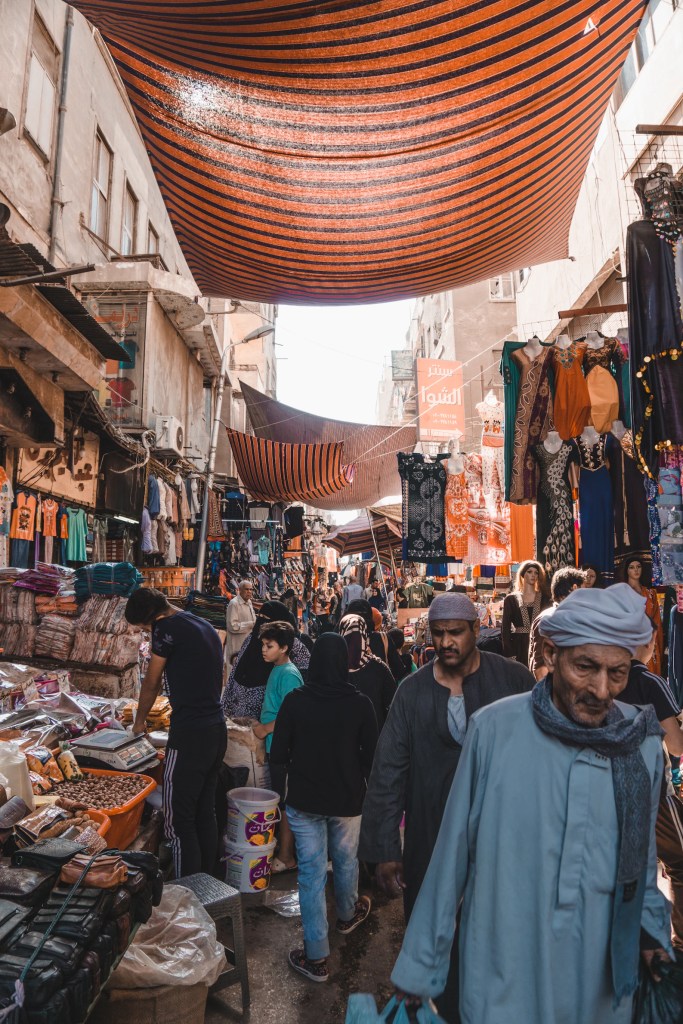
France and Algeria rocked by ‘most serious’ diplomatic crisis since end of colonial rule
Tensions are rising between Paris and Algiers. The current diplomatic crisis, described by analysts as the most serious since Algeria’s independence in 1962, raises the risk of a rupture in bilateral relations between France and its former North African colony. The current quarrel was triggered in July 2024 by French President Emmanuel Macron’s support for Morocco’s claims of sovereignty over Western Sahara. The resource-rich territory, considered by the UN as “non-autonomous”, is controlled for the most part by Morocco but claimed by the Polisario Front, a Sahrawi independence movement supported by Algeria. The move infuriated Algiers, which announced the “withdrawal with immediate effect” of its ambassador to France. Relations have deteriorated ever since, first with the incarceration of French-Algerian writer Boualem Sansal in Algiers in mid-November, who was accused of having undermined the integrity of Algerian territory in statements made to a far-right media outlet in France.
EGYPT
Sisi honours militia fighter accused of war crimes in Sinai
President Abdel Fattah el-Sisi honoured the Sinai militia fighter Ibrahim Hammad as a “martyr” on Tuesday despite calls by rights groups to investigate war crimes allegations against him. At an annual event remembering members of the armed forces killed in combat, Sisi named Ibrahim Hammad as a “martyr hero”, and gave a reward to his mother. Hammad was killed on 10 May 2022 while participating in an Egyptian army operation against alleged “terrorists” in the Sheikh Zuweid area in North Sinai. The Sinai Foundation for Human Rights (SFHR), a London-based group that advocates for accountability for rights abuses in Sinai, has strongly denounced Sisi’s comments. “The SFHR and international organisations, including Human Rights Watch, have documented this individual’s involvement in cold-blooded field executions of unarmed civilians in Sinai in 2017,” the group said. A video verified by HRW in April 2017 shows an operation in which Hamad, then a member of a local militia aligned with the Egyptian army, took part in shootings of two brothers from the Rumailat tribe: Daoud Sabri al-Awabdah, 16, and Abd al-Hadi Sabri al-Awabdah, 19.
UK MPs urge ban on Egyptian mummy displays in British museums
British parliamentarians in the All-Party Parliamentary Group (APPG) for Afrikan Reparations, are calling for a ban on Egyptian mummy displays in British museums. The call was heightened when Zaki el-Salahi was horrified to see the body parts of his ancestors on display during a visit to the Anatomical Museum at the University of Edinburgh. The remains had been taken by the British after the Battle of Omdurman in modern-day Sudan in 1898. London’s British Museum alone holds over 100 mummies – bodies wrapped in linen and placed in coffins, some over 4,000 years ago. The UK’s popular obsession with mummies dates back centuries, and many medieval Europeans ate body parts of Egyptian mummies, believing they could cure diseases. Most mummies still on display in Britain today were brought over during the 19th and early 20th centuries and have been a staple of museum culture ever since. The APPG has proposed that the sale of human remains should be criminalized altogether, pointing to examples in Britain where the spine of a six-year-old was used as a handbag and fetuses were made into earrings.
MOROCCO/WESTERN SAHARA
Sahrawi activist condemns Morocco’s use of Pegasus spyware
A Sahrawi human rights defender has denounced Morocco’s systematic deployment of Pegasus spyware to monitor and intimidate journalists and activists in the disputed Western Sahara. Ghalia Abdallah Djimi expressed her condemnation at the 58th session of the UN Human Rights Council in Geneva. Pegasus, developed by the Israeli NSO Group, is a sophisticated spyware capable of infiltrating smartphones to access data and activate microphones and cameras without users’ knowledge. While intended for combating crime and terrorism, investigations have revealed its misuse against activists, journalists and political figures globally. In Morocco, reports indicate that the spyware has been employed to monitor domestic dissidents and even foreign officials. Notably, in 2021 it was reported that the Moroccan authorities targeted over 6,000 Algerian phones, including those of politicians and high-ranking military officials. This surveillance scandal contributed to Algeria’s decision to sever diplomatic ties with Morocco, a move that also came amid Rabat’s resumption of relations with the occupation state of Israel in exchange for Washington’s recognition of Morocco’s claim to sovereignty over Western Sahara.
The Arab Interior Ministers Council: What is it and why are there human rights concerns?
When the UAE authorities recently confirmed that Egyptian activist and poet Abdul Rahman Yousef al-Qaradawi was extradited from Lebanon with the help of the Arab Interior Ministers Council (AIMC). The security body, run by members of the Arab League, has been behind – or believed to be involved in – the extradition of several high-profile individuals in recent years. Arab League members envisioned the AIMC as early as 1977 but finally established the body in 1982. Its aim is to develop and strengthen security cooperation and crime prevention efforts between Arab countries. Its areas of focus include counterterrorism, drug control and civil defence. The AIMC also circulates arrest warrants and data on crimes across member states. This information sharing system, similar to Interpol and other regional security networks, means wanted individuals can be apprehended across the region… Unlike Interpol, AIMC warrants are not a matter of public record. Human rights groups and UN experts warn that those subject to them are unable to take steps to have their warrants removed. They have also criticized the AIMC for failing to protect people who are wanted for political motives from being sent to countries where they are at risk of ill-treatment and unfair trials.
UNITED NATIONS & RELATED
UN Chief says worry over rising anti-Muslim bigotry
UN Secretary-General Antonio Guterres has expressed concern over “a disturbing rise in anti-Muslim bigotry”, calling on governments to protect religious freedom and for online platforms to curb hate speech. Guterres made the remarks on Saturday to mark the International Day to Combat Islamophobiamarked every year on March 15. Rights groups around the world and the UN have noted a rise in Islamophobia, anti-Arab bias and anti-Semitism since the start of Israel’s 17-month war on Gaza.
“We are witnessing a disturbing rise in anti-Muslim bigotry. From racial profiling and discriminatory policies that violate human rights and dignity, to outright violence against individuals and places of worship,” the UN chief said in a video post on X. “This is part of a wider scourge of intolerance, extremist ideologies and attacks against religious groups and vulnerable populations.”
’Do you have communist links?’ US asks aid groups
United Nations aid agencies have been sent questionnaires by the US asking them to state if they have “anti-American” beliefs or affiliations. Among the 36 questions on the form, sent by the US Office of Management and Budget (OMB), is one asking if they have any links to communism. Some of the world’s biggest humanitarian organisations have received the questionnaire, including the UN Refugee Agency and the International Committee of the Red Cross. The Trump administration has launched a cost-cutting drive across the US government, led by billionaire Elon Musk, and has closed down much of its foreign aid. The UN groups fear the move by the OMB is a sign the US is planning to abandon humanitarian work – or even the UN itself – altogether. The US pulled out of the World Health Organization on the first day of US President Donald Trump’s second term.
AFRICA-GENERAL NEWS

Trump administration mulling new travel restrictions on citizens from dozens of countries
An internal Trump administration memo lists a total of 41 countries divided into three separate groups for travel restrictions. The first group of 10 countries, including Afghanistan, Iran, Syria, Cuba and North Korea, among others, would be set for a full visa suspension. In the second group, five countries – Eritrea, Haiti, Laos, Myanmar and South Sudan – would face partial suspensions that would affect tourist and student visas as well as other immigrant visas, with some exceptions. In the third group, a total of 26 countries including Belarus, Pakistan and Turkmenistan, among others, would be considered for a partial suspension of US visa issuance if their governments “do not make efforts to address deficiencies within 60 days”, the memo said. The list has yet to be approved by the administration, including the US secretary of state, Marco Rubio, and could be amended, officials told the outlet.
Can Djibouti’s Mahmoud Ali Youssouf turn the AU around?
Djibouti’s Mahmoud Ali Youssouf has taken the helm of the African Union amid rising regional tensions and a looming funding crisis. Can this veteran diplomat implment reforms, boost African free trade, and reduce the AU’s reliance on Western aid?
 The Africa Edition ©️
Leave a comment