News That Matters To Africa©️
QUOTE OF THE DAY
“History repeats itself, the first time as a farce, the second as a clown show.”
HIGHLIGHTS
Congo files criminal complaints against Apple
Canadian Gold firm threatens Mali
Departing US ambassador repeats “South Africa shipped arms to Russia”
Iran’s president to make rare visit to Egypt
Gaming in Africa valued at $10 billion.
TOP NEWS
1) EASTERN AFRICA
2) WEST AFRICA
3) SOUTHERN AFRICA
4) NORTH AFRICA
AFRICA-GENERAL NEWS
EASTERN AFRICA
DR CONGO
Congo files criminal complaints against Apple in Europe over conflict minerals
The Democratic Republic of Congo has filed criminal complaints against Apple subsidiaries in France and Belgium, accusing the tech firm of using conflict minerals in its supply chain, ac cording to lawyers for the Congolese government. Apple does not directly source primary minerals and says it audits suppliers, publishes findings and funds bodies that seek to improve mineral traceability. Its 2023 filing on conflict minerals to the U.S. Securities and Exchange Commission said none of the smelters or refiners of 3T minerals or gold in its supply chain had financed or benefited armed groups in Congo or neighbouring countries. But international lawyers representing Congo argue that Apple uses minerals pillaged from Congo and laundered through international supply chains, which they say renders the firm complicit in crimes taking place in Congo. In parallel complaints filed to the Paris prosecutor’s office and to a Belgian investigating magistrate’s office on Monday, Congo accuses local subsidiaries Apple France, Apple Retail France and Apple Retail Belgium of a range of offences. These include covering up war crimes and the laundering of tainted minerals, handling stolen goods, and carrying out deceptive commercial practices to assure consumers supply chains are clean. In an unrelated case in March this year, a U.S. federal court rejected an attempt by private plaintiffs to hold Apple, Google, Tesla, Dell and Microsoft accountable for what the plaintiffs described as their dependence on child labour in Congolese cobalt mines…A U.S.-based lawyer for Congo, said the French and Belgian complaints were the first criminal complaints by the Congolese state against a major tech company, describing them as a “first salvo” only.
Congo’s health ministry says unknown disease is severe malaria
Democratic Republic of Congo’s health ministry said on Tuesday that a previously unidentified disease circulating in the country’s Panzi health zone is a severe form of malaria. Earlier this month, local authorities said the disease had killed 143 people in the southwestern Kwango province in November. “The mystery has finally been solved. It’s a case of severe malaria in the form of a respiratory illness… and weakened by malnutrition,” the health ministry said in a statement. It also said that 592 cases had been reported since October with a fatality rate of 6.2%.
ETHIOPIA
Parliament approves foreign banks entry
After years of anticipation, lawmakers have approved the long-awaited banking business proclamation, paving the way for foreign banks to enter Ethiopia’s financial sector. They can establish subsidiaries, open branches or representative offices, or acquire shares in existing local banks. However, it sets a limit on foreign strategic investors, capping their ownership at 40% in any local bank, while allowing an additional 7% to 10% stake for non-strategic foreign national investors. The new law also stipulates that the combined shareholding of foreign nationals and foreign-owned Ethiopian organizations in a local bank shall be limited to 49% of the bank’s total subscribed shares. The remaining shares are required to remain under Ethiopian ownership. Additionally, the proclamation permits foreign banks to employ foreign nationals as senior executives but requires that resident Ethiopians be included on their boards. The opening of the banking industry marks a significant shift following decades of dominance by local financial institutions in Ethiopia’s banking sector. Currently, there are 32 banks operating in the country, with a combined capital of 290 billion birr (roughly $2.4 billion).
Delayed salary increments leave gov’t workers struggling
Despite a salary adjustment for civil servants was announced to take effect from October, government employees in both regional states and the capital city have reported that they have yet to receive the increase. In an interview with Addis Standard, Ashagrie Kelemu (name changed for security reasons), a government employee in the Tarma Ber district, North Shewa Zone, Amhara region, stated that while relevant government officials have collected data on civil servants’ current salaries and job positions, he and his colleagues have not received their adjusted salaries. Amid the delay in the salary adjustment, Ashagrie expressed concern over the rising cost of living, which he noted has increased significantly in recent months. Speaking at a press briefing a month ago, Finance Minister Ahmed Shide announced that government institutions that have “finalized their payroll adjustments” have received supplementary funding in accordance with the newly approved salary scale for civil servants. He also confirmed that regional states are also receiving “sufficient subsidies” to cover these salary hikes for the next three months.
KENYA
US case against Gautam Adani appears strong but extradition unlikely
The US fraud case against Indian billionaire Gautam Adani appears to be backed by documents that will help prosecutors make a strong case, legal experts said, but the tycoon is unlikely to be extradited to stand trial anytime soon. Federal prosecutors in Brooklyn last month unsealed an indictment accusing Adani of bribing Indian officials to convince them to buy electricity produced by Adani Green Energy, a subsidiary of his Adani Group conglomerate, and then misleading US investors by providing reassuring information about the company’s anti-corruption practices.
Adani, his nephew Sagar Adani, and another Adani Group executive were charged with securities fraud and conspiracy. Adani Group has called the allegations “baseless” and vowed to seek “all possible legal recourse.” Gautam Adani is not in custody. He has made at least two public appearances in India since the indictment, including at a Dec. 9 event also attended by Prime Minister Narendra Modi. Prosecutors may also struggle to secure live testimony from witnesses in India because the process could require assistance from New Delhi, and the government may be reluctant to facilitate testimony that could paint Indian officials in an unfavorable light…
Once a fierce critic, Minority Leader Junet Mohamed cosies up to Ruto
Minority leader in Kenya’s National Assembly, Junet Mohamed, one of the highest-ranking opposition lawmakers, was known as a staunch critic of President William Ruto. But of late, he has been changing his tune, becoming a regular defender of the president’s policies and programmes. The prominent lawmaker from the main opposition Orange Democratic Party (ODM) has been accompanying Ruto on his development tours across the country in recent weeks, praising the Kenya Kwanza government for its “service delivery”. Junet, who popularly also goes by only his first name, is one of opposition leader Raila Odinga’s closest political confidants…Before the sudden change of heart, the vocal lawmaker was on the forefront describing Ruto as “Kenya’s most corrupt leader”. Junet’s new role in the Ruto government further exposes the rift in ODM, triggered by veteran opposition leader Raila’s new ties with Ruto since throwing his hat in the ring for AU chair.
Regulators target Kenya’s booming ‘buy now, pay later’ sector
Tight economic conditions are helping drive a boom in Kenya’s buy now pay later (BNPL) credit sector, with more people paying in installments for higher-priced purchases. But the imminent introduction of regulatory oversight promises to shake up the sector. Motorbikes, smartphones, solar panels, and cooking gas cylinders are among the most commonly purchased items under BNPL arrangements in Kenya. Credit card penetration is also low at just over 6% limiting options for consumers. With real wages on the decline for the past four years due to inflation, and unemployment high, BNPL offerings have become increasingly attractive to many in the country. But proposed legislative changes are expected to have ramifications for the sector. The proposed changes were prompted by widespread concerns over cases of predatory lending and exploitation of customers by BNPL firms. A similar regulatory crackdown on digital lenders in 2021 forced numerous digital loan services out of the business.
Pictorial: Kenya’s devastating drought is the worst in 40 years
Drought in Kenya has reached dramatic levels, with millions of people affected by the lack of water and food. This phenomenon, which until a few years ago followed predictable seasonal cycles, has become increasingly frequent and intense. According to the United Nations, in this historical phase the Kenyan people are experiencing the worst water crisis in the last 40 years and millions of people do not have stable access to safe water sources.
Podcast: Nairobi to New York and back: the loneliness of the internationally educated elite
From June: Every year, hundreds of Kenyans head off to study at elite universities in the US and UK. On graduating, many find themselves in a strange position: unable to fit in abroad, but no longer feeling like they belong back home.
MAURITIUS
New PM sends fresh Chagos proposals to UK
Mauritius says it has submitted changes to a proposed deal over the future of the Chagos Islands, with the country’s new PM saying the original agreement did not benefit his country enough. Under the terms of the original agreement, which was announced in October, the UK would relinquish sovereignty to Mauritius over the archipelago but maintain a 99-year lease over Diego Garcia, home to a major UK-US military airbase. It was finalised shortly before an election which then-Prime Minister Pravind Jugnauth lost in a landslide defeat. His successor Navin Ramgoolam has since said he had reservations about the deal, which has also attracted criticism from the opposition Conservative party in the UK and officials in the incoming Trump administration. The only hint at what might be the issue from the Mauritian side are comments made last month by Arvin Boolell, the minister of agro-industry and fisheries. He criticised the former prime minister for granting the UK a long lease over Diego Garcia – he said it was 200 years, though the publicised timeframe was an initial period of 99 years. “In other words,” Boolell remarked to a newspaper, “the tenant has become the owner of Diego Garcia for 200 years.”
RWANDA/DRC
Behind the Talks breakdown: A Rwandan perspective
The collapse of the peace summit involving Rwanda, DR Congo, and mediated by Angola has once again highlighted the Congolese government’s reluctance to genuinely engage in peace talks and find a resolution to the ongoing M23 conflict. There is also a new problem which the mediator, Angola’s President João Lourenço, will have to grapple with; to try to ask the Congolese to be at least truthful with what was discussed and agreed. Congolese Minister of Foreign Affairs, Thérèse Kayikwamba Wagner, said that at 1 a.m. Saturday/Sunday night after six hours of productive discussions, Rwanda introduced a “new” demand for direct talks with M23, which led to the breakdown of the summit. This, they said, was an unanticipated move by Rwanda that thwarted the peace process. However, there is a significant problem with this narrative. Angolan Minister, a neutral party in this dialogue, emphasized that the M23 issue was already incorporated into the draft agreement…Congo’s Information Minister further fueled the flames of misinformation by falsely claiming that President Kagame refused to attend the summit because the anticipated peace deal would require Rwanda to leave Congo, an assertion that is completely unfounded. The most troubling part of this accusation is the claim that Rwanda’s refusal to attend was somehow linked to the idea that Rwanda would have to relinquish its “exploitation” of Congo’s minerals. This claim is not only baseless but entirely out of touch with the reality of Rwanda’s economic standing…The Congolese government’s repeated refusal to engage in direct talks with M23 speaks volumes about their true intentions.
SOMALIA/ETHIOPIA
Erdogan to visit Ethiopia, Somalia in early 2025 after brokering deal
Turkish President Recep Tayyip Erdogan will visit Ethiopia and Somalia early next year after brokering a deal to end tensions between the two Horn of Africa neighbors, he said on X Sunday…The pair agreed to end their nearly yearlong bitter dispute after hours of talks brokered by Erdogan…The dispute began in January when landlocked Ethiopia struck a deal with Somalia’s breakaway region Somaliland to lease a stretch of coastline for a port and military base. In return, Somaliland — which declared independence from Somalia in 1991 in a move not recognized by Mogadishu — said Ethiopia would give it formal recognition…Turkey stepped in to mediate in July, holding three previous rounds of talks — two in Ankara and one in New York — before last week’s breakthrough, which won praise from the African Union, Washington and Brussels.
SOMALILAND
Unfazed by Somalia-Ethiopia compromise
The authorities in Somalia’s breakaway region of Somaliland say their agreement to grant landlocked Ethiopia access to the sea in exchange for recognition remains intact despite Somalia and Ethiopia’s deal to end the feud it caused. In January 2024, Ethiopia and Somaliland signed a memorandum of understanding (MoU) that stated Ethiopia would recognize Somaliland as an independent nation in exchange for access to the Red Sea. “The relationship between Somalia and Ethiopia, that is their business. We are minding our own business,” said Somaliland’s special envoy to the African Union, Abdulahi Mohammud. Ethiopia and Somalia’s leaders have worked on hammering outa compromise to end their nearly year-old bitter dispute in the Turkish capital of Ankara last week…Election campaigns in Somaliland this year focused on the deal with Ethiopia. New President Abdirahman Mohamed Abdullahi said it lacked transparency and promised a review to ensure the deal aligns with Somaliland’s strategic interests and broader goals for recognition. In his recent inaugural address, he pledged to intensify efforts to gain international recognition for Somaliland and implement the agreement with Ethiopia. “We have an agreement, a bilateral agreement on the bases of an MoU, it is standing, It’s between Somaliland and Ethiopia. What Ethiopia does with Somalia, that’s a completely different just a different story. As far as we are concerned, we have a binding MoU and we are pursuing it.”
SUDAN
Women held as sex slaves in Sudan’s South Kordofan, says HR Watch
Women from Sudan’s South Kordofan state have been repeatedly raped and some held as sex slaves by fighters from the warring Rapid Support Forces (RSF) and allied militias, Human Rights Watch (HRW) said in a report published on Monday. The RSF did not immediately respond to requests for comment. It has regularly denied accusations of systematic abuses during a 20-month-old war with Sudan’s army that has devastated the country and displaced more than 12 million people. HRW said it had documented 79 cases of rape of women and girls as young as seven. It said it had interviewed seven survivors, including one who said she was held with 50 other women and raped repeatedly over three months. The report said fighters had targeted women from the Nuba group in the remote area that borders South Sudan, and that the attacks amounted to war crimes. Women described being chained together after attempting to escape and kept in “a pen-like setup with wires and tree branches”, the report said. Most of the attacks had been reported since the RSF launched assaults on the town of Habila and other settlements on Dec. 31, 2023, the report added.
UGANDA
Court orders government to pay LRA war crime victims
A Ugandan court has ordered the government to pay up to 10 million Ugandan shillings ($2,740) to each victim of Lord’s Resistance Army commander Thomas Kwoyelo, the first senior member of the rebel group to be convicted by Uganda’s judiciary. In October, Kwoyelo, a mid-level commander in the LRA, was sentenced to 40 years in prison for war crimes including murder, rape, enslavement, torture and kidnapping. According to the court ruling, Kwoyelo was found unable to pay any compensation to the victims due to his “indigent” status, leading the court to order the government to bear the cost. The scale of Kwoyelo’s atrocities, according to the ruling, was such that they amounted to “a manifestation of failure on the part of the government that triggers a responsibility on the state to pay reparations to the victims,” the ruling said. The court also awarded additional cash compensation of varying amounts to the victims of other harm caused by Kwoyelo, including property destruction and theft.
Impact Of Cyclone Chido:
At least 34 killed by Cyclone Chido in Mozambique, UN agency says
At least 34 people have been killed by Cyclone Chido in Mozambique since it made landfall there on Sunday, the U.N. humanitarian agency OCHA said on Tuesday, citing figures from the southern African country’s disaster agency. The small French island of Mayotte bore the brunt of the storm, and hundreds or even thousands are believed to have been killed there before it moved on to hit Mozambique on the eastern coast of southern Africa. “As of 17 December 2024, a total of 174,158 people were estimated to be impacted, with 34 people dead and 319 injured,” OCHA said in a statement, citing Mozambique’s institute for natural disasters.
Mayotte hit hard by Cyclone Chido
The South-West Indian Ocean (SWIO) tropical cyclone season has got off to an early and devastating start. Intense tropical cyclone Chido, the third named system, made a direct hit on the French overseas department of Mayotte with catastrophic consequences for the population. Chido hit Mayotte on 14 December with wind speeds of more than 200 km per hour, and gusts of more than 225 km/h. It was the strongest storm to hit Mayotte in at least 90 years, according to Météo-France.
Torrential rainfall accompanied the winds – 176 mm in 12 hours – as well as dangerous seas with average wave heights of more than 5 meters. Such was the strength of the cyclone that it destroyed some of Météo-France’s observational structure. French President Emmanuel Macron declared national mourning. The heavy loss of life occurred despite accurate and timely warnings from Météo-France more than 50 hours in advance. The amber alert was issued on Friday 13 December at 7am local time, red alert on Friday 13 in the evening, upgraded to a rarely used violet alert on Saturday 14 at 7 am. Chido took an unusual track – it skirted the larger Indian Ocean island of Madagascar which would potentially have weakened the system. Its impacted Mayotte as an intense tropical cyclone, with its eye completely engulfing the small island. Chido subsequently made landfall over Mozambique on 15 December before weakening. It brought heavy rainfall to both Mozambique and Malawi.
Many missing in Mayotte as death toll rises in south-east Africa
The search for missing people has continued on the French territory of Mayotte, after Cyclone Chido devastated the islands on Saturday before sweeping through south-eastern Africa, where the death toll is climbing in Mozambique and Malawi. Large parts of Mayotte’s main island, Grande-Terre, are still cut off from roads, internet and phone networks, as well as electricity and water. While 21 people were officially confirmed to have been killed by the storm in Mayotte, officials there said there could be thousands of deaths. The Red Cross said on Tuesday it feared that 200 of its volunteers were missing. In northern Mzambique, 34 people died and 23,600 homes were destroyed, authorities said. The cyclone killed seven people in Malawi, affecting almost 35,000 people, the country’s disaster management department said. Authorities in Mayotte have ordered a 10pm to 4am curfew, starting on Tuesday, citing fears of looting amid reported shortages of food and fuel. Mayotte lies in the Indian Ocean channel between Madagascar and Mozambique and is the poorest part of France. It is officially home to about 320,000 people, but authorities say there could be as many as 200,000 more due to illegal migration, most from the nearby island nation of Comoros.
Chaos and fear on Mayotte after Cyclone Chido – French Red Cross
The French Red Cross said in a press release yesterday that the four priorities of its response to the “chaos and fear” Cyclone Chido has unleashed on the Indian Ocean island territory of Mayotte are water, food, hygiene materials and shelter. IFRC Secretary General Jagan Chapagain said Sunday on X/Twitter that it was feared the needs generated by Chido were “immense”. “My thoughts are with everyone impacted by this disaster,” he said. “We will not be able to count all the victims,” said the Prefect of Mayotte, François-Xavier Bieuville. “I think there will certainly be several hundred [who have died], perhaps we will approach a thousand, or even a few thousand.”
Cyclone Chido kills 34 in Mozambique after battering Mayotte
At least 34 people have been killed in Mozambique by Cyclone Chido, authorities said on Tuesday, after the storm tore through the French island of Mayotte days earlier. Mozambique’s National Institute of Risk and Disaster Management said more than 300 others had been injured by Chido while nearly 23,600 homes and 170 fishing boats had been destroyed. Overall, more than 175,000 people in Mozambique were affected by the storm, it said. Chido made landfall on Cabo Delgado province on Sunday, where it claimed 28 lives, before claiming six more in Nampula province and Niassa, further inland. Rescue crews are still working through the heavily damaged areas.
Cyclone Chido: What to know about storm that devastated Mayotte
Cyclone Chido has become the worst storm to impact the French overseas territory of Mayotte in the Indian Ocean in 90 years. What is Cyclone Chido? Tropical cyclones are called hurricanes when they occur in the Atlantic Ocean, Gulf of Mexico, Caribbean Sea and northeastern Pacific Ocean and are called typhoons when they occur in the western Pacific Ocean. And when they occur in the South Pacific and the Indian Ocean, they are referred to as cyclones. When and where did Chido make landfall? Chido hit Mayotte on Saturday morning with wind speeds exceeding 220km/h (137mph). It made landfall as a tropical storm in Mozambique on Sunday morning. How badly damaged is Mayotte’s infrastructure? Critical infrastructure in Mayotte has been damaged, including roads, water treatment plants and electrical transmission lines. Where is Chido now? At 09:00 GMT on Monday, Chido had weakened to a post-tropical cyclone in Malawi. What’s next? According to ReliefWeb, Chido was expected to dissipate near Zimbabwe on Tuesday.
WEST AFRICA
GHANA
President-elect plans to reform cocoa sector, restructure regulator
Ghana’s president-elect, John Dramani Mahama, has pledged to revamp the cocoa sector and reorganise the state-run regulator, aiming to stimulate growth and improve efficiency in the world’s second-largest cocoa producer.In an interview on Friday, he criticised the cocoa industry structure where the cocoa marketing board (COCOBOD) competes with farmers for profits. “Can we have a state enterprise that is the regulator and quality controller, and that creates an opportunity where the farmer is getting his money directly?” Mahama said. “We will see how to restructure it (COCOBOD).” The COCOBOD controls all aspects of cocoa production in Ghana – from seedlings to jute bag supplies for packing beans for exports. Previous attempts to break it up have failed. Mahama said his government would work out the modalities of a restructure, hinting at private sector involvement in some areas handled by COCOBOD. COCOBOD’s spending has also come under scrutiny after it emerged that its administrative costs more than tripled between 2018 and 2023. Mahama blamed what he described as COCOBOD’s wasteful spending for depleting cocoa production funds and depriving farmers of optimal prices, leading many to turn to illegal mining or seek alternative livelihoods.
MALI
Barrick Gold threatens to suspend Mali operations in stand-off with government
Canada’s Barrick Gold on Monday said it might have to suspend its operations in Mali amid a dispute that has led to the detention of four employees and the issue of an arrest warrant for its chief executive. The threat to halt operations is the latest development in a stand-off between the Malian government and international miners as the government seeks to gain a larger share of revenues from the country’s natural resources…One person familiar with the company’s operations said the blocking of shipments would be a “red line” for Barrick. Even when there had been a coup in 2012 and other trade was blocked, Barrick successfully applied for special permission to continue gold shipments.
OpEd: Mali’s gold mining disputes and the fight for economic justice
Léré the latest Malian town cut off by jihadists
Jihadist militants have imposed a strict blockade on the Malian city of Léré, severely disrupting vital supply routes and movement in the Timbuktu region. The tactic is not new, with similar sieges disrupting towns in central and northern Mali. The blockade, enforced by Group for the Support of Islam and Muslims (JNIM), began on 29 November. Léré, roughly 60 kilometres from the Mauritanian border, now faces restricted access, with the effects rippling through the region. JNIM’s strategy mirrors tactics used against other population centres, including a major blockade of Timbuktu city one year ago…While the city has avoided complete shortages, residents report scarcities of essential items including milk, pasta and fuel, along with rising prices…The blockade’s effects extend to the regional capital Timbuktu, particularly affecting civilians.
NIGERIA
792 arrested over Nigerian crypto-romance scam
Nigeria’s anti-graft agency said it had arrested 792 suspects in a raid on a building believed to be a hub for fraudsters who lured victims with offers of romance, then pressed them to hand over cash for phoney cryptocurrency investments. The suspects, including 148 Chinese and 40 Filipino nationals, were detained on Dec. 10 in Lagos, Economic and Financial Crimes Commission spokesperson said. The luxury building housed a call centre mostly targeting victims from the Americas and Europe, he added. Staff there would make contact with people through social media and messaging platforms, including WhatsApp and Instagram, then seduce them online or offer them apparently lucrative investment opportunities. Once victims were hooked, they were pressured to transfer money for fake cryptocurrency schemes and other non-existent projects. “Nigerian accomplices were recruited by the foreign kingpins to prospect for victims online through phishing, targeting mostly Americans, Canadians, Mexicans and several others from European countries,” said the spokesperson. “Once the Nigerians are able to win the confidence of would-be victims, the foreigners would take over the actual task of defrauding the victims,” he said.
Govt unveils new gunboats to enhance operations against oil theft
Nigerian authorities in oil-rich Rivers State unveiled on Friday six military-grade gunboats to help security agents battle the piracy and oil theft that have plagued the Niger Delta region for decades. The latest measure is part of a broader crackdown aiming at boosting Nigeria’s oil production…Officials said the boats will bolster the navy’s ability to patrol and respond to threats, especially near submerged oil export pipelines, which are often prone to attacks by thieves…Authorities estimate the country loses $10 billion every year, or the equivalent of about 200,000 barrels of oil per day, to illegal actors. Corruption, lack of security, and poor regulation have hindered authorities’ ability to effectively curb the problem…The state-owned Nigerian National Petroleum Company said this week that 94 incidents of crude oil theft occurred between November 30 and December 6…Authorities say Nigeria plans to use drones, automated metering systems and other technology to monitor its oil pipelines next year.
SENEGAL
Why Senegal is cutting military ties with France
In November, President Bassirou DiomayeFaye asked Paris to remove some 350 French troops stationed on Senegalese soil, effectively ending a defence pact that had existed for decades and continuing a trend that has seen many West African nations sever or downgrade once-strong ties with former coloniser France in recent years. The president said France’s continued military presence in the country was not compatible with Senegal’s sovereignty. “Senegal is an independent country, it is a sovereign country and sovereignty does not accept the presence of military bases in a sovereign country,” Faye said, speaking from the presidential palace in Dakar. Faye did not give a deadline for when the soldiers needed to leave…Increasing anti-French sentiments in former French colonies have seen France suffer diplomatic blows across the West and Central African region as its once-influential “Francafrique” sphere rapidly shrinks. Many governments and citizens, especially in the military-led countries of the Sahel, detest France’s real and perceived political interference in their countries. They see France as paternalistic for its deep involvement in sectors like mining and for its inability to decisively halt the spread of armed groups, despite thousands of French soldiers stationed in the region. Ruling military groups in Mali, Burkina Faso, and Niger collectively ejected some 4,300 French soldiers from their countries in 2022, after France refused to back the coups that brought them to power, with thousands of citizens rallying in their support. On November 29, the same day Faye called on French troops to leave Senegal, the central African country of Chad also severed military ties with France…
ECOWAS
West African bloc approves historic exit of military-run states
Leaders of the West African regional grouping, Ecowas, have approved the withdrawal of three countries ruled by the military from the bloc, but have offered a six-month grace period for them to reconsider. Mali, Burkina Faso and Niger plan to withdraw from Ecowas in January after refusing the bloc’s demand to restore democratic rule. The three departing countries were founding members when Ecowas was established in 1975 to improve economic and political integration in West Africa, so this is a huge blow to what was Africa’s most developed trade grouping. Ecowas has not yet said whether it will impose restrictions on people and goods coming from the three departing states, who have formed a new grouping, the Alliance of Sahel States (AES, from its French acronym). The Ecowas Commission in Abuja has been mandated to work out such issues, and how the two blocs should work together in future. Over the weekend, the AES announced visa-free travel and residency rights for Ecowas citizens.
ECOWAS sets up court for crimes under dictatorship in Gambia
West Africa’s regional bloc ECOWAS on Sunday approved setting up a special court to try crimes committed in Gambia during its military dictatorship. The landmark decision was announced at the summit of regional heads of state in Nigeria’s capital, Abuja. The court will cover alleged crimes committed under military dictator Yahya Jammeh, whose rule from 1996 to 2017 was marked by arbitrary detention, sexual abuse and extrajudicial killings. Jammeh lost a presidential election in 2016 and went into exile in Equatorial Guinea a year later after initially refusing to step down. Calls for justice for the victims of the dictatorship had been growing for years in Gambia, a country surrounded by Senegal except for a small Atlantic coastline. In 2021, a truth commission in the country wrapped up its hearings with strong recommendations, urging the government to try perpetrators.
ECOWAS pins hopes on ambitious superhighway from Ivory Coast to Nigeria
West African leaders are holding a crucial summit in Nigeria’s capital Abuja, focusing on the morale-sapping departure of Mali, Burkina Faso and Niger from their 15-member bloc Ecowas. Few think the military rulers of the three dissident states can be persuaded to pause or reverse their decision. While faced with this blow to regional unity, West Africa is also poised to start work on a 1,028km (689 miles) highway from Ivory Coast’s main city Abidjan – through Ghana, Togo and Benin – to Nigeria’s biggest city Lagos. Construction is supposed to start in 2026 and pledges of $15.6bn (£12.3bn) have already been mobilised from a range of funders and investors. The ambitious coastal transport corridor project, conceived to support economic development, will also serve a political purpose – demonstrating the remaining member countries’ capacity to work together and accelerating the trade growth and investment attraction of coastal urban West Africa, already the most prosperous part of this vast region. And just as the EU’s wealth and dynamism proved a powerful attraction for former communist states, perhaps rising prosperity across Ecowas will eventually entice the now disenchanted further north states into rejoining the bloc.
Construction of the proposed four-to-six lane motorway is forecast to create 70,000 jobs, with completion ambitiously targeted for 2030.
SOUTHERN AFRICA
ANGOLA
Isabel dos Santos hits out over UK’s ‘dirty money’ sanctions
Angolan tycoon Isabel dos Santos, once dubbed “Africa’s richest woman”, has hit out at the UK for imposing sanctions on her, telling the BBC the move came as a surprise as she had not been found guilty of “any corruption in any court in any country”. Last month, the daughter of Angola’s former president was described by the UK government as a “notorious kleptocrat” and slapped with an asset freeze and travel ban for allegedly siphoning wealth out of oil-rich Angola. She said Angola’s government was behind a campaign to tarnish her image. “It’s political at the end of the day,” Dos Santos, 51, told the BBC Africa Daily podcast from her base in Dubai…The UK alleged that she had “systematically abused her positions at state-run companies to embezzle at least £350m [$442m], depriving Angola of resources and funding for much-needed development”. Dos Santos, the eldest daughter of former President José Eduardo dos Santos – in power from 1979 to 2017 – was educated at private schools in the UK. A spokesperson for Angola’s attorney-general said it was not a political institution and only investigated evidence of alleged criminality. They said she had been accused of several crimes and so needed to defend herself.
BOTSWANA
Southern African countries to build $45M military depot
The Southern African Development Community (SADC) is building a military logistics hub in Botswana to ensure rapid deployment of troops. The construction follows the regional bloc’s 2021 failure to quickly send forces to quell an insurgency in northern Mozambique. Zimbabwean President Emmerson Mnangagwa, in his capacity as SADC chairperson, performed the groundbreaking ceremony Friday to mark the start of construction. The 19 hectare-SADC Standby Force Regional Logistics Depot will be built in Rasesa, 40 kilometers north of Gaborone…Having faced previous deployment challenges, Mnangagwa says the establishment of the center will ensure the region will be able to deploy troops quickly.
NAMIBIA
Sensitive data leaked after Namibia ransomware hack
Namibia’s state-owned telecoms company has fallen victim to what is known as a ransomware attack resulting in the leak of sensitive customer data, including reportedly information about top government officials. Telecom Namibia said the data had been released after it refused to engage with a group of hackers known as Hunters International. The company said that it is now investigating how such a massive breach of its system occurred…Local media reported that the hackers stole nearly 500,000 pieces of information including personal and financial data belonging to ministries, senior government officials and other company clients. In a statement on Monday, Telecom Namibia said that it only discovered last Friday that some of its customers’ data had been leaked onto the dark web.
SOUTH AFRICA
Outgoing US ambassador Reuben Brigety insists South Africa shipped arms to Russia
Outgoing United States Ambassador to South Africa Reuben E. Brigety II stands by his claims that South Africa sent weaponry to the Russian Federation. Brigety, in an interview said he stands by his allegation of Pretoria sending arms to Russia, despite results of an investigation which found no trace of weapons shipment to Moscow. In his explosive 2023 claims, Brigety had told journalists that Pretoria had sold weapons to Russia, despite having taken a non-aligned stance on Moscow’s invasion of Ukraine. The South African government initiated a thorough investigation into the matter of weapons allegedly loaded onto the Russian cargo vessel Lady R in Cape Town. The panel that investigated the matter concluded its work, and according to reports, the cargo loaded onto the Russian vessel was not weapons, as claimed by Brigety. Following a social media furore and a demarche issued to Brigety by the Department of International Relations, the ambassador “apologised” for the misconceptions arising from his remarks.
Zuma calls on black parties to band together to regain dominance
Former president Jacob Zuma has urged black-led political parties to unite under a single banner in an attempt to retake the nation, implying that the uMkhonto weSizwe (MK) Party, which he leads, will take the lead. According to Zuma, this would make it possible and more efficient for the people to get a two-thirds majority and reclaim the land that was taken away from them by settlers. Zuma made the remarks during the MKP’s first anniversary in Durban, KwaZulu-Natal (KZN) on Sunday. Thousands and thousands of supporters gathered at the stadium to celebrate and witness their leader deliver the first-anniversary speech. Zuma underlined that black people ought to be able to unite under a single organisation to combat poverty and fight for the betterment of their communities. The crowd in approval cheered as he went on with his speech. He urged them to be united because the white minority was more cohesive and more equipped to work towards a single vision while the black community was growing apart.
Brighter 2025 outlook for South Africa’s economy
South Africa’s economy is expected to improve over the next five years as the government of national unity (GNU) continues implementing reforms, particularly in Eskom and Transnet. But there are some global headwinds, not least the United States’ re-election of Donald Trump and his threats of import tariff hikes, the continued slow-down of China’s economy and the climate crisis. So said Standard Bank chief economist Goolam Ballim, who presented the bank’s forecast for the economy and Sub-Saharan Africa for 2025 at a media event in Johannesburg…Ballim said the country could be on a journey to 3.5% growth if it continues on the current trajectory over the next five years. “We believe the repair of the electricity infrastructure is the most significant stand-alone tonic that could buttress economic growth. Improved logistics over the next two years will be another leap [as well as several] other economic reforms, and if we are able to deal with crime, the 3.5% trend growth over a five year horizon becomes probable,” he said. He said for every 1% increase in GDP, employment rises by nearly 0.7%, which is more than double the global average. “At a steady state of 3% GDP growth, SA could generate approximately 350 000 formal sector jobs per annum. These 350 000 jobs would buoy the welfare of about 1.2 million near-dependents,” Ballim said.
OpEd: The EFF exodus and the future of SA
NORTH AFRICA
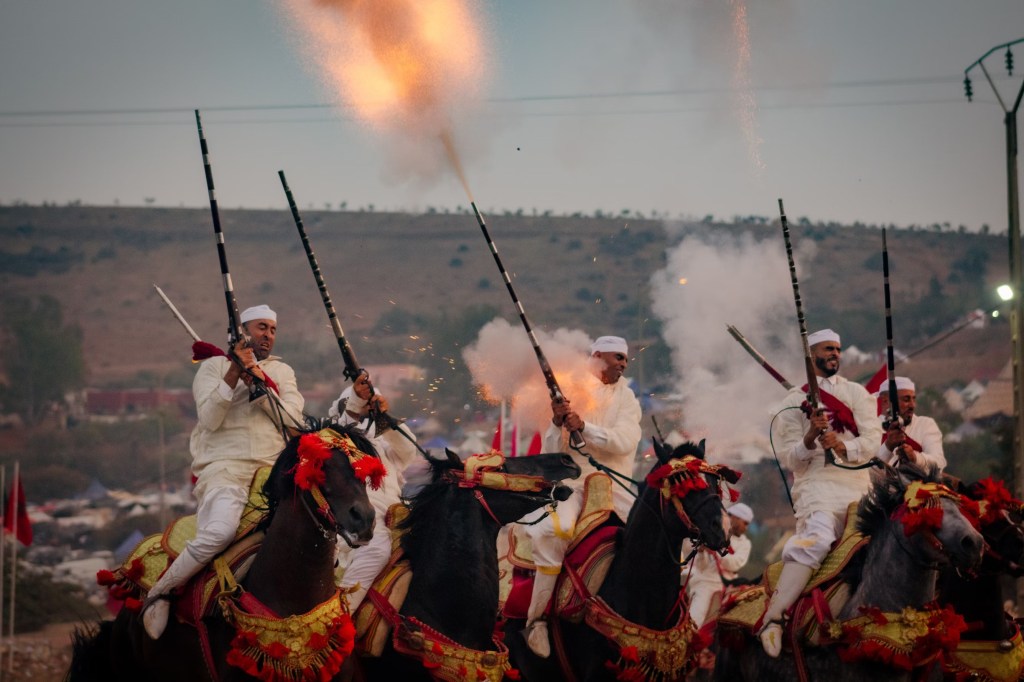
EGYPT
Iran’s president to make rare visit to Egypt for D-8 summit
Iranian President Masoud Pezeshkian will take part in a summit of big Muslim countries in Egypt on Thursday, Foreign Ministry spokesperson Esmaeil Baghaei said, the first visit by an Iranian president to Egypt in more than a decade. Egypt is hosting the summit of the D-8 Organization for Economic Cooperation, which also includes Bangladesh, Indonesia, Malaysia, Nigeria, Pakistan and Turkey. Relations between Egypt and Iran have generally been fraught in recent decades but the two countries have stepped up high-level diplomatic contacts since the eruption of the Gaza crisis last year as Egypt tried to play a mediating role. Iran’s Foreign Minister Abbas Araqchi travelled to Egypt in October to discuss regional issues with Egyptian officials, while his Egyptian counterpart Badr Abdelatty travelled to Tehran earlier in July to attend Pezeshkian’s inauguration. “We have the important summit… known as D-8 in Egypt, the foreign minister will take part in the ministerial conference and then the summit will be held with the participation of the president,” Baghaei said in a weekly televised news conference. Iran will discuss regional and bilateral affairs with the participating countries on the sidelines of the summit, Baghaei added. The D-8 was established in 1997 to improve cooperation between countries stretching from Southeast Asia to Africa.
LIBYA
UN announces initiative to overcome political deadlock in Libya
The U.N. deputy special envoy for Libya, Stephanie Koury, told the U.N. Security Council that as a first step, the U.N. political mission in Libya known as UNSMIL intends to establish an advisory committee, with a deadline to develop options to resolve outstanding electoral issues and a road map for holding an election. “The committee will be composed of experts and respected personalities, who are reflective of the spectrum of Libyan political forces, social, cultural and geographical components,” she said. Koury stressed that the committee isn’t “a dialogue group to take decisions,” but to generate options for follow-on action by Libyan decision-makers.
One of Libya’s main refineries shut down after fighting
One of Libya’s main refineries in the west has been shut down after clashes between local armed groups erupted early Sunday and caused fires on infrastructure, state oil company NOC said. Several tanks at the Zawiya refinery, a town 45 km west of Tripoli and the only one in western Libya that supplies the local market with fuel, caught fire, according to videos posted on social media, before being brought under control. Built in 1974, the Zawiya refinery, which is also a port terminal for importing and exporting fuels, is the largest in the country after that of Ras Lanouf (north), with a refining capacity exceeding 120,000 barrels per day…Zawiya, the third largest city in Tripolitania after Tripoli and Misrata, is the scene of violent and recurring fighting between armed groups.
Russia establishes an air bridge with Libya
Russia has established an air bridge with Libya, which passes through Turkey. Two Ilyushin-76TD aircraft belonging to the Ministry for Emergency Situations (which also frequently performs missions on behalf of the Ministry of Defense) are alternating flights between Russia and eastern Libya (specifically Al Khadim Air Base, located east of Benghazi). Libya’s Al-Hadim base said to be a key transit point for Russia, is used to move equipment and personnel to mines controlled by Wagner’s mercenaries in the Central African Republic. It is also used to export gold mined from these mines. It also serves as a hub for the “smuggling” of weapons into civil war-torn Sudan. This base also houses the premises where Russian soldiers are stationed. According to Western experts, about 2,000 Russian troops are stationed in Libya, where they are supporting General Haftar’s forces.
AFRICA-GENERAL NEWS

Gaming in Africa: a $10 billion market
The market value of Africa’s gaming industry by 2033 is expected to hit $10B after being projected to grow by a compound annual rate of nearly 20%. The estimate by research firm Astute Analytica is based on fast-growing access to smartphones and the internet, and the increasing number of African gamers. Nigeria and South Africa have the highest populations of gamers in Africa and are the major revenue centers for African gaming, Astute says. Both account for nearly a quarter of the $2.1 billion that is expected to be generated this year by the sector. Interest in free-to-play games, like PUBG Mobile and Free Fire, points to gaming enthusiasm on the continent. But, while gamers access these without charge, small transactions within apps drive earnings for developers — an appealing business model in Africa “where affordability is a key consideration for many consumers,” Astute’s report says.
 The Africa Edition ©️
Leave a comment