News That Matters To Africa©️
FRIDAY’S FOCUS EDITION
Good News Africa!
THE FRIDAY QUOTE
“These days we have 24 minutes of News and 24 hours of Information. We have lots of Information but not a lot of Facts”.
HIGHLIGHTS
Somaliland counts votes for new president
Senegal’s Sonko and Sall face off again
Pretoria seals off illegal miners inside a closed mine
Africa CDC welcomes Morocco PCR test for Mpox
Protesters at COP29 demand rich countries pay fair share.
TOP NEWS
Eastern Africa
Christoph Huber: Accused of DRC war crimes but living easy in South Africa
Kenya officials hit back, rubbish Catholic Bishops statement
Video: Bishops accuse State of human rights abuses
Meg Whitman: Why US envoy ruffled feathers in Kenya
Mauritius’ Ramgoolam sworn in as PM after election rout
Somaliland presidential election:
Vote counting underway in Somaliland after peaceful election
Somaliland counts votes after pivotal election
Somaliland holds vote as quest for recognition gathers pace
As Somaliland votes, its leaders spy international recognition
7 things about why polls in Somalia’s breakaway region matter
Voters in breakaway region choosing next president
UN calls for tangible evidence of progress toward democratic elections in South Sudan
South Sudan’s Kiir forms new delegation for Tumaini talks
Sudan war deaths likely much higher
Sudan extends opening of Adre crossing for aid delivery
Cyber attacks, the latest weapon in Sudan’s war on media
Egyptian diplomat rescued from kidnappers in Uganda
Ugandan Archbishop says Welby split global Anglican communion
West Africa
Russian power creeps across West Africa with Equatorial Guinea mission
Ghana’s anti-LGBTQ bill resubmitted to president
Guinean opposition and civil society call for junta’s departure by Jan. 1
Niger junta bans French aid group amid tensions with France
Niger embraces Russia for uranium production leaving France out in the cold
Millions of Nigerians go hungry as floods compound hardship
India’s Modi set to visit Nigeria
How Nigeria leather is sustaining Europe’s designer brands
Senegal heads to the polls amid fiscal crisis, threat of unrest
Former rivals Sonko and Sall face off again in parliamentary elections
EU won’t renew a much criticized fishing agreement with Senegal
Southern Africa
Why post-election violence in Mozambique is a concern for Southern Africa
South Africa FA President Danny Jordaan arrested
South African government says it won’t help 4,000 illegal miners inside a closed mine
Pretoria condemns Israeli minister’s call to annex West Bank
North Africa
Egypt could benefit from a Trump comeback
OpEd: The truth about Egypt’s entanglement in supporting Israel
AU, Rwanda, UNHCR to rescue refugees and asylum seekers suffering in Libya
Africa CDC endorses first locally made Mpox test from Morocco
AFRICA-GENERAL NEWS
GOOD NEWS AFRICA
EASTERN AFRICA
DR CONGO
Christoph Huber: Accused of DRC war crimes but living easy in South Africa
A Swiss businessman is alleged to have found significant business opportunities in the 1990s war that killed six million Congolese. A new investigation has tracked him down to the picturesque southern tip of Africa, where he has a South African ID number and owns four properties in the Western Cape province. Huber has been a person of interest for human rights advocates since the 1990s. Several groups including a United Nations panel of experts, Global Witness, United States law firm Amsterdam & Partners, Trial International and Open Society Justice Initiative (OSJI) have accused him of illicit exploitation of minerals in the east of the DRC. Six million Congolese people have been killed since 1996 in wars fuelled by the scramble for the country’s minerals. It is one of the oldest documented war crimes, but for decades no corporate actor has been tried for it despite well documented evidence that illicit trade in natural resources fuelled war in places like Angola, DRC, Iraq, East Timor, Myanmar and others. If Swiss authorities, who opened their own investigation in 2019, go on to indict Huber it would be the first trial of a corporate actor for pillage since the Nuremberg trials for Nazi crime in 1940s Germany. The Swiss attorney general’s office has not said whether or not Huber will be indicted and Huber, through his lawyer, denied any role in illicit mineral trading.
KENYA
“End the culture of lies, unkept promises and misplaced priorities”, Catholic Bishops tell Government
The Kenya Conference of Catholic Bishops (KCCB) has sharply criticised the government, accusing it of lacking integrity and failing to fulfill key promises, including payments owed to essential service providers. In a press briefing on Thursday, November 14, the bishops expressed deep concern over what they called a “culture of lies” that is eroding public trust and respect. “The culture of lies is swiftly replacing the integrity and respect Kenyans deserve. It seems truth no longer exists. Sadly, Kenyans have tolerated these lies from politicians. They must learn not to validate the falsehoods politicians tell them,” the bishops said. They also condemned what they described as rampant greed and unethical behavior among leaders. “We are troubled by politicians’ heightened insensitivity and irresponsibility in their duties, allowing themselves to be compromised in corrupt deals. The massive greed we’re witnessing is shocking and heartbreaking,” they stated. The clergy further voiced alarm over the rise in abductions, disappearances, torture, and killings, particularly noting a surge in femicide cases.
Govt officials hit back, rubbish Catholic Bishops statement
The government, through the Ministries of Health, Education and Inspector General of Police has slammed the statement by the Kenya Conference of Catholic Bishops, terming it as erroneous and misleading to the public.
Statements released by Cabinet Secretaries of Health, Deborah Mulongo, her Education counterpart, Migos Ogamba and IG Douglas Kanja have blamed the bishops for disregarding significant progress made by the government on issues related to the Social Health Authority, university education funding model, the CBC and investigations into extrajudicial killings and abductions in the country. CS Deborah dismissed claims by the KCCB of the Ministry’s unwillingness to settle debts owed to the faith-based hospitals accrued under the defunct National Health Insurance Fund (NHIF). According to Education CS Ogamba, the Church errored in its description of the two programs as ‘crumbling’ since the government had already made significant progress in the implementation of both programs by investing hugely in the same. IG Kanja consequently faulted the Church for underlooking the work by the security agencies regarding abductions, torture, killings, and increasing murder of women in the country.
Bishops accuse state of human rights abuses
Meg Whitman: Why US envoy ruffled feathers in Kenya
The resignation of US Ambassador to Kenya, Meg Whitman, has received mixed reactions in the East African nation. In a statement dated Wednesday, November 13, 68-year-old Whitman said: “Like all US ambassadors, I serve at the request of the president. The American people have spoken, and a new president will be inaugurated in January. I wish him and his new team success.” The ambassador’s exit comes after a number of Kenyans criticised her over what they described as Whitman’s “active involvement” in the country’s internal affairs. Some Kenyans often took to social media to suggest that the ambassador “backed and protected” the Kenyan government’s agenda, even when it was unpopular with the people. In August 2023, Kenya’s former Prime Minister Raila Odinga faulted Whitman after she said the country’s August 2022 general election was the “freest, fairest, and most credible.” Odinga, had disputed President William Ruto’s narrow victory, alleging the polls were “rigged.” In November 2023, Whitman told a Kenyan television station that she made a mistake for saying the August 2022 Kenyan polls were “freest and fairest.” But even as she exits, with mixed reviews about her tour of duty, Whitman says under her tenure, Kenya’s relations with the US grew “stronger.”
She also cites security, healthcare, trade, and investment as her success stories.
MAURITIUS
Ramgoolam sworn in as PM after election rout
Veteran Mauritian politician Navin Ramgoolam was sworn in as prime minister for his fourth term on Wednesday, a decade after he last left power, following his coalition’s dramatic triumph in a general election. His Alliance du Changement (ADC) coalition won a landslide 60 of the 62 national assembly seats with 62.6% of votes in Sunday’s ballot. Ramgoolam took the oath of office during a brief ceremony at State House, the official residence of President Prithvirajsing Roopun, in front of a selection of lawmakers, foreign diplomats and top civil servants. Afterwards the 77-year-old Ramgoolam, who previously served as prime minister from 1995 to 2000 and 2005 to 2014, told reporters that the country had voted with rage, and that he intended to transform it. “There is a communion between us and the people. We will work to lift the country from the hell,” he said.
SOMALILAND
Somaliland presidential election:
Vote counting underway in Somaliland after peaceful election
Polls have closed across Somaliland after presidential elections, and it appears Wed nesday’s voting across the breakaway region has gone smoothly.The Somaliland National Electoral Commission (NEC) said more than 1 million people were registered to vote across some 2,000 polling stations in Somalia’s breakaway region. Vote counting “…will start from polling centers level, then passes to district, and the regional before we announce the result,” said NEC Chairman Muse Hassan Yusuf. “We have successfully solved minor technical issues reported in some polling stations,” he said. He said the NEC would announce the result of the election by November 21. General Mohamed Adan Saqadhi, head of Somaliland Police Force, said throughout Somaliland the election was peaceful. “Thanks to Allah, the election took place democratically and peacefully. No incident was reported,” said Saqadhi. Three candidates, including incumbent President Muse Bihi Abdi, were on the ballot in Wednesday’s poll, and each of the three candidates promised to strengthen democracy, boost economic growth, and gain the international recognition Somaliland has sought for 33 years.
Somaliland counts votes after pivotal election
Election workers in Somaliland are counting ballots after Wednesday’s presidential election. The exercise is the fourth since the region broke away from Somalia three decades ago. The election commission said voting day had passed without incident. Incumbent Muse Bihi is seeking a second term. He was challenged by opposition leader Abdirahman Mohamed Abdullahi of the Waddani Party, and Faisal Ali Warabe of the smaller UCID party. Preliminary results are not expected until late Friday, with final tallies expected in a week’s time. The election was dominated by a deal granting Ethiopia access to 20 kilometers of the Gulf of Aden coastline in exchange for recognition. Somalia has called the agreement a violation of its overeignty and territorial integrity. Mogadishu has since sought the assistance of Egypt and Eritrea to counter Addis Ababa. Despite living autonomously for over thirty years, no single country recognises Somaliland’s independence. Its leaders are hoping that this election brings the region closer to international recognition.
Somaliland holds vote as quest for recognition gathers pace
Voters in Somalia’s breakaway region of Somaliland have gone to the polls to choose a president in a key election that was delayed for two years. More than 1 million people were expected to cast votes at more than 2,000 polling stations. Ballot counting was under way on Wednesday but results are not expected until next week. Eyeing a controversial deal with Ethiopia and Donald Trump’s upcoming presidency in the United States, candidates, Muse Bihi Abdi of the governing Kulmiye Party and Mohamed Abdullahi of the main opposition Waddani Party, have said they hope to finally deliver international recognition for Somaliland after more than three decades of de facto self-rule. Occupying a strategic position near the entryway to the Red Sea on the northwest point of Somalia, Somaliland unilaterally declared independence in 1991. It has been more stable and peaceful than the remainder of the country since. The self-proclaimed republic has its own money, passports, and army. However, it is not recognised by any country in the world, restricting access to international finance and the ability of its six million people to travel. Somaliland is also optimistic that the incoming Trump administration will revisit Washington’s longstanding recognition of Mogadishu’s sovereignty over Somaliland. Several leading US Department of State officials who worked on Africa policy during Trump’s first term have publicly voiced support for recognising Somaliland.
As Somaliland votes, its leaders spy international recognition
Voters in Somaliland flocked to the polls on Wednesday to choose a president at a time when the breakaway Somali region sees international recognition within reach after three decades of de facto self-rule. Somaliland, which occupies a strategic location at the juncture of the Indian Ocean and Red Sea, declared independence from the Mogadishu government in 1991. It has not been recognised by any country, restricting access to international finance and the ability of its six million people to travel. The Hargeisa government is hoping to soon finalise a preliminary deal signed in January with landlocked Ethiopia that would grant Addis Ababa a strip of land on the coast in exchange for diplomatic recognition. Hargeisa is also hopeful U.S. President-elect Donald Trump will be favourable to its cause. The presidential candidates differ on domestic issues, but both have expressed support for the pact with Ethiopia. Mohamed A. Mohamoud, Somaliland’s representative to Kenya, told reporters that the government would finalise the deal after the election, regardless of who wins. The agreement has soured Mogadishu’s relations with Addis Ababa
7 things about why polls in Somalia’s breakaway region matter
Somaliland, a de facto state in the Horn of Africa, began voting on Wednesday to choose its next president. Presidential elections in Somaliland will define the political landscape of the East African region as the region plays a key role in the power dynamics of both Somalia and Ethiopia. Local media showed voters waiting in line to cast their ballots, with many saying they want a stronger economy and more jobs, among other local priorities. The seven things to know why the polls matter: With this election, Somaliland hopes to forge an image for itself in the international community; its expected to bring an end to two years of political instability in the region; the main opposition Waddani Party campaigned on a platform of democratic reforms and social cohesion; Somaliland signed an MoU with Ethiopia for use of Berbera port and expects it to consider its sovereignty; the Berbera move angered Somalia, which threatened to support armed groups in Ethiopia if it did not cease its activities to recognise Somaliland; the country’s delayed elections raised concerns about stability and consistency of its electoral process; the region does not have direct access to global funding or humanitarian and development aid, as all such support must be routed through Mogadishu.
Voters in breakaway region choosing next president
Somaliland votes, continues its long quest for recognition
SOUTH SUDAN
UN calls for tangible evidence of progress toward democratic elections in South Sudan
The United Nations Mission in South Sudan has called for tangible evidence of progress toward democratic elections the country. Briefing the United Nations Security Council this week, special representative of the secretary-general and head of UNMISS, Nicholas Haysom, told government leaders “the clock on the extension is already ticking.” Since winning its independence in 2011, South Sudan is just beginning its fourth extension of the transitional period government, with elections now rescheduled for 2026.’
South Sudan’s Kiir forms new delegation for Tumaini talks
South Sudan’s President Salva Kiir Mayardit signed an official document on Wednesday [13 November] about creating a new delegation for peace talks with the holdout opposition groups in Kenya. Multiple government officials who preferred anonymity confirmed to Radio Tamazuj that the document was signed “to form a new delegation of the government to negotiate with the holdout group to sign a peace agreement.”
South Sudan factions to hold peace talks in Kenya
South Sudanese government representatives and holdout groups will begin a new round of peace talks in Nairobi on Thursday [14 November], sources said. The talks aim to bring factions that did not sign a 2018 peace agreement into the fold. Participants will include the National Salvation Front (NAS) led by Pagan Amum, the South Sudan United Front (SSUF) led by former army chief Paul Malong, and the Real Sudan People’s Liberation Movement (R-SPLM) led by Stephen Buay.
SUDAN
War deaths likely much higher: research
A new research has suggested that the death toll in Sudan war is much higher than what the official figures show. More than 61,000 people are estimated to have died in Khartoum state during the first 14 months of Sudan’s war, with evidence suggesting the toll from the devastating conflict is significantly higher than previously recorded, according to a new report by researchers in Britain and Sudan. The estimate includes some 26,000 people who suffered violent deaths, a higher figure than one currently used by the United Nations for the entire country. The preprint study by the London School of Hygiene and Tropical Medicine’s Sudan Research Group, released on Wednesday before peer review, suggested that starvation and disease are increasingly becoming the leading causes of death reported across Sudan. The estimated deaths from all causes in Khartoum state were at a rate 50% higher than the national average before the conflict between the army and paramilitary Rapid Support Forces erupted in April 2023, researchers said…counting the dead has been challenging. Even in peace time, many deaths are not registered in Sudan, researchers say. As fighting intensified, people were cut off from places that record deaths, including hospitals, morgues and cemeteries. Repeated disruptions to internet services and telecommunications left millions unable to contact the outside world.
Sudan extends opening of Adre crossing for aid delivery
The sovereign council said on Wednesday it would extend the use of the Adre border crossing with Chad, seen as essential by aid agencies for the delivery of food and other supplies to areas at risk of famine in the Darfur and Kordofan regions. Experts determined earlier this year that while more than 25 million people across the country face acute hunger, several parts of the country are at increased risk of famine, and that one camp in the Darfur region was already in its throes, the consequence of war between Sudan’s army and the paramilitary Rapid Support Forces. Adre, which was closed by an order from the army-controlled government in February, was re-opened for 3 months in August until November 15, and it had not been clear whether that period would be extended. Members of the government have protested against the opening, saying it allows for the RSF to deliver weapons. However, the Sudanese army is not in physical control of the border crossing which lies within territory seized last year by the RSF, which controls most of Darfur. The United Nations welcomed the decision to keep Adre open for another three months.
Cyber attacks, the latest weapon in Sudan’s war on media
The warring factions in Sudan are leveraging cyber attacks against independent media they cannot reach physically…According to the Sudanese Journalists’ Syndicate (SJS), the assault on independent media has intensified, with 445 journalists killed, detained, tortured, or suffering from destruction of their media facilities. As of November, 25 newspapers, more than seven television stations, and 12 radio stations have reportedly halted operations in Sudan. At Medameek, Editor-in-chief Montaser Abdelwahid described cyber attacks as a “distinct form of war aimed at obscuring the truth”. Both sides of the conflict, he said, use extensive propaganda to distort public opinion and cover up their actions. “This war is largely a media war driven by misinformation. They are killing the truth by obstructing reports on the horrific attacks taking place.
UGANDA
Egyptian diplomat rescued from kidnappers in Uganda
Security agencies in Uganda have rescued an Egyptian diplomat from kidnappers, police said late Wednesday, November 13. The Egyptian diplomat, Muhammad Ali Abdul Amidu, was kidnapped on November 8, Ugandan police said in a statement. “The kidnappers demanded a ransom of 40,000 U.S. dollars, threatening to kill him if their demands were not fulfilled,” the statement said. A combined force of the military and police tracked the assailants and intercepted them Wednesday in the central Ugandan district of Wakiso. “One of the kidnappers was put out of action (killed) during a confrontation with the rescue force,” the statement said, adding that the Egyptian diplomat was rescued unharmed.
Archbishop says Welby split global Anglican communion
The head of Uganda’s Anglican Church said on Wednesday Justin Welby, who has resigned as Archbishop of Canterbury, had split the global Anglican communion. Stepping down as the spiritual leader of Anglicans worldwide on Tuesday, Welby said he had failed to ensure a proper investigation into allegations of abuse by a volunteer at Christian summer camps decades ago.The Church of Uganda has long been at loggerheads with the Church of England on its stance on homosexuality, and said last year it no longer had confidence in Welby. The Church of Uganda stopped recognising Welby’s authority over his “inability to uphold the historic and Biblical teaching of the Church of England on marriage and family,” Ugandan Archbishop Stephen Kaziimba said in Wednesday’s statement. “Unfortunately, this is the same compromised leadership that has led to the fabric of the Anglican Communion being torn at its deepest level,” he said. Welby, who had spent years trying to prevent the global Anglican communion fracturing, had faced calls to quit after a report last week found he had taken insufficient action to stop one of the Church’s most prolific serial abusers.
WEST AFRICA
EQUATORIAL GUINEA
Russian power creeps across West Africa with Equatorial Guinea mission
Russia has deployed up to 200 military instructors to Equatorial Guinea in recent weeks to protect the presidency, sources told Reuters, showing Moscow is expanding its footprint in West Africa despite a recent defeat in Mali. The sources said the Russians were training elite guards in the two main cities of the tiny oil-exporting country of 1.7 million people, where U.S. energy firms invested billions of dollars in the first decade of the century before scaling down. The deployment fits into a wider pattern of waning Western influence and increasing Russian interventions in West and Central Africa, where Moscow has sent thousands of mercenaries to protect military regimes and help them fight insurgents. For Russia, the assignments are a way to make money from government fees and economic opportunities in mining or energy, while defying the West as part of a global geopolitical confrontation playing out most dramatically in Ukraine.
GHANA
Ghana’s anti-LGBTQ bill submitted to president
Ghana’s parliament has resubmitted an anti-LGBTQ bill to the president, defying an order to wait until the Supreme Court rules on its constitutionality.The bill proposes up to three years of imprisonment for individuals who identify as LGBTQ and five years for “promoting” LGBTQ activities. President Nana Akufo-Addo had previously declined to sign it into law amid protests by young Ghanaians and warnings by Ghana’s finance ministry that the country could lose $3.8 billion in World Bank funding over the next five to six years if the bill became law. But Trump’s presidential victory suggests that anticipated U.S. condemnation of the law may no longer be a problem.
GUINEA
Opposition and civil society call for junta’s departure by Jan. 1
A committee of Guinean opposition groups, civil society organisations and activists known as the Forces Vives called on Tuesday for the West African country to establish civilian rule by Jan. 1. The junta that seized power in a 2021 coup proposed a two-year transition to elections from 2022 after negotiating with the Economic Community of West African States regional bloc, but it has shown little sign of moving to organise a vote, stoking public frustration. The top bauxite producer has witnessed sporadic protests against the authorities and military leader Mamady Doumbouya since he took office. Some have led to deadly clashes with security forces. In July, Guinea’s transitional authorities presented the draft of a new constitution which would potentially allow Doumbouya to participate in the next presidential election. No date has yet been set for a promised referendum on the constitution, which they said would be a precursor to any election.
NIGER
Niger bans French aid group amid tensions with France
Niger has banned the French aid group Agency for Technical Cooperation and Development, or Acted, from working in the country amid tensions with France.
The Ministry of the Interior signed a decree on Tuesday withdrawing the nonprofit organization’s licence to operate, without providing reasons for the decision. Another aid group, Niger’s Action for Well-Being, or APBE, also saw its licence revoked. Acted had been active in the West African country since 2010, mainly helping people displaced by jihadist violence and natural disasters. Niger’s ruling military rulers took power in a coup last year, the latest of several military takeovers in Africa’s Sahel, the vast, arid expanse south of the Sahara Desert that has become a hotspot for extremist violence. Since the coup, the Sahelian country has pulled away from its Western partners, turning instead to Russia for security. The authorities expelled both the French soldiers fighting against jihadists in the country and the French ambassador.
Niger embraces Russia for uranium production leaving France out in the cold
On 8 November, Mining Minister Ousmane Abarchi announced that Niger is actively seeking to attract Russian investment in uranium and other natural resources. The move comes against the backdrop of a breakdown in relations with France, Niger’s former colonial power and a long-time partner in uranium mining…Tensions between France and Niger escalated after the junta’s decision to revoke Orano’s licence to operate at the Imouraren uranium mine in June of this year. This deposit is one of the largest in the world and has been a focal point of French investment over the years. Since its involvement began in the early 2000s, Orano has invested over €1 billion in developing the mine.
NIGERIA
Millions of Nigerians go hungry as floods compound hardship
Unrelenting price rises and a brutal insurgency had already made it hard for Nigerians in northeastern Borno State to feed their families. When a dam collapsed in September, flooding the state capital and surrounding farmland, many people ran out of options. Now they queue for handouts in camps for those displaced by fighting between extremist Boko Haram rebels and the military. When those run out, they seek work on local farms where they risk being killed or raped by local bandits…Torrential rains and floods in 29 of Nigeria’s 36 states this year have destroyed more than 1.5 million hectares of cropland, affecting more than nine million people, according to the Food and Agriculture Organization of the United Nations. Climate change is a factor, as is Nigeria’s poorly maintained or non-existent infrastructure as well as vulnerabilities caused by the weakening Naira currency and the scrapping of a government fuel subsidy.
India’s Modi set to visit Nigeria
India’s Prime Minister Narendra Modi will visit Nigeria this week, the first by an Indian leader since 2007. The two-day trip comes as the country seeks to deepen ties with Africa since welcoming the African Union last year as a permanent G20 member. But some critics say India’s attempt to champion its relationship with Africa has not lived up to expectations. “Far from displaying signs of a rapid take-off, ties between continent and country are bumpy, with considerable barriers preventing opportunities from being seized,” according to analysis in The Diplomat. Modi’s Nigeria visit is at the invitation of President Bola Tinubu, who has been seeking more foreign investment since assuming office last year. One of Tinubu’s first official presidential trips was to India during last year’s G20 Summit. Bilateral trade between India and Nigeria grew by nearly 70% between 2021 and 2022 to almost $15 billion.
How Nigeria leather is sustaining Europe’s designer brands
Nigerian leather, globally renowned for its quality, seeks to come into its own after spending decades under the shadow of European brands that import raw materials from the country and benefit disproportionately from the sale of finished products. Few are aware that branded “luxurious Italian leather” handbag has more Nigeria in it than Italy. Or, for that matter, that several famous Italian and Spanish brands source at least part of their leather from tanneries in northern Nigeria. Leather from Nigeria, especially red Sokoto goatskin, is acknowledged globally for its superior quality. Although Nigeria has fewer tanneries now than a decade ago, leather continues to be one of the drivers of employment and foreign exchange in Africa’s most populous nation. The Nigerian Export Promotion Council website states that 71% of leather exports from the country are to Italy and Spain. Premium goatskin leather mainly goes to Italy; Spain imports 21% of Nigeria’s goatskin leather and China sources around 4%. India takes the lion’s share of Nigerian sheep and lamb leather with 36%, followed by China with 22%. Even with raw materials like leather, a country tends to lose revenue as those processing these into finished products reap the highest benefit. This is why many African governments have been focusing on adding value to their commodities before shipping them abroad.
SENEGAL
Nation heads to the polls amid fiscal crisis, threat of unrest
Senegal will vote in legislative elections on Sunday that will determine whether the new president and government can gain control over the national assembly and push through their agenda for reforms. The high stakes in the election are threatening to spark renewed unrest following a period of calm. The run-up to the presidential election in March saw some of the worst violence in the country’s recent history. Campaigning has grown heated in recent days and comes at a precarious time for the new government, which is navigating a spiraling fiscal crisis that could undermine its ability to deliver on promises to boost the economy and create jobs. Prime Minister Ousmane Sonko, known for his fiery rhetoric, said this week that his supporters had come under attack and urged them to take revenge. He has also warned that restraint should not be mistaken for weakness. Top priorities for Senegalese voters are jobs and the economy, as inflation has squeezed livelihoods and the nation’s growing youth population struggle to find employment.
Former rivals Sonko and Sall face off again in parliamentary elections
In the upcoming parliamentary elections in Senegal scheduled for this weekend, former presidential rivals Prime Minister Ousmane Sonko and former President Macky Sall will face off once more – this time aiming to secure a majority in Parliament. This follows their competition in the March 2024 presidential election…President Bassirou Diomaye Faye dissolved Senegal’s parliament in September and announced legislative elections for 17 November, saying the opposition-controlled parliament hindered his ability to execute his government’s plans at that time…On election day, citizens vote directly for their chosen list and, upon counting the votes, the list that secures the most votes will garner all the seats in a district. The ruling Pastef party is led by President Faye and Prime Minister Ousmane Sonko.
EU won’t renew a much criticized fishing agreement
The European Union will not renew a fishing agreement with Senegal that has been criticized by many Senegalese, the EU delegation in the West African country announced Tuesday. The decision comes after the EU identified Senegal as a “non-cooperating country” in the fight against illegal fishing earlier this year, citing “failures in monitoring, control and surveillance systems” on Senegalese ships in extraterritorial waters as well as on foreign vessels in the port of Dakar, the capital…The current agreement signed in 2019 allows European vessels to fish in Senegalese waters but has been criticized in the country where fishing stocks have been depleting for more than a decade due to overfishing.
SOUTHERN AFRICA
MOZAMBIQUE
Why post-election violence is a concern for Southern Africa
A deepening political and social crisis in Mozambique will top the agenda of a regional summit this week called after the result of Oct. 9 elections led to weeks of violent protests and prompted the losing candidate to dispute the outcome. At least 30 people are reported to have died during the post-election violence which flared following the victory of the ruling Front for the Liberation of Mozambique (Frelimo) candidate Daniel Chapo. Venancio Mondlane, the independent candidate who came second with 20% of the national vote, has challenged the result and is calling for nationwide protests. International observers have cited irregularities in the election. The Southern African Development Community (SADC) is holding a summit from Nov. 16 to 20 in Harare to discuss the situation in Mozambique. Here’s why the issue is a concern for the wider region:
SOUTH AFRICA
FA President Danny Jordaan arrested
South African Football Association (SAFA) President Danny Jordaan, and his co-accused, SAFA chief financial officer Gronie Hluyo and businessman Trevor Neethling, were arrested on Wednesday over allegations they used the organisation’s money for their own purposes. Jordaan, 73, a leading figure in bringing the 2010 World Cup to South Africa, had tried to get a court to halt his imminent arrest on Tuesday. The case has been adjourned to Dec. 5. Jordaan, who was granted bail for 20,000 rand ($1,110), denies any wrongdoing. The arrest stems from a raid by police on the SAFA offices in March. A police spokesperson said at the time the allegations were that between 2014 and 2018 “the president of SAFA used the organisation’s resources for his personal gain, including hiring a private security company for his personal protection and a public relations company, without authorisation from the SAFA board”.
Government says it won’t help 4,000 illegal miners inside a closed mine
South Africa’s government says it will not help about 4,000 illegal miners inside a closed mine in the country’s North West province as part of an official policy against illegal mining. The miners in the mineshaft in Stilfontein are believed to be suffering from a lack of food, water and other basic necessities after police closed off the entrances used to transport their supplies underground. It is part of the police’s Vala Umgodi, or Close the Hole, operation, which includes cutting off miners’ supplies to force them to return to the surface and be arrested. In the last few weeks, over 1,000 miners have surfaced at various mines in North West province, with many reported to be weak, hungry and sickly after going for weeks without basic supplies. Illegal mining remains common in South Africa’s old gold-mining areas, with miners going into closed shafts to dig for any possible remaining deposits. The illegal miners are often from neighboring countries, and police say the illegal operations involve larger syndicates that employ the miners. Their presence in closed mines have also created problems with nearby communities, which complain that the illegal miners commit crimes ranging from robberies to rape.
Pretoria condemns Israeli minister’s call to annex West Bank
South Africa has condemned a statement by Israeli Finance Minister Bezalel Smotrich that 2025 will be the “year of annexation” of the occupied West Bank.The statement on Wednesday by the Department of International Relations and Cooperation came after Smotrich said he had ordered preparations for the annexation of settlements in the Israeli-occupied territory. The department emphasised the need for a decisive response by the international community against Israel’s settlement expansion in the Palestinian territories and its provocative policies. Israel’s public broadcaster KAN reported on Tuesday that Israeli Prime Minister Benjamin Netanyahu plans to reintroduce the annexation of the West Bank to the agenda of his government when US President-elect Donald Trump takes office in January.
NORTH AFRICA
EGYPT
Sisi could benefit from a Trump comeback
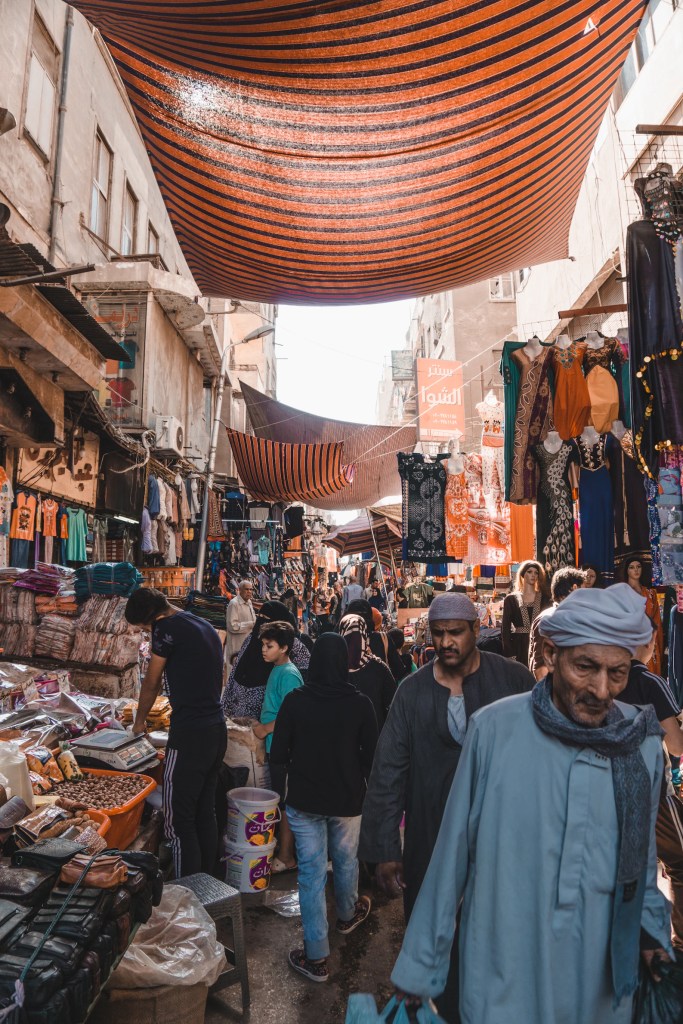
U.S. President-elect Donald Trump paid little attention to Africa in his first term, except for making disparaging comments. Nevertheless, there are clear African winners and losers now that he’s poised to return to the presidency. South Africa and Kenya are among those worried about potentially diminished relations—unlike Nigeria, Morocco, Uganda, and Egypt, which foresee increased trade and arms deals without what they see as lectures on human rights. Egyptian President Abdel Fattah al-Sisi was among the first world leaders to congratulate Trump on his victory even before The Associated Press called the election on the morning of Nov. 6. Cairo has faced scrutiny over attempts to influence U.S. politics. The U.S. government investigated allegations that Sisi offered Trump $10 million to boost his 2016 presidential campaign, according to a Washington Post investigation. Under Trump, Egypt can expect no such reprimands on human rights. By focusing on the Abraham Accords as a key driver of foreign policy in the region, Trump could inadvertently grant Egypt free rein to cement its role as a significant player in Horn of Africa geopolitics.
OpEd: The truth about Egypt’s entanglement in supporting Israel
LIBYA
AU, Rwanda, UNHCR to rescue refugees and asylum seekers suffering in Libya
The African Union (AU), the government of Rwanda, and the United Nations High Commissioner for Refugees (UNHCR) have launched a joint initiative to evacuate refugees and asylum seekers facing severe hardships in Libya. With 55,665 refugees and asylum-seekers registered with UNHCR in Libya, an estimated 4,700 are currently detained in overcrowded and unsafe conditions, in urgent need of relocation, protection, and assistance. This joint agreement builds upon an earlier offer by Rwandan President Paul Kagame in 2017 and a coordinated decision by the AU, European Union (EU), and United Nations (UN) to form a joint taskforce. The taskforce’s mission is to protect vulnerable refugees and migrants along migratory routes, with a focus on those stranded in Libya, where conditions have reached critical levels. This programme will see 500 refugees and asylum seekers, primarily from the Horn of Africa and including children and youth at risk, moved to Rwanda as part of its initial phase. Upon arrival, UNHCR will work to find sustainable solutions for these individuals. UNHCR may resettle some evacuees in third countries, while others may return to their previous asylum countries or their home countries if deemed safe. Rwanda has also offered the possibility for certain individuals to remain within its borders, subject to further authorisation.
MOROCCO
Africa CDC endorses first locally made Mpox test from Morocco
The CDC has recommended the first locally produced real-time PCR test for mpox from Morocco. The African Union’s health watchdog hailed it as a “major milestone” to help combat the outbreak on the continent. The announcement comes three months after the Africa Centres for Disease Control and Prevention (Africa CDC) declared the mpox outbreak a public health emergency. It said the test quickly detects pathogen DNA in blood, saliva or tissue, and that the CDC approval underscored its “reliability and efficacy”. “This major milestone is in line with the African Union’s continental effort to strengthen the self-sufficiency of African public health systems towards enhancing the continent’s efficiency in preparedness and response to disease threats.” Since the start of the year, authorities have recorded more than 50,00 mpox cases and around 1,100 deaths across Africa. Central Africa accounts for more than 85 percent of cases and almost all deaths. Mpox is caused by a virus transmitted to humans by infected animals but can also be passed from human to human through close physical contact.
AFRICA-GENERAL NEWS

Protesters at COP29 demand rich countries pay fair share in climate finance
Demonstrators gathered at the entrance of the COP29 venue this morning, urging wealthy nations to uphold their financial commitments for climate change adaptation and mitigation in the Global South. As COP29 negotiations continue, activists emphasize the need for fair and just climate finance that addresses historical emissions and avoids deepening debt for developing nations. Teresa Anderson, representing ActionAid International, highlighted the severe financial and environmental burden on the Global South, which is disproportionately affected by climate-induced disasters. Her powerful message resonated with the urgency of climate finance reform, stating, “It’s the global South that are paying for the floods… for the droughts… rising sea levels… and they’re trying to adapt to future impacts. On top of that, they’re somehow supposed to pay to mitigate and adopt green technologies, but they can’t because they’re drowning in debt.” The demonstrators argue that rich countries—responsible for the bulk of historical greenhouse gas (GHG) emissions—must do more than offer loans or private investments disguised as climate finance.
Three African countries are fuelling Israel’s war
Some 37% of Israel’s crude oil is supplied by just three African states, according to new research by Oil Change International. Gabon provides 22% of Israel’s crude supplies, followed by Nigeria (9%) and the Republic of Congo (6%). These crude oil exports have continued even after International Court of Justice found in January that South Africa’s case against Israel, if proven, could result in a ruling that Israel is committing genocide against Palestinians in Gaza. Israeli forces have killed more than 40,000 people in Gaza since the war began in October 2023, following the Hamas attack on Israel that killed over 1,200 people. According to a legal opinion by Irene Pietropaoli, a senior fellow at the British Institute of International and Comparative Law, fuel is essential to the activities of the Israeli armed forces, and states and firms that supply it “make an essential contribution to violations of international humanitarian law and genocidal acts against the Palestinians in Gaza.” This research highlights a crucial disconnect between political rhetoric and economic action. In March, for example, Nigeria’s foreign minister, Yusuf Tuggar, said: “There is no justification for the carnage that is going on in Gaza. It has to stop.” Yet Nigerian crude oil continues to flow into Israel, potentially powering the tanks and armoured personnel carriers that make the carnage possible.
How Wall Street fleeces African countries coming and going
Life in Kédougou in Senegal is a paradox: poverty in the land of gold. Of the 17 tonnes of gold Senegal exported last year, more than half (9.13 tonnes) came from Kédougou’s Sabodala mine. Yet, in the same area, one barely gets the most basic of services. The United Kingdom-based company which bought Sabodala mine in 2021, Endeavour Mining, has earned at least $598-million from it since. In its latest financial statements, Endeavour Mining values the Senegalese mine as an asset worth more than $2.5-billion. Its other assets are mines in Côte d’Ivoire, Burkina Faso and Mali, which it values at nearly $3-billion. Endeavour Mining keeps 90% of the profits from its Senegalese operations – sharing them with its shareholders, of course. The Senegalese government takes the remaining 10%. Inequitable resource extraction deals are one reason why Senegal struggles to raise enough revenue to run the country. When its coffers run dry, the government is driven to borrow from the international money markets. In a bitter irony, it often turns to the very same firms that are taking the lion’s share of the revenue from the Senegalese gold mining industry. 40% of the shares in Endeavour Mining are owned by 17 investment firms that are also trading in Senegal’s sovereign bonds. The Senegalese government owes them more than $271-million. When Senegal pays annual interests on those bonds – up to 7.75% depending on the bond note – the firms that are already taking much of the money from Senegalese gold, earn from the country being cash-strapped. This dynamic – lining pockets to borrow from them – repeats itself in many countries. African states have issued dozens of international bonds, borrowing at least $84-billion from global investment firms like BlackRock, Fidelity, HSBC, Schwab, etc. These firms also often own millions’ worth of shares in the multinational companies extracting local resources.
Combat drones are changing how war is waged in Africa
Nearly 740 drone strikes have been conducted on African soil since the very first one that the US military conducted in Libya 13 years ago. Driven by fighting in Sudan, drone warfare on the continent has escalated dramatically in the past two years. It was the United States of America that laid the template for drone strikes on the African continent – and then spent more than a decade perfecting it, civilian casualties be damned. The very first drone attack on the African continent was carried out by a US Predator drone in April 2011, operating in the skies above Misrata, in western Libya. Two months later, the strikes started happening in Somalia. Since 2011, there have been more than two hundred attacks by US drones on Africa soil. In recent years, military drones have become cheaper and more accessible – mass-produced in Türkiye, China and Iran. Access to drones is what gave the Ethiopian government the upper hand against Tigrayan rebels in 2022. Today, drones – allegedly supplied by the United Arab Emirates – are giving the Rapid Support Forces, a paramilitary group, the edge in Sudan’s civil war.
Demystifying external actor influence in Africa’s technology sector
Africa’s reliance on foreign suppliers for the continent’s technology infrastructure is widely seen as a major cybersecurity vulnerability…Because information and communications-based infrastructure increasingly underpins everyday life, opportunities for exploitation are likely to increase…Cyberattacks, linked either directly or indirectly to external state actors, have had major impacts on the finance, public services, and port infrastructure sectors of various African countries in recent years. At the same time, externally supplied information and communications technologies make indispensable contributions to Africa’s technological development and the well-being of millions of Africans. Foreign suppliers will remain influential actors in tech spaces for the foreseeable future. The challenge for African countries, then, is how best to reap the benefits from externally supplied technology while safeguarding Africa’s critical infrastructure.
OpEd: Trump’s return is Africa’s signal to move on
A second Trump presidency is not necessarily a boon for the continent. It also does not necessarily spell more disaster either. US policy towards the African continent will probably not change…Trump’s win will be far more consequential for the US than for the world.
Analysis: Unconventional Trump brings openings and perils for Africa
Trump is unlikely to change his dislike of patient, principled diplomacy as a means to peace and his preference for transactional politics and populist gestures. This brings openings and perils in some areas in Africa.
FilmReview: Coups, colonialism and all that jazz: the film that unravels extraordinary cold war truths
Johan Grimonprez’s documentary Soundtrack to a Coup D’Etat reveals the curious link between Black Americans’ fight for civil rights and the assassination of Congo’s first democratically elected Black African prime minister. Half-way through Soundtrack to a Coup D’Etat, John Coltrane and Duke Ellington’s soulful version of In a Sentimental Mood is interrupted. Suddenly, we see and hear Malcolm X giving a speech at New York’s Harlem Square in 1960. It’s like being shaken from a delicious reverie and thrown into the ice bath of reality. “You’ll never get Mississippi straightened out,” Malcolm X snaps at the Harlem crowds, “until you start realising the connection with the Congo.” Early on, his film quotes political philosopher Frantz Fanon: “Africa is shaped like a gun, and the Congo is its trigger.” Described thus, the Congo doesn’t sound a peaceful place. “It isn’t,” says Grimonprez. “The Congo was long raped and plundered for its raw materials. It still is. You wouldn’t have your Teslas or your iPhones without raw material from the Congo.
Film Review: A ride through Paris – and life – with Souleymane
A beautifully humanising film takes us into the frantic, undocumented life of a delivery rider. A grey and underground economy has grown alongside the multibillion-euro food delivery industry in France. Registered couriers play the system by “renting” their verified accounts to those most desperate to make ends meet: typically undocumented migrants and asylum-seekers willing to work long hours for low pay under all weather conditions. L’Histoire de Souleymane (Souleymane’s Story), is a dive into the hectic life of those invisible workers. French director Boris Lojkine’s newest feature follows Souleymane Sangare, an undocumented Guinean immigrant played by first-time actor Abou Sangare, whose asylum hearing is imminent. Hectic is an understatement.
GOOD NEWS AFRICA
Africans at the cutting edge of interior design
Frozen for the future: Global seed bank receives historic deposit
The people making the case for tourists to visit Africa
How West Africa is fighting disinformation
Algeria
Algeria Invests $1 Billion in New Rail Coaches to Boost National Connectivity
Angola
Challenging albinism discrimination in Angola
Benin
Benin embraces creative partnership
Burkina Faso
Theater festival offers solace in Burkina Faso, a nation torn by violence
DR Congo
Bukavu music festival dedicated to peace in eastern DRC
Women use DRC’s cobalt mining boom to create green jobs
Egypt
Egypt shows Nigeria what it takes to shed malaria’s deadly burden
Omar Marmoush: The Bundesliga – and Egypt’s – next big star
Ethiopia
Ethiopian students find success despite years of hardship
Ghana
Ghana street art festival lights up Volta region
Kenya
Why people with disabilities in Nairobi are looking beyond public transport to navigate busy city
In Kenya, car wash, a symbol of wealth
Initiative in Nairobi’s Mukuru slums uses fly lavae to tackle food waste
Plastic-eating insect discovered in Kenya
Madagascar
Crash course in politics aims to get more women running for office
Morocco
Over 14.6m tourists visited Morocco in 10 months
Nigeria
Want status in Nigeria? An informal iPhone market offers dreams and despair
South Africa
South Africa’s Tyla wins big at MTV EMAs
How the Protea became a symbol for South Africa
The world’s oldest termite colony holds secrets – to the past and future
South Africa’s Sipho ‘Hotstix’ Mabuse on art’s role in resistance
Uganda
Girls in rural Uganda turn to organic solutions to handle period pain
Amina Tayona: Female kayaker and adrenaline junkie
 The Africa Edition ©️
Leave a comment