News That Matters To Africa©️
QUOTE OF THE DAY
“It is simply out of ignorance that a goat attends…a leopard’s party”
HIGHLIGHTS
Mauritius Opposition wins country’s election by a landslide
Ghana’s opposition leader tipped to win
30 die in Mozambique election protests; Protests in Morocco againt docking ship carrying arms to Israel
17 Chadian soldiers and 96 rebels killed in a Boko Haram attack
Huge drop in African elephants in a half century.
TOP NEWS
Eastern Africa
How children have become ‘cannon fodder’ in DRC’s endless conflict
OpEd: Fears of a constitutional coup in DRC
OpEd: AU should not be a silent spectator to brewing genocide in Eastern Congo
DRC on a mission to financing the world’s largest hydropower dam
UN conducts fourth review of Ethiopia’s human rights record
Rising transport costs, inflation leave Addis Abeba’s low-income earners on edge
How Gen Z protesters were abducted, extorted by armed hooded men
Kenya races to transition its Haiti force as Trump White House looms
Kenya’s Raila Odinga launches candidature for AU’s top job
Civil society’s court challenges Govt/Private deals
Kenya’s top judge: No-one has ever tried to bribe me
Mauritius Opposition wins country’s election by a landslide
Mauritius’ PM warned he was heading for election defeat by 3 former PMs
The Somaliland Elections 2024:
Somaliland prepares for presidential polls amid regional tension
How Somaliland elections impact regional power dynamics
Somaliland’s crucial 2024 elections: Clan politics meets party system
Video: Somaliland goes to the polls on Wednesday, officials pledge to hold free & fair poll
UN Security Council considers action on Sudan war
Dozens raped in Sudan’s Al Jazirah
Ugandans detained for insulting President Museveni and family on TikTok
West Africa
Equatorial Guinea: Sex scandal sparks debate on consent
Ghana opposition leader tipped to win presidential vote
Gold, prices, and jobs: What’s at stake in Ghana’s elections?
Mali detains top executive and 2 others from an Australian gold mining company over dispute
Niger rebels fighting for ousted president’s release hand over weapons
Nigerian military, Reuters at odds over reports on alleged mass abortion program
Who are the Lakurawa insurgent group threatening Nigeria?
Nigeria signs $1.2 billion deal to revamp gas plant for aluminium smelter
UK’s new Conservative leader leaves British-Nigerians divided
OpEd: A Country and Its Diaspora
Campaigning heats up in Senegal ahead of snap legislative elections
Southern Africa
Botswana President Boko’s tumultuous journey
Inside the Botswana President’s office
How a beauty queen strode into Botswana cabinet
30 die in Mozambique election protests
Gaddafi gave ANC ‘substantial’ donation for 2009 election campaign
South Africa owes $5 billion in electricity debt, water shortage looms
South Africa’s book publishing grows
North Africa
Protests in Morocco as ship suspected of carrying arms to Israel docks
Moroccan court sentences journalist to 18 months in jail for defamation
Central Africa
Central Africa Republic seeks lifting of embargo on its diamonds
17 Chadian soldiers and 96 rebels killed in a Boko Haram attack
How floods have turned lives in Chad upside down
AFRICA-GENERAL NEWS
THE WEEK AHEAD
FOR YOUR CONSIDERATION
EASTERN AFRICA
DR CONGO
How children have become ‘cannon fodder’ in DRC’s endless conflict
Armed groups have plagued North Kivu for decades, a holdover from regional wars that played out in eastern DRC during the 1990s and early 2000s. Militias during the period were notorious for recruiting child soldiers, known as kadogos, or “little ones” in Swahili. The practice never went away, but experts say it has surged since the outbreak of the M23 conflict in late 2021…According to estimates by the UN children’s agency Unicef, 30% of the members of Congolese armed groups are children…The Guardian interviewed 14 children – three girls, and 11 boys – who had recently escaped armed groups, in one displacement camp in Goma. Most say that desertion is the only way to leave, with some describing being shot at as they fled.
OpEd: Fears of a constitutional coup in DRC
Attempts to change the constitution of the Democratic Republic of Congo only exacerbate existing citizen distrust in government.
OpEd: AU should not be a silent spectator to brewing genocide in Eastern Congo
DRC on a mission to financing the world’s largest hydropower dam
The World Bank and other financial institutions are engaged in discussions about funding a mega hydro-power project in the Democratic Republic of Congo that has the potential of supplying electricity across the entire African continent. The Grand Inga Dam is capable of producing 44,000 Megawatts of power and is estimated to cost 80 billion US dollars. The raging waters of the Congo River are raising hopes of ending the energy shortages in the Democratic Republic of Congo. The government plans to construct 6 hydropower stations near a waterfall in western DRC to add to the two that are already operational. The Grand Inga Dam will be the world’s largest hydropower dam once its completed.
ETHIOPIA
UN conducts fourth review of Ethiopia’s human rights record
Ethiopia’s human rights record is under review, amid mounting concerns, by the United Nations Human Rights Council’s Universal Periodic Review (UPR) Working Group, marking the fourth assessment of the country’s human rights practices.
Ethiopia’s review is part of the UPR Working Group’s ongoing session from 4 to 15 November, during which the human rights records of 14 countries are scheduled for evaluation. The review documents include a national report from Ethiopia, input from UN special procedures and human rights bodies, and contributions from other stakeholders, including civil society and regional organizations. The review of Ethiopia’s human rights record takes place amid mounting concerns from rights organizations, including Amnesty International, Human Rights Watch (HRW), and the Ethiopian Human Rights Commission (EHRC). These organizations have reported several human rights abuses and expressed serious concerns over the ongoing humanitarian crisis in Ethiopia, particularly in conflict zones such as the Amhara and Oromia regions, among others.
Rising transport costs, inflation leave Addis Abeba’s low-income earners on edge
Increases in fuel prices and public transportation fees have affected a significant portion of society, particularly those with low and fixed incomes. In Sepember, the government implemented another substantial fuel price hike, increasing retail prices by up to eight birr per liter. Consequently, the price of gasoline has increased to 91 birr per liter, while diesel prices have risen to 90 birr per liter. In response to the recent fuel price increase, the Addis Abeba Transport Bureau has revised service fares for minibus taxis, midibuses, and city buses operating within the capital. In addition to the recent tariff increases, residents of the capital have expressed concerns that many transportation providers are overcharging passengers, surpassing the newly adjusted fares. According to these individuals this practice has significantly disrupted their daily lives and placed an additional burden on them amidst the rising cost of living…“Both my wife and I are employed, but when we receive our monthly salary, we struggle to cover our daily expenses and are only able to make ends meet from month to month,” explained the father of two. “I can scarcely afford to eat once a day; our life has become progressively more challenging.”
KENYA
How Gen Z protesters were abducted, extorted by armed hooded men
They arrived in unmarked cars with faces concealed behind masks. In broad daylight, without a word, they would snatch young Kenyans off the streets, from their estates or homes, and vanish with them. What followed were hours of terror, confusion, and desperate pleas for survival. These individuals were not criminals or rebels hiding in Nairobi’s dark alleys — they were ordinary citizens, mostly Gen Z protesters, expressing dissent against the government. But behind the thin veneer of the alleged law enforcement, a darker, more sinister operation was unfolding — one that preyed not only on the bodies but also on the wallets of these individuals. Between September and October, we interviewed 32 victims of extrajudicial abductions and forced arrests, alongside three police officers, who revealed horrifying experiences within the force. Chilling accounts have emerged of how rogue officers from specialised units, including the Directorate of Criminal Investigations (DCI) and the National Intelligence Service (NIS), have turned abduction into a profitable racket, using the law as a tool for extortion rather than justice. Victims, aged between 24 and 27, both men and women, recounted harrowing experiences of being abducted in unmarked vehicles, held incommunicado, and coerced into paying bribes for their release. Some reappeared days later, tortured and traumatised, with stories of terrifying ordeals. Others were found dead, strangled, or riddled with gunshot wounds.
Ruto races to transition its Haiti force as Trump White House looms
President William Ruto is pushing for the transition of the Kenya-led security mission in Haiti to a UN peacekeeping operation, amid mounting concerns about its effectiveness, funding and future. The proposed transition featured in US Secretary of State Anthony Blinken’s phone call with Ruto last week. Ruto said the move was meant to “enhance the capability of the mission to help stabilize Haiti.” The UN-backed multinational security mission was meant to help quell the gang violence in the island nation, but its impact has so far been limited. UN special representative Maria Isabel Salvador told the UN Security Council in October that the situation in Haiti had “regrettably worsened” since July, with new peaks of “acute violence.” A first contingent of 430 Kenyan police officers was deployed in June, with the number expected to rise to 2500 including more officers from Kenya and other countries. Salvador said the mission remains “critically under-resourced”, lacking adequate equipment and manpower. In his statement following the phone call with Ruto, Blinken only revealed that he thanked Kenya for leading the mission, without discussing the proposed transition. With the US having footed much of the bill for the Kenya-led mission so far, the future of its funding also appears unclear following the election of Donald Trump and Republican control of Congress when they take office in January. Republican lawmakers had previously stalled approvals for the mission’s funding.
Raila Odinga launches candidature for AU’s top job
Veteran Kenyan politician Raila Odinga has stood for president five times and failed to win. Now, the 79-year-old opposition leader and former prime minister has turned his sights on the top job at the African Union. He faces three strong competitors, from Djibouti, Mauritius, and Madagascar, in his bid to be elected Chairperson of the Commission. The vote for a successor to Chad’s Moussa Faki Mahamat is due to take place by secret ballot at the AU summit in February. Odinga has, however, won what some may see as a surprising supporter. Incumbent Kenyan President William Ruto, who narrowly defeated Odinga in the 2022 election, has backed his rival’s campaign. On Friday, Kenya formally launched Odinga’s candidature, presenting him as the “complete package” needed to tackle Africa’s conflicts and economy. Ruto is banking on Odinga to push through Nairobi’s proposed reforms to make AU institutions more accountable, efficient, and effective. Officially launching his campaign last week, Odinga highlighted his priorities for the organisation if elected. These include a focus on economic development, enhancing intra-African trade, and tackling climate change, with particular attention to large-scale continental infrastructure projects.’
Civil society’s court challenges Govt/Private deals
The government is likely to suffer a setback in its quest to engage private investors to help it develop key infrastructural areas after the Katiba Institute challenged the Private Public Partnership Act of 2021 in court. According to Court documents filed by Katiba Institute, the Public Private Partnership Act is unconstitutional as it omits parliament’s oversight and approval processes. Katiba Institute, in its petition, wants the Judiciary to issue an injunction barring the government from continuing to engage with private companies to push for its key infrastructural ideas.The lobby argues that the Act undermines the constitutional framework for checks and balances thus leaving room for opaqueness. ”PPPs are an aspect of public expenditure that Parliament has the constitutional authority to approve and oversee. Therefore, the PPP law is unconstitutional because it excludes Parliament from the approval and oversight of PPPs,’’ Katiba Institute argued.
Kenya’s top judge: No-one has ever tried to bribe me
Kenya’s most senior judge has hit out following recent allegations of corruption and incompetence within the judiciary. “In all these 22 years I’ve been a judge and a chief justice, nobody has ever approached me with a bribe. I would have them arrested,” said Martha Koome. The country’s first female chief justice has recently been accused of failing to properly investigate and tackle allegations of bribery and corruption within the judiciary. Some Kenyans have been referring to “jurispesa” – a corruption of the legal term jurisprudence and pesa (the Swahili word for money) – implying there is corruption in the judiciary. Kenya’s judiciary has long been marred by claims of corruption and in 2021 Justice Koome agreed that corruption was “a national embarrassment in and out of the judiciary. She said that some of the criticism she faced was because of her gender. “It is total misogyny. It is total chauvinism.”
MAURITIUS
The opposition wins country’s election by a landslide
Mauritius’ opposition coalition has won the country’s election by a landslide, taking all seats in the country’s parliament in a major rejection of the current government. According to results released at various constituencies across the country throughout Monday, the governing coalition led by Prime Minister Pravind Jugnauth failed to get any of the 62 seats available for voters to directly decide on. Jagnauth conceded defeat before all results were announced, saying his Militant Socialist Movement coalition was headed for a huge defeat as it became clear that the opposition was winning in all of the country’s 21 constituencies. The Alliance for Change coalition’s win will see the return of Navin Ramgoolam as the country’s prime minister. He served as prime minister from 1995 to 2000 and again from 2005 to 2014. Jugnauth, in office since 2017, had been seeking another five-year term in the Indian Ocean island nation, but his government faced corruption allegations after recordings of politicians and business people were leaked online. “The population has decided to choose another team. I wish good luck to the country,” Jugnauth said on Monday.
PM said he’s heading for election defeat by 3 former PMs
Mauritius’ incumbent Prime Minister Pravind Jugnauth said on Monday his political alliance was headed for a major defeat to a rival coalition led by a three-time former premier following Sunday’s parliamentary elections. Jugnauth said the Alliance du Changement headed by 77-year-old veteran politician Vin Ramagoolam was poised to win the vote on the Indian Ocean archipelago of about 1.3 million people. Jugnauth became prime minister in 2017, when his father stepped down from the post, and won the election five years ago despite opposition complaints that it had been obtained through bribery and undue influence. Ramgoolam, son of the man who led Mauritius to independence in 1968, was prime minister from 1995 to 2000 and won office again in 2005 and 2010.
SOMALILAND
Elections 2024:
Somaliland prepares for presidential polls amid regional tension
According to the Somaliland National Electoral Commission, more than 1 million registered and eligible voters head to the polls Wednesday to elect their president for the next five years. Three candidates, including incumbent President Muse Bihi Abdi, seek to consolidate the region’s fragile democracy, boost economic growth and gain international recognition that the Somali enclave has struggled to secure for 33 years. Abdi, of the ruling Peace, Unity and Development Party, also known simply as Kulmiye, seeks a second term in Wednesday’s polls. He is running against Abdirahman Mohamed Abdullahi, known as “Irro,” of the Waddani party and Faisal Ali Warabe of the Justice and Development Party, or UCID. Abdi, 76, who was elected in 2017, has pledged there will be progress on a controversial maritime deal that Ethiopia signed with Somaliland earlier this year. This is the fourth presidential election since the region on the northwestern tip of Somalia broke away from the rest of the country, following the collapse of the Siad Barre regime in 1991. The territory declared independence that year but has never achieved international recognition. Despite this, Somaliland has a functioning government and institutions, a political system that has allowed democratic transfers of power between rival parties, its own currency, passport and armed forces.
How Somaliland elections impact regional power dynamics
Somaliland is holding its 4th presidential election on Wednesday. Under international law, Somaliland belongs within Somalia. However, in 1991, the region at the northwestern tip of Somalia unilaterally declared its independence even though its claims of sovereignty have remained unrecognized by the international community. In January, Somaliland’s leader, Muse Bihi Abdi, signed a Memorandum of Understanding (MoU) with Ethiopian Prime Minister Abiy Ahmed. Under the deal, Ethiopia would lease land from Somaliland to build a naval base, while Ethiopia would use the Berbera port for international trade… In Somaliland, practically all presidential candidates are playing this (MOU) card — above all, the incumbent President Muse Bihi Abdi himself. Abdi’s opponents, Abdirahman Mohamed Abdullahi (known as “Ciro” or “Irro”) from the Somaliland National Party (Waddani) and Faysal Ali Warabe from the Justice and Welfare Party (UCID), have not criticized the agreement. He (Abdi) is also accused of authoritarian rule, which has led to divisions between the powerful clans. “One of the most pressing problems is certainly the relationship between the clans, especially the conflict in Las Anod, which is about the secession of an area,” said Dr. Gerrit Kurtz from the International and Security Affairs (SWP), a Berlin-based think tank, referring to Las Anod in northern and eastern Somaliland. It is the capital of the Sool region, which is claimed by both Somaliland and the autonomous Somali states of Puntland and Khatumo. There has been repeated violent unrest in Las Anod in recent years. Somaliland lost control of Sool in 2023 after months of clashes with pro-Somalia forces.
Somaliland’s crucial 2024 elections: Clan politics meets party system
Somaliland prepares for a pivotal moment in its history as the November 13, 2024, elections approach. The self-declared state will hold simultaneous presidential and political party elections. These polls will test Somaliland’s democratic credentials and its quest for international recognition. President Muse Bihi Abdi seeks a second 5-year term amid political tensions. Somaliland has held three previous presidential elections by universal suffrage since 1991. These polls have resulted in peaceful power transitions between parties. This track record has set Somaliland apart in the volatile Horn of Africa region. However, recent years have seen challenges to Somaliland’s stability. The National Electoral Commission (NEC) chairman, Musa Hassan Yusuf, has urged high voter turnout and peaceful participation. Somaliland’s agreement with Ethiopia for port access has added complexity to the election. This deal promises economic benefits but has angered Somalia, which still claims sovereignty over Somaliland. The next president will need to navigate these delicate regional dynamics.
Somaliland goes to the polls on Wednesday, officials pledge to hold free & fair poll
Trump and Somaliland
One possible winner if Trump returns to the White House might be Somaliland, the unrecognized country in the northwest of Somalia. The de facto state has many supporters on the political right in the US and might be able to move forward with its attempts to become a fully recognized state. On Nov. 13 it will hold its fifth presidential election since 1997, even as Somalia struggles to find political stability. “Somalia will be concerned” if Trump wins, said Hudson’s Merservey. Nagy says there will be “more sympathy for places like Somaliland” in a Republican administration. “Somaliland stands on its own feet, It’s very pro-West, very free market oriented and it takes care of the security of its own territory and it holds regular elections.”
SUDAN
UN Security Council considers action on Sudan war
The United Nations Security Council is discussing a British-drafted resolution that demands Sudan’s warring parties cease hostilities and calls on them to allow safe, rapid and unhindered deliveries of aid across front lines and borders.War erupted in April 2023 from a power struggle between the Sudanese army and the paramilitary Rapid Support Forces ahead of a planned transition to civilian rule, and triggered the world’s largest displacement crisis. It has produced waves of ethnically driven violence blamed largely on the RSF. The RSF has denied harming civilians in Sudan and attributed the activity to rogue actors. In the first U.N. sanctions imposed during the current conflict, a Security Council committee designated two RSF generals last week… The Security Council has adopted two previous resolutions on Sudan: in March it called for an immediate cessation of hostilities for the holy month of Ramadan, then in June it specifically demanded a halt to a siege of a city of 1.8 million people in Sudan’s North Darfur region by the RSF. Both resolutions – adopted with 14 votes in favor and a Russian abstention – also called for full, rapid, safe and unhindered humanitarian access.
Dozens raped in Sudan’s Al Jazirah
At least 71 cases of rape, including attacks on minors, have been reported in villages in Sudan’s eastern Al Jazirah state, a source with the Al Jazirah Conference group told Sudan Tribune on Monday. A 5-year-old girl died after being raped following recent attacks on the area by the paramilitary Rapid Support Forces (RSF), the source said, adding that the figure likely represents only a fraction of the actual number of assaults. The source accused the RSF of detaining dozens of women in one village after expelling its residents and said RSF fighters had kidnapped a number of women and taken them to unknown locations.
UGANDA
2 Ugandans detained for insulting President Museveni and family on TikTok
Two Ugandan men have been detained for allegedly insulting President Yoweri Museveni, First Lady Janet Museveni, and the president’s son, General Muhoozi Kainerugaba, on TikTok. David Ssengozi, also known as Lucky Choice (21), and Isaiah Ssekagiri (28) appeared before Magistrate Stella Maris Amabilis, who ordered their detention at Kigo Prison until November 13 for an initial court hearing. The two men, along with a third defendant, Julius Tayebwa (19), face charges of hate speech and spreading “malicious information” against the president’s family and musicians associated with the ruling National Resistance Movement (NRM). Prosecutors claim the content they shared on TikTok was intended to “ridicule, degrade, demean, and promote hostility” toward the first family and others linked to the NRM. While both Ssengozi and Ssekagiri denied the charges, their detention follows a recent government crackdown on criticism of state officials. In September, a police spokesperson cautioned the public against “abusing” the president, calling it an offense. This follows a similar case in July, when a 24-year-old was sentenced to six years in prison for a TikTok video critical of the president and his family.
WEST AFRICA
EQUATORIAL GUINEA
Sex scandal sparks debate on consent
A major leak in the small Central African nation has exposed deeper issues of consent, exploitation and public glorification of those involved. The scandal has ignited debates on privacy and personal rights. Baltasar Ebang Engonga, a high-ranking Equatorial Guinean official, had the internet buzzing last week after video footage leaked online purportedly showing him having sex with multiple women — including the wives of prominent officials. Authorities rushed to stop the sharing of the viral videos, but this did not prevent an outpouring of reactions and memes online, with celebrities such as Nigerian singer Davido and French rapper Kaaris also chiming in. The videos sparked condenation towards the women, while Ebang Engonga was praised for his performance — with some even suggesting he deserved a prize on par with the Ballon d’Or, an annual award given to the best world soccer player. Ebang Engonga was in custody at Malabo’s infamous Black Beach prison for embezzlement charges when the videos were released, according to the country’s state media TVGE. A woman who presents herself as one of Ebang Engonga’s partners told state media that she had “given her consent” for their lovemaking to be filmed, but she thought that the images had “been immediately deleted” after viewing them, adding that she felt “humiliated.” Cyrille Rolande Bechon, a lawyer and activist, told DW that the Ebang Engonga case raises the question of victims’ consent — including consent to be filmed, for the videos to be saved, and for how the videos would be used.
IVORY COAST
Côte d’Ivoire’s wine imports
Côte d’Ivoire imported the largest volume of wines in sub-Saharan Africa in 2023, the US Department of Agriculture (USDA) said. Imports increased by a fifth, to $64 million, from 2022. Of the nearly 80,000 metric tons imported, 88% was from Spain and 7% from France. Ghana and South Africa are among Côte d’Ivoire’s other wine sources, though the combined value of imports from both in 2023 was just above $250,000. Growing urbanization, a vibrant middle class, and the need to complement local spicy dishes makes Côte d’Ivoire a strong market for wines, the USDA said. A weaker West African CFA currency this year has been fueling inflation and reduced imports between January and July by 23% to $26 million. But annual economic growth of more than 6% means Côte d’Ivoire remains an attractive market for wine exporters, the agency said.
Opposition leader Mahama tipped to win presidential vote, poll shows
Opposition leader John Dramani Mahama looks set to win December’s presidential election, an opinion poll showed, placing him ahead of his main challenger, ruling party candidate Muhamudu Bawumia. Former president Mahama, 65, and current Vice President Bawumia, 60, are the two main contenders for the Dec. 7 election to replace President Nana Akufo-Addo, who is stepping down in January. Poll results on Monday showed Mahama winning 52%, followed by 41.3% for Bawumia. It found that voters were mainly concerned about the economy, jobs, education and infrastructure. Mahama invested heavily in infrastructure during his 2012-17 presidency, when he faced criticism for power shortages and economic instability. His government was also embroiled in corruption allegations, although Mahama was never directly accused. Both Mahama and Bawumia are from northern Ghana, a historic NDC stronghold where the NPP has been making inroads.
Gold, prices, and jobs: What’s at stake in Ghana’s elections?
Ghana is due to get a new president after December’s election. The current vice-president, Mahamudu Bawumia, and a former head of state, John Mahama, are the two leading candidates in contention to win the poll. Nana Akufo-Addo, first elected in 2016, is coming to the end of his second and final four-year term. The general election is schduled for Saturday 7 December, the nearly 18.8 million Ghanaians registered to vote and taking part in the country’s ninth general election since multiparty politics was reintroduced in the early 1990s. In the last 30 years, the country has had a series of closely fought but peaceful polls. Ghana has a reputation for the orderly transfer of power between administrations. On polling day, two elections will be taking place simultaneously: Preidential and Parliamentary. The big issues include: economic issues – notably rising prices; unemployment among young people; the environmental impact of illegal goldmining;
MALI
Top executive and 2 others from an Australian gold mining company detained over dispute
The military junta in Mali has, on Friday, arrested CEO Terence Holohan and two other employees of Australia’s gold mining company Resolute Mining while they were visiting the country for talks over an unspecified dispute, the company said Monday. A statement published on Resolute Mining’s website said that the three officials were “unexpectedly detained” after a discussions about “claims made against” the company, without elaborating. The Australian company has been working for years at Mali’s Syama gold mine, a large-scale operation in the country’s southwest. It holds an 80% stake in mine while the Malian government holds the remaining 20%. Resolute Mining said the claims made against the company were “unsubstantiated” and that it has followed due process in conducting its affairs in Mali. The arrest is the latest controversy in Mali’s foreign-dominated and crucial mining sector, increasingly scrutinized by the military authorities. Four employees of Canadian company Barrick Gold were also detained for days in September…foreign companies have for years dominated the mining sector in Mali, one of Africa’s leading gold producers. The companies have faced growing pressure under the military which seized power in 2020 as it seeks to shore up revenues in the mining sector.
NIGER
Some rebels fighting for ousted president’s release hand over weapons
Nine members of an armed rebel movement seeking the release of Niger’s ousted president surrendered Monday, officials in the north of the military-ruled country said. The rebel Patriotic Liberation Front (FPL) was set up in August 2023, a month after Niger’s democratically elected president, Mohamed Bazoum, was overthrown in a military coup. Since then, Bazoum has been imprisoned with his wife, Hadiza, at the presidential palace in Niamey. An official from Agadez governorate announced that, “Nine FPL fighters repented and handed over their weapons and ammunition on Monday during a ceremony in the presence of General Ibra Boulama,” who is the governor of the region. FPL members began surrendering at the start of the month after discreet negotiations by “influential local personalities,” the Air-Info media outlet reported. On November 1, FPL spokesman Idrissa Madaki and three other members turned themselves in separately in two towns near the Libyan border, according to Niger’s army and national television. Last week, FPL leader Mahmoud Sallah was “provisionally stripped” of his nationality as were seven members of the Bazoum regime who were suspected of “terrorist bomb attacks.”
NIGERIA
Nigerian military, Reuters at odds over reports on alleged mass abortion program
The Nigerian military welcomed a report by a human rights group that found “no evidence” the military secretly carried out thousands of illegal abortions as part of its fight against Islamist insurgency. The Reuters news agency says it stands by its three reports in 2022 which lodged the allegations. In a statement over the weekend, Nigerian Defense Chief General Christopher Musa praised the report by the seven-member investigative panel set up by the National Human Rights Commission of Nigeria. Musa said no amount of false accusations will distract the armed forces from defending Nigeria’s integrity. On Friday, the Nigerian investigative panel said it found “no evidence” that the Nigerian military secretly carried out illegal abortions or had such a policy in its operations against terror groups. The panel’s probe lasted 18 months and was based on 199 testimonies from witnesses including Musa, who was leading the counterinsurgency campaign at the time. In December 2022, Reuters news agency published three reports alleging that the Nigerian military ran a mass abortion program for victims of the long-running Boko Haram insurgency and massacred children in the northeast. The report alleged that the military had carried out more than 10,000 abortions since 2013.
Who are the Lakurawa insurgent group threatening Nigeria?
Nigeria’s military has said a new Islamist insurgent group from Niger and Mali, known as Lakurawa, was operating in the northwest and officials and residents said it killed 15 people last Friday in its most high profile attack to date. The Lakurawa first emerged in northwest Nigeria in 2018, when the group started helping locals fight armed gangs known as bandits, local media reported. But the relationship soon soured as residents began accusing Lakurawa of stealing their cattle and seeking to impose strict Islamic law. The group retreated to the border areas of Niger and Mali but would make some incursions into Nigeria…Nigeria is already fighting several armed groups, including Boko Haram, and another insurgency could further destabilise the region and suck an already stretched military into a long-drawn fight, security analysts said. The threat by the group was important enough for Nigeria’s acting Chief of Army Staff, Lieutenant General Olufemi Oluyede to visit Sokoto to rally his troops.
Government signs $1.2 billion deal to revamp gas plant for aluminium smelter
Nigeria has signed a $1.2 billion contract with Chinese state-owned engineering firm CNCEC to revamp a gas processing plant crucial for the country’s aluminium production, its Petroleum Ministry said. The contract signed between CNCEC and BFI Group – the core investor in the Aluminum Smelter Company of Nigeria – is the first step towards reviving the dormant smelter, which has been plagued by years of inactivity due to legal disputes and financial issues. The Petroleum Ministry said late on Monday that the deal would see CNCEC resuscitate the 135 million standard cubic feet per day gas processing plant at the dormant smelter, which can produce around 300,000 tons of aluminium annually. Minister of State for Gas Epkerikpe Ekpo said the plant’s restart would allow Nigeria to develop multiple stages of the aluminium production process and position it “as a major producer of aluminium in Africa and globally”. The plant is expected to produce around one million tons of aluminium annually and generate up to 540 megawatts of electricity, Ekpo said.
UK’s new Conservative leader leaves British-Nigerians divided
For some Nigerians and their descendants who call Britain their home, Kemi Badenoch, becoming the first Black woman to lead a major British political party is a source of hope and pride. For Nigerian-born Abel Fayemi, Badenoch’s election by Britain’s most successful political party was a “remarkable achievement”. But not everyone is celebrating. Some of Badenoch’s remarks have caused alarm among some within the Black community and anti-racism activists in Britain. Badenoch, who was born in London to Nigerian parents lived in Lagos until she was 16, represents the right wing of the opposition Conservative Party and was elected its leader on Nov. 2, after it lost power in a July election. A defender of meritocracy, she said she prefers not to focus on her race, described calls for reparations for slavery as a “scam”, opposed the teaching in schools of critical race theory and has said she has a hard-nosed view on immigration, supported a plan to deport asylum-seekers arriving in Britain without permission to Rwanda, which has since been scrapped by the new Labour government. Annabel Sowemimo, of British-Nigerian heritage said Badenoch pointed to her own success as something she achieved on merit, but did not acknowledge obstacles such as racism that others might face to accomplish the same.
OpEd: A Country and Its Diaspora
Nigerians admire Nigerian immigrants in the diaspora, until they don’t.
SENEGAL
Campaigning heats up in Senegal ahead of snap legislative elections
With less than a week to go before Senegal’s snap legislative elections, the opposition and the government are battling for control of the capital, Dakar. Activists from the opposition coalition are canvassing door-to-door across the city — while government supporters are offered culture. Both sides say they are confident of victory. Faye came to power in a landslide victory in April, promising to crack down on corruption and improve livelihoods. Just six months later, he dissolved parliament accusing lawmakers in the opposition-led assembly of blocking him from executing the promised changes. He called for new elections, hoping to win a majority that would secure his mandate. The biggest threat comes from Senegal’s influential former presidents, Macky Sall and Abdoulaye Wade, who have formed a rival coalition. However, the subject that is currently fuelling passions is the many defections from the ranks of this grouping to the government camp.
SOUTHERN AFRICA
BOTSWANA
Boko tumultuous journey
Since taking over the presidency of the Umbrella for Democratic Change (UDC) in 2010, Advocate Duma Boko has walked a treacherous path, one that has been taxing and stretching. As the current leader of both the UDC and the Botswana National Front (BNF), Boko’s journey has been marked by legal battles and internal resistance from segments of his party. Boko became the BNF president after his predecessor, Otsweletse Moupo, left the position due to personal issues. At that time, the BNF was already dealing with leadership crisis. Boko sought to rejuvenate the party, shifting its traditional image of struggle to one that would later appeal to younger generations. This included replacing the austere traditions of cooking and eating samp at congresses with modern catering and a more appealing atmosphere. In a resolution passed at the Mochudi Congress, Boko was granted the authority to negotiate alliances with other opposition groups. This led to a landmark alliance in 2014 when the BNF joined forces with the Botswana Movement for Democracy (BMD) and the Botswana People’s Party (BPP) to form the UDC. The UDC still managed to secure 15 parliamentary seats in 2019, but internal divisions remained challenging. But Boko managed to calm things down and get ‘his house’ in order.
A reporter inside the President’s office
For the few journalists who were privileged to witness this transfer of power, it was not just a handover of office; it was the passing of a torch in Botswana’s democracy – a moment when one man, having once wielded the highest power, apparently willingly relinquished it to another. Indeed in the dramatic, almost surreal moment of transition that took place in the heart of the country’s seat of power, former president Mokgweetsi Masisi on Monday handed over the keys of government, literally, to his successor, President Duma Boko. It all began just before Botswana’s Chief Justice, Terence Rannowane, officially declared that the Umbrella for Democratic Change (UDC) had crossed the critical 31-seat threshold needed to secure the right to form a government. Before the announcement, Masisi hosted a press conference, acknowledging the results and wishing his successor, Boko, good luck in his new role. The former president’s voice was calm but full of disappointment. It was official. Mokgweetsi Masisi, the man who had once been Botswana’s most powerful figure, was now a former president. Arriving at the Presidential Office this week, Masisi came alone, a stark contrast to the usual entourage of aides, advisors, and security personnel that once flanked him. The scene was a quiet one. No grand motorcades, no flashing lights from police cars, just two vehicles, the opposite of what was the norm. This was the first signal of the moment of transition.
How a beauty queen strode to Botswana cabinet
Botswana’s President Duma Boko has appointed Miss Botswana 2022 Lesego Chombo as the country’s youth and gender affairs minister. The beauty queen is among the six cabinet ministers unveiled as part of President Boko’s new government, with 12 more ministers yet to be appointed…As President Boko’s government takes shape, the appointment of the youthful Lesego Chombo as cabinet minister was commended by different quarters, including the African Union Women, Gender and Youth Directorate. The directorate said on X network that the appointment provides “a platform for young people to lead, and be at the forefront of policymaking.” President Boko said he settled on Chombo as youth and gender affairs minister because of her impactful “community work.” Her engagements included championing children’s rights and wellness, and also speaking out against gender-based violence.
MOZAMBIQUE
30 die in Mozambique election protests
Mozambique has been rocked by violence for the last three weeks since the ruling Frelimo party was announced winner of the 9 October elections with more than 70 percent of votes. Opposition leader Venancio Mondlane, who won 20 percent of the vote, claims the election was rigged, allowing Frelimo to extend its almost half-century in power. On Friday, Human Rights Watch (HRW) said at least 30 people have been killed in Mozambique during the crackdowns by security forces, including two opposition figures shot dead on 19 October. Mozambique’s Centre for Democracy and Human Rights (CDD) tallied at least 34.
SOUTH AFRICA
Gaddafi gave ANC ‘substantial’ donation for 2009 election campaign
The late Libyan leader Muammar Gaddafi gave the ANC a “substantial” financial donation for its 2009 election campaign, says Mathews Phosa, who as ANC treasurer-general at the time helped to secure some of the money. This raises questions about then president Jacob Zuma’s objectivity in mediation efforts to end the Libyan civil war in 2011. Phosa confirms the donation in his memoir, Witness to Power, which has just been published. He also describes how Gaddafi’s political enemies felt Zuma had betrayed them in secret mediation talks in 2011…“But the truth is that the ANC did, under successive treasurers-general, receive donations from Gaddafi. I, for one, played a role in securing some of that money,” he writes. He says that after Zuma was elected as ANC president at Polokwane in 2007, Gaddafi asked to meet him before the 2009 elections, when Zuma would become president. Phosa says he and other Zuma advisers flew to the Libyan capital, Tripoli, where Gaddafi agreed to make a “substantial, once-off contribution to the ANC’s 2009 campaign”. Phosa relates how he was surprised to discover that Zuma’s nephew Khulubuse Zuma was also in the room when they met Gaddafi.
SA owes $5 billion in electricity debt, water shortage looms
South African municipalities owe a staggering R90 billion (US$5 billion) to state-owned power utility Eskom, Electricity Minister Kgosientsho Ramokgopa said on Monday. The City of Johannesburg alone is responsible for a significant portion of this debt, amounting to R6 billion (332 million USD), South Africa state media, SABC reports. Minister Ramokgopa warned that the mounting debt could have serious implications for the country’s electricity supply. The debt issue is also a major factor contributing to the need for increased electricity tariffs. While the tariff increase request was rejected, the minister emphasised that the financial strain on Eskom will inevitably impact electricity prices. Meanwhile, South Africa’s most populous province, Gauteng, is grappling with severe water shortages, Gauteng Premier Panyaza Lesufi said. The province has implemented water restrictions to mitigate the crisis. The water crisis is primarily due to increased demand, ageing infrastructure, and illegal water connections, the Water and Sanitation Ministry said.
South Africa’s book publishing grows
Three and a half billion rand ($190m) is the amount of revenue the South African publishing industry generated in the 2022/23 financial year, according to an industry survey. The country is estimated to have about 200 active traditional and non-traditional publishers. The survey also estimated that 60% of revenue in the publishing industry comes from the education sector, which includes textbooks for schools, the traditional publishers’ primary focus. The rise of non-traditional publishing — in which individuals and businesses in the publishing industry use new and emerging technologies to get content into the hands of readers — has also largely been credited for the significant rise of literary output.
ZAMBIA/ZIMBABWE
Drought saps Zambia and Zimbabwe of hydropower
Earlier this year, a severe effect of El Niño caused the worst mid-rainy season dry spell in southern Africa in a century. That has led to authorities rationing the water allowed to flow through the dam and, in recent months, power cuts of up to 21 hours a day in Zambia on the lake’s northern side and 17 hours in Zimbabwe to the south. The load shedding is devastating livelihoods and hitting the countries’ already weak economies…The drought has also wiped out crops, with hunger stalking much of southern Africa. Lesotho, Malawi, Namibia, Zambia, and Zimbabwe have declared a national disaster and parts of Angola and Mozambique are also affected.
NORTH AFRICA
MOROCCO
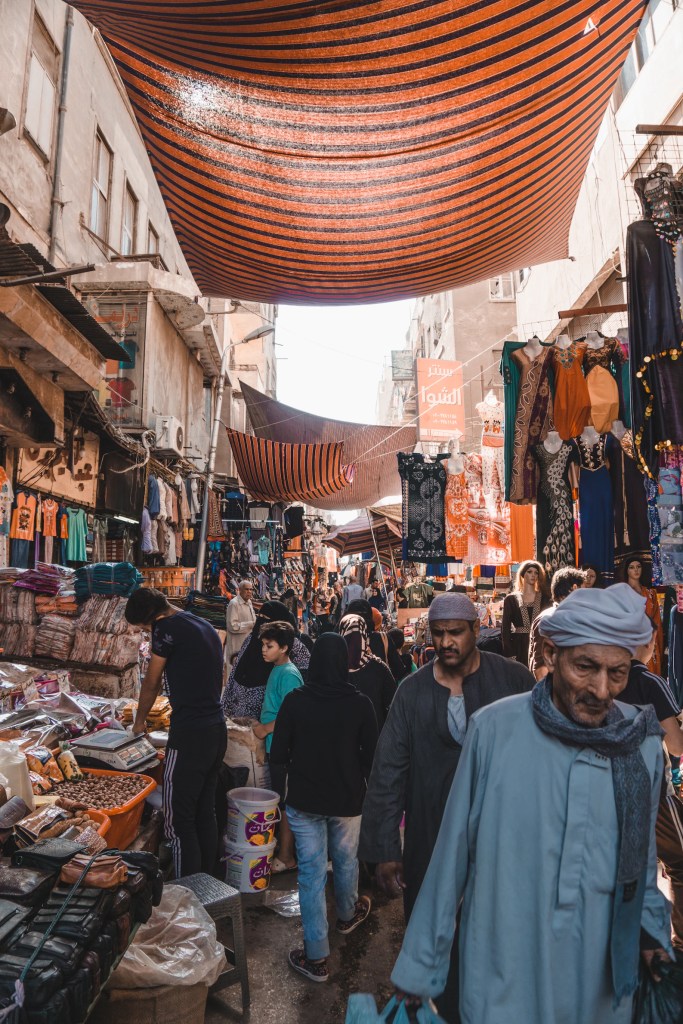
Protests in Morocco as ship suspected of carrying arms to Israel docks
“Whoever welcomes Israel’s ships is not one of us,” protesters in Morocco chanted during protests held in Tangier to condemn the docking of the American flagged Maersk Denver at the port city. The vessel is suspected of carrying arms destined for Israel. Spain had refused to allow the ship to dock in any of its ports, forcing it to search for a different port. The MarineTraffic website, which tracks ship movements, showed that the ship had arrived at the port of Tangier. The VesselFinder website, which also specialises in tracking ship movements, said that it was on its way to the Sultanate of Oman. Spanish newspaper El Pais quoted a spokesman for the Ministry of Foreign Affairs saying that the Madrid government has not and will not grant docking permits to the ship. The National Secretariat of Moroccan Front in Support of Palestine said that “the Moroccan authorities ignored all calls from various parties and our Moroccan Front’s strong warning not to accept the ship – Maersk Denver – and not to allow it to dock in the port of Tangier, which it arrived at midnight on November 9, 2024.” “This ship, loaded with weapons shipments, will unload its cargo onto another ship, which will then continue its journey towards the port of the occupied city of Haifa,” added the secretariat.
Court sentences journalist to 18 months in jail for defamation
Moroccan journalist Hamid Mahdaoui said he was sentenced on Monday to 18 months in prison on a charge of defamation against justice minister Abdellatif Ouahbi. Mahdaoui, who is also editor-in-chief of news website Badil.info and an outspoken critic of government policies, was also fined 1.5 million dirhams ($150,000) by the court of first instance in Rabat. Mahdaoui was sued after he accused Ouahbi of fraud, among other allegations, in a video on his website. Ouahbi has denied the accusations. “I am innocent … I did not expect this prison sentence,” Mahdaoui said, adding that he was still undecided whether to appeal against the verdict to a higher court. Mahdaoui was sentenced under the penal code, instead of the press code which does not include jail terms, said Khadija Riadi of the Moroccan human rights group AMDH. Mahdaoui was released in July 2020, after spending three years in jail on the charge of not reporting a crime against state security.
CENTRAL AFRICA

CENTRAL AFRICA REP. (CAR)
Central Africa Republic seeks lifting of embargo on its diamonds
The Central African Republic (CAR) sought Tuesday to convince the regulatory body for global diamond trading to lift all restrictions against it, ending an export embargo in place for more than a decade. Gem quality diamond deposits make up – together with gold – one of the CAR’s most precious resources. The Kimberley Process (KP) regulatory body opened its plenary assembly in Dubai on Tuesday under the presidency of the United Arab Emirates. The CAR wants a total lifting of the embargo imposed since a political and military crisis sparked civil war in 2013, after decades of violence, instability and coups…Although the civil conflict lost intensity in 2018, the country still suffers bouts of violence and remains deeply poor. Mining and research permits have been issued to Chinese, American, Rwandan and also Russian groups linked to the Wagner mercenary group backing the ruling regime. The effect of sanctions on the CAR has been deep-seated. In 2011, two years before a military coup which degenerated into a long-drawn-out civil war, the country officially earned 29.7 billion CFA francs (around $50 million) from 323,575.30 carats of diamond exports. Last year, the total figure stood at just 324.3 million CFA francs, according to official figures.
CHAD
17 soldiers and 96 rebels killed in a Boko Haram attack
Boko Haram insurgents killed 17 Chadian soldiers in a weekend attack on a military post that also left 96 of the assailants dead in the country’s west, Chad’s army said.The attack in the Lake Chad region happened on Saturday, spokesperson Gen. Issakh Acheikh said on national television Sunday night. He did not provide details. The Lake Chad region has been plagued this year by frequent attacks from insurgents, including Boko Haram and the Islamic State in West Africa. It has revived fears of violence after a period of peace following a successful operation launched in 2020 by the Chadian army to destroy the extremist groups’ bases. Last month, 40 soldiers were killed during an attack on a military base, prompting President Mahamat Deby Itna to launch an operation to dislodge Boko Haram militants from Lake Chad. In March, an attack the government blamed on Boko Haram killed seven soldiers.
How floods have turned lives in Chad upside down
Spells of torrential rain in Chad since July have triggered unprecedented flooding and left a trail of misery, including over 550 casualties and widespread displacement. Material damage includes the destruction of 164,000 homes, the loss of 60,000 head of livestock, and crops sown on nearly 250,000 hectares of arable land. While thousands of displaced people have since been living in camps, only a handful of official sites like Farcha Milezi and Basilique, both located in the N’Djamena region, are formally recognised. A significant aspect of recognised sites is that they get preference in the distribution of food and other humanitarian assistance. In addition to the official sites for flood victims, thousands have set up shelters independently. The UN estimates that US $97 million is needed to provide appropriate assistance to people in distress following the floods.
AFRICA-GENERAL NEWS

ICC’s Karim Khan faces sexual misconduct probe
The chief prosecutor of the international criminal court will face an external investigation into allegations of sexual misconduct, the court’s governing body has said. In a statement, the president of the body that oversees the ICC said the inquiry would examine the allegations against Karim Khan, which related to his alleged conduct towards a woman who worked for him. Since the allegations emerged last month, there has been intense behind-the-scenes negotiations among the court’s member states about the shape and scope of the investigation, as the court has scrambled to formulate a response to the allegations. Päivi Kaukoranta, the president of the governing body, the assembly of state parties (ASP), said an external investigation was being “pursued in order to ensure a fully independent, impartial and fair process”. Lawyers for Khan, 54, have said he “denies the whole of the allegations”. On Monday he said: “I welcome the opportunity to engage in this process.” The alleged victim, a lawyer in her 30s who worked for Khan, has declined to comment. Multiple sources said ICC staffers were informed last week that the woman would be willing to assist an independent investigation. A panel of ICC judges is considering applications by Khan for arrest warrants for the Israeli prime minister, Benjamin Netanyahu, and his former defence minister for alleged war crimes and crimes against humanity in Gaza.
Statement of President of Assembly of State Parties (ASP)on ICC Chief’s probe
Absence of notable world leaders at UN climate conference raises concerns
At the COP29 conference in Baku, some of the world’s most influential figures are notably absent, including leaders from China, the United States, India, Germany, and France. The absence has raised concerns among activists and delegates, who worry it signals a lack of commitment from major emitters in addressing the climate emergency. However, many argue that the urgency of the climate crisis remains undiminished, and global efforts must continue with or without these prominent figures. While major powers will be absent, the conference will see a strong presence from leaders of small island nations and over a dozen African countries, many of whom are among the most vulnerable to climate change effects. These leaders are expected to highlight the urgent need for adaptation funding, emissions reduction, and international cooperation. Over two days, the World Leaders’ Summit will offer these nations a critical platform to voice their unique challenges and push for a stronger commitment to global climate goals.
Trump inherits waning US strength in Africa
A decline in U.S. influence in Africa means U.S. President-elect Donald Trump’s administration will have to grapple with blind spots in its understanding of a fast-changing continent increasingly allied with China and Russia and threatened by spreading jihadist insurgencies. Interviews with eight current and former officials along with a review of U.S. government watchdog reports show that a dearth of staff and resources under President Joe Biden at embassies in Africa undermined efforts to implement Washington’s goals. The U.S. racked up diplomatic setbacks over the past four years, including losing America’s major military base in Niger and failing to negotiate a deal with any ally to reposition those assets. It is now caught without a foothold among the Sahel region’s Russia-backed military juntas just as the region becomes the world’s terrorism. In soft power terms, a Gallup poll published this year showed that China surpassed the U.S. in popularity in Africa…Two former senior officials that served in Trump’s 2017-2021 administration said they expected him to pursue a more pragmatic approach than Biden, seeking tangible returns for U.S. spending in the region. Competition with China will be a major focus, they both said, along with fresh support for U.S. businesses. The U.S. may also revisit its politics towards military leaders in the troubled Sahel, with less focus on democracy and human rights, they said.
Trump’s Africa plans take pragmatic turn
Republican-leaning US-Africa specialists are predicting that a second Donald Trump administration would take a more “transactional, realistic and pragmatic” approach in dealing with Africa. Trump’s four years in office were characterized by reports of a reportedly dismissive attitude towards Africans, most famously his reference to “s-hole countries” — but his supporters say he was the first to raise awareness about what a huge threat China is to US interests in Africa. “You will again see aggressive countering of Chinese influence in Africa,” Tibor Nagy, a former assistant secretary of State for African Affairs under Trump and a former ambassador to Guinea and Ethiopia. One key focus of this transactional approach will be on starting to lock down supply chains for critical minerals in Africa used for green energy batteries used in electric vehicles and phones…But the simple truth is that there is little substantive difference between US-Africa policy thinkers on either side of the aisle in Washington DC. And in their quiet moments, away from the politicking, they acknowledge this. Most experienced African diplomats and government officials also know this. What is less clear is if they know how to take advantage.
OpEd: A little bit more ‘hating’ from Trump II could just do Africa a lot of good
Plantain chips are breaking hearts in Africa
The annoying thing about analysing Africa’s international plantain trade is that the customs (HS) code for plantains – 080310 – is very often also used for bananas in many records. This is despite there being another code for bananas that excludes plantains – 080390. Whilst this conjunction would be shocking to many a person born and bred in Africa, elsewhere there is genuine confusion about the two crops, occasionally warranting explanations by chefs. An irritating result of this needless confusion is that what should have been as easy as pulling and then sifting data from global trade databases like Comtrade and Eurostat can quickly degenerate into snooping around less established data sources and triangulating to get to the point. The point being that Africa is super dominant in the world of plantains; yet, it is not a major exporter. Despite producing large quantities of plantains, African countries including Cameroon, Ghana, and Nigeria consistently export less of the crop than Latin American and Asian countries. Worldwide, 7 of the top 10 plantain producers are in Africa. Latin American and Asian countries that produce significantly fewer plantains routinely out-export giant African producers. In the United States especially, literally no African country has been able to break through into what is the world’s largest import market.
How to reconstruct African history
UNESCO is updating its 60-year old African history curriculum with new volumes that include African diasporas and their contributions to modern-day societies. The General History of Africa (GHA) program was introduced in 1964 to help remedy the general ignorance of Africa’s history by reconstructing it and “freeing it from racial prejudices ensuing from slave trade and colonization,” while promoting an African perspective. In its latest effort, the UN body is developing tools that African teachers and education policymakers can use to strengthen the teaching of the GHA program. The piloting workshop on mainstreaming African history was held in Ghana in September. The objective was to incorporate this history into national school education curricula. “Teaching a common history to Africans is crucial in decolonizing the curriculum,” said Professor Paul Abiero, a historian at Moi University in Kenya. “But successful implementation will require financial resources, which are very limited in many countries.”
Researchers document huge drop in African elephants in a half century
African elephants are Earth’s largest land animals, remarkable mammals that are very intelligent and highly social.They also are in peril. Fresh evidence of this comes in a study that documents alarming population declines at numerous sites across the continent over about a half century. Researchers unveiled on Monday what they called the most comprehensive assessment of the status of the two African elephant species – the savanna elephant and forest elephant – using data on population surveys conducted at 475 sites in 37 countries from 1964 through 2016. The savanna elephant populations fell by about 70% on average at the surveyed sites and the forest elephant populations dropped by about 90% on average at the surveyed sites, with poaching and habitat loss the main drivers. All told, there was a 77% population decrease on average at the various surveyed sites, spanning both species…But in southern Africa, elephant populations rose at 42% of the surveyed sites. “We have seen real success in a number of places across Africa, but particularly in southern Africa, with strong growth in populations in Botswana, Zimbabwe and Namibia. For populations showing positive trends, we have had active stewardship and management by the governments or outside groups that have taken on a management role,” Wittemyer said.
OpEd: Why Western leftists induce distrust, even suspicion, in our societies
OpEd: Africa’s cities are growing chaotically fast, but there’s still time to get things right – insights from experts
THIS WEEK AHEAD
Nov. 11 — South Africa’s biggest mobile operator Vodacom and Africa’s biggest pay TV group Multichoice are expected to report half-year results. But Multichoice already issued a profit warning on Friday (Nov.8) saying its results would be “negatively impacted” by macroeconomic and currency pressures in key markets, notably Nigeria and Zambia.
Nov. 13 — Somaliland, the self-declared state in the northwest of Somalia, will hold its fifth presidential election since 1997.
Nov. 14 — Sanlam, South Africa’s biggest life insurer, releases third quarter operational update.
Nov. 12-14 — Africa Tech Festival 2024 will take place in Cape Town.
Nov. 15 — Nigeria’s statistics office to release the latest inflation data.
Nov. 17 — Senegal will vote in an early legislative election that could give President Bassirou Diomaye Faye a majority in parliament. Despite Faye having been swept to power in a presidential election in March, his party far from assured of securing a majority.
FOR YOUR CONSIDERATION

Nov. 21 — African Union’s Women and Youth Financial & Economic Inclusion (WYFEI 2030) Initiative’s Afri’Talent Program is open for applications from African women and young people.
 The Africa Edition ©️
Leave a comment