News That Matters To Africa©️
QUOTE OF THE DAY
“Some people will have an entire loaf of bread and they will still be after…the slice in your hand”
HIGHLIGHTS
Lupita condemns ‘chilling’ Kenya crackdown
Ukraine rubbishes drone supplies to Mali rebels
Worst drought in century devastates Southern Africa
UN alarmed by treatment of migrants in Tunisia
Russia’s targeting U.S.-funded anti-malaria programs say US ally.
TOP NEWS
Eastern Africa
ICC prosecutor to renew Congo investigation
Concerns raised over congolese cobalt and child labor practices
Tshisekedi walk-out overshadows Francophone summit
Nile basin nations say water-sharing accord has come into force without Egypt’s backing
Coordinates identified for Ethiopian drone massacre in Amhara
OpEd: The Trio: Eritrea, Egypt, and Somalia—Threats to Ethiopia
Kenya to send 600 more Police officers to Haiti In November
Inside Adani’s 30-Year deal for Kenya’s power lines
Ball set rolling as Gachagua to put up defense in trial chamber
Kenya Chief Justice appoints 3-judges for petitions against DP Gachagua’s ouster
Lupita Nyong’o condemns ‘chilling’ Kenya crackdown
Kenya’s Chepngetich breaks women’s world marathon record
Rwanda’s FM lays out three steps to end DR Congo security crisis
Somalia: Families want justice, ‘blood money’ for AU peacekeeper killings
Somaliland signs mining agreement with UAE firm
Gang violence wrecking South Sudan communties
Sudan’s civil war fueled by secret arms shipments from UAE and Iran
AU to reopen Sudan liaison office
OpEd: Sudan’s brutal war has become many wars, making peace even harder to reach
West Africa
Beninese anti-French activist Kemi Seba arrested in Paris
Cameroon prohibits media from discussing President Biya’s health
Dozens locked up as grim history continues for Equatorial Guinea’s Annobón island
Guinea’s Ministers banned from overseas travel
Ukraine denies involvement in drone supplies to Mali’s rebels
Niger strips citizenship of 9 former officials
Nigerian airline CEO faces charge in $20M fraud case
They fled their homes to escape Boko Haram. Now Nigeria is resettling them back despite their fears
Nigeria permits fuel refinery purchases
Senegal unveils 25-Year economic & social development plan
Southern Africa
SAfr man serving in Israeli Sniper Unit accused of killing unarmed civilians
The SAfri anti-apartheid cathedral now a pro-Palestine hub
Former SAfr Finance Minister dies following short illness
Worst drought in century devastates Southern Africa with millions at risk
North Africa
Grand Egyptian Museum to open main galleries for trial run to 4,000 visitors
Libya lays blame for qualifier postponement on Nigeria
Morocco built Africa’s largest theater but it remains closed
UN experts alarmed by treatment of migrants in Tunisia
AFRICA-GENERAL NEWS
EASTERN AFRICA
DR CONGO
ICC prosecutor to renew Congo investigation
International Criminal Court (ICC) Prosecutor Karim Khan said on Monday his office will renew an investigation into Democratic Republic of Congo, focusing on alleged crimes committed in the North Kivu province since January 2022. The renewed efforts will aim to address allegations including potential war crimes and crimes against humanity, and it will assess the responsibility of all parties involved, without targeting specific groups, Khan added. He linked recent violence in the area to regional patterns of conflict dating back to 2002, when the ICC’s jurisdiction in the DRC began. The decision followed a second referral from the DRC government in May 2023, which requested an investigation into what the country called the systematic pillaging of its natural resources in eastern Congo by the Rwanda Defence Forces (RDF) and the M23 rebel group.
Concerns raised over Congolese cobalt and child labor practices
In September, the U.S. Department of Labor added the Democratic Republic of Congo’s cobalt to its list of goods that may be produced using forced or child labor. This action has prompted responses from both authorities and civil society in the country, the world’s leading cobalt producer, as they worry that this decision could drive away investors. The Congolese authorities assert that they are making efforts to enhance the cobalt supply chain. In 2023, the DRC produced 170,000 tons of cobalt, maintaining its status as the global leader. However, concerns linger about how long this will last. In a statement released last week, the Congolese government spokesperson expressed disappointment that the US decision overlooks the progress made and urged partners to increase their technical and financial support.
Tshisekedi walk-out overshadows Francophone summit
A walk-out staged by Congolese President Felix Tshisekedi nearly overshadowed the summit of French speaking countries held in Paris over the weekend. To protest French President Emmanuel Macron’s opening speech for not mentioning the war in eastern Congo, Tshisekedi boycotted the summit’s heads of state retreat, in an embarrassing moment for French diplomacy. Tshisekedi also skipped a luncheon organised by Louise Mushikiwabo, the head of the Organisation of Francophone Countries, on Saturday noon. Before becoming the organisation’s chief, Mushikiwabo served for years as Rwanda’s foreign minister. Kinshasa considered the omission of the war in eastern DRC in Macron’s statement an attempt by Paris to appease Kigali.
ETHIOPIA/EGYPT/SUDAN
Nile basin nations say water-sharing accord has come into force without Egypt’s backing
A regional partnership of 10 countries says an agreement on the equitable use of water resources from the Nile River basin has come into force despite the notable opposition of Egypt. The legal status of the “cooperative framework” was formally confirmed by the African Union after South Sudan joined the treaty, the Nile Basin Initiative said in a statement Sunday. Ethiopia, Uganda, Rwanda, Burundi and Tanzania have ratified the accord. Egypt and Sudan declined to sign, while Congo abstained. Kenya has not yet deposited its ratification documents with the African Union…Measuring 6,695 kilometers (4160 miles), the Nile is the longest river in the world, with one tributary, the White Nile, starting in South Sudan and the other, the Blue Nile, in Ethiopia.
ETHIOPIA
Coordinates identified for Ethiopian drone massacre in Amhara
A horrific footage, far too graphic to publish in its entirety, surfaced undated and unverified on the web earlier this year. Anonymous uploaders claimed it depicted the aftermath of a deadly drone strike in Ethiopia’s north-western Amhara region on 19 February. The strike killed at least 30 civilians. A survivor confirmed that the attack came from an unmanned aerial vehicle, more commonly known as a drone. As the conflict between the state and the rebel Fano militia has intensified, the government has denied journalists access to the region and imposed significant restrictions on mobile communication. The army denied that any civilians had died, describing the incident as an army operation that led to the killing and capture of rebel militants. The army’s version of events was contradicted just days later when the first media reports emerged. These reports included harrowing eyewitness testimony. The dead were from only three or four families. An infant who had just been baptised survived, but seven of his relatives were killed – some still wearing their white ceremonial dress. Other bodies were too mangled to properly identify…By authenticating the new evidence and analysing open-source documents and satellite imagery, The Continent successfully geolocated the massacre to a specific four-way intersection between villages in the rural Amhara North Shewa Zone, some 220km northeast of Addis Ababa and nine kilometres west of Sasit. The big clue came in the footage which showed bodies in clearly discernible civilian attire. The attack appeared to have taken place at an intersection of two roads. Publicly sourced documents, including a 2022 village assessment study produced by the International Organisation for Migration, lists a village by the name of Fela, with precise coordinates. The site’s coordinates are 9°56’10.7”N 39°25’06.9”E.
OpEd: The Trio: Eritrea, Egypt, and Somalia—Threats to Ethiopia
KENYA
Kenya to send 600 more Police officers to Haiti In November
Inspector General of Police Douglas Kanja has confirmed that the second batch of Kenya Police units will be ready for deployment to Haiti early next month. Speaking during a visit by Haiti’s interim Prime Minister Garry Conille at the Administration Police Training College (APTC) in Embakasi, Kanja said the deployment plans and other aspects of the security mission are underway. A contingent of 600 officers will soon join the 400 Kenyan police already stationed in Haiti after completing pre-deployment training. “Once this training is complete, the officers will be ready for departure early next month,” Kanja said during a briefing alongside Prime Minister Conille. Kenya has pledged to provide 1,000 officers to lead the Multi-National Security Support Mission (MSSM) in Haiti, with the initial deployment of 400 officers having begun in September.
Inside Adani’s 30-Year deal for Kenya’s power lines
After four months of negotiations, the Kenyan government last week signed a Ksh.95 billion ($736 million) power transmission deal with Adani Energy Solutions – an Adani Group subsidiary – to develop and maintain key transmission lines and substations across the country. Adani will manage the transmission lines and substations it will construct for 30 years, after which the project and all its assets will be handed over to the Kenya Electricity Transmission Company Limited (KETRACO) “in good condition and free of any encumbrances.” Per the Energy Ministry, the project is meant to address Kenya’s recent spate of power blackouts, which have been blamed on ageing transmission lines. And despite concerns over how public participation in the deal was conducted after Adani Energy Solutions submitted a privately initiated proposal, the government holds that it conducted comprehensive due diligence. Adani Energy Solutions’s sister company, Adani Airport Holdings, is involved in a controversial $1.85 billion (about Ksh.239 billion) proposed investment deal with the Kenyan government to expand the Jomo Kenyatta International Airport (JKIA) in Nairobi.
The Gachagua Saga:
Ball set rolling as Gachagua to put up defense in trial chamber
The impeachment trial of Deputy President Rigathi Gachagua begins today at the Senate, where he will also be accorded an opportunity to plead his case. This comes against the backdrop of damning contents of a witness affidavit by Peterson Njomo Muchira, a close ally of Gachagua, which he has presented to Parliament. Njomo says in the affidavit that he has had to clarify issues following contradictions between the DP’s response and remarks made by various MP when debating on the motion. In particular, Njomo said he has personal knowledge of facts relating to sale of Olive Garden Hotel, which initially formed part of the estate of the late Nderitu Gachagua. “On or around March 31, 2023, the DP approached and convinced me to purchase the Olive Garden Hotel which was at the time part of the estate of the late Nderitu Gachagua. The DP persuaded me to enter into a formal secret arrangement regarding the transaction embodied in the agreement annexed on pages 10 to 34 of his response to the motion,” Njomo says in the affidavit. He has explained that the terms of the secret arrangement were that the DP would buy the hotel from him by refunding the purchase price of Sh412 million as stated in his response to the motion…The schedule will include: tabling of the evidence by the National Assembly including evidence of witnesses; Gachagua will have five hours to table evidence of witnesses, if any, cross-examination and re-examination; the House will then debate the motion and subsequently take the vote. If at least two-thirds of the Senate members, comprising 67 total, including 47 elected and 20 nominated vote to uphold any impeachment charges, Gachagua will cease to hold office.
Chief Justice appoints 3-judges for petitions against DP Gachagua’s ouster
Chief Justice Martha Koome has appointed a three-judge bench to hear five petitions seeking to prevent the impeachment of Deputy President Rigathi Gachagua. The bench will be led by Justice Erick Ogola, with Justices Antony Mrima and Dr. Frida Mugambi joining him. Deputy President Gachagua, represented by a legal team led by Senior Counsel Paul Muite, is challenging the impeachment on several grounds, including a lack of public participation. Gachagua’s team claims that Parliament failed to meet the required standards because the standing orders only allowed for a seven-day window to address the issue before sending it to the Senate. Muite emphasized that this period was insufficient to allow proper engagement with the public. Furthermore, the legal team argued that Gachagua was not given enough time to prepare his defense, asserting that he should have been allowed at least 12 days to respond to the allegations that led to his impeachment.
Lupita Nyong’o condemns ‘chilling’ Kenya crackdown
Actress Lupita Nyong’o has condemned the Kenyan authorities’ crackdown on huge anti-tax protests that began in June. Demonstrators were met with police brutality, according to rights groups, with dozens of people killed and numerous others abducted. Nyong’o, whose father was jailed and tortured under a former president, Daniel arap Moi, was reported to say: “It is chilling to know that this government is resorting to tactics that I had thought had been left in the past.” In response, the government said it was not possible to compare two “very different” administrations and that it “regrets any death that occurred”. But Nyong’o, an Oscar winner who grew up in Kenya but now lives in the US, said the government’s handling of the protests was “upsetting”. As for reports that people were killed during the demonstrations, Mwaura said: “Only police statistics are official…Lupita’s father, Anyang’ Nyong’o, is currently a county governor in Kenya and acting leader of the Orange Democratic Movement (ODM), one of the country’s main political parties.
Chepngetich breaks women’s world record at Chicago Marathon
Ruth Chepngetich has put on a performance for the ages as she obliterated the women’s marathon world record in Chicago, taking nearly two minutes off the previous best to win in 2:09:56. The previous record was 2:11:53 set by Ethiopia’s Tigst Assefa. Chepngetich ditched the competition by the halfway mark and ran through a chorus of cheers through the final straight…Chepngetich, who also won in Chicago in 2021 and 2022, dedicated her latest victory to Kelvin Kiptum, who set the men’s world record – 2:00:35 – at last year’s race just four months before he died in a car accident at the age of 24.
RWANDA/DRCONGO
Rwanda’s FM lays out three steps to end DR Congo security crisis
Rwanda’s Minister of Foreign Affairs and International Cooperation has laid out three steps that could put an end to the security crisis in neighbouring DR Congo. Olivier Nduhungirehe elaborated on these steps during the fifth ministerial meeting on the peace and security eastern DR Congo attended by his counterparts Therese Kayikwamba Wagner of DR Congo and Tete Antonio of Angola, in the Angolan capital Luanda on October 12. Nduhungirehe reiterated that the conflict, which has caused a diplomatic rift between Rwanda and DR Congo would be solved if the latter first took “ownership of this crisis” instead of blaming Rwanda for it. Second, he noted that the Congolese government should “neutralize, in good faith, the FDLR génocidaires. For Nduhungirehe, the third step to end the conflict in eastern DR Congo should be the disengagement of the Burundian troops and the SADC mission (SAMIDRC). “Should the DRC have the political will to take those important steps, this would significantly contribute to the resolution of the long-standing conflict in eastern DRC,” Nduhungirehe said, adding that “Rwanda is willing to support this process.”
SOMALIA
Families want justice, ‘blood money’ for AU peacekeeper killings
Peacekeepers belonging to the African Union Mission in Somalia, or AMISOM, were first deployed in 2007 to prevent a takeover of the country by al-Qaeda affiliate al-Shabab, which sought to overthrow Somalia’s government. While al-Shabab frequently engages in battles with peacekeepers and government forces, civilians have borne the brunt of its attacks. The armed group is estimated to have killed around 4,000 civilians in shootings, suicide bombings and other forms of violence between 2008 and 2020. Backed by the United Nations, United States and other donor states, the AU peacekeepers have played a critical role in countering threats posed by the armed group. But reports about their involvement in abuses against civilians can be traced back to their initial years in the country… “Out of courtesy, I met with [family members] and explained that the consensus is that ATMIS is struggling financially to the point where we had to consider terminating the mission,” Comorian diplomat and current ATMIS political head Mohamed El-Amine Souef explained in a voice message sent to Al Jazeera. Last year, Souef announcrd told that ATMIS needed at least $2m from donors to cover compensation requests in almost 80 cases of peacekeeper violence against civilians. These cases include killings, as well as critical and minor injuries, but the AU has not specified how many of each.
SOMALILAND
Hargeysa signs mining agreement with UAE firm
The Ministry of Minerals and Energy of Somaliland, an unrecognised state considered part of Somalia, has signed an agreement with UAE firm Emirates Industrial Laboratory to modernise mineral testing. The agreement is necessary to establish advanced mineral testing laboratories in the region. It will allow the Emirates Industrial Laboratory to install equipment for testing minerals, and Somalilanders won’t have to send samples of minerals for testing in other states. The agreement is also designed to address long-standing safety concerns in Somaliland’s mining sector. In the region, untrained workers have been excavating in unsafe conditions, resulting in fatalities.
SOUTH SUDAN
Gang violence wrecking communities
South Sudan, Africa’s youngest state with an estimated population of 12 million, majority of whom are youth, has experienced increasing involvement of youngsters in gambling and gang criminal activities. The group activities have resulted in the loss of lives of many young people and the destruction of properties because of revenge attacks. The majority of the young people involved in gambling and gang attacks were school dropouts during the 2016 violence across the country…Youth gangs have torn at the South Sudanese community’s feelings of safety. Some communities have devised initiatives to promote development and help rehabilitate the deviant youths. Social intervention, youth-serving agencies, schools, street outreach workers, grassroots groups, faith-based organizations, law enforcement agencies, and other criminal justice organizations were all being deployed to rehabilitate the youth.
SUDAN
Sudan’s civil war fueled by secret arms shipments from UAE and Iran
Sudan’s devastating civil war is being fueled in part by weapons secretly supplied to both sides by foreign countries, including munitions and drones from the United Arab Emirates and Iran, according to confidential assessments, a State Department funded report and evidence collected from captured weapons in Sudan…This apparent evidence of UAE involvement aligns with the findings of the Sudan Conflict Observatory, a group funded by the U.S. State Department that tracked Emirati flights. In an assessment, the group said it tracked 32 flights between June 2023 and May 2024 and concluded with “near certainty” that they were weapons transfers from the UAE to the RSF…Since the end of last year, Sudan’s military has also been using foreign-supplied armed drones, in particular those secretly provided by Iran, according to the Observatory’s report.
AU to reopen Sudan liaison office
The African Union (AU) will reopen its liaison office in Port Sudan, the Peace and Security Council (PSC) said on Monday, as part of efforts to resolve the conflict in Sudan. The PSC met on October 9 to discuss the situation in Sudan, where fighting between the army and the paramilitary Rapid Support Forces (RSF) has raged since April 2023…This decision would allow the AU to engage with the Sudanese stakeholders and participate actively in the ongoing efforts to end the war, restore civilian rule, and provide technical support to Sudan…Sudan demanded that the AU lift its suspension of the country’s membership, imposed after the coup of the military component against the civilian transitional government so that it could play a role in efforts to end the war. Egypt, which chairs the PSC, backed Sudan’s request…The PSC urged all stakeholders to cooperate with its ad hoc committee on Sudan, which will hold its first meeting on Oct. 23 in Entebbe, Uganda.
OpEd: Sudan’s brutal war has become many wars, making peace even harder to reach
WEST AFRICA
BENIN
Anti-French activist Kemi Seba arrested in Paris
Activist Kémi Séba was arrested by French police in Paris, according to news reports.
Séba was taken into custody on Monday while having lunch with a colleague at a restaurant. He is known for speaking out against France’s strong influence in French-speaking West African countries. Recently, Séba was appointed as an advisor to Niger’s military leader, General Abdourahamane Tiani, who took power in a coup in July 2023, overthrowing President Mohamed Bazoum…Séba is the founder of the group Urgences Panafricanistes and has led protests against French influence. He once burned a CFA franc note, a currency used in many former French colonies in Africa, calling it a symbol of colonialism. Séba’s protests have gained a lot of support, especially from young people in West Africa.
CAMEROON
Media prohibited from discussing President Biya’s health
Cameroon’s government has banned media discussions about the health of 91-year-old President Paul Biya, who has been absent from public view since early September. Interior Minister Paul Atanga Nji issued the directive, stating that media debates on Biya’s health are a “matter of national security” and warning of legal consequences for violators. He then directed the establishment of monitoring cells to track online content. Biya was last seen at the China-Africa summit, which took place in Beijing last month. He has since missed several key international events, including the United Nations General Assembly in New York. Last week, government spokesperson Rene Sadi dismissed rumors about the president’s condition, insisting Biya is in good health and will return to Cameroon soon. Nevertheless, the media ban has been criticized as censorship, with journalists arguing that citizens have a right to be informed. The Committee to Protect Journalists (CPJ) said it was gravely concerned. “Trying to hide behind national security on such a major issue of national importance is outrageous,” said Angela Quintal, head of the CPJ’s Africa programme. With no clear succession plan, observers believe Biya’s death would bring more political turmoil to West and Central Africa, which has seen eight coups since 2020 and several other military attempts to overthrow governments.
EQUATORIAL GUINEA
Dozens of islanders locked up as grim history continues for Annobón
In July, 16 people on the island wrote to the authorities in Malabo, the capital of Equatorial Guinea, expressing concern about the deterioration of the environment and demanding an end to the use of dynamite for mining. The response came swiftly: within a few days soldiers arrested the letter’s signatories and dozens of activists sympathetic to their cause in raids. Cellular service and internet access were also shut down. Three months later, only five of the detainees have been released – all elderly women. Those still in custody have been charged with rebellion and “abusive exercise of fundamental rights”. Human rights activists and members of the Equatoguinean diaspora say Annobón’s roughly 5,000 or so inhabitants have endured a particularly grim recent history of human rights abuses and exploitation. The 6.5 sq mile (17 sq km) territory is the smallest of the country’s eight provinces and its most remote. About 425 miles (685km) from Malabo, Annobón island has one school, and basic amenities such as electricity and potable drinking water are either lacking or irregular. An airport was built in 2013 but most inhabitants can only afford to leave the island on a weekly ferry or in a berth on a monthly or bi-monthly ship. A cholera epidemic in the 1970s wiped out a third of the population. In the 1980s, it emerged that President Teodoro Obiang had given a UK firm a permit to dump 10m drums of toxic waste there. Arbitrary arrests have increased since 2022, and many on the island see the July raids as part of a broader effort to quash dissent. Authorities routinely link activists on the island to Ambô Legadu – a Spain-based separatist group.
GUINEA
Govt Ministers banned from overseas travel
Guinea’s military junta chief General Mamady Doumbouya has banned ministers from traveling abroad without his permission and recalled all those currently out of the country, his office announced. The statement, issued on Thursday, is effective immediately and until the end of the year, the government’s general secretary said…Senior members of government departments and diplomats are still able to represent the country abroad, he added…The junta initially bowed to international pressure to hand back power to civilian rule by the end of 2024. But it has since admitted it will not fulfill the commitment.
MALI
Ukraine denies involvement in drone supplies to Mali’s rebels
Ukraine denied late on Monday media reports that it has been involved in supplying drones to rebels fighting in the north of Mali. The French Le Monde newspaper reported that the Tuareg fighters in the West African country use Ukrainian drones with “discreet but decisive” support from Kyiv against the Mali army and Russia’s Wagner mercenary group that said it fights alongside it. “Ukraine strongly rejects the accusations that have recently been released by the international media outlets about the alleged involvement of our state in the supply of UAVs to the rebels in Mali,” Ukraine’s foreign ministry said in a statement, referring to unmanned aerial vehicles. In August, Mali cut diplomatic ties with Ukraine over Kyiv’s comments that the rebels got all “necessary” information to conduct attacks that reportedly killed scores of Malian soldiers and Wagner fighters in the north.
NIGER
Government strips citizenship of 9 former officials
Nine political figures and former military officials of Niger, who held posts under the former head of state Mohamed Bazoum, have been stripped of their citizenship. This was reported by the local news agency ANP, which has in its possession a copy of a statement issued by the General Secretariat of the country’s government. Among them are former Minister of State and presidential adviser, Rhissa Ag Boulla, who was granted asylum in France in August this year, as well as former chairman of the High Peace Consolidation Authority, General Abou Mahamadou Tarka, and ex-public relations adviser, Amadou Ngade. They are suspected of carrying out activities “likely to disturb public order and security”, working for foreign intelligence and helping to deploy foreign troops in Niger, and engaging in a campaign to demoralise the army. In late September, Rhissa Ag Boulla announced the creation of the Free Armed Forces (FAL), a political-military group, to wage war on Niger’s transitional authorities.
NIGERIA
Airline CEO faces new US charge in $20M fraud case
US authorities charged the owner of Nigeria’s largest airline with obstruction of justice in a $20 million fraud case. The charge updates an indictment from five years ago in which he and an alleged accomplice were charged with bank fraud and money laundering. The US Department of Justice said Allen Onyema, founder and chief executive of Air Peace, faces the new charge of obstruction “for submitting false documents” to the US government. Onyema, 61, allegedly submitted the documents in a bid to end the investigation that led to the bank fraud and money laundering charges, the DOJ announced on Friday. Onyema is charged alongside Air Peace’s finance chief, Ejiroghene Eghagha. The DOJ, in its 2019 bank fraud and money laundering indictment, alleged that both officials moved “more than $20 million” from Nigeria through US bank accounts in a scheme involving false documents based on the purchase of airplanes from a company allegedly based in the US state of Georgia. Air Peace operates the largest volume of daily domestic flights in Nigeria. Onyema founded the airline in 2013. The company flies to and from Nigeria and some West African capital cities.
Fuel refinery purchases now permitted
Nigeria’s government has said fuel retailers can now buy gasoline directly from the Dangote Refinery. Finance minister Wale Edun said state oil company NNPC will stop being the exclusive buyer of Dangote’s refined petrol. The new dealwill allow independent retailers to buy directly from the refinery, which began rolling out petrol locally in September. Fuel prices had begun to rise again in Lagos in the past week before the minister’s confirmation. Prices are now up to four times higher than they were before President Bola Tinubu took office in May 2023. Tinubu, at his inauguration, vowed to remove the country’s fuel subsidy, effectively allowing the price of petrol to be market driven. Analysts say a form of subsidy had remained in place but petrol prices are now rising. A longstanding fear in Nigeria is that fuel price hikes could trigger price increases in the real economy, especially for food and transportation.
They fled their homes to escape Boko Haram. Now Nigeria is resettling them back despite their fears
Thousands of Nigerians have been taken back from displacement camps to their villages, hometowns or newly built settlements known as “host communities” under a resettlement program that analysts say is being rushed to suggest the conflict with the Islamic militants is nearly over. Across Borno, dozens of displacement camps have been shut down, with authorities claiming they are no longer needed and that most places from where the displaced fled are now safe. But many of the displaced say it’s not safe to go back. Boko Haram — Nigeria’s homegrown jihadis — took up arms in 2009 to fight against Western education and impose their radical version of Islamic law, or Sharia. The conflict, now Africa’s longest struggle with militancy, has spilled into Nigeria’s northern neighbors. Analysts say that a forced resettlement could endanger the local population as there is still inadequate security across the hard-hit region
SENEGAL
Senegal unveils 25-Year economic & social development plan
Senegal’s government unveiled a 25-year development plan on Monday that it said would lay the foundations for economic sovereignty through competitiveness, sustainable resource management and good governance. The agenda was launched seven months after President Bassirou Diomaye Faye clinched a landslide election victory on a promise to improve livelihoods in the West African nation. “We aim to build a diversified and resilient economy,” Faye said at the launch ceremony, which comes a month ahead of a snap legislative election. Senegal became an oil producer in June, when Australia’s Woodside Energy started production at its Sangomar oil and gas field. Gas production is also due to begin by the end of the year at the Greater Tortue Ahmeyim liquefied natural gas project, operated by BP. Early in his presidency Faye initiated an audit of oil and mining contracts, but the authorities have not shared details on its progress. The first phase of the economic plan, which will cost $30.1 billion and run from 2025-2029, aims to reduce the budget deficit to 3% of GDP throughout that period, down from 4.9%.
SOUTHERN AFRICA
SOUTH AFRICA
SAfr man serving in Israeli Sniper Unit accused of killing unarmed civilians
A 22-year-old man from Sandton has been accused of despicable war crimes against the Palestinian people. In a scathing documentary by Al Jazeera, Aaron Bayhack was revealed to be part of an elite Israeli sniper unit that executed civilians in Khan Younis and Gaza City. Al Jazeera reported that Bayhack was part of the 202 paratrooper battalion, which consists of roughly 18 men from various nations. Notably, one from Somalia was among them. Bayhack and his team allegedly fired indiscriminately at civilians, including men, women, children, the elderly, and the wounded, in and around hospitals under attack in Gaza. In 2023, the Department of International Relations and Cooperation (DIRCO) expressed deep worry over allegations that certain South African citizens and permanent residents had joined or contemplating joining the IDF. It went on to state that such activity can potentially contribute to the violation of international law and the commission of other international crimes, putting them subject for prosecution in the country. One member of the battalion, a 22-year-old man, told the documentary crew that there is a line that Palestinians do not know about; anyone in his line of sight would be shot. He said anyone of military age walking near the bombardment is a terrorist.
The SAfri anti-apartheid cathedral now a pro-Palestine hub
At the corner of a main intersection in the heart of Cape Town’s city centre stands the oldest cathedral in Southern Africa. Every Wednesday for more than 52 weeks, a sombre crowd has gathered on the stone steps outside the towering Gothic building, many with placards and Palestinian keffiyehs, as they call for an end to Israel’s more than yearlong war on Gaza. St George’s, an Anglican church also known as the People’s Cathedral, has been a symbol of sanctuary for decades – making it a natural site of unity and hope amid despair for pro-Palestine protesters today. During racist apartheid rule, the cathedral kept its doors open to people of all races. And at the height of the anti-apartheid struggle in the 1980s – when it was under the leadership of late Nobel Peace Prize winner, Archbishop Desmond Tutu – it stood up to the hostilities of the white minority regime.
Former Finance Minister dies following short illness
The Mboweni family issued a statement just after 10pm on Saturday night confirming that Tito Mboweni – ANC stalwart, former finance minister and former governor of the South African Reserve Bank – had died following a short illness…Mboweni (65) had an impressive CV in the new South Africa. He started out as labour minister under former president Nelson Mandela’s reign in 1994. He was the eighth governor of the SA Reserve Bank and the first black governor, serving for 10 years after his appointment in 1999. In 2010, he entered the private sector as an international adviser to Goldman Sachs and held several director positions, including chair of AngloGold Ashanti. In October 2018, he returned to public service as finance minister under President Cyril Ramaphosa and resigned in August 2021.
Worst drought in century devastates Southern Africa with millions at risk
Millions of people across Southern Africa are going hungry due to a historic drought, risking a full-scale humanitarian catastrophe, the United Nations has warned.
Lesotho, Malawi, Namibia, Zambia, and Zimbabwe have all declared a state of national disaster in the past months as the drought has destroyed crops and livestock. Angola and Mozambique are also severely affected, the UN’s World Food Programme (WFP) said in a briefing, warning that the crisis is expected to deepen until the next harvests in March or April next year. “A historic drought – the worst food crisis yet – has devastated more than 27 million lives across the region,” said WFP spokesperson Tomson Phiri. “Some 21 million children are malnourished…The lack of rain has also slashed hydropower capacity in the region, leading to major electricity cuts…Authorities in Namibia and Zimbabwe have resorted to killing wildlife, including elephants, to provide meat for hungry people.
NORTH AFRICA
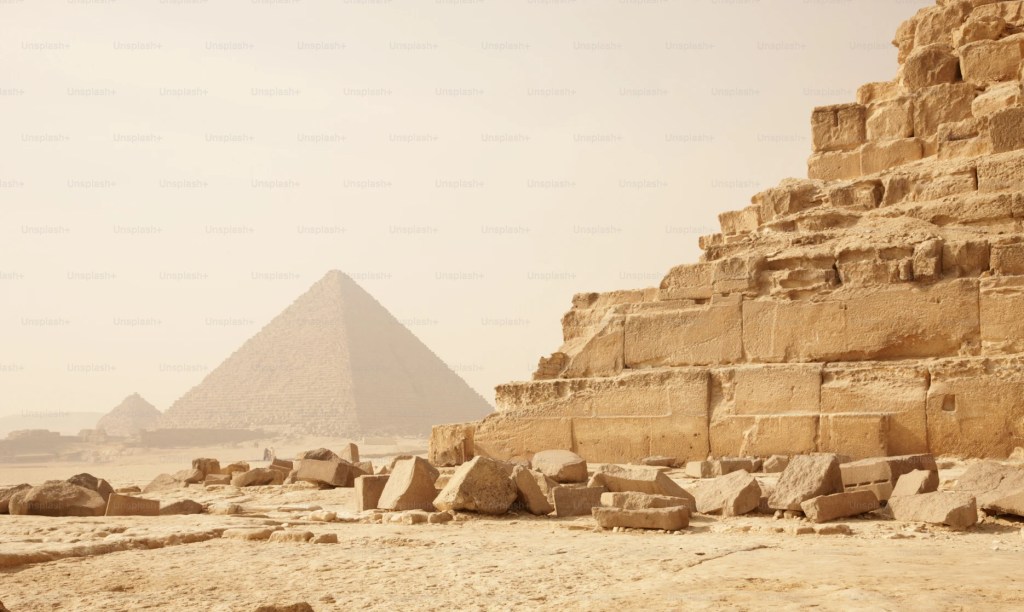
EGYPT
Grand Egyptian Museum to open main galleries for trial run to 4,000 visitors
The Grand Egyptian Museum, a mega-project near the famed Giza pyramids that has cost considerably more than $1bn (£765m) so far, will open its halls, on Wednesday 16 October, to 4,000 visitors as a trial run until the official opening date, which is yet to be announced, according to Al-Tayeb Abbas, assistant to the minister of antiquities. The opening of the museum, which has been under construction for more than a decade, has been repeatedly delayed for various reasons, including the Covid-19 pandemic. More than 100,000 artefacts of Egypt’s ancient treasures will be displayed in the world’s largest archaeological museum, according to the Egyptian state information website…Eras that will be exhibited in the main galleries include the third intermediate period (about 1070-664 BC), late period (664-332BC), Graeco-Roman period (332BC-AD395), new kingdom (1550-1070BC), middle kingdom (2030-1650BC), and old kingdom (2649-2130BC). One of the halls displays statues of the “elite of the king”: members of the royal family and high-ranking officials who worked in the army, priesthood, and the government.
LIBYA/NIGERIA
Libya lay blame for qualifier postponement on Nigeria
The Libyan Football Federation (LFF) said Nigeria were to blame for the postponement of Tuesday’s scheduled Africa Cup of Nations qualifier in Benghazi after the visitors refused to play the match citing mistreatment on arrival in the country. Nigerian players and officials were kept in a locked airport for over 16 hours almost 250km away from their intended destination after their charter flight was redirected while on approach to Benghazi and instead landed in Bayda. They said they had no access to food or water, or contact from Libyan officials during the episode, and decided to fly back to Nigeria on Monday rather than fulfil the fixture. The LFF had said on Monday that the incident was not deliberate and urged Nigeria to be understanding, adding that their players had also faced travel difficulties last week…The LFF had earlier complained about the treatment of their players and officialhttps://shorturl.at/McMkus on arrival in Nigeria for a qualifier in Uyo last week, which saw their flight land hours away from the match venue and the players endured long travel delays.
MOROCCO
Morocco built Africa’s largest theater but it remains closed
Rabat’s giant infrastructure, which cost almost €200 million, is still closed three years after completion, leaving local elected officials baffled. It is an astonishing and dissonant building, whose futuristic design, represented by its white, rounded envelope, leaves no one indifferent. Tourists praise its “impressive structure” of 25,000 square meters, the work of Zaha Hadid, the first female winner of the Pritzker Prize, the “Nobel” for architects. Residents see it as a new emblem of their city. A contemporary response to an older landmark, the nearby Hassan Tower, the remnant of a now disappeared mosque built over 800 years ago. Since the summer, Rabat’s grand theater on the banks of the Bouregreg, the river that separates Morocco’s capital from the neighboring city of Salé, has even been featured on a new 20 dirham bill. As a symbol of the country’s “rich socio-cultural development,” according to the kingdom’s central bank. That aside, despite completion in 2021, the building remains closed. No spectator has yet crossed the threshold of its 1,800-seat theater, “the biggest in Africa,” as the Moroccan press has described it. An inauguration by King Mohammed VI, synonymous with an official opening, has been widely rumored but the King’s visit is slow to arrive.
TUNISIA
UN experts alarmed by treatment of migrants
Migrants, refugees and human trafficking victims face alarming treatment in Tunisia, United Nations experts warned Monday. They said human rights violations were taking place during rescue operations at sea, as people try to cross the Mediterranean to Europe, and in transfers to border areas with neighbouring Algeria and Libya. “We have received shocking reports detailing dangerous manoeuvres when intercepting migrants, refugees and asylum seekers at sea; physical violence, including beatings, threats of use of firearms; removal of engines and fuel; and capsizing of boats,” the experts said in a statement. “For those who are ‘rescued’ by the coastguards, including victims of trafficking, their situation reportedly only worsens on disembarkation at ports,” the experts said. They said they had received reports of arbitrary forcible transfers to Tunisia’s borders, with excessive use of force and no access to humanitarian assistance.
AFRICA-GENERAL NEWS

Russia’s targeting U.S.-funded anti-malaria programs in Africa says US allied think-tank
Since 2022, Russia has sponsored 80 documented disinformation campaigns in 22 African countries, more than any other actor, according to the Africa Center for Strategic Studies. In these campaigns, paid African influencers and Russian state-controlled media amplify each other, “creating the repetitive echo chambers in which disinformation narratives become rote,” according to the center…Western-backed health initiatives in Africa are one of Russia’s latest targets…The State Department says that African Initiative, a news outlet backed by Russia’s intelligence services, has spun similar accounts, including “disinformation regarding an outbreak of a mosquito-borne viral disease.” News outlets favorable to Russia are increasingly dominating national narratives in West and Central African countries where military juntas have strengthened their cooperation with the Kremlin and silenced independent journalists.
Monsoon havoc exposes West and Central Africa’s rising flood risks
Over the last few months, heavy rains have flooded every one of Chad’s 23 provinces, burst a dam in northern Nigeria, damaged ancient buildings in Niger’s desert town of Agadez, and killed more than 1,460 people in the countries on the fringes of the Sahara, according to U.N. aid agency OCHA…some of the inundations were not so predictable. Rains fell further north than usual, flooding desert areas that usually see little rainfall in Chad and elsewhere, exposing gaping holes in infrastructure and official preparedness plans. The Sahel is increasingly threatened by floods due to changes in natural climate patterns, greater rainfall intensity, poor urban planning and other causes, according to a 2021 study in the Journal of Hydrology, which noted that “widespread havoc and devastation are becoming commonplace”.
Africa’s growth dragged by large economies
The World Bank has cut its 2024 economic forecasts for sub-Saharan Africa due to slow growth in the region’s largest economies, including significant impact from the devastating war in Sudan. The bank now estimates that the sub-Saharan region will end the year with an average of 3% growth, down from an April forecast of 3.4%, according to its latest Africa’s Pulse biannual report published this week. Most of the growth in the region is led by small to mid-sized economies including Rwanda and Côte d’Ivoire. But even fast-growing economies, including Senegal and Niger, have been revised downwards significantly from previous optimistic forecasts. Sudan, which has seen 11 million people displaced from their homes and thousands killed, will see its economy shrink some 15% this year. Africa’s largest economy, South Africa, will only grow by 1.1% this year and barely improve in 2025. Economists at the bank said African economic growth this year has been driven by private consumption and investment, particularly in countries where inflation has started to cool off.
Therapeutic food shortage may affect 2m African children says Unicef
Nearly two million children may die of malnutrition because a product used to treat the condition is in short supply, the United Nations Children’s Fund said on Monday. Four countries — Mali, Nigeria, Niger and Chad — have exhausted their supplies of the peanut-based, high-nutrient product, called ready-to-use therapeutic food, or are on the brink of doing so. Another eight nations, including South Sudan, the Democratic Republic of Congo and Uganda, could run out by mid-2025…Severe acute malnutrition, or wasting, can result from poor nutrition during gestation and in infancy, limited access to safe drinking water, and relentless attacks by multiple infections.
Why there’s a rush of African satellite launches
To date, a total of 17 African countries have put more than 60 satellites into orbit and, along with Senegal, both Djibouti and Zimbabwe have also watched their first satellites become operational during the past 12 months. Dozens more African satellites are expected to go into orbit in the coming years. And yet, the continent currently has no space launch facilities of its own…“It’s important for African countries to have their own satellites,” says [Kwaku Sumah, founder and managing director at Spacehubs Africa, a space consultancy]. He argues that it means better control over the technology and easier access to satellite data. This information could help Africans monitor crops, detect threats posed by extreme weather such as floods, or improve telecommunications in remote areas, he adds.
“OpEd: Biden has been a disappointment for democracy in Africa”
 The Africa Edition ©️
Leave a comment