News That Matters To Africa©️
QUOTE OF THE DAY
“When I was a kid, my parents moved a lot…but I always found them”.
HIGHLIGHTS
Tanzanian opposition leader killed
Mali, Niger seek aid after flooding
SAfr says genocide case ‘will continue’ as Israel lobbies US for its end
Egypt seeks Interpol arrest warrant for ex-military leader
Armed violence makes millions to miss schools In Africa.
TOP NEWS
Eastern Africa
First doses of mpox vaccine from the United States arrive in Congo
Gunfire, gang rapes and missing inmates: Inside a deadly DRC jailbreak
Belgium accused of colonial-era crimes against humanity in Congo
Video: Gold Rush: From Eritrea to Saudia
US renews sanctions on Ethiopia
Video: Africa’s disputed Mega-dam
Kenya court halts airport lease to controversial Indian firm
Kenya asks public for help with economic fix laws after protests
Alleged killer of Olympian in Kenya dies from burns
UK and Mauritius resume talks over Diego Garcia
Turkey wants Ballistic Missile Test Range, Spaceport in Somalia
South Sudan restricts delivery of fuel supply to Sudan
Shelling kills civilians after Khartoum rejects UN experts’ report
Sudan, Egypt discuss Geneva process and Arab League peace efforts
OpEd: Looting of the Sudan National Museum – more is at stake than priceless ancient treasures
Abducted Tanzanian opposition leader found killed
Killing of Tanzanian Opposition official adds to fears of Pre-Election crackdown
West Africa
Cameroon, Nigeria and Ivory Coast: -Glencore’s ex-head of oil appears in UK court on bribery charges
Guinea-Bissau police seize over 2 tons of cocaine found on plane
Mali, Niger scramble for international aid to deal with dire flooding
Leader of Nigeria’s labour federation arrested, union says
Nigeria cracks the whip on fake university degrees
Zoo animals escape as flood hits Nigerian state
Video: Nigerians head for Russia to study
OpEd: Nigerian households use a range of energy, from wood to solar
Captain of migrant boat tragedy in Senegal turns himself in
Senegal’s leaders face harsh reality check after promises of radical reform
Southern Africa
Eswatini: Chinese roots deepen in Africa’s last Taiwan holdout
Chinese firms to build Namibia’s largest solar power plant
SAfr says genocide case against Israel ‘will continue’; to file memorial next month
Israel asks US Congress to press SAfr to drop ICJ genocide case
Mbeki says foreigners are not the cause of SAfr’s economic crisis & xenophobia ‘concocted’
SAfr farmers accused of killing two women, feeding bodies to pigs
OpEd: Pluto mission: SAfr astronomers join forces
OpEd: SAfr’s economy needs a shot in the arm, not austerity
Zimbabwe rolls out hefty fines for poor telecommunications services
North Africa
Egypt seeks Interpol arrest warrant for ex-military leader
Libya militia leader detained over killing of high-profile human trafficker
Tunisia tries 16 Iraqis attempting to migrate to Europe
Rejected poll monitors accuse Tunisia’s election authorities of bias
AFRICA-GENERAL NEWS
EASTERN AFRICA
DR CONGO
First doses of Mpox vaccine from the United States arrive in Congo
Authorities in Congo said that 50,000 doses of mpox vaccine from the United States arrived in the country on Tuesday, a week after the first batch arrived from the European Union. Adults in Equateur, South Kivu and Sankuru, the three most affected provinces, will be vaccinated first, starting on Oct. 2, according to Cris Kacita Osako, coordinator of Congo’s Monkeypox Response Committee. Last week, the first batch of mpox vaccines arrived in the capital of Congo, the center of the outbreak. The 100,000 doses of the JYNNEOS vaccine, manufactured by the Danish company Bavarian Nordic, were donated by the EU through HERA, the bloc’s agency for health emergencies. Another 100,000 were delivered over the weekend. The 50,000 doses from the U.S. will be of the same JYNNEOS vaccine. The 250,000 doses are just a fraction of the 3 million doses authorities have said are needed to end the mpox outbreaks in Congo, the epicenter of the global health emergency. EU countries pledged to donate more than 500,000 others, but the timeline for their delivery remained unclear. Since the start of 2024, there have been 5,549 confirmed mpox cases across the continent, with 643 associated deaths, representing a sharp escalation in both infections and fatalities compared to previous years. The cases in Congo constituted 91% of the total number. Most mpox infections in Congo and Burundi, the second most affected country, are in children under age 15.
Gunfire, gang rapes and missing inmates: Inside a deadly DRC jailbreak
It was two hours after midnight last Monday when the first bursts of gunfire rang out in Selembao municipality, south of Kinshasa. The shots, some deafening, created panic among residents who traced the ruckus to Makala central prison and wondered what could be happening. Soon after – in videos that went viral on social media – footage emerged of prisoners brandishing torches as they made their way through the darkness, before the situation degenerated when the sound of locks being forced mingled with screams and the thumping of bullets. In the aftermath, Congolese authorities said there was an attempted jailbreak at Makala – which holds 10 times the capacity it was built to take. They said at least 129 prisoners were killed – some shot by security forces, others crushed and suffocated. Authorities said no one escaped. However, inmates and prisoners’ rights groups say there are nearly 2,000 fewer prisoners in Makala now than before the incident. Though details of what transpired last Monday remain unclear, several inmates inside the prison spoke by phone of what they saw and heard. They described hours of frenzy and fear – as prisoners were shot and crushed, structures were destroyed and female inmates were gang-raped. “The power [in the prison] was cut off from 9pm” on Sunday, said a female prisoner, who we are calling Alice to protect her safety. The outage was confirmed by other sources who said it was unusual in the area as Makala is near a military base. “At around midnight, we heard a vehicle enter the main gate and we don’t understand why, it’s unusual,” Alice said. “Then we heard the sound of people breaking open a door. Then the uprising started.”…Alice estimated that more than 100 women were raped that day… Makala prison was built in 1957 to accommodate 1,500 people, but currently holds between 14,000 and 15,000 detainees, according to official figures – the vast majority of them men. Activists say nearly three-quarters of inmates have never been tried in court. Some have waited more than 20 years to go to court, and there has also been a spike in arbitrary detentions of government critics in the last year. Makala prison director Joseph Yusufu Maliki was suspended by the justice minister; he is now on the run and wanted by the Congolese authorities.
Belgium accused of colonial-era crimes against humanity in Congo
Five mixed-race women demanding reparations from Belgium after being taken from their mothers in Congo 70 years ago took their fight to a Brussels appeals court Monday. The women accuse the country of crimes against humanity over a colonial-era practice that saw them taken from their families and placed in institutions. The complaint covers the period 1948-1961 and concerns the entire policy of placing mixed-race children in religious institutions managed by the Church, but which in fact resulted from a racial policy instaurated by the Belgian colonial administration in the Congo. The five women accuse Belgium of crimes against humanity in their native Democratic Republic of Congo. The Belgian authorities recognise that between 14,000 and 20,000 children are involved in this case, but, despite their considerable number, their fate has long been ignored. In 2021, the judges rejected the motivation brought by the five plaintiffs, saying: “No one can be punished for a crime that did not exist at the time of the alleged facts”. The women appealed the decision and a new trial opened on Monday. At the time, Belgium had claimed that the placements of these mixed-race children were meant to give them a so-called “European” education, in order to create a caste of Congolese people who were favorable to the colonial regime. But in reality, a concerted policy to tear these children, called “mulattoes,” from their mothers (even if their father had not recognised them) was put into place, and to make them somehow invisible, because their very existence challenged the racial supremacy of the colonial order. In 2019, Belgium apologized for kidnapping these thousands of mixed-race children in the DRC between 1959 and 1962, in a move to address the legacy of its often brutal 80 years of colonisation. In 2022, Belgium’s King Philippe also expressed his “deepest regrets” for the pain inflicted during his country’s colonisation of the DRC, but he stopped short of formally apologising for exploitation, racism and acts of violence. Many want the King to go a step further. “We were expecting reparations,” said opposition MP Geneviève Inagosi. “I think Congo’s money also built Belgium. Logically, we are expecting Belgium to use its power to rebuild the DRC. Just expressing regrets and saying that we are turning the page is too easy.”
DR Congo leaders want more from Beijing than mineral sales
Officials from the Democratic Republic of Congo will be heading home from the two-day Forum on China-Africa Cooperation in Beijing with limited success in their bid to expand economic relations beyond the mineral exports that have dominated trade, analysts say. “The Chinese will continue to want to consolidate their position in Congo, including on minerals,” says Jean-Pierre Okenda, a Congolese consultant on mining issues. Although the DRC has a trade surplus with China, while most African countries have large deficits, almost all of it is from minerals China is buying to feed its manufacturers that are hungry for raw materials. The central African nation is the world’s largest producer of copper and cobalt, a metal used in electronics and a key material for batteries used in electric vehicles. The DRC has about 70% of the planet’s cobalt reserves. China’s customs authority shows trade flows to the DRC dropped 13% last year to $18.75 billion compared with 2022, the vast majority of it due to China’s decreased imports from the DRC, which dropped by nearly 14% to $14.27 billion. While the drop was largely due to fluctuating prices, it underscored how deeply the DRC, one of the poorest countries in the world, relies on China.
ERITREA
Gold Rush: From Eritrea to Saudia
ETHIOPIA
US renews sanctions on Ethiopia
The United States’ decision to renew sanctions against Ethiopia is a blow to Prime Minister Abiy Ahmed’s attempt to repair the relationship between the countries. The sanctions were first rolled out due to the two-year war in the northern Tigray region. The measures targeted individuals involved in the war, which officially ended in November 2022. Washington announced the renewal last week. Abiy has sought to improve his government’s image overseas since the end of the conflict, though fighting has spilled over to the Amhara and Oromia regions. The decision to extend the sanctions, first introduced in 2021, will hurt Abiy’s standing internationally, says Cameron Hudson, a senior fellow at the Center for the Strategic and International Studies think tank in Washington. “The real impact of these sanctions is the reputational harm it does,” he said. “It’s a strong counter-narrative to the vision that Abiy is trying to project to the world, and in particular the investment community.” The Biden administration in 2022 also suspended Ethiopia from the Africa Growth & Opportunities Act. The program offers favorable trade terms with the US, which previously helped Ethiopia lure foreign investment to its once burgeoning industrial parks. The renewal comes just weeks after Ethiopia’s government floated its birr currency in order to secure loans from the International Monetary Fund and the World Bank.
Ethiopia hits out at Egypt as Nile dam row escalates
Ethiopia has said Egypt “must abandon its aggressive approach” towards a controversial hydroelectric dam on the River Nile as tensions between the two countries continue to escalate. Addis Ababa was responding to a letter Egypt sent to the UN Security Council last week accusing Ethiopia of violating international law by continuing to fill the dam without agreement from downstream countries. In its letter to the Security Council, Ethiopia rejected what it called “a litany of unfounded allegations” from Cairo. This latest round in a long-running dispute comes as Egypt forges closer military ties with Ethiopia’s neighbour Somalia, which has its own disagreement with Ethiopia. The row dates back to 2011 when Ethiopia began building the Grand Ethiopian Renaissance Dam (Gerd) on the Blue Nile, a tributary from where 85% of the Nile’s waters flow. Egypt sees this as an existential issue as it relies almost entirely on the river for its water and fears that the dam could mean that the flow of the river is disrupted. It also says that two colonial-era treaties guarantee that it has a right to veto upstream projects. But for Ethiopia, the huge project, set to be the largest hydroelectric plant in Africa, is an integral part of its efforts to develop the country and get electricity to millions of households.
ETHIOPIA/EGYPT/SUDAN
Video: Africa’s disputed Mega-dam
The Nile’s importance is difficult to overstate.
The Grand Ethiopian Dam, built over the Blue Nile’s tributary, will provide electricity to millions of people. So why then is it the focus of an international dispute? In 2023, the reservoir covered an area bigger than London. Countries living downstream are worried.
KENYA
Kenya court halts airport lease to controversial Indian firm
Kenya’s High Court has temporarily suspended the proposed plans to lease the Jomo Kenyatta International Airport (JKIA) to Indian conglomerate Adani Enterprises. In a case certified as urgent by the High Court, the Kenya Human Rights Commission (KHRC) and the Law Society of Kenya (LSK) challenged the push to take over the running of JKIA by the Indian company for a period of 30 years. The two organisations argued that JKIA is a strategic and profitable national asset and the deal is, therefore, irrational and violates the principles of good governance, accountability, transparency, and prudent and responsible use of public money. In the deal, the Indian firm would upgrade the airport, including the construction of a second runway and a new passenger terminal under a 30-year build-operate-transfer (BOT) contract. KHRC and LSK, however, argued that Kenya can independently raise the estimated $1.85 billion or Ksh238 billion needed to expand JKIA without leasing the airport for the stated period. “Thus, the Adani proposal is unaffordable, threatens job losses, exposes the public, is diproportionate to fiscal risk, and offers no value for money to the taxpayer,” lawyer Dudley Ochiel said in the application. High Court judge John Chigiti certified the case as urgent and granted temporary order, suspending the deal pending the determination of the case.
Ruto Gov’t asks public for help with economic fix laws after protests
Kenya’s finance ministry will seek suggestions from the public on new legislation to boost revenue and tackle other challenges, Finance Minister John Mbadi said on Monday, after protesters forced the government to withdraw its financing law. President William Ruto discarded tax hikes worth more than 346 billion shillings ($2.7 bln) in June after protests that killed more than 50 people. The move left the heavily indebted government with a bigger budget deficit for this financial year, mounting pending bills, and a delay in funding from the International Monetary Fund. “We are barely managing. This is not where we wanted to be, but we are here,” Mbadi told a budget preparation meeting. He was appointed from the opposition last month as Ruto sought to stabilise his government. The minister initially said he would revive some tax hikes in the abandoned finance bill, before rowing back after a public outcry and threat of more protests. “I will be issuing a circular tomorrow, inviting the public’s participation to submit proposals on some legislative reforms to improve our current economic situation,” he said. Kenyans will have until Sept. 20 to submit views. Mbadi said the country had no choice but to keep servicing its debt, which stands at above the optimum level recommended by the World Bank and the International Monetary Fund, after years of borrowing driven by infrastructure construction.
Alleged killer of Ugandan Olympian dies from burns
The former partner of Ugandan athlete Rebecca Cheptegei, who is accused of killing her by dousing her in petrol and setting her on fire, has died from burns sustained during the attack, the Kenyan hospital where he was being treated said on Tuesday. Cheptegei, 33, who competed in the marathon at the Paris Olympics, suffered burns to more than 75% of her body in the Sept. 1 attack and died four days later. Her former boyfriend, Dickson Ndiema Marangach, died at 7:50 p.m. (1650 GMT) on Monday, said Daniel Lang’at, a spokesperson at Moi Teaching and Referral Hospital in Eldoret in western Kenya, where Cheptegei was also treated and died. “He died from his injuries, the burns he sustained,” said Lang’at. Local media reported that he had suffered 30% burns when he assaulted Cheptegei as she was returning home from church with her children. Cheptegei, who finished 44th in Paris, is the third elite sportswoman to be killed in Kenya since October 2021. Her death has put the spotlight on domestic violence in Kenya, particularly within its running community. Rights groups say female athletes in Kenya, where many international runners train in the high-altitude highlands, are at a high risk of exploitation and violence at the hands of men drawn to their prize money, which far exceeds local incomes.
MAURITIUS
Talks with UK resume over Diego Garcia, a Key U.S. Naval Base
The new British government has resumed talks with Mauritius on the future of Diego Garcia in the Indian Ocean, the previous government having suspended the negotiations. The United Kingdom has owned Diego Garcia within the Chagos Archipelago since 1814, and until recently it has rebuffed attempts by Mauritius to assert that the archipelago should have been transferred when the island nation gained independence from Britain in 1968. The resumption of talks comes at a delicate time. The United Kingdom has leased the island of Diego Garcia to the United States for its exclusive use as a military base since 1966. The lease to the United States runs until 2036, with a renewal option thereafter, and there is no clause for early termination. The United States maintains a major airfield on Diego Garcia, as well as a naval base, which can host submarines and all classes of surface vessels. Generally dismissed as being in the middle of nowhere, Diego Garcia also now finds itself in the increasingly busy sea-lane between the Straits of Malacca and the Cape of Good Hope, which now carries extra traffic previously served by the Suez Canal. In these circumstances, the United States is likely to push back on a number of solutions to the future of Diego Garcia now being discussed between the United Kingdom and Mauritius, which variously threaten the secure operations of the base. A particular concern arises from Mauritius’ warming relationship with China.
SOMALIA
Turkey wants Ballistic Missile Test Range, Spaceport in Somalia
Turkey has held talks with Somalia about setting up a site to test-fire missiles and space rockets from the Horn of Africa country, according to people familiar with the matter. Ankara’s ballistic-missile program requires long-range testing and Somalia’s location on the eastern tip of mainland Africa is ideal for firing toward the Indian Ocean, said the people, who asked not to be identified discussing sensitive subjects. The country is close to the equator, making it a suitable site for a space port, they said. Testing near the equator can also help boost the range and efficiency of space rockets. Turkey has long aspired to join a space race traditionally dominated by global powers, and plans to launch a rocket have been underway for some years. That could potentially be fired from Somalia, the people said. Turkish officials are confident Somalia will agree to its request, the people said. Turkey’s defense ministry declined to comment.
SOUTH SUDAN/SUDAN
South Sudan restricts delivery of fuel supply to Sudan
South Sudan has restricted the delivery of fuel Sudan in the wake of a diplomatic push and engagement from the military led by the Sovereign Council of the Sudan. The shift in fuel supply comes after the new Sudanese Ambassador to Juba, Isam Mohamed Hassan assumed his diplomatic duties a few days after President Salva Kiir and his accompanying delegation met and discussed bilateral issues with Sudan at the China-Africa summit sidelines…[A security officer in Wau] said it was hard to identify who was buying fuel for use by armed actors in the Sudan conflict because those who were involved in buying goods in South Sudan and selling them in Sudan did not identify themselves as a group supporting one group against the other in Sudan.
SUDAN
Shelling kills civilians after Khartoum rejects UN experts’ report
Shelling killed at least 21 people at a market in southeast Sudan on Sunday, September 8, 2024, a day after the country’s rulers rejected a call by UN experts for an independent force to protect civilians from the devastating civil war. The Sudan Doctors Network blamed the paramilitary Rapid Support Forces (RSF) for the shelling, which happened in the town of Sennar. As well as the 21 killed, it said more than 70 people had been wounded in the attack. The shelling came a day after Sudan’s foreign ministry rejected a call by independent UN experts for “an independent and impartial force with a mandate to safeguard civilians” to be deployed “without delay.”
Sudan, Egypt discuss Geneva process and Arab League peace efforts
Sudanese Foreign Minister Hussein Awad and his Egyptian counterpart, Badr Abdel-Aty, discussed efforts to resolve the ongoing crisis in Sudan on Monday. These efforts include the Geneva process as well as initiatives led by the Arab League. The Egyptian government is actively seeking to play a more significant role in resolving the conflict in Sudan. It has coordinated with the U.S. administration to encourage the Sudanese government to participate in peace talks, despite the United Arab Emirates’ involvement in mediation efforts?
OpEd: Looting of the Sudan National Museum – more is at stake than priceless ancient treasures
TANZANIA
Abducted Tanzanian opposition leader found dead
The body of a senior Tanzanian opposition official abducted from a bus by armed men was found on the outskirts of commercial capital Dar es Salaam with signs he had been beaten and acid had been poured on his face, his party said. The killing of Ally Kibao, a member of the secretariat of the main opposition Chadema party, may taint the reformist image of President Samia Suluhu Hassan, who has tried to ease repression since succeeding John Magafuli, who died in office three years ago. Kibao’s body was found on Saturday morning, a day after two armed men removed him from a bus travelling from Dar es Salaam to the north-eastern port city of Tanga, Chadema chairman Freeman Mbowe told journalists late on Sunday. “The (preliminary) post-mortem has been done and it is obvious that Ally Kibao has been killed after being severely beaten and even having acid poured on his face,” Mr Mbowe said, adding that a full autopsy report would be completed on Monday.
President Hassan said she had ordered an investigation into what she described as Kibao’s assassination.
Killing of Tanzanian Opposition official adds to fears of Pre-Election crackdown
The abduction and killing of an opposition official over the weekend in Tanzania has kindled fear and consternation in the East African country, with activists saying it has added to questions about the democratic credentials of the nation’s pathbreaking president as elections loom….[Ali Mohamed Kibao’s] death comes amid a wave of abductions and arrests of opposition party members that have rattled Tanzania as it gears up for local elections in December and a general election next year…[President Samia Suluhu Hassan], Tanzania’s first female leader, had promised to break with the previous leader’s autocratic tendencies when she took office in 2021…Ms. Hassan signaled early in her term that she would ease repression in Tanzania: She allowed political rallies to resume, lifted a ban on several newspapers and opened the country to foreign investors. But more recently, she has been accused of stalling in enacting broader overhauls, including writing a new Constitution, amending the electoral law and overhauling onerous media regulations.
WEST AFRICA
CAMEROON/NIGERIA/IVORY COAST
Glencore’s ex-head of oil appears in UK court on bribery charges
Glencore’s former head of oil Alex Beard appeared in a London court on Tuesday to face bribery charges relating to the Swiss commodity trader’s operations in Africa. Beard will plead not guilty, his lawyer said at London’s Westminster Magistrates’ Court. The 57-year-old is charged with two counts of conspiracy to make corrupt payments to government officials and officials of state-owned oil companies in Nigeria between 2010 and 2014, and in Cameroon between 2007 and 2014. Beard, who is the most high-profile commodity trader to have been charged in Britain for alleged corruption, joined Glencore in 1995 from BP, the biggest trading desk at that time, and was head of oil from 2007 until 2019, when he retired. He helped Glencore become one of the top three oil trading firms, trading as much as 7% of the world’s oil in its heyday. Four other ex-Glencore employees – Andrew Gibson, Paul Hopkirk, Ramon Labiaga and Martin Wakefield – were also charged with making corrupt payments relating to Glencore’s operations in Nigeria, Cameroon and Ivory Coast. Gibson and Wakefield are further charged with conspiracy to falsify documents between 2007 and 2011. Another ex-Glencore employee, David Perez, has been charged with making corrupt payments and conspiracy to falsify documents. Perez did not indicate any pleas. Prosecutor Alexandra Healy said the alleged offences related to the West Africa desk of Glencore’s London office.
GUINEA-BISSAU
Police seize over 2 tons of cocaine on plane
Police have seized 2.63 tons of cocaine found on an airplane that arrived from Venezuela in the West African country’s capital, the judicial police said. Agents confiscated 78 bales of drugs that were smuggled in on a Gulfstream IV aircraft during a raid on Saturday afternoon at Bissau’s Osvaldo Vieira International Airport, the police said in a statement. The aircraft’s entire crew of five, including the pilot, was arrested. They included two Mexican nationals as well as citizens of Colombia, Ecuador and Brazil. The detainees will appear before a regional court on Monday for interrogation, the statement said. Police said the raid, codenamed “Operation Landing”, was carried out in cooperation with the U.S. Drug Enforcement Administration and the Maritime Analysis and Operations Centre-Narcotics. Drug smugglers often use West African countries as a transit point to ship cocaine from South America to Europe. The seizure at the weekend is one of the biggest recorded in recent years.
MALI/NIGER
Mali, Niger scramble for international aid to deal with dire flooding
Mali has called on the international community for aid to deal with the fall-out of severe flooding which has hit the country in recent weeks. Over 40 people have died and thousands more are displaced. Neighbouring Niger is facing a similar situation with a death toll of over 270…”These countries are already ravaged by conflict and insecurity, making it even harder to respond,” said Vishna Shah-Little, regional advocacy, media and communications director for [Save the Children] in Western and Central Africa…The rainy season in the Sahel countries runs from June until September and brings similar problems every year. But scientists warn that climate change driven by fossil fuel emissions is making extreme weather events such as floods more frequent, intense and longer-lasting.
NIGERIA
Leader of Nigeria’s labour federation arrested, union says
Nigeria’s state security service arrested the president of its largest labour federation on Monday on charges that are yet to be disclosed, the Nigeria Labour Congress (NLC) said. The arrest of Joe Ajero comes days after he criticised the government for raising the price of gasoline by 39%, threatening to call a strike if the decision was not reversed. High fuel prices were among the reasons for cost of living protests in early August. Ajero was arrested by officials from the Department of State Security (DSS) at the airport in the capital Abuja while trying to fly to Britain on union business, the NLC said on X. The DSS did not immediately comment on the issue. Analysts say the latest hike in the price of gasoline – widely used by small businesses and households to power generators – could further stoke inflation that is already in double digits, worsening economic hardship.
Nigeria cracks the whip on fake university degrees
Nigeria has defended its recently revived and long fight against fraudulent university degrees, declaring its strong commitment and relentless effort to end the practice. Earlier this year, it suspended degrees obtained by Nigerians from universities in Benin and Togo. But last month, the ban was subsequently broadened to cover some universities in Kenya, Uganda and Ghana. “For the first time, this is a decisive game changer and large-scale decision-making by the current government, that it has zero tolerance [for fake degrees],” says Chris Maiyaki, the acting executive secretary of the Nigerian National Universities Commission based in the capital, Abuja. Nigerian authorities say they want to maintain the credibility of their educational system and protect employers from potential fraudulent practices. The latest decision by Africa’s most populous nation was triggered by an undercover report by a local newspaper journalist who easily acquired a degree from a university in Benin. The journalist, detailed earlier this year how he acquired the degree for a four-year program from the Benin university in under two months. “To get your certificate in six weeks, as this undercover journalist did across the border of Niger, is unthinkable. It is inconceivable,” said Maiyaki. State agencies and ministries in charge of accrediting academic qualifications obtained abroad are already facing investigations.
Zoo animals escape as flood hits Nigerian state
Officials from a zoo in north-east Nigeria have confirmed that some wild animals had escaped from captivity after flooding hit Borno state. Videos of some of the creatures on the streets of the state capital, Maiduguri, have been widely shared on social media. Ali Donbest, who runs the Sanda Kyarimi Zoo, reported that he does not know exactly how many animals are free but a hunt is on to locate them. One ostrich has been found but he advised residents to be careful. Local media are reporting that Maiduguri is experiencing flooding on a scale that has not been seen for three decades with many forced to leave their homes. Mr Donbest said that there had been some success in finding some of those that had escaped. “We’ve been able to recapture the ostrich seen on the street and we also got a call that a crocodile had been found in another location but we cannot get there due to the floods,” he said. He also said the cages where the lions and hyenas were kept had been submerged by floodwaters but cannot tell if they had escaped. The zoo boss explained that the flood had damaged some of its walls enabling the animals to roam free. However, not all the creatures spotted on the streets may be from the zoo. “We got a report that a hippo was seen somewhere and we don’t have hippos in the zoo, so the waters might also disperse animals from other locations too,” he said.
Nigerians head for Russia to study
Russia’s influence in western Africa is expanding, and not only through military asistance to combat terrorism. The Kremlin has started an aggressive campaign to attract more African students to Russia.
Nigerian households use a range of energy, from wood to solar – green energy planning must account for this
SENEGAL
Captain of migrant boat tragedy in Senegal turns himself in as death toll rises to 26
The captain of a migrant boat that capsized off Senegal over the weekend was arrested, local authorities said Tuesday, as the death toll rose to 26. Cheikh Sall, the owner and captain of the boat, turned himself in Monday, said Amadou Diop, the district’s prefect. The death toll of the capsizing rose to 26, Senegal’s navy said on the social media platform X on Tuesday. The artisanal fishing boat left the town of Mbour, nearly 80 kilometers (50 miles) south of the capital Dakar heading to Europe on Sunday afternoon before capsizing a few miles (kilometers) off the coast. In recent years, the number of migrants leaving West Africa through Senegal has surged with many fleeing conflict, poverty and the lack of job opportunities. Most head to the Canary Islands, a Spanish archipelago off the coast of West Africa, which is used as a stepping stone to continental Europe. Last month, the Senegalese army said it had arrested 453 migrants and “members of smuggling networks” as part of a 12-day operation patrolling the coastline. More than half of those arrested were Senegalese nationals, the army said. In July, a boat carrying 300 migrants, mostly from Gambia and Senegal, capsized off Mauritania. More than a dozen died and at least 150 others went missing.
Senegal’s leaders face harsh reality check after promises of radical reform
Within a week of being inaugurated in April as Senegal’s youngest president, Bassirou Diomaye Faye named his political mentor, Ousmane Sonko, as prime minister and announced his 25 cabinet appointments. Faye had swept to power on a leftist, anti-establishment and pan-African agenda promising radical reform, and said in his victory speech that his administration would focus on national reconciliation, easing the cost of living crisis and fighting corruption. His first-round victory in March over Amadou Ba, who represented the ruling administration, was all the more remarkable because Faye and Sonko had been released from prison only 10 days before the vote, under an amnesty announced by the previous president, Macky Sall. Six months on, however, the promises of far-reaching change have not come to fruition. Faye and Sonko blame parliament, where Sall’s supporters still hold a majority won in 2022. Sonko has refused to present his policy agenda – known as the general policy declaration (GPD) – to parliament, on the grounds that parliament does not recognise the role of prime minister. Sall scrapped the position in 2019 and reinstated it in 2022, but MPs did not apply the reinstatement to parliamentary regulations until late August. On 4 September, Sonko said Faye would dissolve the opposition-dominated parliament in the coming days, which would pave the way for elections. Senegal’s parliament cannot be dissolved by the president until it has sat for two years. According to media reports, this threshold will be reached on 12 September.
Glencore’s ex-head of oil appears in UK court on bribery charges
Glencore’s former head of oil Alex Beard appeared in a London court on Tuesday to face bribery charges relating to the Swiss commodity trader’s operations in Africa. Beard will plead not guilty, his lawyer said at London’s Westminster Magistrates’ Court. The 57-year-old is charged with two counts of conspiracy to make corrupt payments to government officials and officials of state-owned oil companies in Nigeria between 2010 and 2014, and in Cameroon between 2007 and 2014. Beard, who is the most high-profile commodity trader to have been charged in Britain for alleged corruption, joined Glencore in 1995 from BP, the biggest trading desk at that time, and was head of oil from 2007 until 2019, when he retired. He helped Glencore become one of the top three oil trading firms, trading as much as 7% of the world’s oil in its heyday. Four other ex-Glencore employees – Andrew Gibson, Paul Hopkirk, Ramon Labiaga and Martin Wakefield – were also charged with making corrupt payments relating to Glencore’s operations in Nigeria, Cameroon and Ivory Coast. Gibson and Wakefield are further charged with conspiracy to falsify documents between 2007 and 2011. Another ex-Glencore employee, David Perez, has been charged with making corrupt payments and conspiracy to falsify documents. Perez did not indicate any pleas. Prosecutor Alexandra Healy said the alleged offences related to the West Africa desk of Glencore’s London office.
SOUTHERN AFRICA
ESWATINI
Chinese roots deepen in Africa’s last Taiwan holdout
China is building up its business and economic interests in Eswatini in a sign that Taiwan’s last African ally is gradually pivoting towards Beijing. The southern African country was the only one of Africa’s 54 countries that declined to attend last week’s triennial China-Africa summit in Beijing. The kingdom of Eswatini has long refused to cut ties with Taiwan — even when Beijing has explicitly threatened to cut all trade with the African country because of it. But, despite that official snub last week, members of the Eswatini’s business community told Semafor Africa that authorities are quietly warming to China. It is forcing Taipei to face up to the reality that Chinese enterprises, business people, and even state players are digging deep roots in the kingdom’s economy…Eswatini’s government in May 2023 awarded the state-owned PowerChina a $165 million tender to construct the vital Mpakeni Embankment Dam even while noting in a statement that Eswatini had “yet to establish diplomatic relations with China” it had recognized PowerChina for “its brand influence in the southern African region.” Taiwan opened an embassy in Mbabane in 1968, the same year the country won self-rule from the British. This relationship has endured even as other countries have switched allegiances to China.
NAMIBIA
Chinese firms to build Namibia’s largest solar power plant
Namibia’s state-owned power utility NamPower on Monday said it had signed a contract with two Chinese firms to start building the country’s largest solar power plant. The southern African country is a net importer of electricity, relying on neighbouring Zambia and South Africa for power, but the plant will add 100 megawatt to its current total installed power capacity of roughly 500 MW. The plant will help stabilise future electricity tariff increases, support Namibia’s economic growth and promote environmental sustainability, Kahenge Haulofu, NamPower managing director, said in a statement. Some 80% of the 1.4 billion Namibian dollar ($78.33 million) project will be funded by German development bank KfW, while NamPower will contribute the remaining funds from its balance sheet. Firms China Jiangxi International Economic and Technical Cooperation Co. Ltd and Chint New Energy Development (Zhejiang) Co. Ltd will take 18 months to complete the power plant and commercial operations are set to begin in the second quarter of 2026.
SOUTH AFRICA
Govt says genocide case against Israel ‘will continue’; to file memorial next month
The genocide case against Israel at the International Court of Justice (ICJ) will continue and South Africa will file a memorial next month, the presidency said in a statement on Tuesday. “South Africa intends to provide facts and evidence to prove that Israel is committing the crime of genocide in Palestine,” the statement said. “This case will continue until the Court makes a finding. While the case is in progress, we hope that Israel will abide by the Court’s provisional orders issued to date.” Several countries, it added, namely Turkiye, Nicaragua, Palestine, Spain, Mexico, Libya and Colombia, have all joined the case which began public hearings in January. South Africa filed the case at the tribunal based in The Hague in late 2023, accusing Israel, which has bombed Gaza since last October, of failing to uphold its commitments under the 1948 Genocide Convention. The top Court, in May, ordered Israel to halt its offensive in the southern Gaza city of Rafah. It was the third time the 15-judge panel issued preliminary orders seeking to rein in the death toll and alleviate humanitarian suffering in the blockaded enclave, where the casualty count has crossed 40,000.
Israel asks US Congress to press South Africa to drop ICJ genocide case
Israel is lobbying members of Congress to press South Africa to drop its legal proceedings in the International Court of Justice (ICJ) over the war in Gaza, according to an Israeli foreign ministry cable. Israeli officials say they want members of Congress to make clear to South Africa that there will be consequences for continuing to pursue the case. Israel hopes the new coalition government in South Africa will take a different approach to Israel and the war in Gaza, the officials said. Israeli officials said the Israeli foreign ministry started a diplomatic campaign in recent weeks to press South Africa not to push forward with the case at the ICJ. The U.S. congress is a main tool in the effort. The Israeli diplomats were instructed to ask members of Congress to issue public statements condemning South Africa’s actions against Israel and threaten that it could lead tosuspending U.S. trade relations with South Africa. That’s unlikely to happen because the U.S. wants to maintain its relationship with South Africa in order to counter the influence of Russia and China. South Africa has until Oct. 28 to give the top UN court its arguments for continuing the case against Israel over alleged violations of the Genocide Convention during the war in Gaza.
Mbeki says foreigners are not the cause of SA’s economic crisis & xenophobia was ‘concocted’
Former president Thabo Mbeki has dropped a bombshell that the deadly 2008 xenophobic attacks in Alexandra, Johannesburg, were part of a planned operation to force Zimbabweans to return to their country and to vote out Robert Mugabe. Mbeki made the shocking revelations last Wednesday, during a student engagement at the University of South Africa (Unisa), in Pretoria. This was during March, in 2008, where the opposition leader Morgan Tsvangirai and Mugabe failed to garner a 50% majority, resulting in a run-off election scheduled to take place in June. He also said South Africa’s economy is in crisis and that it is not caused by foreigners. “I am a former president of this country and you will never ever convince me that this economy is in crisis because of foreigners. It’s not true,” he said as students clapped for his remarks. Mbeki said among other things that contribute to the economic crisis in the country is the sky rocketing unemployment, which he said needs to be addressed. Mbeki said Alexandra township has always attracted and had many foreign nationals from different countries across the African continent, without any friction. In 2008 all manner of troubles broke out in Alexandra township in Johannesburg, attacks on these foreigners, particularly Zimbabweans.” He said the attacks later spread to other areas across the province, with people championing for xenophobia and afrophobic attacks. Mbeki, who served as the president of South Africa from 1999 to 2008, explained that when he saw the attacks, he realised that it was not the township that he knew. “Alexandra, for decades, has had Zimbabweans and Mozambicans and so on. There was never this kind of conflict. Why?.” He said they made a mistake as a government for not declassifying an intelligence document about what happened in that township, on the very same year.
Farmers accused of killing two women, feeding bodies to pigs
Three men in South Africa are accused of killing two women and feeding their bodies to pigs on their farm in a case that has outraged the public. The men appeared in court Tuesday in the northern province of Limpopo. The state wants them to remain behind bars until their trial is concluded. Farm owner Zachariah Johannes Olivier, supervisor Andrian Rudolph de Wet and employee William Musora face two counts of premeditated murder, one count of attempted murder and possession of an unlicensed firearm. Musora, a Zimbabwean national, also faces charges of being in the country illegally. It is alleged that in August, a truck belonging to a dairy company dumped potentially expired goods at Olivier’s farm, prompting the women, Locadia Ndlovu and Maria Makgatho, to trespass and try to collect the products. Both were shot and killed. A man with them was injured and crawled to a nearby road to scream for help. He told police, who found the women’s decomposed bodies in a pigsty.
Several political parties protested outside Mankweng Magistrates Court, calling for the men to be denied bail and face the harshest possible sentence. The South African Human Rights Commission called on the public not to take the law into their hands in retaliation. Violent crimes on South Africa’s farms have been a concern for years, including the killing of farmers by criminals and farmers’ abuse of workers. The case will continue next month.
ZIMBABWE
Govt rolls out hefty fines for poor telecommunications services
Zimbabwe’s government has introduced hefty fines of up to $5,000 for poor service in the country’s telecommunications industry. In a statement Tuesday, Zimbabwe’s ICT Minister Tatenda Mavetera said the government will levy fines of between $200 and $5,000 per infringement for telecommunications companies and internet providers who fail to give reliable service. Willard Shoko, an independent high-speed internet consultant, said the new fines could result in a solid telecom industry that can compete in the entire southern African region. Fungai Mandiveyi, media and corporate affairs executive at Econet Wireless, Zimbabwe’s biggest telecommunications company, said the new regulations will be easier to comply with than those that existed before…However, Christopher Musodza, an independent digital policy consultant, said the pressure to maintain internet service during Zimbabwe’s frequent power outages may present challenges for telecom companies. Zimbabweans have long complained about poor and expensive telecommunication service. Shoko said that is the reason they are welcoming the government’s decision this month to approve Starlink’s license to operate in Zimbabwe.
NORTH AFRICA
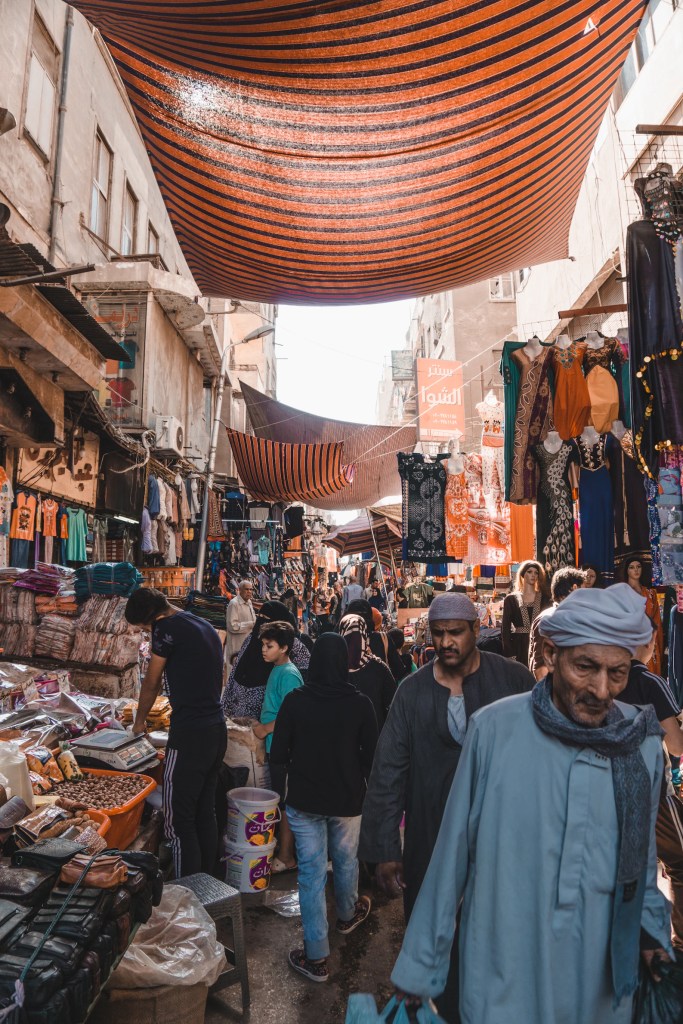
EGYPT
Interpol arrest warrant sought for ex-military leader
Egyptian authorities yesterday asked the International Criminal Police Organisation (Interpol) to place the name of Admiral Mohamed Ibrahim Youssef on its wanted list and to pursue and arrest him. This is following the issuance of a ruling to imprison him for ten years in absentia as a fugitive following his conviction in a corruption case. Mohamed Ibrahim Youssef was a former military leader and chairman of the board of directors of the Holding Company for Maritime and Land Transport. The Cairo Criminal Court, headed by Magdy Abdel Bary, ruled on Sunday, to imprison Youssef for ten years, on charges of making illegal deals and making tens of millions of pounds in profits. He was also charged with giving instructions to drop lawsuits against the company for violating its contracts, causing the state to lose millions. The verdict stipulated the imprisonment of the former military leader, and ten years in prison for Medhat Mansour Mustafa, vice chairman and managing director of the Gulf Egyptian Investment Group, and a fine of 30 million Egyptian pounds (about $618,000).
LIBYA
Militia leader detained over killing of high-profile human trafficker
Libya’s chief prosecutor has ordered the detention of militia leader Mohamed Bahroun and an associate in connection with the killing of notorious human trafficker Abdel-Rahman Milad. Bahroun, commander of the First Support Battalion, surrendered after accusations of involvement in Milad’s death emerged. Milad, also known as “Bija”, was killed on 1 September in Tripoli while riding in a vehicle driven by a chauffeur. He was a prominent figure in Libya’s coastguard, accused by the UN of sinking migrant boats using firearms and being involved in human trafficking operations. Sanctioned by the UN Security Council, Milad was previously jailed for human trafficking and fuel smuggling. Milad was linked to serious human rights abuses in Libyan detention centres, where migrants were extorted or imprisoned. The detention of Bahroun marks a rare move against a militia leader in Libya, where armed groups have long wielded considerable power. The case has drawn international attention, especially from European countries like Italy, which have been impacted directly by the North African country’s human trafficking networks.
TUNISIA
16 Iraqis tried for attempting to migrate to Europe
Tunisian authorities are trying 16 Iraqi citizens after arresting them for trying to migrate to Europe, Iraq’s Foreign Ministry said. This is the first incident of its kind after Tunisia lifted the visa requirement for Iraqi citizens wishing to visit the country. 16 Iraqis, including 14 from the Kurdistan region, who had travelled to Tunisia with the intention of migrating to Europe, are due to appear in court, a statement by the Undersecretary of the Iraqi Foreign Ministry, Omar Al-Barzanji, said on Sunday. He said he expects them to “be released.” He explained that “these people were deceived and believed they would reach Europe. Even if they receive a sentence they will be immediately released, because their sentence will be for one month and they have been detained for more than a month.” Al-Barzanji noted that “two other groups of Iraqis from the Kurdistan region were recently arrested in Tunisia, and ten of them were released.”
Rejected poll monitors accuse Tunisia’s election authorities of bias
Election officials in Tunisia doubled down Monday on their decision to deny accreditation to some election observer groups who say the move shows the October presidential contest in the North African country won’t be free and fair. The Independent High Authority for Elections, or ISIE, said in a statement that several civil society groups that had applied for accreditation had received a “huge amount” of foreign funding of a “suspicious origin” and therefore had to be denied accreditation to observe the election. Though the ISIE did not explicitly name the groups, one of its commission members said last weekend that it sent formal allegations against two specific groups to Tunisia’s public prosecutor, making similar claims that they took funding from abroad. The two organizations, I-Watch and Mourakiboun (which means “Observers” in Arabic) are not the first civil society groups to be pursued by authorities in Tunisia. Under President Kais Saied, non-governmental organizations have increasingly been targeted for their work, which spans from aid for migrants to human rights to local development efforts.
AFRICA-GENERAL NEWS

China’s new strategy in Africa: is the continent getting a fair deal?
China has unveiled a bold new strategy to deepen its influence in Africa – with mixed reactions over whether the continent will truly benefit. At the close of the latest China-Africa cooperation forum, Beijing presented an elaborate proposal to boost African development while securing its own strategic foothold. The Beijing Action Plan is China’s blueprint for the next three years, committing a staggering €46 billion in aid, investments and credit lines. Building on the Dakar Action Plan – signed in the Senegalese capital in 2021 to strengthen cooperation in trade, infrastructure and development – the new deal promises African countries €27 billion in credit, €10 billion in assistance and €9 billion in direct investment from Chinese companies. Its unveiling, made during the ninth Forum on China-Africa Cooperation (Focac) held last week in Beijing, marks a key moment in the strengthening relationship between the two regions. But while the numbers sound promising, questions linger about the true impact on Africa…Beyond financial aid, China’s strategy this time extends into new territory: political and security cooperation. The plan also includes promises of training African military forces, participating in peacekeeping efforts and combatting terrorism. Beijing has also expressed a desire to foster “exchanges between political parties”, generating concern that China may be encouraging African governments to adopt elements of its own authoritarian model.
War ‘tour’, football and graffiti: How Russia is trying to influence Africa
Evidence found by the BBC shows that Russia is using media and cultural initiatives to attract African journalists, influencers, and students while spreading misleading information. These events are being promoted by African Initiative, a newly founded Russian media organisation which defines itself as an “information bridge between Russia and Africa”. It inherited structures previously set up by the dismantled Wagner mercenary group and is believed by experts to have links with the Russian security services. Registered in September 2023, a month after Wagner’s leader Yevgeny Prigozhin died in a plane crash, African Initiative has welcomed former employees from his disbanded enterprises. Its efforts have been particularly focused on the three military-run countries of Mali, Niger and Burkina Faso…Alongside cultural events on the ground, African Initiative maintains a news website with stories in Russian, English, French, and Arabic, as well as a video channel and five Telegram channels, one of which has almost 60,000 subscribers. Some of the Telegram channels were “recycled” from older ones which had been set up by groups linked to Wagner. They were the first to promote the Russian Defence Ministry’s paramilitary group Africa Corps, which has effectively replaced the military wing of Wagner in West Africa. Pro-Kremlin narratives and misleading information, especially about the United States, are rife…In June, a group of bloggers and reporters from eight countries were invited for a seven-day “press tour” of the Russian-occupied areas of Ukraine…Beyond press tours, local affiliates of African Initiative in West Africa’s Sahel region have been actively involved in community outreach efforts aimed at boosting Russia’s image.
Armed Violence closes over 14,000 schools In Africa, leaving millions without education
Education in conflict zones across West and Central Africa is increasingly under threat. According to a recent report by the Education in Emergencies Working Group (EiEWG), armed violence has forced the closure of 14,364 schools across 24 countries in the regions as of June 2024, significantly affecting the education of millions of children. This marks a significant increase from 2023 when 13,200 schools were closed…HumAngle’s ongoing coverage of conflict-affected communities shows how these school closures represent more than just a disruption of learning; they are a sign of how armed groups have used education as a battleground, weaponising the right to learn by targeting students, teachers, and educational infrastructure…The school closures are exacerbating the vulnerabilities of children in conflict zones, particularly girls, who are at heightened risk of early marriage and sexual exploitation…The recruitment of children by armed groups not only disrupts their education but also perpetuates cycles of poverty and instability, making it harder for families and communities to recover from conflict.
African nations boost gold reserves amid economic uncertainty
Central banks in Africa are turning to gold to protect themselves from economic and geopolitical instability and to diversify their financial portfolios. In September 2023, the price of gold per ounce was $1,900. A year later, it is selling for $2,500. According to the World Gold Council, an international trade association for the gold industry, demand for the metal is expected to increase in the next 10 months despite the soaring prices. Some experts, such as Carlos Lopes, a professor at the Nelson Mandela School of Public Governance in South Africa, attribute the African central banks’ gold rush to the need to protect their local currencies. “In the last few years, because of inflation and all these movements for stimulation packages and the rest, the returns are extremely low,” Lopes said. “On the other hand, gold is going up in terms of price because these big banks are also going after gold as a protection. So, it is a very good investment to go to gold.” It helps that African gold production has grown by 60% since 2010, according to the World Gold Council, higher than a global increase of 26%. In 2022, Zimbabwe launched a gold-backed currency to curb inflation and volatility in foreign exchange rates. Ghana and Uganda have been buying gold from artisanal miners to bolster their shrinking foreign currency reserves. Ghana, Africa’s largest gold producer, plans to buy oil from other countries and pay them in gold to ease pressure on local currency and lower high fuel prices.
OpEd: Rating agencies and Africa – the absence of people on the ground contributes to bias against the continent – analyst
 The Africa Edition ©️
Leave a comment