News That Matters To Africa©️
QUOTE OF THE DAY
“Boats don’t sink because of the water around them; boats sink because of the water that gets in them”.
HIGHLIGHTS
129 killed in Congo prison break
Nigeria charges protesters with treason
Angola weighs rival bids to transform economy
UN hosts talks to resolve Libya’s bank crisis
African nations losing 5% of their GDP to climate change.
TOP NEWS
Eastern Africa
More than 129 killed in DR Congo prison break
OpEd: Mpox in the DRC – children are at high risk – health expert explains why
Ethiopian Airlines stops flights to Eritrea
LSK seeks arrest warrant for Acting Police Boss over disappearance of Kitengela activist, siblings
Shortages and delays hit morale of Kenyan officers in Haiti
India’s Adani controversially sets up Kenyan subsidiary amid push for airport deal
Security authorities accused of protecting British army soldier in murder case
Will more stars boycott Dubai over Sudan?
OpEd: Sudan is the world’s worst modern war – what has happened and what it’ll take to rebuild
OpEd: Sudan civil war: How Elon Musk’s X is fueling the conflict
Ugandan opposition figure Bobi Wine is shot in confrontation with police
Ugandan court jails three for naked anti-graft protest
Ugandan Olympian hospitalised after being set on fire
Fossil hotspot hunt in East Africa risks ‘blurring’ evolution
West Africa
Burkina Faso denies Visas to some French diplomats
Militants kill at least 37 in Nigeria attack
Nigeria charges protesters with treason, inciting military
Dangote Oil Refinery begins processing gasoline, State firm to be sole buyer
British man baffled by Nigeria declaring him a top fugitive
Southern Africa
Angola weighs rival China, European financing bids to transform economy
Daughter of South Africa’s ex-president Zuma to be Eswatini king’s 16th wife
South Africa ‘torn apart’ by extortionists, MPs say during debate
OpED: South Africa’s infrastructure vandalism epidemic – A crisis demanding immediate action
North Africa
Algeria: A presidential election in a climate of repression
UN hosts talks in Tripoli to resolve Libya’s central bank crisis
’Crumbling’: Libya’s warring factions dig in for fight over oil profits
One year on, Morocco’s quake victims still wait for homes
Tunisia presidential candidate arrested, three removed from the race
AFRICA-GENERAL NEWS
UPDATE ON MPOX
LETTER TO EDITOR OF THE GUARDIAN
EASTERN AFRICA
DR CONGO
More than 129 killed in prison break
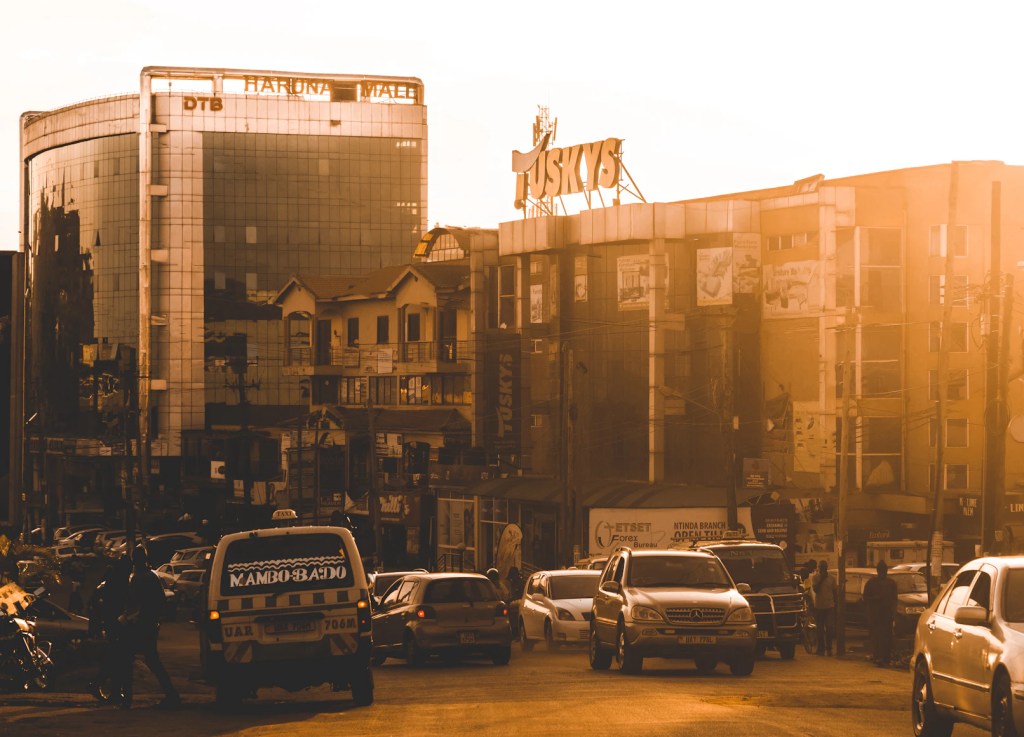
Over 129 people have been killed in an attempted mass breakout from the largest prison in the Democratic Republic of Congo, the latest in a series of violent attacks on jails in the central African nation. Prisoners tried to break out en masse from the Makala Central Prison in the capital, Kinshasa, at around 2 a.m. local time (9 p.m. ET) on Monday, Interior Minister Jacquemain Shabani Lukoo Bihango told reporters. One Kinshasa resident, Daddi Soso, told Agence France-Presse that gunfire rang out for several hours during the incident and that he later saw security vehicles removing bodies from the scene. A series of graphic videos circulating on social media – not verified by CNN – showed dozens of bloodied corpses on the ground. More than 12,000 inmates were held in the Makala prison before the attempted jailbreak even though the facility could only contain 1,500 people, according to a recent report by Amnesty International. Prison breaks are common in the DRC, with several attacks being launched on correctional facilities in recent years.
Kinshasa spurns talk for war
Despite Congolese leaders knowing that dialogue with the rebel coalition would benefit it more, Congolese president Felix Tshisekedi vowed not to engage in any dialogue with the AFC/M23 rebels, vowing to fight them till the end. The Congolese government has invested billions of dollars in purchasing heavy military equipment and logistics, and paying thousands of dollars to eastern European and American mercenaries, local and foreign militia groups, as well as Burundian troops, to fight AFC/M23. However, Tshisekedi’s strategy has not been effective. Kinshasa has suffered huge losses while the rebels expanded their area of influence by capturing swathes of territory. The Congolese army and its vast allied coalition with over 40,000 soldiers, almost five times larger than the rebel coalition’s personnel, started heavy attacks against the rebels since October 2023. However, the rebels keep on advancing, and capturing territory after territory.
ETHIOPIA
Ethiopian Airlines stops flights to Eritrea
Ethiopian Airlines said on Tuesday it had suspended flights to neighbouring Eritrea because its bank account there was frozen. The carrier’s CEO Mesfin Tasew told a news conference that the Eritrean Civil Aviation Authority had blocked money transfers from Ethiopian Airlines’ bank account in the Eritrean capital city Asmara. Eritrea had previously said it would suspend all Ethiopian Airlines flights at the end of this month. Flights from Ethiopia to Eritrea had resumed in 2018 after two decades, following a peace deal and resumption of diplomatic relations between the two neighbours that earned Ethiopia’s Prime Minister Abiy Ahmed a Nobel peace prize a year later. “We couldn’t continue in such situation and we have decided to suspend the flight as of today,” Mesfin said. Five diplomats claim that the suspension of flights signalled that relations between Asmara and Addis had soured significantly, but the risk of conflict was unlikely for now. The two countries severed ties in 1998 when a two-year war started over their disputed border. Eritrea fought alongside Ethiopia in a war that erupted in November 2020 against regional forces from Ethiopia’s Tigray region, but relations soured once again after Asmara was excluded from the peace talks that ended that conflict two years later, and because some of its troops remain in Tigray.
KENYA
LSK seeks arrest warrant for Acting Police Boss over disappearance of Kitengela activist, siblings
The Law Society of a Kenya (LSK) is now seeking a warrant of arrest for Acting Inspector General of Police Gilbert Masengeli for failing to appear in court to disclose the whereabouts of three individuals who went missing in Kitengela two weeks ago. Activist Bob Njagi and brothers Jamil and Aslay Longton disappeared without a trace on August 19, with reports indicating they were forcibly taken away by unknown assailants, who are presumed to be government operatives, following the recent anti-government demonstrations. The LSK subsequently filed a lawsuit against the IG over the abductions. On August 26, the court called for the unconditional release of the abducted persons and ordered the police boss to avail himself and explain why the initial orders regarding the missing individuals were not respected. Despite the summons, Masengeli did not appear in court on Tuesday. Instead, he was represented by a lawyer who informed the court that the IG was unable to attend due to official duties. LSK President Faith Odhiambo however objected the claims, arguing that Masengeli is in contempt for failing to appear for the case’s mentioning. Prior to the hearing, Odhiambo had demanded that the Acting IG produce activist Njagi and the Longton brothers. In a heavily worded statement issued on August 30, Odhiambo condemned the incidents and tasked the IG with conducting thorough investigations into the disappearances of the trio and to hold those responsible accountable.
Shortages and delays hit morale of Kenyan officers in Haiti
Pay issues and shortages of equipment and manpower have sapped morale among Kenyan police officers deployed to Haiti and hampered their ability to confront heavily armed gangs, four officers have reported. After three years of rampant killing, rape and extortion by gangs that control most of the capital Port-au-Prince, Haiti’s transitional government and its international allies are counting on the Kenyan-led mission to restore enough security to hold elections by February 2026. The first nearly 200 Kenyan officers arrived in Port-au-Prince in late June and were joined by a similar-sized contingent three weeks later. The force is supposed to increase to around 2,500 personnel from at least 10 countries. But progress is slow, in part because of financing issues…The four officers said they had been told more equipment was on the way but had not yet seen it and had to fight in the meantime with inadequate resources…Two officers said they regularly took heavy fire from gunmen who would position themselves in tall buldings, but that the police had limited ability to respond because their vehicles do not have armoured platforms from which to shoot. They also said they do not always have radios in their vehicles.Some of the officers questioned why they had been deployed before the equipment was ready. “Some people have been saying … we should just go back home and come when things are ready,” one said. The officers said they had mostly been patrolling major Port-au-Prince roads but had carried out some joint operations with Haitian police – with mixed success.
India’s Adani controversially sets up Kenyan subsidiary amid push for airport deal
Adani Enterprises has set up a Kenyan subsidiary as it steps up its push to take over the running of Jomo Kenyatta International Airport, amid continued opposition among transport workers to the takeover by the Indian conglomerate. While Adani noted that its Airports Infrastructure PLC (AIP) has yet to commence operations or generate revenue, the establishment of a Kenyan airport subsidiary is a sign of its continued commitment to the JKIA takeover, even as domestic opposition to the deal grows. Kenya Airports Authority workers went on strike at JKIA on Monday to oppose Adani’s proposal to take over the airport…Adani submitted a privately initiated proposal (PIP) to the Kenya Airports Authority (KAA) earlier this year to operate JKIA under a 30-year concession.
Security authorities accused of protecting British army soldier in murder case
The family of the late Agnes Wanjiru, the 21-year-old woman who was allegedly raped and murdered by an officer of the British Army Training Unit in Kenya (BATUK) in 2012, has accused the Directorate of Criminal Investigations (DCI) and the Director of Public Prosecutions (DPP) of frustrating their quest for justice. While appearing before the National Assembly’s Defence Committee, the family’s spokesperson, Esther Muchiri, accused the Kenyan investigative agencies of colluding with the British government to mask the identity of the soldier implicated in the gruesome murder. “This language from the DCI, claiming the investigations are still ongoing 12 years later – this cannot be true. The UK government is hiding behind this excuse because the investigations are in the hands of the Kenyan police. We urge the committee to help us push for the extradition of that soldier,” she said. The Defence Committee, chaired by Nelson Koech, is currently conducting an inquiry into the conduct of BATUK in Laikipia and Samburu counties. The committee heard firsthand accounts of the frustrations experienced by Wanjiru’s family. “Imagine being told you can’t petition the UK for justice because we are poor. Is it our fate to be poor?” Muchiri posed. The family’s advocate, questioned why, despite court orders for exhumation to obtain DNA samples from the deceased, the UK government has not matched the DNA to the database of British officers who were in Kenya at the time of Wanjiru’s death.
OpEd: Kenya champions the free movement of people in east Africa, but it’s failing immigrants and refugees at home
SUDAN
Will more stars boycott Dubai over Sudan after rapper Macklemore?
When fans saw rapper Macklemore had cancelled an upcoming gig, some of them assumed it was in solidarity with Gaza. But it wasn’t. The gig was in Dubai and he had cancelled over the war in Sudan, which has already killed tens of thousands of people, left millions more hungry and triggered a humanitarian disaster. The glamorous Gulf city of Dubai is the biggest in the United Arab Emirates (UAE) – which has been widely accused of funding the Rapid Support Forces (RSF), one of the warring sides in Sudan. “The crisis in Sudan is catastrophic,” Macklemore said in an Instagram post on Monday. “I have to ask myself what is my intention as an artist?” continued the rapper, who rose to fame with 2012 classic Thrift Shop. His moral stand has thrust the brutal conflict – which has garnered far less global attention than Ukraine or Gaza – into popular culture, and activists hope other artists will follow suit. “It was huge,” says an activist who has been campaigning for a ceasefire with the group London for Sudan. “In the comments there were a lot of people saying, ‘oh, my God, what’s happening in Sudan?’ The UAE government has described the allegations over its involvement in the Sudan conflict as “baseless and unfounded”, and meant “to divert attention from the ongoing fighting and humanitarian catastrophe”.
OpEd: Sudan is the world’s worst modern war – what has happened and what it’ll take to rebuild
OpEd: Sudan civil war: How Elon Musk’s X is fueling the conflict
UGANDA
Opposition figure Bobi Wine is shot and wounded in confrontation with police
Bobi Wine was shot in the leg in a confrontation with police Tuesday just outside the capital, Kampala, his opposition group said. Photos posted online showed Wine surrounded by followers who yelled that he had been shot in the leg before some supported him into a waiting car. His party, the National Unity Platform, holds the most seats of any opposition group in the national assembly. The party said on X that Ugandan security operatives “have made an attempt on the life of” Wine, whose real name is Kyagulanyi Ssentamu. “He was shot in the leg and seriously injured in Bulindo, Wakiso District,” it said, referring to a town on the outskirts of Kampala. It was not immediately clear whether Wine was targeted with a live bullet or a tear gas projectile. Images shared by his close associates showed a bleeding wound below the left knee. Wine ran for president in 2021, losing to President Yoweri Museveni in an election he claimed was rigged against him. Wine was a famous entertainer in this East African country before he won a seat in the national assembly in 2017. He is especially popular among young Ugandans in urban areas.
Ugandan court jails three for naked anti-graft protest
A court in Kampala has remanded three anti-corruption activists to Luzira prison following their arrest for staging a nude protest at Parliament. The protestors were demonstrating against Speaker Anita Among, demanding her resignation. According to the charge sheet, the state alleges that on September 2, 2024, the three, along with others still at large, conducted a half-naked procession on Parliamentary Avenue, Central Division in Kampala. The protestors, with anti-corruption messages painted on their bodies, allegedly caused public annoyance and obstruction. The youthful protestors, identifying as ‘Uganda Freedom Activists’, had their breasts painted in the colours of the Ugandan flag and carried placards condemning corruption. They specifically called for the resignation of Speaker Among, who has been widely accused of corruption and is currently facing travel bans from the UK and the US. The trio denied the charges but were remanded after failing to provide substantial sureties for bail.
Ugandan Olympian hospitalised after being set on fire
Rebecca Cheptegie, who competed last month in the Paris Olympic Games, suffered burns to three-quarters of her body when her partner poured petrol on her and set her ablaze, police reported late on Monday. The attack took place on Sunday afternoon at Cheptegie’s home in Kenya’s western Trans Nzoia County. The 33-year-old athlete is now in critical condition in a hospital in Eldoret, Kenya. Her Kenyan partner and alleged assailant, Dickson Ndiema Marangach, was also injured by the flames, according to police, who said he broke into Cheptegie’s home while she was at church. Cheptegie, who placed 44th in the women’s marathon at the 2024 Olympics, is not the first high-profile athlete to make headlines as the victim of domestic assault in Kenya. In 2021, record-breaking Kenyan runner Agnes Tirop was found stabbed to death in her home. Tirop’s estranged husband Emmanuel Ibrahim Rotich, who denies involvement, is now being tried for her murder.
Fossil hotspot hunt in East Africa risks ‘blurring’ evolution
Concentration of research on fossil-rich hotspots and discoveries in the East African region risks obscuring a broader, more complex picture of human origins. According to researchers, while East Africa is often celebrated as a fossil-rich hotspot, fossil evidence from other parts of Africa remains underexplored, potentially holding key information that could challenge or enhance our understanding of human evolution. The Great Rift Valley in East Africa, for example, is famous for yielding fossils that have shaped much of what is known about early hominins. Discoveries like Australopithecus afarensis (“Lucy”) and early Homo species have solidified this region’s reputation as the “Cradle of Humankind”. West Africa, Central Africa, and Southern Africa also hold potential fossil sites that may reveal important aspects of human evolution. For example, fossils found in South Africa, such as Australopithecus sediba and Homo naledi, have provided alternative views on human ancestry. Yet, these areas have not received the same level of attention or resources for excavation and research as their eastern counterparts…A new study ’suggests’ the extent to which the concentration of sites in hotspots like the East African Rift System biases understanding of human evolution and calls on scientists to take that bias into account when interpreting early human history.
WEST AFRICA
BURKINA FASO
Visas denied to some French diplomats
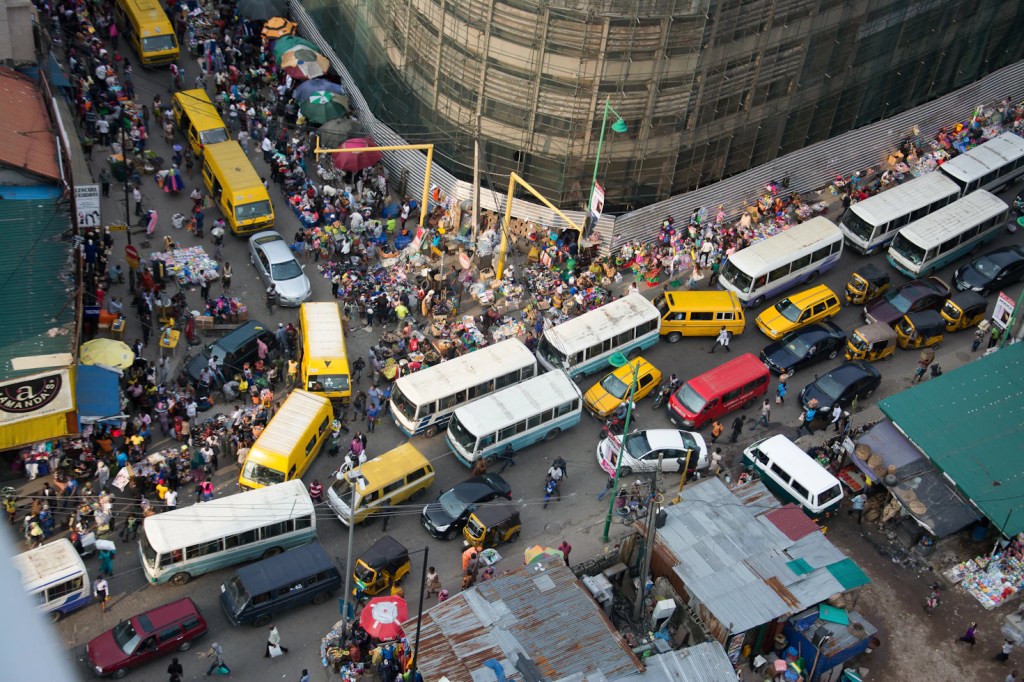
The authorities have refused to issue visas to several French diplomats and employees amid a sharp deterioration in bilateral relations. The new director of a French school in Ouagadougou and some gendarmes who were supposed to provide security for France’s chargé d’affaires in Burkina Faso have also reportedly been denied entry into the country. Relations between Paris and Ouagadougou have deteriorated sharply since the military group came to power in 2022. Burkina Faso expelled the French ambassador Luc Allade in December 2022, and now the French embassy is headed by the first counsellor to the ambassador. It is noted that the embassy is also facing staff shortages: two political counsellors were declared persona non grata for “subversion” and expelled from the country in April 2024. Embassy staff have to pass through a cordon of Burkinabe security forces every time to enter the building. It is claimed that “tensions are only increasing” as a civil society organisation supporting the republic’s resident transitional leader Ibrahim Traoré has given France an ultimatum to move the embassy to another location because it is close to the country’s leader’s residence and “poses a threat” to the transitional authorities.
NIGERIA
Suspected Boko Haram militants kill at least 37
Suspected Boko Haram Islamist militants roared into a northeastern Nigerian village on motorcycles, opened fire on a market and set shops and homes ablaze, killing at least 37 people, according to a military official. Residents said the death toll could be even higher, with villagers still missing and feared dead after fighters chased them into the bush. The attack took place on Sunday afternoon in Yobe, one of three states at the frontline of an insurgency that has lasted 15 years. Thousands of Nigerians have been killed and more than 2 million displaced. Yobe police spokesperson Dungus Abdulkarim said the attack in Yobe’s Mafa village was apparent retaliation for the killing of two suspected Boko Haram fighters by local vigilantes. After shooting at the market and torching buildings, the militants chased other residents into the bush and shot them, Abdulkarim added.
Nigeria charges protesters with treason, inciting military
Nigeria charged 10 people with treason and conspiring to incite the military to mutiny following last month’s nationwide demonstrations that saw thousands take to the streets to protest against a cost of living crisis. The protests were met with a deadly crackdown by security forces and Amnesty International said at least 13 people were killed. Security forces denied using lethal force. The 10 men were arraigned in the Abuja Federal High Court and entered a not guilty plea. They face the death penalty if convicted, human rights lawyer Inibehe Effiong said. State prosecutors said that the protesters intended to destabilise Nigeria and “conspired together to commit felony to wit, treason”.
Prosecutors also laid five other charges against the accused under the country’s penal code, including inciting the military to mutiny, burning government buildings and disturbing public peace. Lawyers for the protesters sought their release on bail, which was opposed by the state. The court will make a ruling on Sept. 11 when their trial is expected to begin. Amnesty urged the government to unconditionally release all the people arrested during the protests. It said the trial was meant to unlawfully justify detaining protesters.
Dangote Oil Refinery begins processing gasoline, State firm to be sole buyer
Nigeria’s Dangote Oil Refinery has begun processing gasoline after delays caused by recent crude shortages, an executive said on Monday. The $20 billion refinery on the outskirts of Lagos, built by Nigerian billionaire Aliko Dangote, began operations in January with output of products including naphtha and jet fuel. With a capacity of 650,000 barrels per day, Africa’s largest refinery promises to ease oil producer Nigeria’s costly reliance on imported oil products. Devakumar Edwin, a vice president at Dangote Industries Limited, said state-oil firm NNPC Ltd, Nigeria’s sole importer of gasoline, would buy its gasoline exclusively. The delivery of gasoline into the Nigerian market will ease NNPC’s struggle to supply the local market. The company is reeling with debts of $6 billion to oil traders for supply since January. This has affected its ability to supply the local market where fuel queues have persisted since July. Prices have jumped by 45% from the official price of 617 naira ($0.3942) announced after subsidies were removed last year.
British man baffled by Nigeria declaring him a top fugitive
A British national has said he is at a loss as to why the Nigerian police have accused him of planning to overthrow Nigeria’s government and placed a bounty on his head. It was alleged by Nigeria’s police spokesperson on Monday that Andrew Wynne – and a co-conspirator – had built up a network of sleeper cells to destabilise Nigeria and had fled the country in the wake of last month’s cost-of-living protests. Speaking from the UK, Mr Wynne told Nigeria’s Channels Television he was not aware of accusations and would be happy to talk to officials. He said he ran a bookshop in the Nigerian capital, Abuja, and had been visiting the West African nation for 25 years without any problems. A reward of 10m naira ($6,000, £5,000) has been offered by Nigeria’s police to anyone who has information that could lead to the arrest of Mr Wynne – and the same amount for his alleged Nigerian accomplice Lucky Obiyan…police spokesperson Muyiwa Adejobi gave more details about Mr Wynne, saying he had rented a space at Abuja’s Labour House, the headquarters of the Nigeria Labour Congress (NLC) – the country’s main trade union body. He also said the British national had established a school to cover up his activities – working towards the overthrow of President Bola Tinubu’s government.
SOUTHERN AFRICA
ANGOLA
Gov’t weighs rival China, European financing bids to transform economy
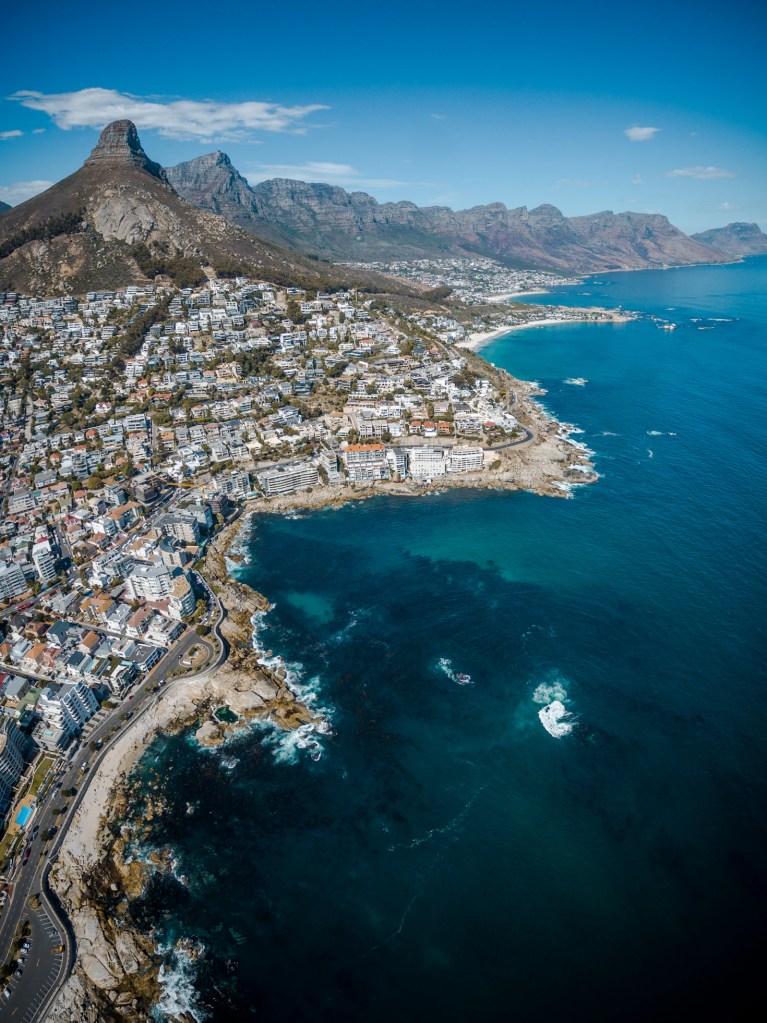
China needs to step up its financing for Angola if the African nation is to absorb more Chinese-made goods from solar panels to electric cars, Angola’s finance minister said on Tuesday, as the former OPEC member considers vying bids from Beijing and Europe. China approved loans worth $4.61 billion to Africa last year, the first annual increase since peaking at $28.4 billion in 2016, when 68% of lending went to Angola alone, even as it began to turn off the cash spigot and move away from big-ticket infrastructure projects as resource-rich Africa struggles with a growing debt crisis and grasps for quicker financing solutions. Since quitting the Organization for Petroleum Exporting Countries (OPEC) in December, Angola has been looking for ways to firm up its finances and food security, grow its fisheries sector and attract more job-creating investment inland, Vera Daves De Sousa said in an interview ahead of a major China-Africa summit in Beijing. The littoral state has plentiful reserves of base metals and ample agricultural resources such as sugar cane, coffee, cotton and livestock, but they have been neglected compared with oil, which accounts for 95% of its exports. China has expressed willingness to help Angola modernise its agricultural sector, grow its industries and diversify its economy in exchange for imports of more Chinese goods, but faces competition from the West.
ESWATINI/SOUTH AFRICA
Daughter of South Africa’s ex-president Zuma to be Eswatini king’s 16th wife
A daughter of the former South African president Jacob Zuma and the king of Eswatini, formerly Swaziland, have become engaged during a traditional ceremony in which Nomcebo Zuma was among hundreds of women and girls dancing for the monarch. Zuma, 21, appeared on Monday night at the annual reed dance as the liphovela – the royal fiancee or concubine – and will become King Mswati III’s 16th wife. The 56-year-old king has led Africa’s last absolute monarchy since taking power in 1986, days after his 18th birthday, and has been criticised for his lavish lifestyle while most of the population lives in poverty. The days-long reed dance is a traditional rite of womanhood, with young women singing and dancing bare-chested, wearing traditional clothing that includes anklets and thick colourful tassles, some carrying mock swords and shields. It is not the first time King Mswati, who has dozens of children, has announced a much younger bride at the Umhlanga. In September 2005, 17-year-old Phindile Nkambule was presented as his 13th fiancee at a reed dance, with the BBC reporting at the time that she had caught his eye at the main dance the previous month. Just days before, the king had rescinded a ban on sex for and with girls under 18, which he had implemented in an effort to fight HIV/Aids. Two months after imposing the ban in 2001, Mswati fined himself a cow for breaking his own rule by taking a 17-year-old as his ninth wife…The king’s latest bride also comes from a large polygamous family. Jacob Zuma, 82, has been married six times and currently has four wives and more than 20 children.
SOUTH AFRICA
Nation ‘torn apart’ by extortionists, MPs say during debate
Africa must declare war on the construction and extortion mafias that use violence to hold citizens and businesspeople hostage to their demands for cash in exchange for contracts and personal protection. This was the unequivocal agreement across all political parties during a parliamentary debate on the construction mafia and rampant extortion after Police Minister Senzo Mchunu outlined the South African Police Services (SAPS) plan of action to deal with the criminals. Mchunu said parts of the country face a “wave of extortion and other related crimes”, with Gauteng, KwaZulu-Natal, Western Cape and Eastern Cape accounting for 73% of all reported crimes. “Extortion [has] been emerging over time and it has now reached levels where all communities in our country beyond the four provinces have become very angry, bitter and agitated,” Mchunu said. “The pain has gone very deep. The mood expressed in communities all around the country is also reflective of statements made in the house unanimously against these crimes in the short past. The current socio-economic conditions are militating against low crime levels in the country and need to be addressed urgently by this house and also by the executive.” He said the modus operandi of the perpetrators of extortion was well known. “They are often armed, operating in groups and instilling fear and chaos. The relative silence of communities and low reporting is often due to these fears.”
OpED: South Africa’s infrastructure vandalism epidemic: A crisis demanding immediate action
NORTH AFRICA
ALGERIA
A presidential election in a climate of repression
After the brief ‘breath of freedom’ of the Hirak, the mandate of Abdelmadjid Tebboune, candidate for re-election in September, has been marked by human rights violations. Amine*, a 45-year-old former Algerian journalist who left his country for Paris two years ago, remembers with nostalgia the wave of hope that seized Algiers’ newsrooms in February 2019 during the Hirak, the popular uprising that led to the downfall of long-time autocrat Abdelaziz Bouteflika. “A breath of freedom had blown over the country,” related Amine, who worked for a media outlet in the Algerian capital at the time. “In marches, on television sets, in newspapers and on social networks, opposition politicians, community activists and ordinary citizens dared to be very critical without fear of reprisals,” he added. However, this quickly came to an end with the subsequent mass arrests of Hirak activists who supported a democratic transition and opposed the presidential elections organised by the ruling establishment, Amine said.
Following the election of President Abdelmadjid Tebboune in December 2019, after a controversial vote, the arrests continued, targeting journalists, students, activists and members of the opposition. Last April, the National Committee for the Liberation of Detainees (CNLD), an association created during the Hirak by a group of lawyers, prisoners’ families and intellectuals, published a list of 228 individuals “arbitrarily detained and sentenced to prison”, and called for their release.
LIBYA
UN hosts talks in Tripoli to resolve Libya’s central bank crisis
The United Nations Support Mission in Libya said it held talks in Tripoli on Monday to help resolve a central bank crisis that sparked a blockade of oil production and threatens the worst crisis in years for the major energy exporter. The standoff was triggered when Western factions moved last month to oust veteran governor Sadiq al-Kabir and replace him with a rival board, leading Eastern factions to shut down all oil production. In its statement, UNSMIL said the consultations were concluded with ‘significant’ understanding and the two sides agreed to submit a draft agreement to their respective chambers for review, with the goal of finalizing and signing the agreement on Tuesday. Oil prices edged higher on Monday, recovering some losses from late last week, as Libyan oil exports remained halted and concerns about higher OPEC+ production from October eased. Representatives from Libya’s House of Representatives and High Council of State on one side and the Presidential Council on the other participated in the talks hosted by UNSMIL which lasted from morning until late into the night, the statement said. Libya’s central bank (CBL) is the sole legal repository for Libyan oil revenues and it pays state salaries across the country. If those functions are compromised by the current crisis, Libyans will soon feel the pinch.
’Crumbling’: Libya’s warring factions dig in for fight over oil profits
Foreign powers backing Libya’s rival governments don’t want a return to war, but situation could spiral out of control, experts say. Libya’s oil production and exports plunged on Thursday as warring political factions appear to be digging in for a feud over control of the war-ravaged country’s central bank and the petrodollars it holds. The closure of oil fields and terminals across eastern Libya slashed the Opec member’s production by roughly 700,000 barrels per day, analysts state. Libya, home to Africa’s largest proven oil reserves, was producing about 1.2 million bpd this year…The closures are a result of a dispute between Libya’s rival governments for the reins of the central bank in Tripoli, which controls the cash generated by the country’s oil sales. On one side is Abdul Hamid Dbeibeh, the prime minister of Libya’s UN-recognised government based in Tripoli, who wields an alliance of powerful militias. On the other side, is Field Marshal Khalifa Haftar, who controls a rival government based in the country’s east. While Libya’s central bank is located in Tripoli, the bulk of its oil reserves and infrastructure are located in the east… Analysts say the central bank dispute reveals that Tripoli’s government has no intention of stepping down. With no deadline for elections or term limits, they say leaders in Tripoli have been cementing control of other institutions like the National Oil Company (NOC).
MOROCCO
One year on, Morocco’s quake victims still wait for homes
A year after Morocco’s devastating earthquake in the High Atlas mountains only some 1,000 homes out of 55,000 under reconstruction have been rebuilt, according to government figures, as thousands continue to live in tents under extreme heat in summer and freezing cold in winter. The 6.8 magnitude earthquake, Morocco’s deadliest since 1960, struck on Sept. 8, 2023, killing more than 2,900 people and damaging vital infrastructure. It destroyed many hamlets with traditional mud brick, stone and rough wood houses, specific to the Amazigh-speaking Atlas mountains. Last week, locals at the quake’s epicenter Talat N Yacoub protested over the slow pace of reconstruction, demanding more transparency in aid distribution and more investment in the impoverished area’s infrastructure and social services. So far 97% of households are receiving gradual government reconstruction aid, the prime minister’s office said in a statement, adding that 63,800 quake-hit families are receiving a monthly state handout of 2500 dirhams ($255).
TUNISIA
Presidential candidate arrested, three removed from the race
The electoral commission rejected a court ruling reinstating three presidential candidates and police arrested another candidate in what opposition critics said was another example of President Kais Saied stifling competition. Defying the highest judicial body, the commission approved only the candidacies of Saied and two others, Zouhair Magzhaoui and Ayachi Zammel, for the Oct. 6 presidential election. “The commission is the only body constitutionally entrusted with the integrity of election,” Farouk Bouasker the head of electoral commission said. Earlier on Monday, police arrested Zammel, a member of his campaign reported. The campaign member said the arrest appeared aimed at distracting him from his campaign. The developments could shake the credibility of the vote and deepen a political crisis that has been escalating since 2021, when Saied began ruling by decree in a move the opposition described as a coup. Last week, the Administrative Court, the highest judicial body that adjudicates electoral disputes, reinstated three prominent candidates, Mondher Znaidi, AbdelLatif Mekki and Imed Daimi, to the election race after the electoral commission had rejected their candidacy filing. Dozens of activists gathered near the commission’s headquarters on Monday, demanding the commission step down.
AFRICA-GENERAL NEWS

Israeli jets traumatise African migrant workers
A few minutes before 5pm on 6 August, a boom rippled across Beirut. Two days earlier, people in Lebanon’s capital had commemorated the 2020 Beirut port explosion. The boom was reminiscent of the shattering sound back then, when 237 people were killed. This explosive sound was quickly followed by another — stronger and louder. In the streets, terrified people scrambled for shelter. It was not a bomb or an explosion at the port: Israeli attack planes had torn through the air, flying as close as possible to the ground, fast enough that they broke the sound barrier. The sonic boom and shockwave this creates is used as a tool of psychological warfare, and it came right before a scheduled speech by Hezbollah leader Hassan Nasrallah. It wasn’t the veiled threat of war by Israel that threw Marian Sesay, a Sierra-Leonean migrant living in Lebanon. It was the trauma of the past. “Those sonic booms, that’s like what happened on the fourth of August explosion for sure,” says Sesay, referring to the port explosion among whose fatalities were 76 foreign nationals. “Now, I’m scared of every little sound,” she says…In the aftermath, some migrant workers decided to leave Lebanon. Others chose to stay. They healed with the help of some organisations, their community and their family back home. But the scars are still there — scratched each time Israeli jets break the sound barrier, as they have done several times since the Hamas attack on 7 October 2023.
African nations losing 5% of their GDP to climate change – Report
African nations are losing up to 5% of their GDP every year as they bear a heavier burden than the rest of the world from climate change, a new report said Monday after one of the continent’s hottest years on record. The World Meteorological Organization said many African nations are spending up to 9% of their budgets for climate adaptation policies. “Over the past 60 years, Africa has observed a warming trend that has become more rapid than the global average,” said WMO Secretary-General Celeste Saulo, warning that it is affecting everything from food security to public health to peace. Africa is responsible for less than 10% of global greenhouse gas emissions. But it is the most vulnerable region to extreme weather events including droughts, floods and heatwaves, the WMO said. The new report focuses on 2023, one of Africa’s three hottest years on record. It urged African governments to invest in early warning systems as well as meteorological services. If adequate measures are not put in place, up to 118 million Africans will be exposed to droughts, floods and extreme heat by 2030, the report warned. In sub-Saharan Africa, the costs of adapting to extreme weather could be $30-50 billion per year over the next decade, the report estimated.
China reaps most of the benefits of its relationship with Africa: what’s behind the imbalance
Analysis: The ninth Forum on China-Africa Cooperationin Beijing takes place under the theme of “Joining hands to advance modernisation and build a high-level China-Africa community with a shared future”. But how shared can that future be between the Asian economic giant and Africa? The eight summits since 2000 have not resulted in mutual gain, particularly in trade and industrialisation for Africa. China has reaped most of the benefits. The fault lies with Africa’s lack of a strategy for engagement with China…The China-Africa cooperation forum has become the most important event on the African international relations calendar. More African leaders attend these summits than the United Nations general assembly.
Analysis: Minerals -The magnet shaping China’s quest for Africa
As the ninth Forum on China–Africa Cooperation (Focac) kicks off this week in Beijing, a new, green theme is shaping their relationship: the global renewable energy race. Lauren Johnston, a development economist with expertise in China-Africa relations, was asked to provide some insights into this development as it positions both regions as key players in the global shift towards green energy.
China’s mission to win African hearts with satellite TV
As African leaders gather in Beijing this week for the triennial China-Africa summit, Chinese President Xi Jinping may have one thing under his belt to boast about – satellite TV. Almost nine years ago, President Xi promised the heads of state attending the Forum on China-Africa Cooperation (FOCAC) in Johannesburg that China would provide over 10,000 remote villages in 23 African countries with digital TV access. With over 9,600 villages having received satellite infrastructure, the project is now nearing completion. The ambitious pledge, revealed during a period of warm China-Africa relations and funded by China’s aid budget, was entrusted to StarTimes, a private Chinese company already operating in several African countries. It was an apparent show of goodwill and an opportunity for China to flex its soft power in a strategically important region.
OpEd: China’s interests in Africa are being shaped by the race for renewable energy
OpEd: China-Africa forum 2024 – A watershed re-alignment of the Global South?
Poll: Corruption pushing African youth to emigrate
Nearly 60 percent of young Africans want to leave their countries because their governments are not reining in corruption, according to a new poll of youth across 16 African nations. They cited corruption as the biggest obstacle to progress, according to the 2024 African Youth Survey published on Tuesday. The poll commissioned by the Johannesburg-based Ichikowitz Family Foundation surveyed 5,604 people between the ages of 18 and 24 in Botswana, Cameroon, Chad, the Republic of the Congo, Ivory Coast, Ethiopia, Gabon, Ghana, Kenya, Malawi, Namibia, Nigeria, Rwanda, South Africa, Tanzania and Zambia. 83% percent of them said they are concerned about corruption at home, and 62 percent believe the government is failing to address it. The poll showed nearly 58 percent of young people saying they are “very likely” or “somewhat likely” to consider emigrating to another country in the next three years. “Concern is widespread across different spheres, including national and local governments, businesses, and police forces,” said the survey, conducted via face-to-face interviews in January and February. More than half, or 55 percent, of those polled said Africa was headed in the “wrong direction”, although there was a modest rise to 37 percent in “Afro-optimism” from the 2022 survey. Young Africans looking to emigrate favoured North America as their top destination, followed by Western Europe, including the United Kingdom, France, Germany, and Spain.
UPDATE ON MPOX

Inside an Mpox outbreak
A new strain of the mpox virus is spreading rapidly within Africa and has been discovered in Asia and Europe. The World Health Organization has declared it a global health emergency. Journalist Prosper Heri Ngorora takes us through an outbreak in Democratic Republic of Congo.
OpEd: Mpox in the DRC – children are at high risk – health expert explains why
Virus hunters: The scientists tracking deadly diseases in tough conditions
LETTER TO THE EDITOR OF THE GUARDIAN

“Your report (Senegal’s troubled Casamance region hopes for peace with rise of local boy to PM, 28 August) referred to the Gambia as “the roughly rectangular, English-speaking country that bisects Senegal”. Why do western media continue to categorise African countries based on colonial languages, as if African languages don’t exist? This overlooks the fact that Wolof is widely spoken in both Senegal and the Gambia. By choosing to emphasise a European language over Wolof, the article seems to disregard African languages. While it is true that many African countries have not fully decolonised and continue to use colonial languages imposed on them as their “official languages”, it is crucial to question why this remains the norm. The current approach undermines the richness of African languages and perpetuates the divisive colonial lens through which the continent is often viewed. Western media should commit to discontinuing the use of colonial language categorisations and give due recognition to African languages.”
Karim Bah
Munich, Germany
 The Africa Edition ©️
Leave a comment