News That Matters To Africa©️
QUOTE OF THE DAY
“You can collapse a nation without the use of atomic bombs. It only requires lowering the quality of education and allowing corruption to determine which students are accepted. Eventually, patients will die in the hands of such future doctors; buildings will collapse at the hands of such engineers; money will be lost at the hands of such accountants; and justice will be scarce in the hands of such judges…The corruption of education leads to the collapse of a nation.”
HIGHLIGHTS
Sudan’s worst 500 days
South African is now Miss Universe Nigeria
SAfr’s $5 billion digital opportunity
Algeria joins BRICS Bank
African leaders flock to Beijing.
TOP NEWS
Eastern Africa
WHO says Mpox vaccines to arrive in DR Congo in next few days
The Crisis ‘Heating’ the Horn:
Why Ethiopia is so alarmed by an Egypt-Somalia alliance
Djibouti offers port to defuse Ethiopia-Somalia tension
Analysis: From Water to Power: Ethiopia activates key turbines at GERD amid regional tensions
Ethiopia: Op-ed: Pretoria Agreement: The rift and the road ahead
Kenya: regulator acknowledges Safaricom’s Starlink worries
OpEd: Here is Raila’s Africa Union road to nowhere
Rwanda’s Kagame fires military chiefs in latest purge
Analysis: New AU mission for Somalia: old problems, fresh solutions?
Sudan’s worst 500 days: First the war then deadly floods
OpEd: To End Sudan’s War, Pressure the UAE
What’s driving Uganda’s high fuel prices
West Africa
Gabon marks year since ‘coup of liberation’
Why Lagos buildings keep crashing down
Nigeria’s brightest students…leave
OpEd: On Nigeria’s bold but rudderless attempts at structural economic reforms
Hounded South African is now Miss Universe Nigeria
Southern Africa
SAfr’s $5 billion digital opportunity
SAfr seeking Star Gazers as tourists
Pretoria: ‘sick’ Zimbabweans clogging hospitals
A year after Johannesburg building fire, survivors feel abandoned by cit
North Africa
Algeria joins BRICS New Development Bank
Libya dismantles human trafficking network
AFRICA-GENERAL NEWS
THIS WEEK AHEAD
FOR YOUR CONSIDERATION
EASTERN AFRICA
DRCONGO
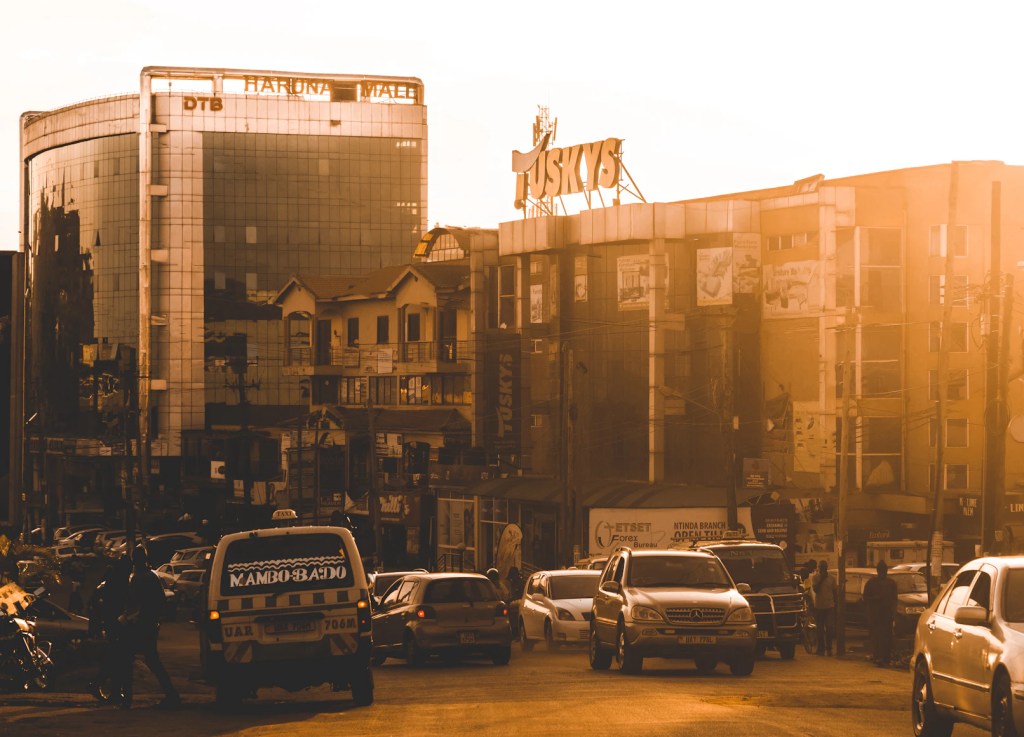
Mpox vaccines to arrive in DR Congo in next few days, WHO says
The World Health Organization chief said on Friday that mpox vaccines were set to arrive in the Democratic Republic of Congo in the next few days to fight a new strain of the virus. “We hope to have the first delivery in the next few days, and then it will build up,” Director General Tedros Adhanom Ghebreyesus told reporters at a press conference. Some 230,000 mpox doses are immediately available to be dispatched, added WHO official Tim Nguyen. These doses were donated by the European Commission and Danish mpox vaccine manufacturer Bavarian Nordic, Nguyen said. It is currently reviewing applications for emergency licences for two vaccines made by Bavarian Nordic and Japan’s KM Biologics. Tedros said these were expected to be granted in the next two weeks. Rosamund Lewis, the WHO technical lead for mpox, said she hoped the vaccines and other interventions by health partners would help cases come down again in the near future.
The Crisis ‘Heating’ the Horn:
Why Ethiopia is so alarmed by an Egypt-Somalia alliance
A military alliance between Somalia and Egypt is ruffling feathers in the fragile Horn of Africa, upsetting Ethiopia in particular – and there are worries the fallout could become more than a war of words. The tensions ratcheted up this week with the arrival of two Egyptian C-130 military aeroplanes in Somalia’s capital, Mogadishu, signalling the beginning of the deal signed earlier in August during a state visit by the Somali president to Cairo. The plan is for up to 5,000 Egyptian soldiers to join a new-look African Union force at the end of the year, with another 5,000 reportedly to be deployed separately. Ethiopia, which has been a key ally of Somalia in its fight against al-Qaeda-linked militants and is at loggerheads with Egypt over a mega dam it built on the River Nile, said it could not “stand idle while other actors take measures to destabilise the region”…Somalia has not only brought its Nile enemy Egypt into the mix, but also announced that Ethiopian troops would not be part of the AU force from next January. This is when the AU’s third peace support operation begins – the first one was deployed in 2007 months after Ethiopian troops crossed over the border to help fight al-Shabab Islamist militants, who then controlled the Somali capital. There are at least 3,000 Ethiopian troops under the current AU mission, according to the Reuters news agency.
Gaming an Ethiopia-Egypt war
“Egypt cannot conduct direct warfare with Ethiopia. It doesn’t share a border with Horn state. To do that will require investment in aircraft careers, long-range expeditionary strike capabilities. Its helicopter career fleet expanding. Egyptian Navy warships capable of carrying and delivering ballistic short and medium range missiles. To threaten Ethiopia its small fleet of submarines and frigates will need to move close to the Bab el-Mandeb (this explains why Egypt angered by the Ethiopia-Somaliland MoU). Four states with borders with Ethiopia are crucial for Egyptian military planners and strategists – Sudan, S/Sudan, Eritrea and Somalia. Al-Sisi has pursued an encirclement strategy targeting these states cutting defence deals with states on the Nile Basin. Egypt deployed its long-range bombers and fighters in Wad Sayidnah, north of Khartoum, but pulled out its troops when war erupted in Sudan in 2023. It also maintains personnel and close defence cooperation with Eritrea. Egypt recently signed a deal with Djibouti to build a logistics hub that could be crucial for ships and aircraft. Somalia is ideal for Egypt. It has a long border with Ethiopia and a large coastline. Obtaining a military base and deploying fighter bombers and other lethal assets could put Ethiopia in a real difficult spot. Somalia highly likely to become theatre for Egyptian-Ethiopian confrontation. Egyptian threat on its eastern flank may impel Ethiopia to start a pre-emptive war – invade Somalia and dislodge government in Mogadishu. A repeat of the Dec 2006 scenario highly plausible”.
by Rashid Abdi on “X” @RAbdiAnalyst
Djibouti offers port to defuse Ethiopia-Somalia tension
Djibouti’s Foreign Minister Mahmoud Ali Youssouf says his country has a proposal that could solve the dispute between Somalia and Ethiopia. In an interview, Youssouf said his country has offered to give Ethiopia access to the port of Tadjoura, about 100 kilometers (62 miles) from the border with Ethiopia. He said Djibouti and other countries such as Turkey have been trying to solve the dispute between Somalia and Ethiopia, which ignited at the beginning of this year when Ethiopia signed a Memorandum of Understanding (MOU) with the breakaway region of Somaliland, a deal Somalia sees as an infringement to its sovereignty. Under the deal, Somaliland would lease 20 kilometers (12 miles) of shoreline to Ethiopia in return for recognition, according to Somaliland officials. Ethiopia already relies on Djibouti’s main port to import most of its goods, using four different terminals, said Youssouf, who is a candidate for the African Union chairperson. “Djibouti is even ready to hand over a new port, a brand-new port that has been built, a brand-new corridor to the northern border of Djibouti, that corridor will be very helpful to Ethiopia, at least to decrease the cost of transport,” he said.”Djibouti is even ready to consider a mix-management of the port with Ethiopia,” he added…Asked if Djibouti’s offer includes a naval base for Ethiopia, Youssouf said, “No.”
ETHIOPIA
Analysis: From Water to Power: Ethiopia activates key turbines at GERD amid regional diplomatic maneuvering, experts examine what lies ahead
Op-ed: Pretoria Agreement: The rift and the road ahead
KENYA
Regulator: Safaricom’s Starlink worries
Kenya ‘s communications regulator, the Communications Authority of Kenya (CA), says Safaricom, the country’s largest telecom service provider, is welcome to raise regulatory concerns about Elon Musk’s satellite internet service Starlink. In a statement, the CA said Safaricom is justified in its fears concerning the licensing of independent satellite providers, including Starlink. CA is Kenya’s ICT regulatory authority, responsible for telecommunications, cyber security, e-commerce, broadcasting, multimedia, and postal/courier services. The CA stated that “licensees or service providers are free to raise any issue in the market with the ICT regulator.” Last week, Safaricom expressed concerns and urged CA to exercise caution while granting independent licenses to satellite internet service providers. In a letter to CA, Safaricom requested the regulator consider mandating satellite internet providers like Starlink to work together with local mobile network operators. This comes after the satellite internet provider introduced competitive price options and plans that even allowed Kenyans to rent its equipment without having to purchase the full package.
OpEd: Here is Raila’s Africa Union road to nowhere
“…I was struck by two sad truths. One truth was of a tone deaf generation totally incapable of understanding the problems of Africa. The other was that these same people continue to be in charge of Africa’s affairs…”
RWANDA
President Kagame fires military chiefs in latest purge
President Paul Kagame has sacked senior military officers in the latest purge of the country’s disciplined forces. Among those shown the door is Major General Martin Nzaramba, Colonel Dr Etienne Uwimana and 19 other senior and junior officers for misconduct. According to a statement released by Rwanda Defense Forces (RDF), the President also authorised the dismissal and contract termination of 195 other military personnel of various ranks from the army. Brigadier General Ronald Rwivanga, the RDF spokesperson, told local media that Maj-Gen Nzaramba was dismissed due to corruption and mismanagement of funds meant for the welfare of soldiers when he headed the Nasho Military Training Institute. He said Col Dr Uwimana was fired for violating the military code of conduct and for grave mistakes he made, without giving details. The spokesperson said others were also dismissed for corruption and other forms of misconduct that violated military regulations. RDF has often taken a tough stance on the conduct of military officers, and dismissals have included high-ranking officers. One such case was that of Maj-Gen Aloys Muganga, who was dismissed for what the force said was due to excessive alcohol consumption. Brig Gen Francis Mutiganda was sacked for insubordination in 2023. Some 228 other soldiers of various ranks had their contracts terminated or were dismissed.
SOMALIA
Analysis: New AU mission for Somalia: old problems, fresh solutions?
To succeed in tackling al-Shabaab, the new peace support operation needs appropriate resourcing and protection from regional tensions.
SUDAN
Sudan’s worst 500 days: First the war then deadly floods
27 August marks 500 days of relentless conflict in Sudan that has killed thousands and left millions in dire need of humanitarian assistance, with women and girls bearing the worst of the war. So far, more than 18,000 people have been killed, 33,000 injured, and 10 million displaced — including 7 million internally making Sudan the world’s largest displacement crisis. The conflict has also propagated the world’s largest hunger crisis, with millions facing famine conditions. As fighting shows no signs of abating, the future of Sudan remains bleak and uncertain. “The situation is catastrophic, and the world must stop turning a blind eye to the escalating devastation and suffering,” warns Abdirahman Ali, CARE Sudan Country Director. “The war has shattered the healthcare system, leaving countless without care. Aid workers struggle to reach those in desperate need of help, and food prices soar as farms remain bare due to a missed planting season. Women and girls are disproportionally impacted, facing sexual and gender-based violence (SGBV) that has them living in constant fear.”…Sudan’s war has been a churn of bad numbers: 500 days or 16 months of death, displacement and hunger. It has also been a reflection of several numbers of ceasefire attempts that failed. That was the war. But then floods came this week in northern parts of Sudan. Its toll was not yet known but officials were speaking of 40 deaths, 200 missing after a dam breached its banks. In Sudan, locals have been pummeled by hunger, displaced by war, injured in violence as well as marooned by floods.
OpEd: To End Sudan’s War, Pressure the UAE
Abu Dhabi is prolonging the war by arming the brutal rebels of the Rapid Support Forces. The international community must stop giving it a pass.
UGANDA
What’s driving Uganda’s high fuel prices
Two months after the Uganda National Oil Company (Unoc) took over as the sole importer and supplier of petroleum products into the country, pump prices remain high, signalling more problems associated with the supply lines. There has been a slight drop in average pump prices, attributed partly to direct importation of fuel products yielding reduced logistics costs. But the change is pegged to other factors, mainly the appreciation of the Ugandan shilling against the US dollar, and the lower global price of crude. According to Trading Economics, Brent crude on Thursday sold at $77.6 before rebounding past $80 a barrel, but is expected to trade at $77.42 by the end of this quarter, down from $85 in June, when Unoc initially submitted orders for the first consignment of its fuel imports. Despite this, Uganda continues to feel pump price headaches as the dominant firms in the market are still comfortably perched above the government’s desired upper limit of Ush5,000 ($1.34) for a litre of petrol or diesel, in a competitive downstream market.
WEST AFRICA
GABON
Nation marks year since ‘coup of liberation’
A year since a military coup in Gabon ended the Bongo dynasty’s 56-year rule, the country marked the anniversary in festive mood this week with celebrations and promises by the ruling junta to step up progress on reforms. The Gabonese largely welcomed the military’s ouster of president Ali Bongo, whose family’s poor management of the central African country’s oil wealth had led to a stagnant economy and stranded a third of the population in poverty. Hundreds gathered in the centre of the capital, Libreville, on Friday for official celebrations led by interim president General Brice Oligui Nguema to mark the first anniversary of what is widely referred to as the “coup of liberation” in Gabon. Gabon faces significant challenges. Despite its significant oil wealth, infrastructure across the heavily forested country is poor, it is highly dependent on food imports, and income per capita is lower than it was in the 1970s. The junta, which calls itself the Committee for the Transition and Restoration of Institutions, has taken steps to improve transparency and budget management. But a brighter economic outlook will depend on authorities’ ability to pivot to a more open and inclusive model of governance, the International Monetary Fund warned in May, saying economic diversification and correcting fiscal imbalances were vital.
NIGERIA
Why Lagos buildings keep crashing down
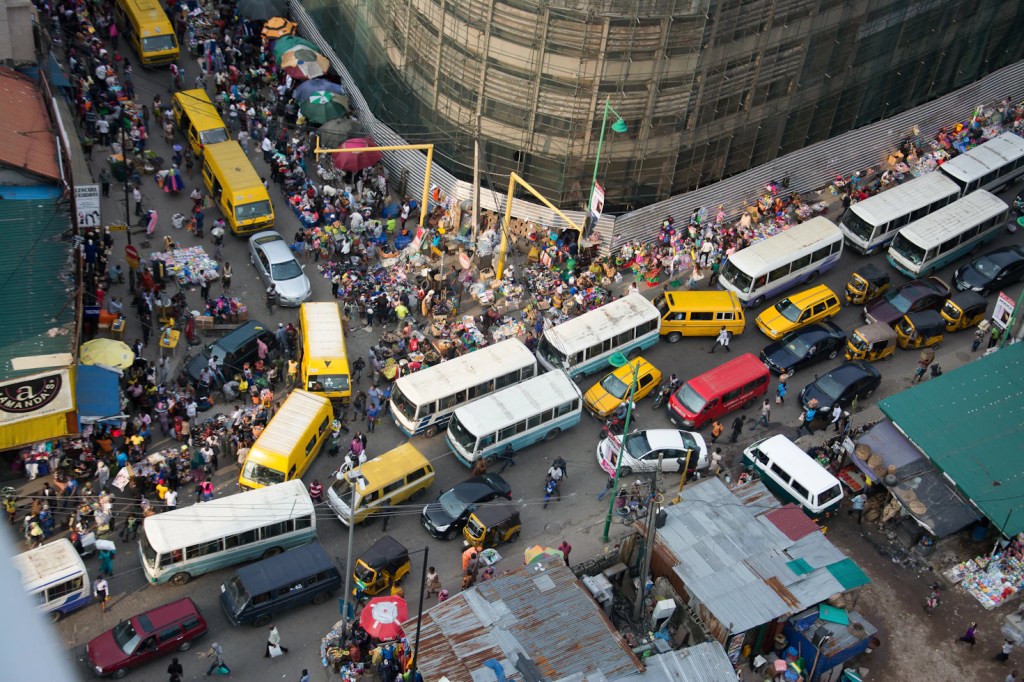
A building has collapsed in Nigeria’s megacity, Lagos, once every two weeks on average so far this year. The gaps among the buildings, replaced by piles of debris, represent a failure of governance as well as giving rise to allegations of contractors trying to cut corners to save money. There are regulations, there are maintenance schedules, there are inspectors – but the system does not work. Those responsible are never held to account, and so nothing ever changes. Lagos, dubbed by one expert who spoke to the BBC as ” the building-collapse capital of Nigeria”, has seen at least 90 buildings falling down in the last 12 years, leaving more than 350 people dead…Alleged political influence is a barrier to pursuing prosecutions. “If you are connected to people in power, even if you are the culprit in a building collapse case nothing will happen to you,” says a Lagos state politician. With 19 building collapses already recorded so far this year by the Lagos State Emergency Management Agency, the final total is likely to be the highest in the past decade. But lessons may still go unlearnt. The head of the Council for the Regulation of Engineering in Nigeria recently said that the country lacked the capacity to properly investigate what is going on.
Nigeria’s brightest students leave the country
What do Nigeria’s brightest pre-college students do after passing national exams? “They leave,” according to newspaper archiving platform Archivi.ng. Researchers Ayodimeji Ameenat and Fu’ad Lawal looked back at the 100 top performers in Nigeria’s 2009 West African Senior School Certificate Examination, to track what’s become of them…61% of the top 100 students were female, with girls claiming seven of the top 10 spots, including one who was ranked No. 1. An estimated 47% of the students have left Nigeria in the years since, reflecting an ongoing migration trend…Some left immediately after secondary school. Others left after their first degrees, after gaining some work experience. They mostly live in the United States, the United Kingdom, and Canada. This trend contributes to the growing evidence of the ongoing brain drain, as many of Nigeria’s brightest talents seek opportunities outside the country.
OpEd: On Nigeria’s bold but rudderless attempts at structural economic reforms
President Bola Tinubu’s lack of a focused agenda is blunting the impact of some of his bold reforms while also jeopardizing private sector growth
Hounded South African beauty queen wins Nigeria contest
After being hounded over her nationality and forced to drop out of the Miss South Africa contest, Chidimma Adetshina has been crowned beauty queen of a totally different country. Ms Adetshina cried tears of joy as she was named Miss Universe Nigeria on Saturday. “This crown is not just for beauty; it’s a call for unity,” the 23-year-old law student stated after weeks at the centre of an intense media storm. She was invited to participate in Miss Universe Nigeria after her position as a finalist in the Miss South Africa contest sparked a wave of criticism. Some people in South Africa had questioned her eligibility to compete in the beauty pageant because despite being a South African citizen, Ms Adetshina’s father is Nigerian and her mother has Mozambican roots. In interviews Ms Adetshina said she was born in Soweto – the South African township next to Johannesburg – and grew up in Cape Town. The row over her nationality sparked an investigation with the organisers of Miss South Africa asking the nation’s home affairs department to look into her eligibility…Ms Adetshina dropped out of the contest, saying she took the decision for her and her family’s safety and wellbeing. After hearing of Ms Adetshina’s story, the organisers of Miss Universe Nigeria invited her to participate in their contest.They said she would be able to “represent her father’s native land on the international stage”. After winning the contest on Saturday, Ms Adetshina will represent Nigeria at November’s Miss Universe competition.
SOUTHERN AFRICA
SOUTH AFRICA
A $5 billion digital opportunity
South Africa’s digital transformation is “lagging” despite its immense potential and rising demand for digital skills, but getting it right could generate over $5 billion for its economy, says a new report.
Improving digital infrastructure and enhancing the regulatory environment are among changes recommended in the report by digital conglomerate Naspers and the Mapungubwe Institute for Strategic Reflection. The authors say investment could help the country’s digital platform economy — driven by companies that facilitate e-commerce, deliveries and transportation services — inject 91.4 billion rand ($5.2 billion) into South Africa by 2035. The projected growth would increase the sector’s contribution to South Africa’s economy to 1.38% of GDP, up from 0.02% in 2022.Naspers is Africa’s largest tech and media company, valued at some $37 billion. Its portfolio includes online store Takealot, delivery service Mr. D, and real estate platform Property24. The report recommends that South Africa authorities establish regulatory “sandboxes” to encourage growth and innovation and thereby accelerate the sector’s development. Researchers found that it can take “up to 180 days” to secure various approvals. It also calls for the expansion of high-speed internet access to be fast-tracked, a greater emphasis on science and technology education, and incentives for local producers to sell on e-commerce platforms. “Though still in its early stages, the shift to digital mirrors global trends and offers a rare chance to unlock significant economic potential for our nation,” Naspers South Africa CEO Phuthi Mahanyele-Dabengwa said.
Star Gazers are welcomed as tourists
South Africa is set to unveil a new tourism strategy geared towards attracting stargazers and space enthusiasts. Minister of Tourism Patricia de Lille, who announced the plan, said it would be launched in late September. She said South Africa was the first African nation to develop an astro-tourism strategy. The minister said the strategy focuses on infrastructure development and transforming communities to take advantage of conditions in the country. South Africa’s minimal light pollution and favorable weather conditions make it an ideal astro-tourism destination. Tourism plays a key role in South Africa’s economic growth. The tourism minister noted that the sector contributed 8.8% to the country’s GDP in the first quarter of 2024, which was higher than contributions from transport, mining, and agriculture sectors. South Africa hosts two global initiatives that make it a prime location for professional astronomers: the Square Kilometer Array (SKA), and the Southern African Large Telescope (SALT).
SKA is an international radio telescope hosted in South Africa and Australia that seeks to answer questions in astrophysics and cosmology. And SALT is the largest optical telescope in the southern hemisphere. It is located in the southern town of Sutherland, an astronomical hub whose climatic conditions have earned it the nickname “Gateway to the Universe” and attract both researchers and amateur stargazers.
A year after Johannesburg building fire, survivors feel abandoned by city
Sibongile Majavava sits outside her small tent shack at the Wembley stadium homeless shelter on the eastern outskirts of Johannesburg, her third temporary home since a deadly firetore through the building she was living in a year ago. The 34-year-old South African, her Tanzanian partner, Muhdi, 36 and their toddler have been hoping to get back on their feet since the August 2023 blaze in the dilapidated Usindiso building in the inner city killed 76 people and left hundreds homeless. But a year later, surrounded by tents and makeshift dwellings in the former sports stadium-turned-shelter, the couple feel hopeless and abandoned by those they thought would help them. Building fires have become common in downtown Johannesburg where hundreds of what city officials call “hijacked” buildings have been taken over by criminal cartels. These gangs partition off rooms and rent them out illegally to poor and desperate people – while offering no services like functioning water, electricity or sewage, which creates unsafe living conditions. Usindiso was in a similar state by the time the deadly fire happened last August, with a commission of inquiry into the blaze finding that it housed 200 shacks “partitioned with highly flammable material”. The inquiry found city authorities liable for neglect after the 2023 blaze that killed 76 people in a dilapidated building in South Africa…
SOUTH AFRICA/ZIMBABWE
Pretoria complains ‘sick’ Zimbabweans clogging hospitals
A war of words has erupted between South African and Zimbabwean government officials after Pretoria complained that its neighbours are overwhelming its health care system.SAfr’s Home Affairs Minister Aaron Motsoaledi set the cat among the pigeons earlier this month when he singled out Zimbabwe for allegedly sending its citizens across the border for free medical treatment. Dr Motsoaledi, an outspoken critic of the influx of Zimbabwean immigrants into the southern Africa’s strongest economy, said South African hospitals were being overwhelmed by non-paying foreign patients. “They just close their eyes and let people cross the border (into South Africa). It’s unfair,” he said…Nick Mangwana, the Zimbabwe government spokesperson, in one of the social media posts described Dr Motsoaledi’s statements as uninformed and xenophobic. Thousands of Zimbabweans cross the border into South Africa every day, many risking their lives crossing a crocodile-infested river to flee decades of economic meltdown.
NORTH AFRICA
ALGERIA
Algeria joins BRICS New Development Bank
Algeria has been approved for membership in the BRICS New Development Bank (NDB), the country’s finance ministry has announced. The decision was taken on Saturday and announced by NDB chief Dilma Roussef at a meeting in Cape Town, South Africa. By joining “this important development institution, the financial arm of the BRICS group, Algeria is taking a major step in its process of integration into the global financial system,” the Algerian finance ministry said in a statement. The bank of the BRICS group of nations — whose name derives from the initials of founding members Brazil, Russia, India, China and South Africa — is aimed at offering an alternative to international financial institutions like the World Bank and IMF. Algeria’s membership was secured thanks to “the strength of the country’s macroeconomic indicators” which have recorded “remarkable performances in recent years” and allowed the North African country to be classified as an “upper-tier emerging economy,” the finance ministry said. Membership in the BRICS bank will offer Algeria — Africa’s leading exporter of natural gas — “new prospects to support and strengthen its economic growth in the medium and long term,” it added.
LIBYA
Authorities dismantle trafficking network
Libyan authorities have dismantled a human trafficking network operating in the country’s southwest and arrested members of the group, the country’s Attorney General’s office said on its Facebook page on Saturday. Authorities arrested one of the network’s leaders and 10 members who are accused of murder, illegal detention, torture, and rape of migrants, the statement said. The investigation documented violations affecting 1,300 migrants, including cases of forced detention, torture, and extortion for their release…People smugglers operating with impunity in Libya have sent hundreds of thousands of migrants by sea to Europe, mainly Italy, since 2014. Thousands have died during the voyages.
AFRICA-GENERAL NEWS

African leaders head to Beijing for summit
African heads of state have begun arriving in the Chinese capital, Beijing, ahead of the 2024 Forum on China-Africa Cooperation (FOCAC) summit which gets underway on Wednesday. This 9th gathering is expected to provide a framework for navigating China’s evolving strategic partnership with the continent in the post-Covid era. It is taking place at a time of rising geopolitical tension that will see Beijing prioritise its position in relation to other world powers. Climate and energy are expected to be among the key topics for negotiation between Chinese and African stakeholders. Discussions will also focus on digital and technology cooperation in a bid to close Africa’s digital divide. In the past, FOCAC has yielded notable financial commitments for projects spanning infrastructure, agriculture, and manufacturing. Experts warn, however, that African countries should use the summit to foster cooperation that is both sustainable and mutually beneficial.
China to pitch green tech exports to African leaders
China will urge a summit of 50 African nations in Beijing this week to take more of its goods, before Western curbs kick in on its exports such as electric vehicles and solar panels, in exchange for more pledges of loans and investment. But the dozens of African leaders arriving in the Chinese capital for the three-yearly event may not be easy bait. They will want to hear how China plans to meet an unfulfilled pledge from the previous summit in 2021 to buy $300 billion of goods. They will also seek assurances on the progress of incomplete Chinese-funded infrastructure projects, such as a railway designed to link the greater East African region. Africa’s biggest two-way lender, investor and trade partner is moving away from funding big-ticket projects in the resource-rich continent, preferring instead to sell it the advanced and green technologies Chinese firms have invested in heavily. China has already started tweaking conditions for its loans to Africa, setting aside more for solar farms, EV plants and 5G Wi-Fi facilities, while cutting back on bridges, ports and railways.
African states fret over dirty money
African countries are seeing money laundering as a common problem requiring transboundary solutions, in what call for linked legal frameworks to tackle the issue. At the 48th Eastern and Southern Africa Anti-Money Laundering Group (ESAAMLG) Task Force of Senior Officials Conference this week, officials summed up money laundering as a fuel for other organised crime transcending physical boundaries. These include terrorism, drug trafficking, human trafficking and poaching. Essentially, money laundering is concealing financial benefits obtained from these illegal activities but also includes corruption or embezzlement of public funds. Launderers often try to convert the money into some legitimate business, say a night club, land buying and selling and other businesses to hide their tracks.Kenya’s National Treasury Principal Secretary Chris Kiptoo admitted the increasing activity by groups in the eastern and southern Africa regions means laundering in one part of the continent can directly hurt the other. But he also argued that these regions need special solutions suitable to them, rather than blanket moves that may have worked elsewhere.
How Africa’s armed conflicts fuel ‘disappearance’ of people
New data shows more than 71,000 people, 25,000 children among them, have been reported missing on the African continent by the end of June, 2024, according to details contained in a report by the International Committee of the Red Cross (ICRC). Women and children account for more than half (54 percent) of the ICRC’s missing cases in Africa. The missing persons are those whose fate is unknown, usually after an incident like war, abduction, kidnapping, natural disaster or accident. And the ICRC usually tried to reconnect families torn apart by such incidents. In this year’s cases, ICRC says the number of missing persons is mainly due to the increased armed conflicts on the African continent, forcing many to leave their homes or end up as victims of the war in some other way. The data, released every year on August 30th when the world observes the International Day of the Victims of Enforced Disappearances, highlights the grave injustices faced by countless individuals and their families around the world and calls for action to prevent such atrocities in the future.
Amazon to invest over $1B to boost AI Cloud in Africa
As Amazon Web Services (AWS) celebrates its 20th anniversary in Africa, the business underlined its commitment to extending its Cloud and Artificial Intelligence services in the region, with an additional $1.7 billion investment budget slated to be deployed by 2029. Speaking at the AWS Summit 2024 in Johannesburg, South Africa, Chris Erasmus, AWS country general manager for South Africa, said: “The AWS community in Sub-Saharan Africa (SSA) is thriving; we have thousands of AWS customers in SSA today, and we see this as an incredibly strategic area of growth for us.” He continued, “We have over 6000 partners who are helping us build and deliver our business value.” Erasmus pointed out that the Cape Town region in South Africa alone has over 160 AWS access services, and the company would continue to expand. Starting with South Africa in 2019, AWS said it had set an ambitious target of powering 100% of its infrastructure with renewable energy.According to Erasmus, AWS has met that objective seven years ahead of schedule, and in South Africa alone, it has launched a solar plant in Northern Cape Province…He promised that the company will continue to grow its activities across other African markets and in South Africa.
2024 Africa Wealth Report: Millionaire Growth of 65% in Next Decade
The total investable wealth currently held on the African continent amounts to USD 2.5 trillion and its millionaire population is set to rise by 65% over the next 10 years, according to the 2024 Africa Wealth Report, published by international wealth advisory firm Henley & Partners in collaboration with global wealth intelligence partner New World Wealth. The annual report reveals that there are currently 135,200 high-net-worth individuals (HNWIs) with liquid investable wealth of USD 1 million or more living in Africa, along with 342 centi-millionaires worth USD 100 million or more, and 21 dollar billionaires. Africa’s ‘Big 5’ wealth markets — South Africa, Egypt, Nigeria, Kenya, and Morocco — together account for 56% of the continent’s millionaires and over 90% of its billionaires. Despite a tough past decade which saw a 20% decline in its millionaire population, South Africa remains home to over twice as many HNWIs as any other African country, with 37,400 millionaires, 102 centi-millionaires, and 5 billionaires, followed by Egypt with 15,600 millionaires, 52 centi-millionaires, and 7 billionaires. Nigeria sits in 3rd place with 8,200 HNWIs, followed by Kenya (7,200 millionaires), Morocco (6,800), Mauritius (5,100), Algeria (2,800), Ethiopia (2,700), Ghana (2,700), and Namibia (2,300) all making it into the Top 10 Wealthiest Countries in Africa. Going forward, over the next decade (to 2033), the likes of Mauritius, Namibia, Morocco, Zambia, Kenya, Uganda, and Rwanda are all expected to experience 80%+ millionaire growth…
2024 Africa Wealth Report
DSPs streaming dollars into African artists’ bank accounts
“There is money in streaming music,” Bongo flava star Diamond Platinumz, whose real name is Naseeb Abdul Juma Issac, is quoted as saying in 2021, then added that he was making more money from international digital service providers than from his performances.Over in Kenya, several artists say the same about the money in streaming. Among them is Nikita Kering, who is reported to have made thousands of dollars from streaming her music. It has not always been the case, though. Already, global streaming giants are flocking to the African market. In April 2020, Apple Music, which had been available in only 13 African nations including South Africa, Nigeria, and Kenya, expanded to 25 more countries in the continent. Apple Music, which launched in 2015, stated on its website that, the move was a response to the shifting tides in how media is consumed across the continent. Swedish-founded Spotify, which launched in 2006 and is considered a pioneer in music streaming and arguably the best-known streaming platform in the world, decided to expand in 40 African countries, including Kenya, in 2021. Previously, Spotify only existed in South Africa, Tunisia, Morocco, and Egypt in Africa.
‘Black tax’ – why some young Africans want to stop sending money back home
“Sending money back home or to your extended family is such a common African practice that I absolutely hate,” said Kenyan influencer Elsa Majimbo earlier this month in a now-deleted TikTok rant that sparked a furious debate on social media. The 23-year-old touched a nerve when it came to discussing with her 1.8 million followers what is known as “black tax”. This is when black Africans who achieve a modicum of success, whether at home or abroad, find themselves having to support less well-off family members. The question for many is whether this is an unnecessary and unwelcome burden or part of a community obligation to help pull others up. In the video Majimbo said her father had supported members of the extended family for years and now they were looking to her for help. She turned her anger on one particular unnamed relative. “You’ve been asking my dad for money since before I was born. I was born, I was raised, I grew up, now you’re asking me for money – you lazy [expletive]. I’m not feeding your habits.” While not everyone agreed with Elsa Majimbo’s rant, it seems to have touched a nerve, especially among the younger generation. In 2023, funds sent home by African migrants amounted to about $95bn (£72bn), according to the International Fund for Agricultural Development, which is almost the size of the Kenyan economy.
Video: Elon Musk’s Starlink Expands in Africa With New Launches in Ghana, Botswana
OpEd: A New Political “Youthquake”
A new generation is asserting itself across Asia and Africa, where young people are spontaneously forming protest movements and forging rare coalitions. Though every country is different, these movements share a desire to sweep away the political structures underpinning the unjust world they will inherit.
THIS WEEK AHEAD
Sept. 4-5 — The World Conference on Soil, Water, Energy and Air will take place in Victoria, Seychelles.
Sept. 4-6 — The 11th Africa Fintech Summitwill bring together fintech decision makers including AfCFTA secretary-general Wamkele Mene and Paystack co-founder Shola Akinlade in Nairobi.
Sept. 4-6 — The African Union Commissionwill hold the first ever Africa Urban Forum at the Adwa Memorial Museum in Addis Ababa.
September 24, 2024 – New York City; President Julius Maada Bio, Sierra Leone; Aliko Dangote, Founder, Dangote Group; and Mcebisi Jonas, Chairman, MTN Group will join the stage at The Next 3 Billion summit — the premiere U.S. convening dedicated to unlocking one of the biggest social and economic opportunities of our time: connecting the unconnected.
FOR YOUR CONSIDERATION

Sept. 16 — Doctoral students are invited to apply for the 2024/2025 CAPSI-Mastercard Foundation PhD Fellowship at Wits Business School.
Oct. 18 — Applications are open for the 2024 Commonwealth Youth Awards for Excellence in Development Work, organized and delivered by the Commonwealth Youth Programme.
 The Africa Edition ©️
Leave a comment