News That Matters To Africa©️
QUOTE OF THE DAY
“After the rain, the umbrella becomes a burden for everyone”
HIGHLIGHTS
Congo-Rwanda cease-fire
Nigeria’s protests brings deaths and injuries
South Africa’s ‘construction mafia’ is called out
Tunisian presidential candidates complain of restrictions and intimidation
Ukrainian FM heads for Africa in lobbying effort
Africa at the Olympics.
TOP NEWS
Eastern Africa
Congo-Rwanda cease-fire: A lasting peace effort?
Ethiopia PM says talks underway with armed groups; one group denies any discussion
Podcast: From Nobel peace prize to civil war: how Ethiopia’s leader beguiled the world
New Kenya cabinet swearing-in for next week as MPs finalise vetting
Ex Kenya UN envoy takes issue with US “integrity” statement. GOK is ‘mum’
Kenya’s debt sustainable amid growth in exports, CBK says
Fitch downgrades Kenya after revenue policy reversal
Crows ‘nightmare’ for Kenya coast hoteliers
Al Shabaab kills 37, injures 212 on Mogadishu beach
Somaliland establishes ‘Ministerial Level State Recognition Taskforce’
Collapsed Nairobi talks may have saved South Sudan
Sudan’s famine-stricken Zamzam camp hit by devastating floods
Ugandans still waiting for coffee plantation compensation
West Africa
Cameroon state oil firm says staff linked to Glencore bribes will face UK court
Protests in Berlin over murder of a Cameroonian
Ghana’s Akufo-Addo pledges smooth transition after polls
Weah Threatens To ‘Resist’ Arrests of Former Liberian Officials
Niger accuses France of destabilisation
OpEd: US military is leaving Niger even less secure: why it didn’t succeed in combating terrorism
Protesting hunger, Nigerians warn, ‘Life cannot continue like this’
Nigeria’s president calls for end to protests against economic hardship
Nigerian police teargas protesters, arrest dozens
Video: What is fueling protests and a violent crackdown in Nigeria?
OpEd: Fela Kuti is more famous today than ever – what’s behind his global power
Akon City stalled: Senegal’s patience wears thin
Southern Africa
SAfr’s ‘construction mafias’ are scaring away investors, minister says
Is Helen Zille South Africa’s ‘parallel president’?
North Africa
Alongside the Trump-Russia Inquiry, a Lesser-Known Look at Egyptian Influence
Tunisian presidential candidates complain of restrictions and intimidation
AFRICA GENERAL
AFRICA RELATED BOOKS/PUBLICATIONS
EASTERN AFRICA
ETHIOPIA
PM says talks underway with armed groups; one group denies any discussion
Prime Minister Abiy Ahmed said that negotiations are in progress with armed militias in the Amhara region to peacefully resolve the ongoing conflict there. Speaking at a meeting with financial leaders in Addis Ababa on Friday, the prime minister said the federal government has been making efforts to reach out to the rebels but hinted that a lack of unity among the armed groups could be an obstacle. “I haven’t revealed this so far but to let you know today, it has been a while since we started talks with armed groups operating in the Amhara region,” he said in Amharic, speaking to participants of the meeting. “The problem so far is that there is no centralized group. When we reach an understanding with one group we don’t agree with the other.” A spokesperson for one of the Fano armed groups fighting in the Amhara region denies talks with the government. Fano is an ethnic Amhara militia without a formal structure and there are several groups operating in different parts of the Amhara region. Despite the prime minister’s remarks, an official with the Amhara region’s peace council set up in June also appears to be unaware of the reports of talks with the armed militias.
From Nobel peace prize to civil war: how Ethiopia’s leader beguiled the world (Podcast)
When Abiy Ahmed took power in Ethiopia, he was feted at home and abroad as a great unifier and reformer. Two years later, terrible violence was raging. How did people get him so wrong?
DRCONGO/RWANDA
Congo-Rwanda cease-fire: A lasting peace effort?
A cease-fire set to begin on August 4 has been reached between the Democratic Republic of Congo and Rwanda after more than two years of fighting in eastern Congo between the M23 and the Congolese military. M23 rebels launched the offensive in the mineral-rich region at the end of 2021. Since then, they have seized large swathes of territory in an effort to gain a share of North Kivu’s major deposits of copper, gold and diamonds. Angola, which has been mediating to resolve the conflict, announced the peace deal on Tuesday after talks in Luanda, adding that the truce would come into effect from midnight on Sunday. The fresh deal comes as a humanitarian truce between the M23 rebels and government forces obtained through the United States was due to expire on August 3. However, analysts are sceptic about the new deal because previous truces inked by both countries were never respected for more than a few weeks. Although some are sceptical on the new agreement, Angolan President Joao Lourenco is being referred to as the ‘Champion of Peace’ in this conflict. Soy Komba, an Angolan specialist in international relations, told DW that Angola has been playing the role of mediation in a very intelligent way…Former colonial power Belgium and France, the European Union, and the United Stateshailed the signing of the latest agreement on Wednesday.
KENYA
New Cabinet swearing-in set for next week as MPs finalise vetting
The Kenyan parliament is expected to complete vetting nominees to President William Ruto’s reconstituted Cabinet on Sunday, setting the stage for their swearing into office next week. The parliamentary vetting, which began Thursday, is taking place against the backdrop of public murmurs over integrity of some of the nominees, the retention of six persons who served in the Cabinet dismissed on July 11, and the inclusion of opposition leaders in what is set to be a team of rivals. At least one petition has been filed in a local court seeking to bar the four opposition members from taking their positions in the new Cabinet while the country’s official anti-corruption body wrote a letter to parliament opposing the appointment of one of the nominees it says is under investigation for corruption. On Thursday, the US, in a tweet posted on the X (formerly Twitter) handle of its embassy in Nairobi, appeared to warn the Kenyan parliament against approving individuals implicated in corruption for appointment to the Cabinet. Although the tweet fell short of stating exactly what action the US would take in case the tainted nominees are approved, it would no doubt worry President Ruto as he prepares to formally appoint his new ministers.
Ex-Kenya UN envoy takes issue with US “integrity” statement. GOK is ‘mum’
A Kenyan former permanent representative to the UN has criticised a US government over a “lecture” on governance issues, even though Nairobi agreed with it. The matter, concerning the ongoing vetting of nominated Cabinet secretaries, is about those supposedly tainted by integrity issues. The US Embassy on Thursday called on Kenyan MPs to reject those with tainted integrity, coming in the wake of protests that had forced President William Ruto to sack his entire team of ministers…But Martin Kimani, Kenya’s permanent representative to the UN in New York until April this year, saw the US commentary as a lecture the country doesn’t need. In fact, he saw it as a diversion from Washington’s own failures on global scale, one of which includes the ongoing war in Gaza, where a ceasefire has been elusive. But on Friday, Kenya said it would not respond to the US Embassy comments, even though it agreed with the call for integrity issues to be prioritised. “The statement (by the US Embassy) expresses a view that aligns with that of many Kenyans and is consistent with our Constitution,” said Dr Korir Sing’oei, Kenya’s Principal Secretary for Foreign Affairs. “We take no serious issue with it,” he told The EastAfrican.
OpEd: Protests in Kenya and Uganda highlight corruption at the top – but political elites don’t give in without a fight
Kenya’s debt sustainable amid growth in exports, CBK says
Kenya’s debt remains sustainable in the medium to long term supported by sustained policy actions and expected strong export growth, the Central Bank said in a quarterly economic report on Friday. In the report for the period ending in March released in Kenya’s capital Nairobi, the apex bank said that the country’s debt burden indicators have improved supported by a stronger fiscal effort. However, the overall and external ratings for risk of debt distress remain high, according to the bank. It noted that the country’s Debt Sustainability Analysis shows that Kenya is susceptible to export, exchange rate and primary balance shocks. Kenya’s public and publicly guaranteed debt stood at Ksh10.3 trillion ($79.3 billion) at the end of March, representing 67 percent of the gross domestic product. Domestic debt comprises 50.3 percent of the total debt, while external debt denominated mainly in dollars and euros makes up the rest. According to the apex bank, Kenya fully repaid its 2 billion dollars Eurobond debt before the June 24 deadline.
Fitch downgrades Kenya after revenue policy reversal
Global credit ratings agency Fitch downgraded Kenya’s sovereign rating to “B-” from “B” on Friday, citing heightened risks to the East African country’s public finances after the government backtracked on key revenue measures following protests. Bowing to pressure from protesters, the Kenyan government had to withdraw its 2024/25 tax plan in June to raise $2.7 billion more in revenue. The plan was recommended by the International Monetary Fund (IMF) to address fiscal imbalances. Fitch said the risk of prolonged social unrest remains, significantly complicating the environment for fiscal consolidation. The agency also expects some challenges for Kenya in securing external financing, partly due to high borrowing costs on the back of low foreign-exchange reserves. Rival ratings agency Moody’s last month downgraded Kenya’s credit rating further into junk status, while S&P will wait until Aug. 23 to make any key rating change.
Fitch, however, maintained its outlook on Kenya at “stable”, citing strong official creditor support which would help the country’s near-term external liquidity pressures.
Crows pose nightmare to Coast hoteliers
Climate change and a conducive environment in the Kenyan Coast have resulted in flocking of the Indian house crows from as far as Zanzibar and Comoros. Kenya Wildlife Service (KWS) director of wildlife and community service Charles Musyoki, said crows are also known to kill indigenous animal species in the region, including small birds, creating an imbalance in the ecosystem…With no natural predators in Kenya, plus their ability to adapt to new environments quickly, they have increased exponentially in numbers of thanks to the mounds of garbage, which provide their main source of food. The birds, which are said to have originated from India, as the name suggests were first spotted in Mombasa in 1947 but today, they are estimated to be two million within the Coast ecosystem. Pest Control Poisons Board has issued a permit to import poison (to kill the birds) – but the cost remains a problem, with stakeholders estimating that it will cost Ksh10 million to procure the poison which goes for Ksh800,000 ($6,164). Between 1999 and 2005, A Rocha Kenya, a conservation and research organisation, used Starlicide to eliminate crows in Malindi. Their records show they managed to reduce crows from hundreds to fewer than 50, but the Kenya government later banned the importation of Starlicide.
SOMALIA
Al Shabaab kills 37, injures 212 on Mogadishu beach
A suicide bomber detonated explosives outside a hotel in a popular beachfront area in Somalia’s capital, Mogadishu, before gunmen stormed the building, setting off a four-hour siege that left at least 32 (now 37) people dead and more than 60 (now 212) others wounded, the police said on Saturday. Al Shabab claimed responsibility for the deadly assault, which started late Friday. Al Shabab have been waging an insurgency against the internationally backed government in Somalia for more than 17 years and have previously targeted the beach area, Lido, which is popular with businesspeople and officials as well as with other residents. A spokesman for the Somali police, Abdifatah Adan Hassan, said that officers had killed three attackers who had stormed the beachfront hotel, ending the siege. The attack underscores Al Shabab’s enduring threat despite yearslong efforts by the Somali government and its allies, including the United States and the African Union, to suppress the militant group. President Hassan Sheikh Mohamud of Somalia vowed to defeat Al Shabab when he came to power in 2022, and his efforts initially proved successful as the government limited the group’s ability to carry out attacks in the capital and kicked the militants out of large swaths of the country. But in the past year, Al Shabab, which is linked to Al Qaeda, have succeeded in retaking villages and towns across central and south-central Somalia. In January, Al Shabab also captured a United Nations helicopter with at least nine people onboard after the craft made an emergency landing in an area controlled by the group.
SOMALILAND
’Ministerial Level State Recognition Taskforce’ Established
The Somaliland Ministry for Foreign Affairs and International Cooperation said it has taken “a significant step towards international recognition today.” The Ministry’s announcement further said Somaliland has “established a Ministerial Level State Recognition Taskforce to strategize and pursue recognition efforts, and that the decision “aligns with our government’s ongoing diplomatic initiatives, including the recent MoU with Ethiopia for sea access.” On 01 January 2024, Ethiopia and Somaliland signed a memorandum of understanding (MoU) granting Ethiopia access to the sea in return for international recognition for Somaliland. In a resolution issued at the end of four days of meetings by members of both the Executive and the Central Committee, the ruling Prosperity Party (PP) said in January that it has decided to bring the Memorandum of Understanding (MoU) that Ethiopia signed with Somaliland “to a practical agreement” while simultaneously giving attention to the principles of give and take to secure additional options to port access with other neighboring countries. In February Somaliland said it was “on course without any wavering, and remain seized” of the implementation of the MoU and disclosed that a technical team of international legal experts and a high-level advisory group to advise and guide the process has been appointed. Ethiopian officials’ official push back against critics of the MoU were in response to statements of condemnation from Egypt and the Arab League countries, while it continued maintaining its position to see through the MoU.
SOUTH SUDAN
Collapsed Nairobi talks may have saved South Sudan
South Sudan’s collapsed talks in Nairobi may still save it from anarchy, thanks to crucial bits that delegates had already agreed on before they fell out, and which were more important for the country’s stability. The talks started in Nairobi on May 9, but halted last month after representatives of the Sudan People’s Liberation Movement-in-Opposition (SPLM-IO) walked out. They argued that the protocols under discussion would undermine the principles of the 2018 peace deal. Officially known as the Revitalised Agreement on the Resolution of the Conflict in the Republic of South Sudan (R-ARCSS), it was signed between President Salva Kiir’s SPLM and SPLM-IO and other political factions. The talks in Nairobi were meant to bring in groups that had stayed away from R-ARCSS. Yet, while walking out by SPLM-IO may mean a deal to accommodate the groups in the government of national unity may delay, it may influence a general focus on transition.
SUDAN
Famine-stricken Zamzam camp hit by devastating floods
A famine-stricken camp in Sudan’s conflict-torn Darfur region is facing a significant new influx of displaced people while floods threaten to contaminate water and sanitation facilities, according to satellite imagery. The findings from Yale Humanitarian Research Lab show that toilets and nine out of 13 water points have been inundated at the Zamzam camp for internally displaced people (IDPs) in North Darfur, raising the risk of cholera and other diseases in an area already facing extreme levels of malnutrition. The camp, hosting about 500,000 people, has become more crowded as people have fled recent fighting between Sudan’s army and the paramilitary Rapid Support Forces (RSF), which broke out in April 2023. The images analysed by the Yale researchers show brown floodwaters submerging outdoor toilets and areas where people queue for water.
UGANDA
Ugandans still waiting for coffee plantation compensation
It has been 23 years since over 2,000 people were displaced in Uganda to make way for a coffee plantation for the German company Neumann. Since then, they have been fighting for justice in court. Neumann Kaffee Gruppe (NKG) has maintained that its lease of the 2,500-hectare (4.9 acres) land from the Ugandan government was signed in good faith. The company also acknowledged that 25 families in the Mubende district resisted relocation and were subsequently removed by government authorities. In 2002, farmers sued the government in Kampala, as well as NKG and its Ugandan subsidiary, Kaweri Coffee Plantation. NKG claimed the Ugandan government compensated 166 families, however many claim that no compensation has been paid to them. In the first verdict in 2013, the Ugandan government was acquitted.With the help of the German human rights network FIAN, the farmers filed a complaint with the UN Committee on Economic, Social and Cultural Rights (CESCR) in 2015. It was not until 2017, partly due to pressure from the German government, that representatives of the Ugandan president presented the plaintiffs with an offer for a settlement. In April 2021, a final agreement was reached with a compensation package of less than €1 million euros — a fraction of the €30 million originally demanded. “I remember how the judge insisted at the time that these people should be paid immediately,” said Francis Katabalva, a lawyer who has been helping displaced families for 22 years. “Unfortunately, that hasn’t happened yet.”
WEST AFRICA
CAMEROON
State oil firm staff linked to Glencore bribes will face UK court
Adolphe Moudiki, SNH’s administrator and director general, had previously denied staff involvement but late on Friday issued a statement saying some employees had been identified as suspects – linked to commodity trader Glencore- and would appear before a British court on Sept. 10. In June 2022, Glencore’s UK subsidiary pleaded guilty at a London court to seven counts of bribery in connection with oil operations in Cameroon, Equatorial Guinea, Ivory Coast, Nigeria and South Sudan.
On Thursday, Britain’s Serious Fraud Office (SFO) charged Glencore’s former head of oil Alex Beard with two conspiracies to make corrupt payments to government officials and employees of state-owned oil companies in Nigeria and in Cameroon. Glencore’s UK subsidiary has admitted it paid bribes in Cameroon to SNH officials and others to the sum of 7 billion CFA francs ($11 million) to secure preferential access to oil between 2011 and 2016.
Protests in Berlin over murder of a Cameroonian
The streets of Berlin resonated with the voices of protesters from the Black community and their allies, who gathered to express their outrage and demand justice for the recent killing of William Chedjou. The 37-year-old Cameroonian man was stabbed to death by a Tuorkish man during an argument over parking space on 11 July in Berlin. The victim and perpetrator did not previously know each other, the police said. The protest march, which began at the spot where Chedjou was stabbed and made its way to the district centre of Berlin, highlighted the ongoing issues of racial violence and systemic discrimination faced by Black individuals in society. The protest march in Berlin serves as a stark reminder of the persistent challenges faced by Black individuals in Germany and around the world. As the community continues to mourn the loss of William Chedjou, there is a renewed call for systemic change in attitudes towards Black people.
GHANA
Court blocks protests against costs
A high court in Ghana has prohibited civil society groups from holding protests in Accra, citing security concerns. Organizers intended to mobilize over two million people to demand action from President Nana Akufo-Addo on corruption, living conditions, and delays in signing an anti-LGBT bill. However, the police filed a case that asked the court to ban the protests, planned between July 31 and August 6, due to inadequate personnel as officers have been deployed to provide security at political rallies amid campaigns for the next elections. Despite the ban, organizer Mensah Thompson insists that youth are determined to demonstrate and do not need the authorities’ approval. The planned protests reflect a growing trend across Africa, which began in Kenya in June and has since spread to Uganda and Nigeria.
Akufo-Addo pledges smooth Transition after polls
President Nana Addo Dankwa Akufo-Addo has reiterated his dedication to ensuring a smooth transition of power after the upcoming 2024 general elections. At the Ghana Report Summit in Accra, themed ‘Combating Misinformation and Disinformation in Election 2024,’ President Akufo-Addo called on the media and citizens to remain vigilant ahead of the 2024 elections. He emphasized that Ghana’s democratic progress relies on active citizen engagement, a vibrant civil society, and a free press. “Our democratic journey has been made possible by the active participation of the citizenry. A robust civil society and a free media. These elements reinforce collectively, Ghana’s reputation as a stable democratic nation,” Akufo-Addo said. He further stressed the need to counter misinformation and disinformation, warning that their impact on the electoral outcome is impossible to overstate. He added that Ghana’s democratic stability is showcased through its seamless transfer of power between political parties.
LIBERIA
Weah Threatens To ‘Resist’ Arrests of Former Liberian Officials
Former President George Weah reacts to the arrest and indictment of several of his key former officials here, including indefinite suspension of the executive governor of the Central Bank of Liberia, vowing to use both political and legal means to resist strongly. Those arrested included Mr. Weah’s security advisor, Jefferson Karmoh, former Acting Justice Minister Cllr. Nyenati Tuan, former Financial Intelligence Agency Director Stanley S. Ford, and former Comptroller of the FIA, D. Moses P. Cooper. Former Finance Minister Samuel Tweah remains at large. The current Executive Governor of the Central Bank, Aloysius Tarlue, has been suspended with immediate effect after a compliance audit commissioned by the Boakai Administration implicates them in the withdrawal and disbursement of millions of dollars from the Government of Liberia’s Consolidated Account at the CBL, outside of compliance procedures and policies. But Mr. Weah terms the arrest of his officials as a witch-hunt, saying that the government of President Boakai has weaponized the judiciary to go after former officials. However, President Boakai’s government rejects the allegation of a witch-hunt, maintaining that it has sufficient evidence to prove its charges against the accused in court.
NIGER
Niger accuses France of destabilisation
The head of Niger’s military-run government has accused France of attempting to destabilise the country, seven months after expelling French soldiers involved in counterterrorism efforts. General Abdourahamane Tiani made the accusations during a two-hour interview on Niger public television, coinciding with the 64th anniversary of Niger’s independence. ‘This sick desire to destabilise Niger has spread through the repositioning of all the agents of the French DGSE (intelligence services) that we chased out of our territory,’ Tiani stated on Saturday. Tiani alleged that French intelligence agents expelled from Niger had repositioned themselves in Nigeria and Benin. He accused these agents, along with elements of the Beninese armed forces dressed in civilian clothes, of engaging in actions aimed at destabilising Niger…By accusing France of destabilisation, Niger’s military government is signalling a continued departure from its historical ties with its former colonial power, while forging new partnerships with neighbouring military-led states.
OpEd: US military is leaving Niger even less secure: why it didn’t succeed in combating terrorism
NIGERIA
The National Protests:
Protesting hunger, Nigerians warn, ‘Life cannot continue like this’
Thousands of Nigerians struggling to afford food and earn a living turned out across Africa’s most populous country – despite government attempts to prevent them – in protests that have already left at least 13 people killed, according to Amnesty International. Organizers have called for 10 days of protest in cities across Nigeria, Africa’s most populous nation, a response to rising inflation and hunger caused by policies that the government argues are necessary to revive what it has called a dead economy.
“Life cannot continue like this,” said Usman Abdulhamid, a protester in the northern city of Kano, where many have been unable to afford food, medicine or even bus fares to the hospital. “People cannot survive without eating.” The long-planned demonstrations in the West African country drew inspiration from recent huge protests in Kenya, some observers said. Persistent demonstrations there forced President William Ruto to abandon planned tax hikes and fire his cabinet last month. The economy is even worse in Nigeria, where about 40 percent of its more than 220 million people live in extreme poverty, and inflation has reached a 28-year high of 34 percent. Many Nigerians blame President Bola Tinubu for devaluing the currency and removing an expensive but popular fuel subsidy — even though it was later partly reinstated. In the lead-up to the protests, the government’s main priority appeared to be to head them off, recruiting influencers, pastors and imams to try to persuade people not to turn out. The government even arranged so-called anti-protest protests, of people demonstrating against the main protests which, as with most modern Nigerian movements, had a hashtag — in this case #EndBadGovernance. But thousands of people across the country demonstrated anyway.
Protesters in Nigeria demonstrate over high cost of living
Police fired tear gas to disperse crowds of protesters in Nigeria’s capital city Abuja on Thursday, as thousands rallied against escalating cost of living and governance issues in Africa’s most populous nation, according to eyewitness accounts. Protesters demonstrated in Abuja, the commercial capital Lagos and several other cities to show discontent with economic reforms that have led to rampant inflation and inflicted increasing hardship on ordinary Nigerians. President Bola Tinubu has vowed to pursue the changes that he says are needed to keep the country afloat. Authorities deployed armed security personnel in an effort to preempt potential violence. In Lagos, armed police watched as protesters marched towards the government house and then proceeded to two locations that were authorised for the protest. Some shopping malls in the city were shut and guarded by a heavy police presence. Inspired by protests in Kenya in June that led to the government there scrapping some planned tax increases, Nigerians are mobilizing online to demand the reinstatement of subsidies for petrol and electricity, free primary and secondary education and measures to combat insecurity, among other demands. In Abuja, the military mounted roadblocks along the highway leading into town, while some protesters gathered at a stadium. Youths demonstrated in the city of Maiduguri, the hotbed of a militant insurgency in the northeast of the country, in the face of a heavy security presence, to voice their frustration at the government and its policies.
Tinubu calls for end to protests against economic hardship
President Bola Tinubu called on Sunday for a suspension of protests against a cost of living crisis, saying this would create an opportunity for dialogue, his first public comments since frustrated citizens took to the streets last week. Amnesty International has said at least 13 people were killed in clashes with security forces on the first day of protests on Thursday. Police denied using excessive force and said seven people had died as of Saturday – four from an explosive device during a march in northeast Borno state, two who were hit by a car and another who was shot by a guard when protesters looted a shop. In a televised broadcast, Tinubu called for an end to violence in several states since the protests started, saying he was always open for dialogue. “My dear Nigerians, especially our youth, I have heard you loud and clear. I understand the pain and frustration that drive these protests, and I want to assure you that our government is committed to listening and addressing the concerns of our citizens,” he said. Nigerians have been mobilising online to organise protests against economic hardship and bad governance and have called for a cut in petrol prices and electricity tariffs, among several demands.
Police teargas protesters, arrest dozens
Nigeria’s police on Saturday arrested dozens of protesters and fired teargas to disperse those trying to march to government offices in the capital Abuja on a third day of demonstrations over a cost of living crisis. In northern Kano state, at least one person was shot in the neck and rushed to hospital, witnesses said. At least 13 people were killed on Thursday when protests turned violent, Amnesty International said, blaming police for using live rounds. Police said on Saturday that in three days of protests seven people had died, but they denied responsibility. Nearly 700 people had been arrested during the protests and nine officers injured, police added in a statement. In the commercial hub of Lagos, more than 1,000 protesters gathered peacefully to denounce economic hardship worsened by President Bola Tinubu’s reforms that started last year with the removal of a popular petrol subsidy and the devaluation of the currency, which sent inflation soaring.
Video: What is fueling protests and a violent crackdown in Nigeria?
Demonstrators killed by police and millions put under curfew. In Nigeria, people have been shot dead by police and hundreds arrested for protesting against the government’s economic policies. President Bola Tinubu says the reforms are vital. Critics say they are too extreme. So why are people so angry? And could the unrest spread?
OpEd: Fela Kuti is more famous today than ever – what’s behind his global power
SENEGAL
Akon City stalled: Senegal’s patience wears thin
Akon’s ambitious $6bn Akon City in Senegal faces delays and scepticism as authorities issue an ultimatum. A single arched concrete block is the only sign of progress where R&B singer laid the foundation stone for his metropolis four years ago. The West African nation allocated 136 acres on its Atlantic Coast in 2020 for Akon City—a real-life Wakanda inspired by Marvel’s Black Panther films. Promising condominiums, amusement parks, a seaside resort, and gravity-defying skyscrapers powered by solar energy and Akoin cryptocurrency, Akon presented his vision in Dakar. Today, the field 60 miles south of Dakar is deserted, save for grazing goats and cows, as government patience wanes, according to media reports. Sapco-Senegal, the state-owned entity overseeing coastal development, issued a formal notice demanding Akon start work or risk losing 90 percent of the granted land, stated General Manager Serigne Mboup via email. This notice follows Akon missing several payments, insiders revealed. Neither Akon nor Sapco provided further comments. The project’s first phase was planned to be completed by 2023 but has faced delays. Akon also announced a second city in Uganda, but preliminary work stalled due to land disputes. Residents are disillusioned, having not been reimbursed for land handed over in 2009. Despite some local investments like a youth centre and basketball court, none of the futuristic plans have materialised.
SOUTHERN AFRICA
SOUTH AFRICA
‘Construction mafias’ are scaring away investors, minister says
Powerful and politically-connected “construction mafias” are scaring away investors and holding back infrastructure projects needed to grow South Africa’s economy, said Dean McPherson, the country’s new public works and infrastructure minister. “It’s a big threat to us,” he said. “It actually physically stops projects that are underway (and) it creates a barrier to entry for the private sector because if there’s going to be stoppages and cost overruns, that eats into their margins.” “Mafias” in South Africa’s construction sector initially surfaced in the east coast province of KwaZulu-Natal about a decade ago and have since expanded across all provinces, according to a 2023 report by the Cape Town-based Inclusive Society Institute. The groups typically invade construction sites, demanding money or a stake in development projects, and use violence or intimidation to get what they want, it said.
Is Helen Zille South Africa’s ‘parallel president’?
Helen Zille is the most powerful white woman in African politics. The chairperson of South Africa’s Democratic Alliance party is also a lightning rod for controversy.
NORTH AFRICA
EGYPT
Alongside the Trump-Russia Inquiry, a Lesser-Known Look at Egyptian Influence
In the summer of 2017, as the special counsel Robert S. Mueller III was starting his investigation, his agents and prosecutors were chasing potentially explosive allegations about foreign influence over Donald J. Trump and his campaign. C.I.A. intelligence relayed to the special counsel’s office suggested that senior leaders of a foreign power had signed off on secretly funneling millions of dollars — with the help of a Trump campaign adviser acting as “a bag man” — to Mr. Trump in the final days of the 2016 election. Interviews and other evidence obtained by the special counsel’s office showed that indeed Mr. Trump had lent his campaign a similar amount of money in the final days of the race — and, after beating Hillary Clinton, Mr. Trump immediately struck a far more favorable tone toward the country than his predecessors. The country in question, however, was not Russia. It was Egypt…The Egypt investigation would outlast Mr. Mueller’s inquiry, which shut down in 2019. It was picked up by career prosecutors in the U.S. attorney’s office in Washington, who closed it out in the summer of 2020 without pursuing any charges. No evidence has ever surfaced publicly that Mr. Trump or his campaign directly received Egyptian money.
TUNISIA
Presidential candidates complain of restrictions and intimidation
Tunisian opposition parties, presidential candidates and human rights groups have accused the authorities of using “arbitrary restrictions” and intimidation in order to ensure the re-election of President Kais Saied in a vote set for Oct. 6. Saied announced on July 19 that he would seek another five-year term. Elected in 2019, Saied dissolved parliament in 2021 and began ruling by decree in a move the opposition described as a coup. He has said he will not hand over power to what he calls “non-patriots”. As an Aug. 6 deadline for registering as a presidential candidate looms, 11 opposition figures who hope to run against Saied issued a joint statement this week criticising the authorities. “The violations have affected most of the serious candidates to the point that they appear to indicate a desire to exclude them (from the election) and restrict them in order to make way for a specific candidate,” they said in the joint statement.
AFRICA- GENERAL NEWS

Sub-Saharan Africa to gain new IMF board seat on Nov. 1
The International Monetary Fund (IMF) said Friday its Board of Governors issued a new resolution to increase the number of Executive Directors on the Executive Board by adding a 25th chair intended for Sub-Saharan Africa. The IMF Managing Director Kristalina Georgieva said in a statement that the decision will make the Board of Governors, the highest decision-making body of the financial agency, more inclusive and that it will reflect the region’s role in the global economy,
“Approval by the Board of Governors to change the size of the Executive Board requires an 85 percent majority of the total voting power,” said the statement. “The Fund’s membership approved the resolution allowing for the creation of a 25th chair, exceeding the required threshold.”?The new Board of 25 Executive Directors will take office on Nov. 1, 2024. The decision for the creation of a 25th chair to improve Sub-Saharan Africa’s representation was made by the International Monetary and Financial Committee during the 2023 Annual Meetings in Marrakech, Morocco.
As mpox cases surge in Africa, few treatments and vaccines available
The Africa Centers for Disease Control and Prevention said in a report released Wednesday that mpox, also known as monkeypox, has now been detected in 10 African countries this year including Congo, which has more than 96% of all cases and deaths. Officials said nearly 70% of cases in Congo are in children younger than 15, who also accounted for 85% of deaths. There have been an estimated 14,250 cases so far this year, nearly as many as all of last year. Compared to the first seven months of 2023, the Africa CDC said cases are up 160% and deaths are up 19%, to 456.
Burundi and Rwanda both reported the virus for the first time this week. New outbreaks were also declared this week in Kenya and Central African Republic, with cases extending to its densely populated capital, Bangui…Mpox outbreaks in the West have mostly been shut down with the help of vaccines and treatments, but barely any have been available in African countries including Congo. In May, WHO said that despite the ongoing outbreak in Africa and the potential for the disease to spread internationally, not a single donor dollar had been invested in containing mpox.
Fifth of medicines in Africa may be sub-par or fake, research finds
A fifth of medicines in Africa could be substandard or fake, according to a major research project, raising the alarm over a problem that could be contributing to the deaths of countless patients. Researchers from Bahir Dar University in Ethiopia analysed 27 studies in the review and found, of the 7,508 medicine samples included, 1,639 failed at least one quality test and were confirmed to be substandard or falsified. Estimates published last year by the UN Office on Drugs and Crime put the human cost of falsified and substandard medicines at up to 500,000 deaths a year in sub-Saharan Africa. “Substandard medicines” refer to those that are authorised but do not meet quality standards, whereas “falsified medicines” are those that deliberately misrepresent their identity, composition or source. A World Health Organization (WHO) spokesperson said antibiotics and antimalarial products were the most falsified medicines in Africa.
Ukrainian FM Kuleba seeks African support in Russia conflict
Ukrainian Foreign Minister Dmytro Kuleba is set to visit three African countries this week in an effort to rally support for Ukraine’s position in its ongoing conflict with Russia, the ministry announced on Sunday. This diplomatic tour, Kuleba’s fourth to Africa in the past two years, will see him visiting Malawi, Zambia, and Mauritius from August 4-8. In June, several African countries participated in a conference on Ukraine hosted by Switzerland. However, many have been hesitant to join Western initiatives to isolate Russia, which remains a significant supplier of energy and commodities to the continent. During his tour, Kuleba will also discuss the supply of Ukrainian grain to the region, which is vital for food security in many African countries. Additionally, talks will cover the involvement of African companies in the reconstruction efforts of war-torn Ukraine.
AFRICA AT PARIS 2024 OLYMPICS
Algeria’s Kaylia Nemour makes gymnastics history for Africa with gold
Algeria’s Kaylia Nemour became the first African gymnast to win an Olympic medal when she secured the gold with a breathtaking routine on the asymmetric bars at the Paris Games on Sunday that wowed the crowd in Bercy Arena. The 17-year-old’s fast-paced routine featuring a number of complex release-and-catch manoeuvres delighted the crowd who came to support a gymnast who had previously represented France. Fans roared and jumped to their feet as soon as Nemour completed her dismount from the asymmetric bars. She immediately broke down in tears as she handed Algeria their first medal of the Paris Olympics, with her performance scoring a staggering 15.700 points.
Uganda wins gold in the 10,000-meter race
Joshua Cheptegei of Uganda took the lead with a little more than a lap left in a masterpiece of a 10,000-meter final Friday to win in an Olympic-record 26 minutes, 43.14 seconds in front of a roaring crowd on an electric opening night for track at the Stade de France.
The world-record holder raced in the middle of a strung-out pack for most of the 25 laps on the calm, cool evening outside of Paris. Then he took off around the curve and held the lead over the final 500 meters against a crowd of Ethiopians who set a blistering pace all night. Ethiopian Berihu Aregawi beat American Grant Fisher in a sprint to the line for silver. Fisher’s bronze medal marked the first for the U.S. in the longest race on the Olympic track since Galen Rupp took silver in 2012. The win earned Cheptegei $50,000 — a new prize for Olympic track this year — and a chance to ring the bellat the end of the stadium that is reserved only for newly crowned Olympic champions.
Cape Verde boxer clinches nation’s first Olympic medal
Cape Verde boxer David De Pina clinched his island nation’s first Olympic medal with a quarterfinal victory Friday in the boxing tournament at the Paris Games.
Cape Verde, a nation of about 600,000 people on 10 isles more than 300 miles west of continental Africa, had never taken home a medal in its previous seven appearances in the Olympics. But De Pina has won twice in the men’s 51-kilogram division in Paris to secure at least a bronze medal — and a monumental achievement for sports in his country. De Pina beat Zambia’s Patrick Chinyemba on Friday night in an extraordinary showdown between boxers from African nations. Chinyemba, the African champion and a Commonwealth Games bronze medalist, fell just short of winning only the third Olympic medal in his much larger nation’s history.
Tunisian fencer Ferjani takes silver at Paris 2024
Tunisia’s Fares Ferjani missed out on becoming Africa’s first gold medallist at the Paris 2024 Olympics after defeat in the final of the men’s individual sabre. The 27-year-old had to settle for silver after being beaten 15-11 by South Korea’s Oh Sanguk at the Grand Palais in the French capital. Ferjani, seeded 13th, had seen off the world number one Ziad Elsissy in the semi-finals but could not produce another upset against Oh.
Egypt Wins Africa’s Third Medal
Mohamed El-Sayed has won Egypt its first medal at the Paris 2024 Olympics after claiming the bronze medal in the fencing event. The men’s épée event at the 2024 Summer Olympics took place on 28 July 2024 at the Grand Palais strip, with three Egyptians participating. Following a tight game, El-Sayed managed to defeat his Hungarian opponent by sudden death (8-7) and win Egypt its first medal in France. This is Egypt’s second medal in fencing after Alaaeldin Abouelkassem’s, who also competes at the Paris Olympics, silver in foil at the London 2012 Olympics.
South Africa’s Tatjana Smith retires from swimming after gold and silver in Paris
South Africa swimmer Tatjana Smith announced her retirement from swimming following her silver medal swim in the 200m breaststroke final at the Paris Olympics. Having won the 100m breaststroke gold on day three, Smith was bidding to match compatriot Penny Heyns who took both the 100 and 200m golds at the 1996 Atlanta Games and remains the only women’s swimmer to do so. “…It’s 22 years that I’ve been swimming, and it’s been a big part of my family’s life and everything. My family and everyone knows that it was my last one, just to enjoy that moment together.”
Morocco eliminates US men with 4-0 Olympic soccer victory
The United States was eliminated from the Olympic men’s soccer tournament on Friday after a 4-0 loss to Morocco in the quarterfinals. Soufiane Rahimi, Ilias Akhomach, Achraf Hakimi and Mehdi Maouhoub scored the goals at Parc des Princes that ended U.S. hopes of a medal at the Paris Games. Morocco, which enjoyed fervent support in the French capital, will play the winner of Japan vs. Spain in the semifinals in Marseille on Monday. The U.S. qualified for the quarterfinals of the Olympics for the first time since Sydney 2000 but was outclassed by a polished Morocco team that had already beaten Argentina in the group stage.
South Sudan criticizes officiating in loss to Serbia
Travesty, robbery, injustice”- these words echoed through Stade Pierre-Mauroy after South Sudan crashed out of the 2024 Paris Olympics. The highest-ranked African team from last year’s World Cup will now fly back home after their dream was crushed. And they are not going away quietly, to say the least. South Sudan needed to avoid losing by more than 2 points in their final Group C game against Serbia. When the buzzer sounded at the end of the night, the score read Serbia 96, South Sudan 85. Since then, the tears haven’t stopped flowing from the eyes of Wenyen Gabriel, Bul Kuol, and their teammates. This prompted Luol Deng, former NBA star and South Sudan basketball President to sound off on the Olympics committee over the injusticethey suffered. In a passionate post-game rant, Deng raised the question over officiating decisions, voicing the lack of diversity among the decision-makers on the court.
Cyclist who fled Tigray war set for dream Olympic race
Eyeru Gebru’s passion for cycling is seemingly endless, as is her appreciation for the life it has allowed her to live. Born in the north Ethiopian region of Tigray in the mid-1990s, she will be competing at the Paris Olympics as one of 37 athletes selected for the Refugee Olympic Team. It is an opportunity she has dreamed of since she was a little girl…The outbreak of the Tigray war in November 2020 brought Gebru’s cycling ambitions to a halt. The Ethiopian government clashed with forces in the region, including the Tigray People’s Liberation Front – the one-time ruling party of the East African country…more than two million were displaced and nearly 900,000 forced to flee as refugees. That last group included Gebru, who left eight months after the fighting started, ostensibly to compete at the 2021 World Championships in Belgium…Gebru will fulfil her lifetime ambition when she lines up on the Trocadero for the women’s road race on Sunday. “It’s a big thing,” she said. “I’m going to represent more than 100 million refugees around the world. I’m happy and proud to represent [them].”
Olympics boss denounces attacks on Algerian boxer
IOC President Thomas Bach said the “hate speech” directed at boxers Imane Khelif and Lin Yu-ting at the Paris Olympics is “totally unacceptable.”
“We will not take part in a politically motivated … cultural war,” Bach said at a news briefing Saturday at the midway point of the Paris Games, where he wanted to draw a line under days of global scrutiny about the female boxers’ gender. “What is going on in this context in the social media with all this hate speech, with this aggression and abuse, and fueled by this agenda, is totally unacceptable,” the International Olympic Committee leader said. Khelif of Algeria and Lin of Taiwan have been the focus of intense attention — and often inaccurate commentary — because both were disqualified at the 2023 world championships.
Podcast:
Why is the Algerian Olympic boxer, Imane Khelif’s gender being questioned?
Algeria’s Imane Khelif found herself at the centre of controversy at the Olympic games in Paris after her opponent, Italy’s Angela Carini surrendered just 46 seconds into the boxing match. The result generated immediate discussion because Khelif had in the past failed testosterone and gender eligibility tests at the World Championships. Carina later said, “I have never been hit so hard in my life”. Who is Imane Khelif and why is her gender being questioned?
AFRICA RELATED BOOKS/PUBLICATIONS
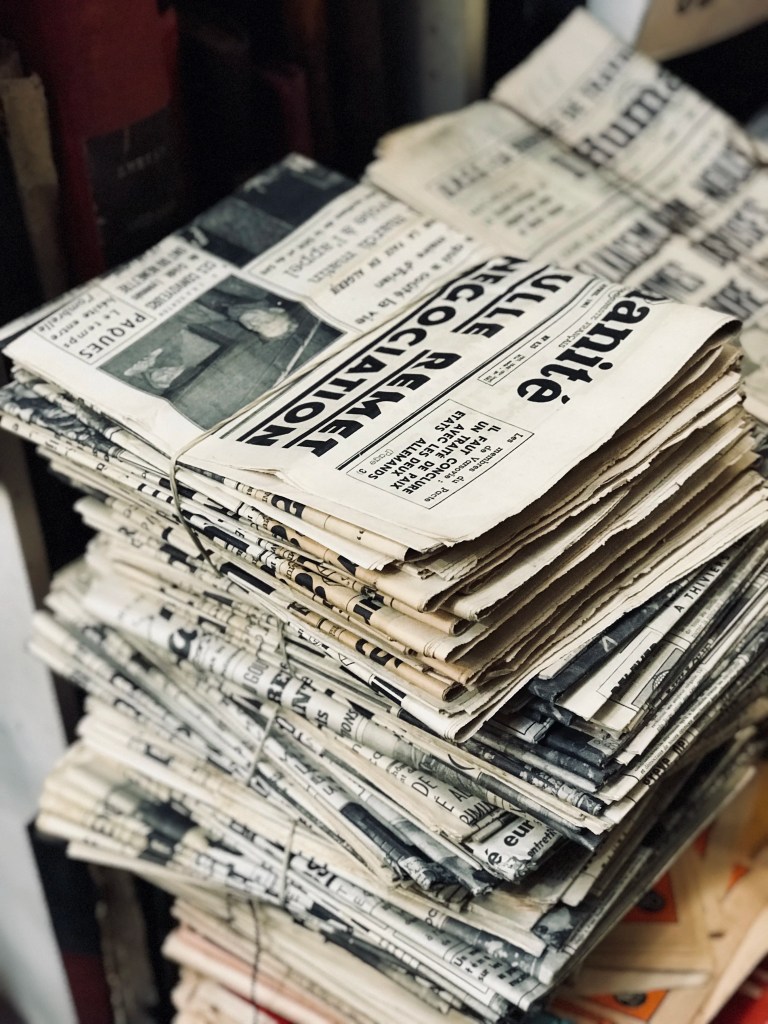
German colonialism in Africa has a chilling history – new book explores how it lives on
Germany was a significant – and often brutal – colonial power in Africa. But this colonial history is not told as often as that of other imperialist nations. A new book called ‘The Long Shadow of German Colonialism: Amnesia, Denialism and Revisionism’ aims to bring the past into the light. It explores not just the history of German colonialism, but also how its legacy has played out in German society, politics and the media.
Germany’s inglorious history of human zoos
In Dresden, as in many other towns and villages in the German Reich, people from (former) German colonies were exhibited in so-called “Völkerschauen” or “Menschenzoos” – human zoos. These shows, for the amusement of the general public, did not only take place during the German colonial era but lasted well into the 1940’s! The exhibition in Dresden shows how this inhumane practice shaped the image of how a large part of society viewed Black people. Accompanying the exhibition is a richly illustrated catalogue entitled “Menschen anSchauen” (“Looking at People”). The volume brings together many historical images that can be very painful to look at, especially for people affected by racism (trigger warning!)…The shows were rarely about getting to know foreign cultures. Instead, Black and Brown people were presented as different, dangerous and primitive.
 The Africa Edition ©️
Leave a comment