News That Matters To Africa©️
QUOTE OF THE DAY
“If it’s not yours, don’t take it. If it’s not right, don’t do it. If it’s not true, don’t say it. If you don’t know, shut up.”
HIGHLIGHTS
DRC stopping UN exit it requested
Kenya working through its crisis
Cameroon’s Biya to run again
Cape Town hunkers down over stormy weather
Arrests, summonses of potential presidential candidates in Tunisia continue
Africa proposes WTO chief for second term
TOP NEWS
Eastern Africa
A truce in Congo ends in a week
Congo says UN exit unlikely while Rwandan troops present
Koffi Olomide angers Kinshasa with war comments
Video: Is enough being done to end the conflict in the DRC?
The ongoing Kenya crisis:
Ruto hints at forming gov’t of National Unity before forming cabinet
Kenyan police watchdog probes police link to mutilated bodies
Police vow “transparent” probe into the dismembered female bodies
President Ruto now on local tours since Int’l travel became “unacceptable”
Assembly Speaker bans meetings away from Parliament as psrt of austerity meadures
Scandals, incompetence doomed Ruto’s first cabinet
GenZ Tax protesters take on Christian leaders
MP Farah Maalim asked to leave Mombasa Hotel over Gen Z comments
Millions in Allowances & 10 other benefits wife of DP will miss
Politicians denied ‘usual’ chance to speak at Ruto’s church event
Migrant deal: Rwanda enjoys windfall, PR
Somalia will require foreign troops past Atmis exit
At least 8 killed in shootout during failed jailbreak in the Somali capital
UN-brokered Sudan ceasefire talks begin with one party no-show
President Samia replaces spy chief yet again as she readies for Tanzania election
West Africa
Cameroon’s 93 year old Biya to run again
Gambia’s bid to unban FGM divides families and parliament
Jailed Malian singer appeals extradition to EU court
Inmates escape from one of Niger’s most fortified prisons where jihadis are held
Nigeria-EU deal sparks false claims over LGBT rights
Bassirou Diomaye Faye’s First 100 Days as Senegal’s President
Terrorism and organized crime rampant in Sahel and spilling into West Africa coastal states, UN says
Southern Africa
IMF slashes Botswana’s 2024 growth forecast
Cape Town sees thousands affected by stormy weather
Zimbabwe authorities in crackdown on dissent ahead of summit
I cannot forgive Mugabe’s soldiers – massacre survivor
North Africa
Algerian President Abdelmadjid Tebboune announces reelection campaign
Arrests, summonses of potential presidential candidates in Tunisia continue
AFRICA GENERAL
ARTICLES ON ANALYSIS, EDITORIAL & OPINION
AFRICA RELATED BOOKS & PUBLICATIONS
EASTERN AFRICA
DR CONGO
A truce in Congo ends in a week
A two-week truce in eastern Congo has heavily reduced fighting, but with a week left aid workers and local civil society groups say not much help has reached millions of people who are trapped in one of the world’s largest humanitarian crises. The two-week humanitarian cease-fire was announced by the U.S. a week ago, bringing a pause to clashes between Congolese forces and rebels allegedly backed by neighboring Rwanda in the mineral-rich region. Fighting has intensified this year, especially in the North Kivu province where hundreds of thousands have been displaced. The two-week period is not enough, and even during the truce there have been reports of continuing violence in Masisi territory near Goma, the capital of North Kivu, said Abdoulaye Barry, head of the sub-office of the U.N. refugee agency in the region. In the Bulengo displaced persons camp, one of the region’s largest, news of the truce brought joy that quickly faded when aid failed to arrive, said Faustin Mahoro, a refugee and head of the camp. The U.S. ambassador to the United Nations, Linda Thomas-Greenfield, replied when asked why aid isn’t being delivered to eastern Congo: “This truce was an extraordinary effort, and I think it was an extraordinary step forward to get this cease-fire.” The French medical organization Doctors Without Borders, or MSF, said the cease-fire would help it work “more calmly and deliver medications” in several affected communities where it already operates. “The absence of artillery between the two parties enables us to work more safely in the sites where we offer free care,” said Camille Niel, MSF’s emergency coordinator.
Congo says UN exit unlikely while Rwandan troops present
U.N. peacekeepers are unlikely to proceed with an agreed withdrawal from Congo’s conflict-torn North Kivu for as long as Rwandan troops remain in the eastern province, the Congolese foreign minister said on Saturday. North Kivu is battling a two-year insurgency by the Rwanda-backed M23 militia that has displaced more than a million people, and a U.N. report said this week 3,000-4,000 Rwandan troops were fighting the Congolese army with “de facto control” over M23 operations. Rwanda has in the past denied allegations from Congo and Western powers that it supports M23 with troops and weapons. On Tuesday, Congo’s government said conditions had not been met for the U.N. mission to leave the province, and Foreign Minister Therese Kayikwamba Wagner said the withdrawal – while still a priority – should take place in an orderly way when conditions allow. Bintou Keita, head of the U.N. mission known as MONUSCO, has said there is no timeline for the pull-out, which was requested by Congolese President Felix Tshisekedi last September. A first phase saw peacekeepers complete their departure from South Kivu province in June. The full withdrawal of MONUSCO, which took over from an earlier U.N. peacekeeping operation in 2010 and currently numbers about 10,800 troops, will reshape security operations in mineral-rich eastern Congo, where many armed groups fight over territory and resources…Wagner said Congo’s efforts to raise international awareness of Rwanda’s involvement in the M23 conflict were starting to bear fruit, and expressed the hope that targeted sanctions would be imposed as a result.
Koffi Olomide angers Kinshasa with war comments
Congolese rhumba legend Koffi Olomide’s voice is known for good vibes across Africa. But he has lately been stirring trouble every time he speaks on local issues.
This week, he roiled the pot with comments on the war in the eastern Democratic Republic of Congo, arguing that the Congolese authorities ought to accept their weakened position in the war. “We are beaten and slapped. They do what they want with us. I’ve seen lorries of these people coming, quietly, peacefully, there’s no one to stop them,” he said. These remarks have angered authorities in Kinshasa. In eastern DRC, the Congolese army, FARDC, has been putting up a fight against the M23 rebels, which DRC says are sponsored by Rwanda. Olomide is generally known in the DRC as a man who feels good when he is in conflict or disputes. In the music world, some analysts believe that has been his strategy to remain at the top for generations. During a TV talk show last Wednesday, the musician also spoke about the welfare of Congolese soldiers, who go to war with what he termed as rudimentary logistical resources. Olomide said his eyes welled up by what he witnessed. In the same programme, Olomide wondered why “we have changed the Minister of Defence in a country supposedly at war.” His comments called into question the choices made by President Félix Tshisekedi, who in early June appointed Guy Kabongo Deputy Prime Minister in charge of Defence, replacing Jean-Pierre Bemba, who was made Minister of Transport…On the streets of Kinshasa, Olomide’s comments have fueled a stormy debate. While some lauded Olomide for his truthful analysis, others accused the singer of downplaying the deaths of soldiers who fell on the battlefield.
Video: Is enough being done to end the conflict in the DRC?
For years, the Democratic Republic of Congo has been trapped in a cycle of conflict, with devastating consequences for its people. The latest escalation in violence between the military and the M23 armed group has forced 7.4 million people from their homes in two years. The United Nations says more than 25 million people are in desperate need of aid. And it’s warned the latest M23 activity in the east carries the very real risk of provoking a wider regional conflict. What will it take to bring peace to the DRC? And is there a role its neighbours can play to prevent the violence from spreading?
KENYA
Ruto hints at forming gov’t of National Unity before forming cabinet
President William Ruto on Sunday hinted that he would be forming a government of national unity ahead of cabinet reconstitution. Speaking during a church service, Ruto hinted that his next cabinet will be an all-inclusive unit that will merge the interests of all political factions. The President’s remarks fueled the speculation that Kenya Kwanza and Azimio had reached a deal to share cabinet dockets. In the recent developments, the country has seen Ruto and the opposition leader Raila Odinga come together in the political spheres with the most notable episode being when the President assented to the Independent Electoral and Boundaries Commission Bill at the Kenyatta International Convention Centre (KICC) last week. As Ruto was assenting to the piece of legislation, Raila backed the president’s call for dialogue with Kenyan youth who have continued to express dissatisfaction with the country’s leadership. However, Raila later backtracked from the position, revealing that he had taken note of Kenyans’ resistance to the proposed dialogue and a possible handshake…The former Prime Minister stated that he had asked Wiper Leader Kalonzo Musyoka’s to represent him at the State House event but the latter declined forcing him to avail himself at KICC. Kalonzo warned Raila of engaging in the dialogue with the President stating that it would be a futile venture.
Kenyan police watchdog probes police link to mutilated bodies
The nine bodies with ‘visibile marks of torture’ were found in an abandoned quarry near a police station. Kenya’s police watchdog has said it is investigating whether there was any police involvement following the discovery of nine mutilated bodies in an abandoned quarry in Mukuru, a collection of slums south of Nairobi. The Independent Policing Oversight Authority (IPOA) said at least “nine deceased persons” were dumped less than 100 metres from the Kware police station south of the Kenyan capital. “Seven deceased persons are believed to be female while two are males,” it said on Friday. “The bodies, wrapped in bags and secured by nylon ropes, had visible marks of torture and mutilation,” according to the statement. Kenyan police are under intense scrutiny after dozens of people were killed during antigovernment demonstrations last month, with rights groups accusing officers of using excessive force. Inspector General of Police Japhet Koome resigned over the crackdown and deaths, the presidency announced on Friday. The IPOA said that due to the location of the dumping site and the “widespread allegations of police involvement in unlawful arrests, [and] abductions”, the agency was undertaking preliminary inquiries to establish whether there was any police involvement. It also called on the police to take “immediate and hastened forensic investigations” to identify the bodies. The Kenya Human Rights Commission, a non-governmental organisation, also urged a “comprehensive investigation” to determine the cause of the deaths and those responsible.
Kenya police vow “transparent” probe into the dismembered female bodies
Police in Kenya have promised a “transparent” investigation into the discovery of eight mutilated female bodies that were found dumped in an abandoned quarry in Mukuru, a collection of slums south of the capital Nairobi. “The entire national police service and I understand the deep concern and distress the tragedy brings to the families, residents of Kware and fellow Kenyans,” acting Police Chief Douglas Kanja said in an address to journalists on Sunday. Investigations on the bodies, which were found dumped inside plastic bags in a case that has rattled the nation, are expected to conclude within three weeks, according to the acting police chief. Police authorities said they were pursuing possible links to cults, serial killers or rogue medical practitioners as part of their investigation. President William Ruto is under increasing pressure to contain the nationwide crisis that has taken hold over widespread anti-government protests. The AFP news agency reported that in the absence of a police search on Sunday, volunteers were combing through the vast piles of rubbish in search of more victims. Locals reportedly tried to take a bag they had hauled out of the quarry to the police station, but were met with canisters of tear gas.
President Ruto now on local tours since Int’l travel became “unacceptable”
President William Ruto has toned down on his international travels for the past month due to the major upheaval experienced in the country amid the anti-government and anti-tax demonstrations. Ruto, who had barely stayed in the country for three consecutive weeks, has been in a month-long ‘lockdown’ and has even spent most of his time at State House in Nairobi. Since June 18, when Kenya began to witness unrest, President Ruto has only made few local travels aimed at assessing government projects. The other times he has left State House is on Sundays, when attending prayer services in selected churches. However, Ruto’s handlers have equally exercised caution in his local tours. Lately, Ruto’s communication team does not share details of his local tours nor the Sunday church service he will attend. The constant trips made by Ruto were also part of the grievances floated by the protesting youths who lamented the mass wastage of public resources during the travels. Ruto last jetted out of the nation on June 13 to Southern Italy for the G7 Summit. He was one of the five African leaders invited to the Summit and he highlighted Africa’s potential for green industrialisation, digital revolution and innovation and cited the huge renewable energy reserves in the continent. During his Italy trip, he also visited Switzerland on June 15 for a high-level meeting to forge peace in Ukraine. Before that, he had travelled to South Korea on June 4 for the South Korea-Africa summit taking place in Seoul. This trip was regarded as the eating of a diplomatic humble pie, having gone against his own words since he had vowed not to attend such summits.
Assembly Speaker bans meetings away from Parliament
National Assembly Speaker Moses Wetangula has ordered all committee sittings to be held within the precincts of Parliament as part of the austerity measures by the government to reflect the current state of affairs. In a communication to the House on Friday, Wetangula noted that the sittings can be held in other government facilities should the meeting rooms be inadequate and not in luxurious hotels as is the norm. The speaker acknowledged receipt of Supplementary Estimates of the Financial Year 2024/25 from the National Treasury that will seek to rationalise the Ksh.3.9 trillion budget and actualise budget cuts from the three arms of the government…President William Ruto’s administration has been under fire in the past month with Kenyans calling for the public expenditure to be reduced to reflect the status quo. Government officials were also accused of flaunting lavish lifestyles at a time when the public is grappling with the high cost of living. This led to anti-government protests that saw President Ruto drop the Finance Bill 2024 and subsequently dissolve his Cabinet.
Scandals, incompetence doomed Ruto’s first cabinet
The dismissal of nearly the entire Cabinet by President William Ruto on Thursday marked the shortest tenure in government for Cabinet Secretaries in Kenya’s history.
Appointed by Ruto two weeks after his victory in the 2022 General Elections, the Cabinet had a chequered history marred by allegations of graft and incompetence from the onset of its tenure. The president’s nominees encountered hurdles right from the start during their vetting by Parliament, in a process that revealed the caliber of individuals chosen to lead various ministries in government. The vetting exercise served up everything from tears to indignation. Despite some opposition, the list of the president’s appointees sailed through the House. “We will give William Ruto his skunk, let us not interfere with it, we give it to him since he has asked for it. These are not people who can run a government, apart from a few individuals who are not more than 8 the rest are incompetent, unqualified, have integrity issues, are people who cannot deliver this country from where it is to the level we want,” Nominated MP John Mbadi said then. It wasn’t long before trouble started rocking the ministries under the leadership of the then new ministers. The Ministry of Health was soon embroiled in the Kenya Medical Supplies Authority (KEMSA) mosquito net scandal, which resulted in the agency losing Ksh.63.7 million; the Ministry of Trade and Industry became embroiled in a multi-billion-shilling edible oil scam; The Ministry of Agriculture came under scrutiny for distributing 139,688 bags of 25kg fake fertilizer, estimated to be worth Ksh.209 million, to unsuspecting farmers.
GenZ Tax protesters take on Christian leaders
In Kenya, the youth protests against planned tax increases have served as a wake-up call for the Church. They’ve shaken up a powerful institution, in a country where more than 80% of the population, including the president, are Christian. The young demonstrators accused the Church of siding with the government, and took action against politicians using the pulpit as a political platform. On a recent Sunday afternoon, Catholic leaders responded to the challenge. They organised a special Mass for the youth from churches in and around Nairobi, to honour those who’d been killed by police in the anti-tax protests. Hundreds of young people crowded into the Holy Family Basilica to pray for the dead. Just weeks earlier, Sunday Mass had been interrupted by chants from the altar of the basilica. It was an unprecedented protest from young people – the digitally savvy generation known as Generation Z or Gen-Z. They felt the church wasn’t backing their campaign against tough tax hikes. Several who attended said the service was a welcome first step, but a belated one…The Gen-Z protesters are now condemning what they see as the cozy relationship between Christian and political institutions. Again and again on the sidelines of the Mass, they mentioned suspicions about visits by Church leaders to the State House, the presidential residence, including during the protests. One change they demanded, and got, was an end to the ostentatious practice of “harambee” – politicians giving large sums of money to the Church. Such donations can buy political influence on Sunday mornings. The protest movement aimed to stop that – they called it #OccupyChurch.
MP Farah Maalim asked to leave Mombasa Hotel over Gen Z comments
The management of a renowned luxury hotel in Mombasa revealed that Daadab Member of Parliament Farah Maalim was asked to leave the establishment following an uproar on social media. According to the Managing Director, the MP was no longer staying at the hotel as of Friday evening July 12. The MD added that the hotel did not condone the remarks made by the MP who is facing investigations for hate speech. In response to questions raised by Kenyans over hosting the MP, the hotel added that they could not associate with an individual who makes inflammatory comments. Maalim is currently under investigation by the National Cohesion and Integration Commission (NCIC) following a video that emerged on social media after the Gen Z protests. However, the MP has distanced himself from the video claiming that it was edited. The MP is expected to appear before NCIC for interrogation, He is accused of hate speech and being discriminatory.ecently resorted to disrupting internet access, mostly to quell political turmoil.
Millions in Allowances & 10 other benefits wife of DP will miss
The National Treasury on Saturday through the Supplementary Budget for the 2024/25 Financial Year officially scrapped the Office of the Spouse to the Deputy President. In the Supplementary Budget necessitated by the need to impose austerity measures, Second Lady Pastor Dorcas Gachagua lost Ksh35 million paid as allowances. Additionally, her office lost 10 other benefits ranging from hospitality supplies to routine maintenance of vehicles. The National Treasury also scrapped Ksh22 million which had been set aside as basic salary allocation for permanent employees. Should the office had not been abolished, the taxpayer would have forked out Ksh1.7 million for communication, supplies and services. For the 2024/25 financial year, the Office of the Spouse to the Deputy President had requested Ksh60 million for domestic travel and subsistence and other transportation costs. On the other hand, foreign travel for the Second Lady was to cost the taxpayer Ksh47 million. Other expenses included; rental of produced assets (Ksh10 million), training expenses (Ksh19 million) and hospitality supplies and services (Ksh54 million). Pastor Dorcas’ office had further been allocated Ksh2 million for office and general supplies and services as well as an extra Ksh3.2 million for fuel, oil and lubricants.
Politicians denied ‘usual’ chance to speak at Ruto’s church event
Politicians accompanying President William Ruto at a church service in Nyandarua County were on Sunday, July 14, denied a chance to speak to the congregants. Deputy President Rigathi Gachagua revealed that the presiding Bishop had told him that the politicians were not allowed to give speeches at the altar. As such, only the Deputy President and President William Ruto spoke to the congregants at AIPCA Ndogino, Ndaragwa, Nyandarua County. Some of the leaders who had accompanied the President included Nyandarua Governor Moses Kiarie Badilisha as well as area senator John Methu. The area Member of Parliament George Gachagua who was playing host to the Head of State was also denied a chance to speak. Notably, the crowd cheered after the announcement that local politicians should not be allowed to speak in church.
Videos
Many Kenyan politicians proudly show off their luxury lifestyles, but young audiences are not enjoying the show.
Ruto’s just fired Cabinet was worth Billions – even before they started.
A segment of KTN News where the reporter ‘figuratively’ kicks ex-Cabinet Secretaries who are, ‘literally’, down.
GenZ – their messages by road, rail and…air
GenZ went to a police station in Kiambaa to stop the local MP from absconding with Relief food stored there
Sacked CSs’ stalked by allegations of graft and incompetence Citizen TV
The dismissal of nearly an entire cabinet in Kenya has seen cabinet secretaries record the shortest stint in government in the country’s history. The cabinet, picked by the president after his victory in the 2022 general election has had a chequered history that started right from their appointment and ran through the short stint, characterized by allegations of graft and incompetence.
RWANDA
Migrant deal: Rwanda enjoys windfall, PR
Rwanda is going to enjoy the windfall from Britain after the ill-fated asylum deal with London fell through, as the new Prime Minister, Sir Keir Starmer, killed the scheme on his first day in office. Rwanda will not pay back the money it was advanced by Britain, with the new government only settling for saving the two instalments that were yet to be disbursed. Following the developments, the Rwandan government says it is under no obligation to refund the £270 million ($350 million), after it upheld its end of the deal until the British government scrapped the asylum scheme, according to Doris Uwicyeza Picard, at the Ministry of Foreign Affairs. Rwanda has already received two instalments of the asylum deal money, and more was scheduled to also be disbursed in the next two years. President Paul Kagame had earlier indicated that Rwanda would return the money if the deal falls through and UK asylum seekers are not sent to Rwanda, but this is now highly unlikely…Deputy Rwandan government spokesperson Alain Mukurarinda told local media on Tuesday that the migrant deal did not include any “clause regarding reimbursement. The British government has no basis of asking for reimbursement. this was not a loan. is there any clause that Rwanda did not fulfil in the agreement so it can maybe be the basis for asking a refund? nothing like that? They approached us for a partnership and we agreed.
Both parties signed an agreement, we went through the back-and-forth, and it later even became an international agreement. We started implementing it and now they are cancelling it. We are not to blame,” Mr Mukurarinda said.
SOMALIA
Somalia will require foreign troops past Atmis exit
As Somalia moves towards African Union Transition Mission in Somalia (Atmis) exiting the country and ushering in another foreign force on its shores, security experts say financial reasons and political expediency are to blame for the short transition timelines. As a result, they say Somalia’s push to be the architect of its security will again not be achieved when all AU troops exit the country. This will come nearly three years after Atmis was authorised by the United Nations Security Council to mentor the Somali National Army (SNA) to take up security responsibilities, handover military outposts and deliver the transition that guarantees protection for civilians, against al Shabaab militants. But, in his June 24 briefing to the UNSC, head of Atmis Mohamed el-Amine Souef observed that despite the AU force’s progress towards delivering the transition, al Shabaab remains resilient and retains the ability to conduct devastating attacks. This, Souef said, was evident in the recent attack on Somali Security Forces in El Dhere in the Galguduud region of Galmudug state in central Somalia, and the mortar attack on the Atmis camp in Baidoa, in the southwestern part of the country. Experts say a fluid security transition such as the one in Somalia does not need an immediate, complete withdrawal of foreign forces, but the gradual transfer of military operations and security responsibilities to local forces prior to the ultimate withdrawal of foreign troops. Despite the progress – in which the SNA has since June 30, 2023 taken over 22 bases from the AU, Somalia’s transition has stuttered due to a force generation deficit, resulting in the inability to match the security tasks at hand, which has continued to expose civilians to al-Shabaab attacks.
At least 8 killed in shootout during failed jailbreak in the Somali capital
Five prisoners and three soldiers were killed Saturday in a failed attempt by some inmates to break out of a prison in the Somali capital, Mogadishu, a corrections officer said. Twenty-one people were wounded in the Saturday morning incident, said Col. Abdikani Khalaf, spokesman for the Somali army’s custodial corps. Speaking after the incident was over, he told reporters that some inmates armed with small arms and hand grenades exchanged fire with guards. State-run media reported that an elite police unit intervened to thwart the attempted jailbreak. The gunfire and explosions had interrupted weeks of relative calm for residents of Mogadishu, which faces sporadic attacks from the Islamic militant group al-Shabab. The prisoners involved in the attempted jailbreak were believed to be members of al-Shabab, although it has not claimed responsibility for the incident.
SUDAN
UN-brokered ceasefire talks begin with one party no-show
Sudan’s warring parties are in Switzerland for U.N.-led talks aimed at brokering possible local ceasefires to facilitate aid and protect civilians, but only one side showed up for the start of discussions on Thursday, the United Nations said. War erupted in April last year between the Sudanese army and the paramilitary Rapid Support Forces (RSF) over the integration of the forces in a transition to free elections. The talks in Geneva have been convened by U.N. Sudan mediator Ramtane Lamamra, U.N. spokesperson Stephane Dujarric said in New York. A U.N. spokesperson in Geneva said the parties would negotiate via Lamamra instead of meeting face to face. “Regrettably, one of the delegations did not come to the session planned for today. (Lamamra) and his team later met with the other delegation as planned,” said Dujarric, adding that Lamamra had invited both sides to continue talks on Friday. He declined to say which party did not show up for talks. Another U.N. spokesperson said the two delegations in Geneva were made up of senior representatives of the leaders of both parties. An RSF source confirmed to Reuters that its delegation was in Geneva. The army did not respond to a request for comment. In a speech on Thursday, Sudanese army chief Abdelfattah al-Burhan rejected negotiations unless the RSF withdraws from civilian infrastructure and homes. The U.N. effort is the latest is a series of mediation attempts by various countries and entities, none of which have succeeded in achieving a sustained pause in fighting. Talks in Jeddah, Saudi Arabia, between the army and RSF sponsored by the United States and Saudi Arabia broke down at the end of 2023.
TANZANIA
Samia replaces spy chief yet again as she readies for Tanzania election
President Samia Suluhu Hassan on Thursday appointed her third head of intelligence in less than two years in the latest indication of a major shake-up targeting her inner circle in the run-up to Tanzania’s election season. Suleiman Abubakar Mombo was sworn in Thursday evening as Director-General of the Tanzania Intelligence and Security Services (TISS) in place of Ali Idi Siwa, who had held the position for just 11 months. Siwa’s predecessor, Saidi Massoro, was the spy chief for an even shorter period — eight months — having assumed the role in January 2023. Like the previous announcements, the presidency gave no reasons for Mr Siwa’s abrupt exit in a brief statement issued just an hour before he took the oath in the presence of the President at State House, Dar es Salaam. Little is known about Mr Mombo. This shakeup follows a series of other transfers involving members of the President’s Private Office (PPO) over the past month, which have sparked murmurs over their growing frequency…No replacements for any of the departed officials have been publicly announced so far. The sequence of realignments may point to changing dynamics around the State House and the presidency as the elections approach, starting with nationwide local government elections in October or early November.
WEST AFRICA
CAMEROON
93 year old Biya to run again
President Paul Biya, 91, and in power for a record 42 years, has confirmed he will contest the next election, when he will be 93. Cameroon’s Parliament just approved a request by Biya, who lives mostly in Europe, to postpone the country’s parliamentary and municipal elections until 2026, angering the opposition
@cobbo3
How Cameroon’s Paul Biya, 91, plans to stay in power
When Cameroon holds its next presidential election, Paul Biya will be 93. But the country’s presidency confirmed this week that he will contest on his ruling party’s ticket, as he has done in the past. Both decisions — to delay the elections by a year and to allow him to contest despite his age — have infuriated opposition politicians in Cameroon. But even these opponents may not be allowed to contest, leaving Biya free to win again. Here is how he did it: Cameroon’s parliament on Wednesday approved President Biya’s request to postpone the country’s parliamentary and municipal elections until 2026. The presidency argued that the calendar of political events was crowded and that the polls needed to be delayed to allow some breathing space…Biya’s ruling Cameroon People’s Democratic Movement (CPDM) with 152 seats voted in favour of the bill to extend the mandate of their members for another 12 months when it expires on March 10, 2025. But for politicians opposed to Biya, this was a landmine. According to Cameroon’s electoral code, only a political party with representation in the National Assembly, Senate, Regional Council or Municipal Council can nominate a presidential candidate. However, an independent candidate can run for the highest office in the land, but must be endorsed by at least 300 dignitaries from each of the country’s 10 administrative regions.
GAMBIA
Gambia’s bid to unban FGM divides families and parliament
For Mariama Jarjou, taking her two daughters to a traditional circumciser when they were 5 and 4 was an act of love – a painful but important ritual that would give them status in their village and make them eligible for marriage. An uncut woman is a “solima” in the local Mandinka language in Gambia. People will tell her she smells bad, no one will eat the food she cooks, be her friend or want her as a wife. Few dared question Gambia’s former dictator, Yahya Jammeh, when he outlawed female genital mutilation (FGM) over a decade later, in 2015, saying it was not required by Islam, the country’s majority religion. But today, Jarjou strongly supports an attempt in parliament to repeal the ban. If it succeeds, Gambia, a small West African nation of fewer than 3 million people, would be the first country in the world to make FGM legal again after outlawing it. A final vote is expected on July 24. Banned in over 70 countries worldwide, FGM remains widespread in some African nations and diaspora communities. An estimated 144 million women and girls on the continent have been subjected to the practice, which usually involves the partial or total removal of the external genitalia. The consequences are lifelong and can include chronic pain; recurring infections; problems with urination, menstruation and childbirth; pain during sexual intercourse and trauma. The World Health Organization says FGM brings no health benefits, only harm…The bill’s supporters in Gambia have framed their campaign as a backlash against what they describe as Western values being imposed by international donors or former colonial powers, a theme that resonates with many Africans. They also argue that the practice is rooted in Islam, the religion of around 96% of Gambians, though many imams and Islamic scholars dispute this. Rights advocates fear the bill’s potential to ignite a wider effort to dismantle protections for women and girls. “If they succeed today, the next day the bill will be on child marriage, then the next on gender-based violence,” said Nafisa Binte Shafique, the UNICEF representative in Gambia.
MALI
Jailed Malian singer appeals extradition to EU court
Renowned Malian singer Rokia Traore, arrested in Italy more than three weeks ago over an international child custody dispute, has appealed to European Union judges to resist an extradition request from Belgium, her lawyer said on Friday. Traore, 50, is one of Africa’s best-known vocalists and a goodwill ambassador for the United Nations’ refugee agency UNHCR. She was arrested on June 20 at Rome’s Fiumicino airport under a European arrest warrant. She had been sentenced to two years in prison in Belgium last October in connection to a child custody battle. Since her arrest at Fiumicino, she has been in jail in Civitavecchia, near the Italian capital. The singer had flown to Italy to hold a concert outside Rome’s Colosseum. “Ms Traore was sentenced in Belgium in her absence and without the certainty that she had knowledge of the trial. Even worse, the trial took place without a defence lawyer,” her Italian lawyer Maddalena Del Re said. This constitutes possible ground for opposition to her extradition, Del Re said, adding that she had asked the Luxembourg-based EU court to rule on the matter as it has jurisdiction over EU-wide arrest warrants. Meanwhile, a prosecutor at Rome’s appeal court has agreed that Traore may leave prison in favour of house arrest if she can find a home in Rome, the lawyer said.
NIGER
Inmates escape from one of Niger’s most fortified prisons where jihadis are held
Nigerien authorities enforced a curfew Friday as they searched for inmates who escaped from one of the country’s most fortified prisons in the Tillaberi region after it was breached under unclear circumstances. Niger’s Ministry of Interior alerted government agencies to the escape of the inmates from Koutoukale prison on Thursday night. It urged them to redouble vigilance, engage traditional and religious leaders, and look out for suspicious movements within the populations. The interior ministry did not say how many inmates escaped nor how they fled. Considered one of the safest in the country, the prison, located 50 kilometers (31 miles) north of the capital of Niamey, holds hundreds of inmates convicted or suspected of jihadi violence that stems from neighboring Nigeria and across the wider Sahel region. The Tillaberi government department immediately banned all kinds of movement. “Law enforcement will be deployed to ensure compliance with this measure and guarantee the safety of all,” it said in a statement on Thursday night.
NIGERIA
Nigeria-EU deal sparks false claims over LGBT rights
LGBT people already live in fear in Nigeria, where same-sex relationships are illegal – now widespread misinformation about a European Union partnership pact has whipped up further hostility towards the community. The Samoa Agreement – signed by Africa’s most-populous nation in June – is a co-operation deal between the EU and 79 countries from Africa, the Caribbean and the Pacific. The 403-page pact does not mention LGBT rights or same-sex relationships at all – yet many Nigerians believe that by signing it the West African nation has automatically legalised same-sex relationships. The claims went viral last week when a piece published by Nigeria’s Daily Trust newspaper falsely alleged that the agreement forced underdeveloped and developing countries to recognise LGBT rights as a condition “for getting financial and other supports from advanced societies”. Even if the agreement referenced such rights, it would still be impossible for the provisions of any international agreement signed by Nigeria to automatically result in changing the law, Nigerian lawyer Ugo Egbujo explained. Under current legislation, adopted a decade ago, same-sex couples face up to 14 years in prison. “The only way to domesticate a law is to bring it to the National Assembly, where members must deliberate and vote to adopt it. Without doing this, it isn’t a law nor is it justiciable nor enforceable,” said Mr Egbujo. “We have clear legislation on same-sex marriage and since its establishment in 2014, it has not been touched. Signing a multilateral agreement will not automatically change that.” The Nigerian Bar Association has also scotched rumours that there was a provision in the agreement requiring the country to accept LGBT rights as a pre-condition for a $150bn (£116bn) loan – adding there was no reference to any loans in the deal. Despite these clarifications, opposition supporters have weaponised the fake news to attack the government and to whip up anger around the contentious issues of religion, ethnicity and politics. President Bola Tinubu and Vice-President Kashim Shettima, who are both Muslims, have been accused of betraying their religion. The false story is trending across social media and has become the leading subject of debate for influencers and political commentators.
SENEGAL
Bassirou Diomaye Faye’s First 100 Days as Senegal’s President
Bassirou Diomaye Faye’s first 100 days as Senegal’s president have been marked by a string of audits reviewing public finances and minerals contracts. But there have also been quick measures implemented to attract capital to the West African nation and to cushion the effects of rising living costs to sustain his early popular appeal. The 44-year-old, who took office in April after a whirlwind couple of months that took him from a jail cell to the presidential palace, has implemented his plan for Senegal in a tone more measured than the revolutionary verve of his campaign. No contracts with multinationals have been canceled. His first foreign trip outside of Africa was to meet with French President Emmanuel Macron in Paris. Senegal remains a member of the euro-pegged CFA currency zone. The mood in Senegal is that Faye is “taking time to take stock of state affairs, refine policy plans, and learn the ropes of governance,” says Jeanne Ramier, an Africa associate at the Eurasia Group consultancy. “The administration is still drafting the ‘Project’ document, which will replace [former president] Macky Sall’s Emerging Senegal Plan and has been slow to come up with and roll out concrete policies,” added Ramier. Key among Faye’s quick-win acts on the economy is the $750 million eurobond issued in June to meet government financing needs ahead of the start of oil and gas production this year. A week after the bond sale, the government slashed the prices of bread, oil and rice while suspending taxes and customs duties on importers. These are moves likely to buy Faye some time before having to make harder policy decisions that will entail disruptive reforms…Faye’s remaking of the presidency and its powers could be the indicator to watch as to how Senegal changes under his leadership. He has increased the responsibility of the prime minister, a role he gave to his firebrand political mentor Ousmane Sonko. In contrast to his boss, Sonko has maintained some of the fiery themes of the campaign season. In May, for example, he questioned the impact of French military bases in Senegal on “national sovereignty and our strategic autonomy.” It raises the prospect that the country could follow in the footsteps of other French-speaking African nations who have ordered the former colonial power to withdraw its troops from their territories. A key constraint on the Faye presidency so far has been the lack of a majority in parliament. The president has to wait until mid September, when it would be two years since the current crop of legislators took office, before possibly dissolving parliament and calling for new elections…
THE SAHEL
Terrorism and organized crime rampant in Sahel and spilling into West Africa coastal states, UN says
Terrorism and organized crime by violent extremist groups linked to al-Qaida and the Islamic State are a “pervasive threat” in Africa’s volatile Sahel region and are spilling over to West Africa’s coastal countries, the top U.N. envoy for the area warned Friday.
Leonardo Simão, the U.N. special representative for the Sahel and West Africa, said the focus on combating terrorism has had limited effect in stopping rampant illegal trafficking in the Sahel and the effort needs more police. “It’s drugs, it’s weapons, it’s human beings, it’s mineral resources, and even food,” Simão said after briefing the U.N. Security Council. According to Secretary-General Antonio Guterres’ new report on the Sahel and West Africa, hundreds of people have been killed in the first half of 2024 alone in terrorist attacks, many of them civilians. The vast majority of deaths occurred in Burkina Faso, Mali and Niger, whose ruling military juntas in March announced a joint security force to fight terrorism, though the force has yet to begin operations. The three countries are increasingly cutting ties with the U.S. military and allying with Russia on its security challenges…US’s Thomas-Greenfield urged increased funding and the appointment of a U.N. resident coordinator in the region, saying a U.N. presence is critical to support U.N. development efforts “as well as ensuring the delivery of much needed humanitarian assistance.” Russia’s deputy ambassador, Anna Evstigneeva, countered that international security efforts amount to an “attempt to continue imposing new colonial models” on Burkina Faso, Mali and Niger. She accused Western donors of limiting assistance for “political reasons. Mali, Burkina Faso and Niger are conducting an uncompromising and coordinated fight against terrorist groups and they are achieving success and stabilizing their territories,” Evstigneeva said
SOUTHERN AFRICA
SOUTH AFRICA
Cape Town sees thousands affected by stormy weather
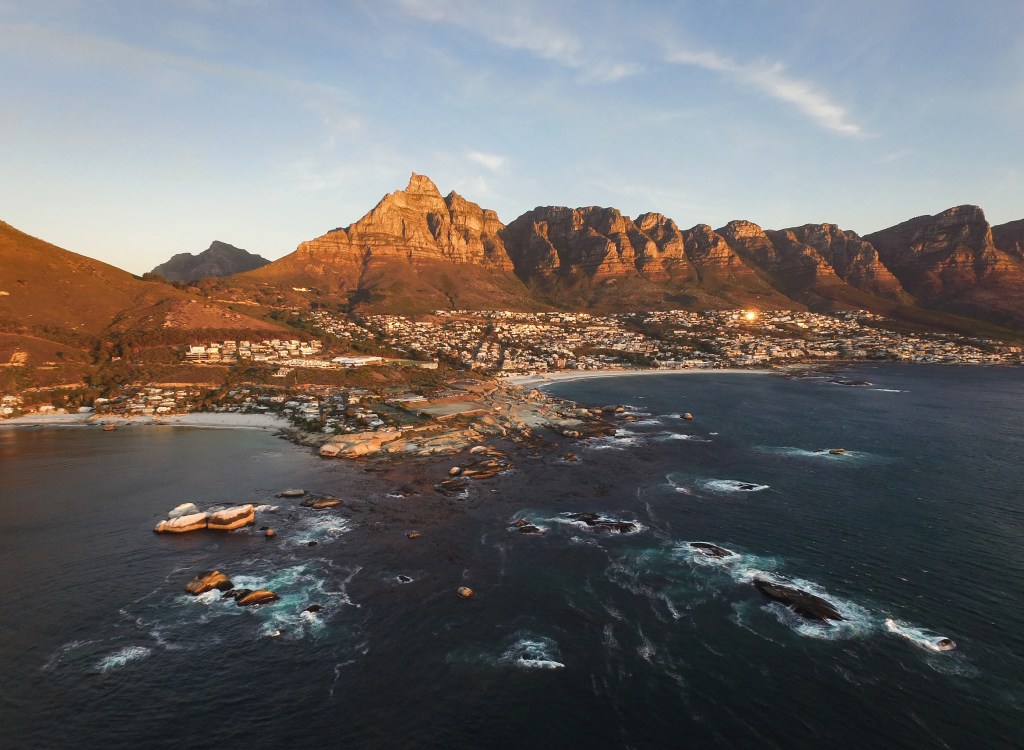
More stormy weather loomed over Cape Town after days of high winds and drenching rain that have displaced hundreds of people, flooded homes and uprooted trees, authorities said on Friday. Close to 33,000 dwellings in both informal settlements and suburbs have been affected, the city’s disaster management centre said. Essentials such as meals, blankets, mattresses, roof sheeting and hygiene packs were being distributed to affected communities amid biting winds and plunging temperatures.
“We have a huge humanitarian situation to deal with and all authorities are working together to address this,” Anton Bredell, Western Cape Minister for Local Government, said in a statement. All the city’s major catchment dams were full or nearing capacity, the Western Cape government said, warning the Breede River in Swellendam town was flowing at more than 1,000 cubic metres a second and was in danger of breaching its banks as more rain is expected. The South Africa Weather Service has warned that an approaching cold front will cause strong to near gale-force winds of around 40 to 60 kph (25-37 mph) between Table Bay and Plettenberg Bay on Sunday. Wave heights of up to five metres (16 feet) were expected on Saturday morning. Ships at Cape Town port, one of the busiest in South Africa, were advised to taking necessary precautions such as tending to moorings regularly to prevent snapping. Despite the damage, some residents were enjoying the bad weather. Online videos showed youngsters frolicking about in flooded roads and even boogie boarding down saturated hills.
ZIMBABWE
Authorities in crackdown on dissent ahead of summit
The Zimbabwe government has launched a crackdown on opponents to forestall protests against unresolved political disputes during a forthcoming regional summit. Harare will host the 44th Southern African Development Community (SADC) Summit on August 17, where President Emmerson Mnangagwa will take over as chairperson of the sub-regional organisation. That Summit could also be an arena to sort out Zimbabwe-Zambia tensions after Mnangagwa was caught on hot mic telling Russian President Vladimir Putin about the West, planning to install crucial military equipment in Zambia to target Harare. Both the US and Zambia refuted the claims but Zambia has since lodged a complaint to SADC about Zimbabwe’s allegations. But for Zimbabwe, the local political problems are just as important. In recent weeks, Mr Mnangagwa’s government has become increasingly edgy about reports of planned protests by his opponents to coincide with the summit. He has intensified a crackdown on opposition and civil society groups, which has led to the arrest of scores of people. Mr Mnangagwa told a recent meeting of his ruling Zanu-PF party that he was “aware of certain rogue elements within the nation who are bent on peddling falsehoods and instigating acts of civil disorder, especially before, during and after regional and world stage events.”
I cannot forgive Mugabe’s soldiers – massacre survivor
An astounding number of mass graves surround Thabani Dhlamini’s home in south-western Zimbabwe…They were all victims of ethnic killings between 1983 and 1987, when Mugabe unleashed the North Korean-trained Five Brigade in strongholds of Joshua Nkomo, his arch-rival. Some describe what followed as a genocide. It is not known how many people died – some estimates put it at more than 20,000 people.
Nkomo was a veteran freedom fighter from the south-western province of Matabeleland who, more than two decades after his death, is still fondly known as “Father Zimbabwe”. The two men had had a fractious relationship during the long liberation struggle against white-minority rule – Nkomo came from Zimbabwe’s Ndebele minority and Mugabe from the nation’s Shona majority. They fell out two years after independence in 1980, when Mugabe fired Nkomo from the coalition government, accusing his party of plotting a coup. Operation Gukurahundi was launched, which at the time the government said was a counter-insurgency mission to root out dissidents who had been attacking civilians. “Gukurahundi” means “cleansing rain” in the Shona language. Those targeted by the elite soldiers were mainly from the Ndebele ethnic group in Matabeleland and Midlands provinces, and the killings laid the foundation for lingering ethnic tensions…it has taken seven years for current President Mnangagwa to establish what he has called the Gukurahundi Community Engagement Programme. A series of village-level hearings, where survivors can air their grievances…Victims and survivors’ families are divided over whether the new government initiative will bring healing and change their fortunes.
NORTH AFRICA
ALGERIA
President Abdelmadjid Tebboune announces reelection campaign
Algeria’s president announced on Thursday that he intends to run for a second term in office, five years after ascending to power as the military and establishment-backed candidate during widespread pro-democracy protests. The 78-year-old political veteran, Abdelmadjid Tebboune, said in an interview broadcast on Algerian television that his decision came in response to support from political parties and young people. “If the Algerian people want to vote for me, that’s fine, otherwise I’ll have accomplished my mission and whoever succeeds me will be welcome,” he said, lauding his record as well as the gas-rich North African country’s security and stability. Tebboune had avoided declaring his intentions even after setting the Sept. 7 election date almost four months ago. Despite repeated demurrals, his intentions were “an open secret” and his candidacy a byproduct of discussions among the political elite…
TUNISIA
Arrests, summonses of potential presidential candidates continue as election day nears
As elections approach in Tunisia, potential candidates are facing arrest or being summoned to appear in court as authorities clamp down on those planning to challenge President Kais Saied. On Friday, a judge in a Tunis court put a potential presidential candidate under a gag order and restricted his movements. Abdellatif Mekki, who served as Tunisia’s health minister and was a prominent leader of the Islamist movement Ennahda before founding his own political party, is among a group of former politicians being investigated for the 2014 killing of a prominent physician. His political party, Work and Accomplishment, has decried the timing of the murder charges as politically motivated due to his plans to run against Saied in Tunisia’s October election. Mekki is the latest potential candidate to face legal obstacles before campaigning even gets underway in the 12 million person North African nation.The challenges facing opposition candidates are a far cry from the democratic hopes felt throughout Tunisia a decade ago. Since 2019, observers have been alarmed at growing signs of a democratic backslide. Saied has imprisoned political opponents, suspended parliament and rewritten the constitution to consolidate the power of the presidency. Despite Tunisia’s ongoing political and economic challenges, large segments of the population continue to support him and his populist rhetoric targeting corrupt elites and foreign interference into domestic affairs…The pursuit of Saied’s political opponents has spanned the political spectrum, from Tunisia’s lslamists like Ennahda’s 83-year-old leader Rached Ghannouchi and nationalists like Free Destourian Party President 49-year-old Abir Moussi.
AFRICA- GENERAL NEWS

Africa’s rare earths could make up 9% of global supply by 2029
African mines could account for nearly a 10th of the world’s rare earths in five years, climbing from zero today, creating new players in a market dominated by China. Eight mines in countries such as Tanzania, Angola, Malawi and South Africa are expected to start production by 2029 and contribute 9% of global supply, according to Benchmark Mineral Intelligence. Most of this new supply could still be secured by Western and non-Chinese processing firms, the London-based industry consultant said in a new analysis. China mines about 70% of the world’s rare earths and refines almost all of the material – a cluster of 17 elements that make magnets used in electric vehicles, wind turbines and military equipment. Beijing can flex its muscles by limiting both production and exports. In December, the Asian country banned overseas sales of a range of rare-earth technologies. The US and its allies are trying to build supply chains independent of China. While 37% of the future African supply is already destined to be shipped to Chinese buyers, most of the production is “potentially available for ex-China and Western rare earths companies,” Benchmark said, noting that Europe is developing the most processing facilities outside of China. “China will not be the only beneficiary of Africa’s active, low cost pipeline, which will also become strategically valuable for the EU and US,” it said.
Africa proposes WTO chief for second term, document shows
The African Group has asked World Trade Organization (WTO) chief Ngozi Okonjo-Iweala to run for a second term as the head of the global trade watchdog, a document showed on Friday. Okonjo-Iweala, a former Nigerian finance minister, made history by becoming the first female and African chief of the 30-year-old trade body in 2021. Her term formally ends in August 2025 and she has not yet commented publicly on her plans. “The African Group is of the view that it would be in the best interest of the Organization if the process of reappointment were to start early,” according to the document sent by Chad, asking Okonjo-Iweala to make herself available for reappointment. It cited the need to make progress on outcomes under her tenure ahead of the next major ministerial meeting due to be hosted by Cameroon. Under WTO rules, Okonjo-Iweala, 70, has until the end of November to decide whether to apply.
Belgium museum wrestles with colonial past, with 40,000 objects tainted with violence
For years, the lustrous copper and glass necklace was on display at the Royal Museum for Central Africa in Tervuren, east of Brussels. Reputed to have belonged to a notorious 19th-century trader of enslaved people, it has 10 bright gilded copper beads suspended on silk, with red glass “jewels” on an intricate medallion. But nobody really knew how the jewellery from central Africa came to be in Belgium. The necklace belonged to Yakaumbu Kamanda Lumpungu, chief of the Songye people in Kabinda in the centre of the modern-day Democratic Republic of the Congo (DRC).A proponent of Congolese independence, Lumpungu was hanged in 1936 by the colonial administration, accused of a double murder – charges that his family denies. Lumpungu had inherited the necklace from his father and gave it to his favourite wife, Mfute. His relatives do not believe he would have parted with it voluntarily. Nearly 90 years after his death, the necklace is one of dozens of objects on display in an exhibition on the provenance of the collection of the Royal Museum for Central Africa, which runs until 29 September. The museum was rebranded as the AfricaMuseum in 2018 after a massive renovation and “decolonisation” process. Today, the museum – founded in 1898 to glorify a brutal colonial project – is still coming to term with its past. After King Léopold II took control of Congo in 1885, establishing a notoriously violent and cruel regime, thousands of objects – art, weapons, musical instruments, grave goods and even human remains – flowed north to Brussels. The AfricaMuseum – like the British Museum in London, the Musée du Quai Branly in Paris and Hamburg’s Museum am Rothenbaum – Cultures and Arts of the World – is grappling with growing calls for restitution of colonial-era artIfacts.
AFRICA RELATED BOOKS & PUBLICATIONS
Africa’s best selling books of all time
Over the past century, African writers have written about their lives, experiences, culture, history, and myths in a variety of forms, styles, and languages. They have been widely published across Africa, Europe, the Americas, and Asia. They’ve written in English, French, Portuguese, Arabic, Swahili, and several other indigenous languages. They wrote, and write, with exceptional originality, flair, and sincerity. From Chinua Achebe, considered to be the father of modern African literature, to Trevor Noah who is part of the new-age crop of writers; African literature continues to stay relevant and as educative as it is entertaining and enlightening. Although not exhaustive, this list puts together some of Africa’s best selling books of the past century.
AFRICA – ANALYSIS, EDITORIAL/OPINION
Does Africa need to be more than an afterthought?
Africa the need to engage with Democracies and Coup regimes
The state of democratic rule on the African continent
Why Europe Needs Africa
Cooperation between Africa and Europe should build on both continents’ strengths to identify converging interests, compatible visions, and potential synergies.
The world is rushing to Africa to mine critical minerals like lithium – how the continent should deal with the demand
Next Wave: What is Africa’s place in the EU AI treaty?
West Africa is changing: five essential reads on breakaways from Ecowas
Prospects Dimming For Democracy In The Sahel – Analysis
 The Africa Edition ©️
Leave a comment