News That Matters To Africa©️
QUOTE OF THE DAY
“We live in a time when intelligent people are being silenced so that stupid people are not offended.”
HIGHLIGHTS
DRC’s failed coup trial begins
Benin-Niger spat deepens
US terrorism strategy failing in West Africa
SAfrica’s DA poised for power-sharing
Black migrants confront violence and despair in North Africa
No agreement on proposed merging of economic groups.
TOP NEWS
Eastern Africa
2 women in Comoros detained on gay sex charges after marriage bid
SADC forces engage M23 rebels in eastern DRC as violence intensifies
US, British citizens among suspects on trial in Congo after failed coup
Ethiopia’s Gerd generates more-than-expected electricity
Ethiopia – National Dialogue Commission reaffirms commitment to inclusiveness
Kenyans’ tax burden and why the president wants them to pay more
Kenya set to join Organisation of American States (OAS) as observer
Why Kenya’s political leaders prefer play the tribal card
Rwanda opposition leader barred from standing against president
UN steps up efforts to maintain peace in South Sudan
Sudan plays Russia and US, seeks junta recognition
Uganda hit by power outage for several hours, grid operator says
EAC leaders upbeat as Nduva takes hot seat
West Africa
Benin-Niger spat deepens with arrests at crude pipeline terminal
Ghana close to signing debt rework MoU with official creditors
Ghanian celebrities lead protests over power outages
Despite fears in Europe, no migrant surge after Niger scrapped ban
US lawmakers say Nigeria is detaining American to extort Binance
Nigerians get free pay-TV after MultiChoice is fined
US confronts failures as terrorism spreads in West Africa
Sadat, the ‘Turkish Wagner’ whose shadow hangs over West Africa
Southern Africa
South African parties await details of ANC unity government proposal
White politician poised for power faces hurdle in South Africa
What big business wants for South Africa’s future
South Africa floats universal basic income for all
Gupta brothers denied bail in India
Long jail terms for Chinese cybercrime gang in Zambia
Zimbabwe’s Mnangagwa hails Putin as ‘my dear friend’ and ally
North Africa
Stranded migrants confront violence and despair in Tunisia
Sub-Saharan migrants in “alarming situation” between Libya, Algeria, Niger
AFRICA GENERAL
TWEET(s) OF THE DAY
PODCAST OF THE DAY
GALLERY OF AFRICA NEWS IN PICTURES
AFRICA CALENDAR
(9) ARTICLES ON ANALYSIS, EDITORIAL & OPINION
EASTERN AFRICA
COMOROS
Two women detained on gay sex charges after marriage bid
Police in Comoros detained two women on Saturday on charges of engaging in same-sex sexual activity after they asked an Islamic preacher to marry them, a public prosecutor said. Gay sex is illegal in Comoros, a Muslim-majority archipelago nation in the Indian ocean which has a population of 870,000. The Public Prosecutor said the women were being held in pre-trial detention at a prison in the capital, Moroni, after a court appearance in which they were charged with having “unnatural sex”. They are accused of acts that are contrary to good morals and against nature. If convicted, the two women who are aged 22 and 25 could be jailed for up to two years, he added. It was not immediately possible to reach a lawyer representing the women.
There has been a growing crackdown on same-sex relations in some African countries in recent years, with tough anti-LGBTQ+ laws passed in Uganda and Ghana drawing strong condemnation from Western countries and rights campaigners. A report by the UK-based Human Dignity Trust, a rights group, said there were few known examples of anti-LGBTQ+ laws being enforced in the Comoros in recent years.
DRCONGO
SADC forces engage M23 rebels in eastern DRC as violence intensifies
The Southern African Development Community (SADC) troops in eastern Democratic Republic of Congo have, unlike their East African predecessors, been involved in armed combat against the M23 rebels, making peaceful negotiations a distant reality. The East African Community countries (EACRF), whose mandate ended in December 2023, had sought to buffer the frontlines to encourage dialogue. But, while this helped push back the M23 without firing a shot, it angered Kinshasa for not targeting what it called ‘terrorists.’ For SADC, however, this approach has come at a cost, recording more deaths than EACRF. On May 31, the South African army, a member of this mission known as SAMIDRC announced that it had lost a soldier. A Spokesman for the Congolese army (FARDC) in North Kivu, accused M23 and the Rwandan army of having a hand in it. Rwanda has denied having a hand in the conflict even though Kinshasa has insisted M23 are backed by Kigali, claims also sustained by the US and France. This is the 5th South African soldier to die since the deployment of that country’s troops under SADC mission. Like the first four who lost their lives, hit by mortars, the fifth is also South African. A military expert based in Goma, believes that the strategy to escalate the fight by the rebels has two aims: To put pressure on the government in Kinshasa to open a dialogue, and to send a message to South African President Cyril Ramaphosa to agree to withdraw his country’s troops fighting under the SADC banner.
US, British citizens among suspects on trial in Congo after failed coup
More than 50 defendants, including six with U.S., British, Canadian or Belgian citizenship, appeared in court in the Democratic Republic of Congo on Friday charged with taking part in a failed coup and other offences that carry the death penalty. Armed men briefly occupied an office of the presidency in the capital Kinshasa on May 19 before their leader, U.S.-based Congolese politician Christian Malanga, was killed by security forces. The defendants include Malanga’s 22-year-old son Marcel Malanga, two other US citizens and the three other holders of foreign passports. All have Congolese roots. All 53 face charges including illegal arms possession, criminal conspiracy, terrorism and attempts to destabilise state institutions and undermine the integrity of the state, some of which risk the death penalty or lengthy prison sentences. Congo lifted a moratorium on the death penalty in March, citing treachery and espionage in recurring armed conflicts as the reason.
ETHIOPIA
Gerd generates more-than-expected electricity
The Ethiopian government disclosed that the Grand Ethiopian Renaissance Dam (Gerd) has generated more than 2,700 gigawatt hours (GWh) of electricity during the past 10 months. The Ethiopian Electric Power (EEP) said the mega hydroelectric power plant has surpassed its initial planned power generation targets in the past 10 months of the current 2023/2024 Ethiopian fiscal year that started on July 8, 2023, state-affiliated Fana Broadcasting Corporate reported late Wednesday. The dam registered around a 26 percent increase from the initial plan of 2,152.8 GWh, according to data from EEP. With the new milestone, Gerd contributed about 16 percent of the country’s total 16,900 GWh of electricity generated during the reported period from various power generating plants across the country. The Horn of Africa country started to build the Gerd on the Nile River in April 2011. The mega hydroelectric power project has since then been a major issue among the three Nile-bound countries of Ethiopia, Egypt, and Sudan.
Ethiopia frequently reiterates that the dam will power its development aspirations and boost its ambition to attain a lower-middle-income status in the near future. Meanwhile, Egypt and Sudan frequently express their concern that the dam would affect their share of the river waters.
National Dialogue Commission reaffirms commitment to inclusiveness
The Ethiopian National Dialogue Commission has issued a formal statement announcing its openness to engaging in discussions with the Ethiopian Orthodox Tewahedo Church (EOTC). This follows concerns raised by the EOTC’s Holy Synod regarding its involvement in the current national dialogue process. The Commission’s statement, released on 07 June, 2024, emphasized its commitment to inclusiveness, stating that this principle applies equally to all religious institutions. In its statement issued yesterday, the Holy Synod noted that the Commission had proceeded with its efforts, including the selection of participants and setting of the agenda, without formally inviting the Church to participate. The Holy Synod acknowledged the Commission’s purpose, as outlined in its founding proclamation, to involve stakeholders in addressing national issues through dialogue. However, they stressed the importance of formally engaging with the Commission to secure the church’s right to participate and contribute its priorities to the agenda. The Holy Synod further announced the establishment of a committee dedicated to pursuing a formal role for the church within the Commission’s proceedings. In its response, the Commission highlighted its cooperation with the Inter-Religious Council of Ethiopia.
KENYA
Kenyans’ tax burden and why the president wants them to pay more
President William Ruto is trying to convince Kenyans that they should hand over more of their hard-earned cash, saying that, if anything, they are under-taxed. He recently argued that Kenyans have “been socialised to believe they pay the highest taxes” when in fact, he added, the overall tax burden was lower compared to some other countries in Africa and beyond. Since he was elected president in August 2022, Mr Ruto’s government has raised a host of taxes while also introducing new ones. Taxes on salaries have gone up, the sales tax on fuel has doubled and people are also paying a new housing levy and are due to pay more for health insurance.
Mr Ruto’s message is that if people want better public services and a reduction in the country’s debt burden then they have to pay up. But many are angry…Economist Odhiambo Ramogi argues that countries in the West with high tax rates generally have good public services to show for it. In contrast, he argues, despite there being many taxes and levies waiting for Kenyans, people still have to “pay school fees, hospital bills, you have to pay for all public services, it’s double taxation all across the board”. He says that in order to grow, Kenya should first ensure taxes are properly collected and utilised, as well as eliminate corruption…But the president appears determined (with increasing taxes). Despite the uproar, more taxes will be coming – the president has defended the raising of more taxes in order to boost government revenue and reduce borrowing. Kenya has a national debt of nearly $80bn (£62bn) much of it inherited from previous administrations.
Kenya set to join Organisation of American States (OAS) as observer
Kenya is set to be admitted to the Organisation of American States (OAS), a regional bloc of 34 countries in the Western hemisphere, in what could allow Nairobi a permanent observation status to the body whose members include Haiti. The 34-member bloc, including the US, is headquartered in Washington and often acts as a forum for Western hemisphere countries to discuss political issues in the wider Americas region. Once formally admitted, Kenya will join 75 other countries and organisations with permanent observer status. But it won’t be the first African country. OAS already admitted Angola, Algeria, Benin, Egypt, Equatorial Guinea, Nigeria, Ghana, Morocco, Togo and Tunisia. Sitting on this body, however, could allow Kenya to hear directly local concerns, suggestions or objections on its involvement in Haiti.
Why Kenya’s political leaders prefer play the tribal card
Talk about tribal politics dividing the country has dominated discussions across the country after President William Ruto warned politicians against spreading the vice. But how realistic are his concerns? The warning followed a siege against Deputy President Rigathi Gachagua who has been accused by Ruto’s allies of allegedly spreading tribal politics that is quickly polarising the country through his calls for a united Mt Kenya region. There is no doubt that negative ethnicity polarises communities but political analysts argue that tribal politics has been entrenched in the national psyche by those in power over the years, including those in office currently. Pundits therefore argue that the political tirade against the DP is more about personal interest and fear of losing political traction in the Mt Kenya region than pacification of the country…President Ruto is becoming increasingly agitated by what he calls “tribal politics” which he has condemned at every meeting he has held since addressing the prayer breakfast meeting about two weeks ago. But the president himself used the tribal card in the last election, especially when he campaigned against a former MP from a minority race from his Uasin Gishu backyard in 2022 elections…almost all politicians in the country, including ODM leader Raila Odinga, engage in tribal politics for personal interest and for them to continue being the so called regional kingpins.
SOUTH SUDAN
UN steps up efforts to maintain peace in South Sudan
The UN Mission in South Sudan (UNMISS) said Thursday it has stepped up efforts to maintain peace in Malakal town, Upper Nile State, following the death of several people last week due to violence. UNMISS said it will continue to support efforts to protect civilians and maintain calm through intensive patrols and engagement with affected communities. Nicholas Haysom, special representative of the UN secretary-general and head of UNMISS, said in a statement issued in Juba, the capital of South Sudan, that the situation is currently calm but fragile. The clashes erupted on May 30 between the Dinka and Shilluk communities over the disputed Akoka area, with armed Dinka men attacking and killing four Shilluk fishermen who were under civilian protection. In retaliation, the Shilluk community moved out of the UN Protection of Civilians Site and killed a driver belonging to the Dinka community in Malakal town.
UGANDA
Nation hit by power outage for several hours
Uganda on Friday suffered a rare nationwide electricity blackout for several hours, state-run power grid announced, adding that power was gradually being restored late in the afternoon.
Uganda Electricity Transmission Company Limited (UETCL) blamed the power outage on technical issues at Karuma Hydro Power plant in a post on X. The 600MW Karuma power plant is located on the Nile River in Kiryandongo District in mid-northern Uganda, 110km downstream of Lake Kyoga, and 270km from Uganda’s capital, Kampala. Financed by the Export-Import Bank of China (Eximbank) at approximately $1.7 billion, the dam is critical in meeting the region’s increasing electricity demand in efforts to accelerate industrialisation. The dam is poised to generate power for export to South Sudan, about 180km away, and the Democratic Republic of Congo, about 200km away.
SUDAN
Sudan plays Russia and US, seeks junta recognition
The war in Sudan has given Moscow an opportunity to revive an agreement to establish a military base in the Red Sea, helping it to expand its influence in the Horn of Africa region. Either that or the Sudanese military leadership is playing Russia and the US as it pushes levers to have itself recognised as the legitimate administration of Sudan and isolate rivals Rapid Support Forces (RSF). This week on Tuesday, Malik Agar, deputy leader of the Sudan Transitional Sovereign Council led by Abdel Fattah al-Burhan, visited Moscow where, a government dispatch indicated he was to discuss defence co-operation. The idea, officials indicated, was to help the junta gain arms while providing a naval logistics base to Russia at Port Sudan. The deal was expected to grant Russia a coveted access to the Horn of Africa coastline, enabling it to run affairs with their contacts in the interior of Africa, just as much as it allows it to play alongside rivals who already have military bases at the Red Sea. Russia, through its private military group Wagner, had initially played alongside the RSF before stopping. Shifting to the Sudan Armed Forces (Saf) may imply stronger political relevance as Moscow drives to compete internationally in spite of Western sanctions.
EA Region
EAC leaders upbeat as Nduva takes hot seat
East African Community’s first female Secretary-General Veronica Mueni Nduva, sworn in at an Extraordinary Heads of State Summit, was sworn in at an Extraordinary Heads of State Summit chaired by President Salva Kiir of South Sudan in Juba. Ms Nduva, who leaves the job of Principal Secretary for Public Serice, Performance and Delivery Management, pledged to address the pressing issues in the bloc and remain faithful to the integration agenda.She also promised to dedicate her time to promote peace in a region that is facing conflict in eastern Congo, closed borders between Rwanda and Burundi, and tensions between Rwanda and Democratic Republic of Congo. President Kiir said the EAC is on the right track. “We are now at 15 percent at trading among ourselves. We look forward to increasing the percentage with the admission of Somalia,” he said. President Kiir also announced that South Sudan would be hosting public participation and consultation on the Political Federation in July.
WEST AFRICA
BENIN/NIGER
Niger-Benin spat deepens with arrests at crude pipeline terminal
A prosecutor in Benin said authorities had detained on Wednesday five Niger nationals for allegedly entering Benin’s Seme-Kpodji pipeline terminal under false pretences, deepening a dispute over exports of crude oil from Niger via Benin. At least 2 were accused of being agents of Niger’s ruling military junta. Niger’s Oil Minister rejected the prosecutor’s allegations, telling a press conference in Niamey that those arrested were inspectors supervising the loading of crude oil in line with an agreement with Benin. Relations between the West African neighbours have been strained since Benin blocked crude exports via its port from landlocked Niger in May. On May 15, Benin temporarily reversed the export block. The tensions go back to the July 2023 coup in Niger, which led the regional bloc ECOWAS to impose strict sanctions for more than six months. Trade flows in the region were expected to normalise after the bloc lifted sanctions, but Niger has kept its borders closed to goods from Benin. Benin’s crude blockade jeopardised Niger’s plan to start exports from its Agadem oilfield via the pipeline under a memorandum of understanding with Chinese state-owned oil giant China National Petroleum Corp (CNPC) worth $400 million.
GHANA
A debt rework MoU with official creditors is close – sources
Ghana and its official creditors have finalised core issues on a debt rework and will sign a draft memorandum of understanding very soon, a key step required to access more International Monetary Fund financing. The memorandum formalises a provisional deal reached in January with government creditors, including China and France, to restructure $5.4 billion of debt, as the West African nation tries to chart its way out of its worst economic crisis in a generation. Getting an MoU in place will pave the way for the IMF’s executive board to meet and approve a disbursement of $360 million under Ghana’s $3 billion bailout programme, which is expected later this month. All the important issues were settled, one source familiar with the situation said, adding the process was now down to finalising some specific wording. The signing of the document was expected within days, according to the sources. Ghana defaulted on most of its overseas debt in December 2022 amid soaring servicing costs, following Zambia into post-COVID default. Lingering in default complicates the government’s efforts to secure outside funding and claw its way out of a punishing economic crisis. Like Zambia, Ghana also signed up for debt treatment under the G20 Common Framework, a process designed to facilitate quick debt overhauls and bring the newest large bilateral lender, China, into the process.
Ghanian celebrities lead protests over power outages
Hundreds of Ghanaians took to the streets of Accra on Saturday in a peaceful protest against power supply outages affecting businesses and daily life across the West African nation. Dressed in red and black, with leaders in red berets, demonstrators marched through the capital, calling on the government to stabilise the power supply. Chanting patriotic songs and carrying kerosene-powered lanterns to symbolise their plight, the large crowd caused traffic gridlock in the evening. Despite being one of the first African countries to pursue electrification aggressively, Ghana suffers from chronic power shortages and struggles to expand capacity to meet growing demand. Dubbed the #DumsorMustStop vigil — “dumsor” meaning power cuts — the protest was organised by prominent Ghanaian actress and film producer Yvonne Nelson. “I am feeling the heat, and I am here to voice out,” said Nelson. Also joining the protest, Ghanaian comedian DKB who said: “These unannounced power outages are killing our craft. We need stable electricity to thrive.” Ordinary Ghanaians also voiced their frustration. Shop owner Anita Twumasi was visibly distressed as she shared how the power outages affected her six-month-old baby. “My baby cannot stand the heat. Every time the power goes off, I worry for her health,” she said. Protesters blame the power cuts on the New Patriotic Party (NPP) government’s alleged failure to pay for necessary fuel. Electricity has become a major campaign issue in Ghana, a country rich in gold and oil, ahead of elections in December.
NIGER
Despite fears in Europe, no migrant surge after Niger scrapped ban
Niger’s military leaders in November scrapped a European Union-backed law that criminalised people who aided migrants. The reversal of the law triggered alarm in Europe. In the run-up to this week’s elections for the European Parliament, some far-right parties have predicted an influx of illegal migrants. But nine migration experts and representatives of migration-focused organisations painted a more cautious picture, noting that data on migrants reaching Europe via the Mediterranean does not show an increase, although they say those numbers could increase in the future. “When I hear politicians say that there is an immigration emergency or talk of an invasion: no, this is not the case,” said Flavio di Giacomo, the IOM spokesperson for the Mediterranean. The UN agency is not expecting migrant flows on this route from North Africa to rise dramatically in the coming months, he said. “This is a humanitarian emergency. It’s not an emergency in terms of numbers.” In fact, arrivals via the central Mediterranean are down 62% from January to April, the EU border agency Frontex said in a May report. This was partly due to poor weather that complicated the sea crossing, di Giacomo said. The IOM also points to historical trends showing that 80% of African migrants tend to stay in Africa, part of a centuries-old tradition of free movement of economic migrants.
NIGERIA
US lawmakers say Nigeria is detaining American to extort Binance
US lawmakers have accused Nigeria of wrongfully detaining an American staff member of cryptocurrency exchange Binance in an attempt to extort money. They urged President Joe Biden and the State Department to quickly intervene in the case. Tigran Gambaryan, 40, and a company colleague were arrested by Nigerian security authorities in February while on an official visit to the country. Gambaryan is facing charges of tax evasion, money laundering and engaging in unlicensed financial activities, in a trial that began in May. “Mr. Gambaryan’s health and well-being are in danger, and we fear for his life,” read a letter dated June 4 and signed by 16 members of the US House Foreign Affairs Committee. “It is crucial to emphasize that the charges against Mr. Gambaryan are baseless and constitute a coercion tactic by the Nigerian government to extort his employer, Binance,” stated the letter, which also said he had been subjected to harsh treatment and called for swift action to save his life. Nigeria’s government, responding to the accusations, said it is following due process. “Prosecutors are confident of their case, based on the facts and evidence gathered. Binance will have every opportunity to defend itself in court against these severe charges of financial crimes,” Information Minister Mohammed Idris said. Nigerian authorities this year renewed their crackdown on crypto, arguing that trades on platforms like Binance helped weaken the local naira currency even as it evades paying taxes on earnings from its activities. Idris, the information minister, claimed Binance had “a turnover in Nigeria of over $20 billion” in 2023.
Nigerians get free pay-TV after MultiChoice is fined
A Nigerian consumer tribunal fined the local unit of Africa’s biggest pay-TV company MultiChoice Group 150 million naira ($107,142.86) on Friday for contempt of court and ordered the company to offer its subscribers one month of free service. MultiChoice, which operates pay-TV services DSTV and GOTV in Nigeria, increased subscription rates by about 25% in May, drawing complaints from subscribers. The decision by the Competition and Consumer Protection Tribunal (CCPT) ruling comes after MultiChoice Nigeria defied a previous order to halt the price increase. The CCPT subsequently restrained MultiChoice from raising prices on April 29. However, the company challenged the court’s jurisdiction and proceeded with the increase. On Friday, the tribunal asserted its authority over consumer rights cases and imposed the fine on MultiChoice for defying its order.
WA REGION
US confronts failures as terrorism spreads in West Africa
In the shadow of the Sept. 11 attacks, the United States rushed troops and military aid to a swath of West Africa to help French forces stop the spread of Al Qaeda and other terrorist groups. More than a decade later, and with hundreds of millions of dollars in security assistance spent, that regional counterterrorism effort has largely failed. Groups that have declared allegiance to Al Qaeda and the Islamic State are on the march. Military coups have toppled civilian-led governments in Mali, Chad, Burkina Faso and Niger. The new leaders have ordered American and French troops out, and in some cases invited Russian mercenaries in to take their place. As the United States withdraws 1,000 military personnel from Niger and shutters a $110 million air base there by September, American officials are scrambling to work with a new set of countries in coastal West Africa to battle a violent extremist insurgency that they perceive is steadily seeping south…An American diplomat in the region said that West African governments should share the blame, because some of those partners were more interested in staying in power than in fighting terrorism.
Sadat, the ‘Turkish Wagner’ whose shadow hangs over West Africa
The mercenaries in the private security company close to Turkish President Erdogan could play a growing role in Niger and Mali, following their operations in Libya and Azerbaijan. Are pro-Turkish Syrian mercenaries operating in Niger? The suspicion, not yet confirmed by conclusive documents, was first raised at the beginning of May with the announcement by the London-based Syrian Observatory for Human Rights (OSDH) of the first dead repatriated to the country. The OSDH reported they were Syrian victims deployed in the Sahel region in the name of Turkey’s geopolitical designs. Since then, the OSDH, an information center linked to the Syrian opposition, has regularly reported arrivals in Niger of “over a thousand” of these Syrian fighters from Sadat, a private Turkish security company close to President Recep Tayyip Erdogan. While Turkey’s offensive in Africa is an old story, where security deals blend with economic contracts, humanitarian aid and the promotion of an Islam similar to the one envisioned by the Muslim Brotherhood, renewed attention seems to be focused on the Sahel at a time when the departure of the French and American forces is inviting new strategic players. “In Niger, Syrian mercenaries are supposed to guard mines, oil installations or military bases,” said OSDH director Rami Abdel-Rahman. “But they then find themselves involved in fighting against jihadist groups. Nine of these Syrian fighters have died to date.” OSDH reports that these men find themselves fighting alongside the “Russians” of Africa Corps (ex-Wagner), or even abandoned to the Corps’ authority, even though Moscow and Ankara are supposed to be rivals in the Syrian war. “Russians and Turks are cooperating in Niger,” said Abdel-Rahman.
SOUTHERN AFRICA
SOUTH AFRICA
South African parties await details of ANC unity government proposal
South African opposition parties said on Friday they were waiting for more details on a proposal by the African National Congress to form a government of national unity after it lost its majority for the first time in the democratic era. The Democratic Alliance (DA), the largest opposition party, said it was open to talks and was “committed to the process”. “But the broad invitation to all parties … rather than limiting it to parties committed to our current constitutional dispensation, the rule of law and a social-market economy, has undoubtedly complicated matters,” spokesperson Werner Horn said. President Ramaphosa said the ANC had already held constructive discussions with the EFF and DA, as well as with the smaller Inkatha Freedom Party (IFP), the National Freedom Party and the Patriotic Alliance. Zuma’s MK said it expected to meet with the ANC soon. During the election campaign, the DA had called any potential ANC tie-up with the EFF or MK a “doomsday coalition” that would tank the economy. Both smaller parties advocate nationalising mines and seizing land without compensation.
White politician poised for power faces hurdle in South Africa
when the African National Congress failed to secure a governing majority in last week’s election and on Thursday invited its political opponents to join forces in a government of national unity, John Steenhuisen moved to the front of the pack of political leaders looking to work with the party he had sworn off. He and the Democratic Alliance are now plowing ahead with the most important political negotiations in South Africa since the end of apartheid in 1994 and have drafted a document laying out their core principles for joining a government with the African National Congress, or A.N.C. As head of the party that took second place, with nearly 22 percent of the vote, Mr. Steenhuisen seems likely to get a leading role in the next government, political analysts say. But even as he is rising, Mr. Steenhuisen must navigate the tricky third-rail of South African society: race. Mr. Steenhuisen is white, and the national leadership of his party is predominantly white. In a country that is 80 percent Black, many still view him and his center-right party, which is favored by many in big business and the private sector, as champions of white interests. Political analysts attribute this in part to the unresolved trauma of apartheid but also to the Democratic Alliance’s sometimes flip and clumsy handling of racial issues…Some within the A.N.C. vehemently oppose bringing the Democratic Alliance into a governing coalition, saying that the party has opposed efforts to undo the racial disparities that still linger from apartheid, especially in wealth, land ownership and employment. Opponents also accuse the Democratic Alliance of peddling racism.
What big business wants for South Africa’s future
A leading figure in South Africa’s second biggest political party has warned that a failure to fix the economy “might end up with violence that nobody wants”. In the aftermath of the elections Dion George, who oversees economic policy for the Democratic Alliance (DA), said that political parties need to “set aside our deeply entrenched ideological perspectives” to get the economy growing again. South Africa’s President, the ANC’s Cyril Ramaphosa, has said the concerns of citizens must be the priority. “These issues include job creation and the growth of our economy that will be inclusive, the high cost of living, service delivery, crime and corruption,” he said recently. Last year South Africa’s economy grew just 0.6%. “A whole lot of small businesses have actually shut down” because of widespread problems with energy supplies as well as the state run transport and water networks, says Busisiwe Mavuso, the chief executive of the influential lobby group Business Leadership South Africa. Its members include local names such as the Bidvest conglomerate and Absa bank as well as international firms such as Amazon, Volkswagen and Nestle. Ms Muvaso says the “trading environment is not conducive” and that her members’ “plea is for the government to really fix the basics”.
South Africa floats universal basic income for all
Africa is facing the most dramatic political shift since the end of apartheid after the African National Congress after its losses in the recent election. Weeks of difficult negotiations between the ANC and its rivals on how best to form a governing coalition are expected. One commitment that unites most parties – including the incumbent ANC and its biggest rival, the Democratic Alliance – is to maintain or increase income support for adults, which includes monthly Covid payments to the poorest households. But the ANC has gone one step further. A week before the election, it released a statement deepening its commitment to finalising a policy to transform the state’s Covid grant into a universal basic income (UBI) within two years of forming a new administration. If implemented, this would make South Africa the first country in the world to work towards a policy of paying all people between the ages of 18 and 59 a regular grant, with no condition to be seeking work…“When you put money into the hands of the poorest households it lifts the whole economy,” says Kelle Howson, a senior researcher from the Johannesburg-based Institute for Economic Justice (IEJ), which is part of a coalition of civil society organisations calling for a basic income grant in South Africa…the idea of a basic income was largely the stuff of political debate and fantasy until Covid. During the pandemic, many governments issued emergency grants and income support to replace employment in a way that would previously have been politically impossible
Gupta brothers denied bail in India
An Indian court has refused bail to Anil Gupta and Ajay Gupta in connection with allegedly abetting the suicide of a businessman. Ajay Gupta, 58, and Anil Gupta, were arrested in Dehradun, the capital of Uttarakhand state last month. The son of the victim said his father left a suicide note in which he accused the two men of threatening him. In 2018, South African investigators said the Guptas colluded with ex-president Jacob Zuma to siphon off state assets under a system that, according to one estimate, cost several billion dollars. The two younger brothers, Atul and Rajesh fled to the United Arab Emirates. In 2023, a Dubai court ruled against extraditing them to Pretoria on a technicality. Ajay was declared a fugitive from justice in 2018, but South African authorities dropped the charges against him the next year.
ZAMBIA
Long jail terms for Chinese cybercrime gang
Lengthy jail terms have been handed to 22 Chinese citizens – and a Cameroonian man – for cyber-related crimes in Zambia. The gang’s only female, Gu Tianjiao, cried “papa, papa” as her seven-year sentenced was announced in the Lusaka Magistrates Court on Friday. Some in the gang – including its mastermind Li Xianlin – received up to 11 years in prison. The group’s members were also fined between $1,500 and $3,000 (£1,180 and £2,360) each. Victims as far afield as Singapore, Peru and the United Arab Emirates fell prey to their online scams, say Zambian authorities. After a trial lasting several weeks, the perpetrators pleaded guilty on 3 charges – computer-related misrepresentation, identity-related crimes, and illegally operating a network or service. The 22 people jailed on Friday were among a bigger group of 77 suspects arrested in April, in connection with what authorities called a “sophisticated internet fraud syndicate”. Dozens of young Zambians were also arrested after allegedly being recruited to be call-centre agents in the fraudulent activities, including internet fraud and online scams, the DEC said during the arrests.
ZIMBABWE
Mnangagwa hails Russia’s Putin as ‘my dear friend’ and ally
President Emmerson Mnangagwa on Friday cast President Vladimir Putin as “my dear brother” and said Russia was a consistent ally of Zimbabwe. Mnangagwa, speaking at the St Petersburg International Economic Forum, praised Putin for defending the independence and territorial integrity of Russia. “Zimbabwe considers the Russian Federation as a consistent global ally,” Mnangagwa said on a stage shared by Putin in St Petersburg. “Strength lies in our unity, adaptability and innovation.” “It is regrettable and unacceptable that the collective West continues to peruse hegemonic tendencies that blatantly violate the sovereign equality of nations, justice and fairness,” Mnangagwa told the forum. Mnangagwa called for an end to sanctions on his own country that he said were imposed for the “crime” of Zimbabwean people claiming their own land. Still Zimbabwe, he said, was “open for business”.
NORTH AFRICA
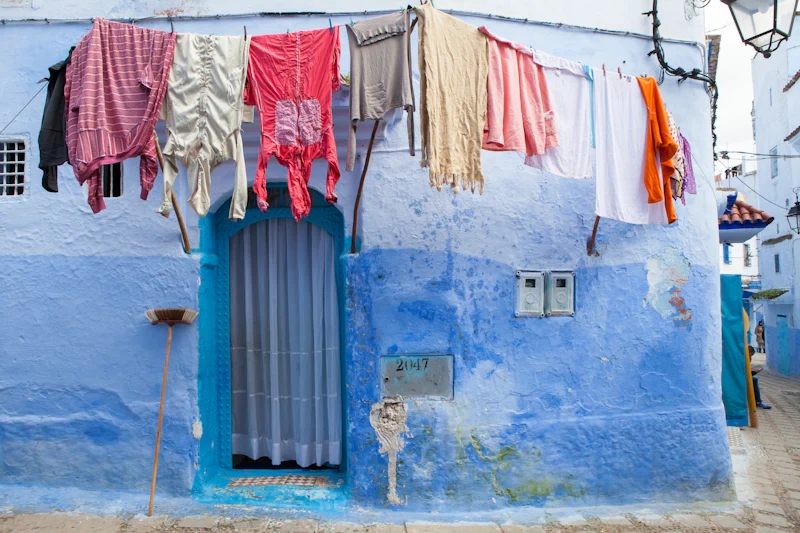
TUNISIA
Stranded migrants confront violence and despair in Tunisia
For many migrants who’ve long dreamed of Europe, one of the last stops is an expanse of olive trees on North Africa’s Mediterranean coastline. But in Tunisia, less than 100 miles (161 kilometers) from the Italian islands that form the European Union’s outermost borders, for many that dream has become a nightmare. Based on unofficial estimates, the U.N.’s International Organization for Migration said it believes 15,000 to 20,000 migrants are stranded in rural olive groves near the central Tunisian coastline. Their presence is a byproduct of anti-migration policies being championed in both Tunisia and throughout Europe, particularly from right-wing politicians who are expected to gain ground in the European Union’s parliamentary elections this week. The encampments have grown in size since last year as police have pushed migrants out of cities and ramped up efforts to prevent Mediterranean crossings… From January to May, authorities stopped nearly 53,000 migrants from crossing its maritime border to Europe, Interior Minister Kamel Fekih said last month. Less than 10,000 migrants successfully crossed from Tunisia to Italy this year, down from 23,000 in the same time period last year. That fulfills objectives that European leaders outlined last summer when they brokered a 1Billion euro ($1.1B) accord with Tunisia. Though the funds have not been completely disbursed, the deal included 105 million euros ($114 million) for migration-related programs.
Sub-Saharan migrants in “alarming situation” between Libya, Algeria, Niger
The “unprecedented humanitarian crisis” in Africa is partly linked to the restrictive migration policies of the European Union (EU), according to the statement by the Action for Human Rights and Friendship (ADHA). Sub-Saharan Africa continues to lose thousands of young people to irregular migration, often to nowhere. As they try to reach Europe at all costs, they find themselves in difficult and dangerous conditions, sometimes “in Libyan, Algerian and Tunisian prisons”. The statement stated that the organisation expressed deep concern at this alarming situation and informed the Senegalese authorities that “around 100 Senegalese are currently stranded in Niger”.
It added that Libya, Algeria, Tunisia and Niger are transit points for sub-Saharan migrants trying to reach the Spanish and Italian coasts in Europe. “However, the deterioration of security conditions, restrictive migration policies under the complicit eye of certain EU countries and the lack of response and coordination on the part of the migrants’ countries of origin have led to an unprecedented humanitarian crisis,” the ADHA President said. It notes that the number of migrants intercepted in Tunisia rose from 31,297 in 2022 to 69,963 in 2023, while “almost 9,000 black Africans” were expelled and “forcibly” transferred to the borders of Niger by Algerian security forces between early January and early April 2024.
AFRICA – GENERAL NEWS

No agreement in Africa on proposed merging of economic groups
Presidents and finance ministers from eleven central African countries have failed to agree on merging three economic blocs. Analysts say breaking down economic barriers among member countries of the Central African Economic and Monetary Community, CEMAC, the Economic Community of Central African States, ECCAS, and the Economic Community of the Great Lakes Countries CEPGL will boost trade and growth in a region that is said to be among the poorest and most conflict-ridden in the world. But after a meeting in Cameroon’s capital, officials say combining the three economic blocs will take longer than the leaders of the regions expect.
Gilberto Da Piedade Verissimo is the president of ECCAS. He says the process of merging the economic blocs is taking longer than planned because of a lack of political will, conflicting interests and bureaucratic duplication among 3 rival economic groups. He says each time there is a leadership change, ECCAS officials start explaining the importance of fusing the economic blocs for the general interest of the eleven central African states to new governments all over again because different leaders have different understandings of the combination. Verissimo said merging economic blocs will stop the duplication of regional projects such as airlines, roads, electricity, agriculture and aquaculture, making it easier for funding agencies to invest in such projects.
What to know about Russia’s growing footprint in Africa
Russia’s top diplomat pledged help and military assistance while on a whirlwind tour of several countries in Africa’s sub-Saharan region of Sahel this week, as Moscow seeks to grow its influence in the restive, mineral-rich section of the continent. Russia is emerging as the security partner of choice for a growing number of African governments in the region, displacing traditional allies like France and the United States. Sergey Lavrov, who has made several trips to Africa in recent years, this week stopped in Guinea, the Republic of Congo, Burkina Faso and Chad. Moscow has aggressively expanded its military cooperation with African nations by using the private security company Wagner, and its likely successor, Africa Corps, with Russian mercenaries taking up roles from protecting African leaders to helping states fight extremists. Moscow is also seeking political support, or at least neutrality, from many of Africa’s 54 countries over its invasion of Ukraine. African nations make up the largest voting bloc at the United Nations and have been more divided than any other group on General Assembly resolutions criticizing Russia’s actions in Ukraine. Here’s a look at how Russia is expanding its influence in Africa:
Africa agrees to provide stable supply of minerals to South Korea
African leaders gathering in Seoul last Tuesday agreed to ensure an organised, stable supply of minerals to South Korea, enabling the Asian country new entry to critical raw material for energy transition. The assurance was provided in a joint declaration…the two sides will launch a high-level dialogue through which to discuss the supply from Africa’s mineral-rich countries. Seoul said its bid was collaborative and will serve as a “a model example of sustainable development of global mineral resource.” The promise to provide a new kind of arrangement for minerals in Africa sounded enticing for a continent that has often complained of exploitation. But Koreans were also short of what African leaders actually demanded. In the joint declaration, Seoul ensured the SDRs, debt and any pledges towards enhancing World Bank contribution for concessional lending was avoided. Instead, promised to double official development aid to Africa to $10 billion by 2030, and provide export financing of about $14 billion to Korean seeking trade and investment in Africa “as a catalyst for projects for cooperation with Africa. Most of that money will be disbursed through the through the expansion of Korean Economic Development Cooperation Fund (EDCF). African leaders had called for technology transfer, especially to enable countries to learn from Korea’s developed technology in robotics, biotechnology, artificial intelligence and related areas…This too, was omitted in the joint declaration, even though they pledged people-to-people exchanges including research cooperation. Instead, South Korea said it will “share expertise”. It was unclear whether that will involve actual technology transfer.
Africa in debt crisis as donors resort to lending, says UN
Rich countries and organisations that were previously sending grants to Africa as official development assistance (ODA) have now resorted to lending instead, worsening the debt crisis that African countries face, according ‘A World of Debt’ published by UNCTAD. Africa’s debt grew from an average of 30 percent as a ratio of GDP in 2010, to over 60…At the same time, debt servicing costs have skyrocketed over the decade, disproportionately affecting developing countries, with Africa now paying 9.8 times more interest on their sovereign bonds than developed countries. Last year, a record 54 countries across the globe allocated at least 10 percent of their government revenues to interest payment alone. Half of these countries were African. Data by Unctad shows that while countries on the continent now spend an average of $39 on health and $60 on education for each of their citizens, they spend about $70 per capita on interest payment. In comparison, countries in Latin America spend $323 per citizen on healthcare, $364 per person on education and only $280 per capita on interest payment.
Overlooked and underfunded: tropical diseases
Neglected diseases are rarely headline-grabbing pandemics — they exist in the shadows, afflicting one billion people who are already burdened by poverty and limited access to healthcare. And, despite the dire need, in the impoverished regions where these diseases often lurk in the shadows of neglect, with little hope for effective treatment, research and development (R&D) efforts suffer chronic lack of funding. The reason they are called “neglected” is because these 20 diseases—the lion’s share of which are concentrated in low- and middle-income countries (Lmics) , especially sub-Saharan Africa—are almost absent from the global health agenda. Even today, when the focus is on Universal Health Coverage, Neglected Tropical Diseases (NTD) have limited resources and are almost ignored by global funding agencies. New research by Policy Cures Research, a think tank based in Sydney, Australia and project partners established that $97.9 billion was put into R&D for neglected diseases between 1994-2022. For comparison R&D expenditures in the pharmaceutical industry totalled $244 billion globally in 2022 only. In total, neglected disease R&D represents a mere 1-2 percent of global spending on all health-related R&D…research shows that diseases persist not because they are incurable, but because they are ignored due to the exorbitant cost of developing new treatments, with estimates ranging from $43.4 million to $4.2 billion, for diseases that predominantly affect the poor, and where the return on investment is deemed too low.
Conflicts in Africa take toll on EU donors
The EU—the largest donor after the US—is currently operating humanitarian aid missions in Somalia, Sudan, Chad, the Democratic Republic of Congo and South Sudan, although its humanitarian agency has operated on the continent for the past 25 years providing humanitarian aid to African crises. But, as the number of conflicts rise and natural calamities mount, Maciej Popowski, Director-General of the European Civil Protection and Humanitarian Aid Operations (Echo), said the pressure is setting in even on an agency that has usually sent its share of response. Overall, humanitarian agencies including the UN say regions like the Horn of Africa will need at least $10 billion by September this year to attend to the various crises such as floods, insecurity and displacement, while the UN last month put up a funding appeal for $5.5 billion to attend to the biting drought in southern African regions. Budgetary challenges won’t necessarily push the European agency out of these places. But it means the assistance will be reduced and certain services cut out. Either that or the number of those reached could be cut down altogether, he said.
Nothing to show for Africa’s space ventures
At least 13 African countries, including Kenya, Uganda, and Rwanda, have now launched satellites bearing their national flags and financed by their taxpayers’ money, yet, years on, none has been able to rise up to the task of collecting Africa-specific data from space. “Satellites have multiple uses, in navigation, scientific research, earth observation, communication, weather forecasting among others, and there’s no doubt Africa needs them,” said Wanjiku Chebet Kanjumba, a US-based Kenyan aerospace engineer. Kenya launched a satellite to space last year, but one year on…the Taifa-1 satellite is yet to send any meaningful data back home. Uganda’s earth observation satellite PearlAfricaSat-1, launched in November 2022, failed to accomplish anything, and had expired. The narrative is almost similar across Africa. Ms Kanjumba argues that to take advantage of this growing industry, Africa needs to prioritise investments in space infrastructure, since, being close to the equator, the continent is better positioned for satellite launchpads than most regions across the globe. “The best way is to take advantage of the amazing location we have as a country and try to start off with a space port so we can force foreigners to come to our country and we can gain knowledge and technology from them so that we can develop our own people,” argues Ms Kanjumba. Kenya has already kicked off the race to constructing a State-owned space port, which the Kenya Space Agency hopes to have completed at least 80 per cent of by 2027, according to their recently published 2023-2027 Strategic Plan.
TWEET(s) OF THE DAY
“Botswana, Eritrea & Libya have never borrowed from the IMF while the top 5 borrowers from Africa (Egypt, Côte d’Ivoire, Ghana, Angola & Kenya) owe IMF about $32B, representing about 40% of total Africa’s IMF debts.”
Afreximbank Research @AfreximResearch in “X”
GALLERY OF AFRICA NEWS IN PICTURES
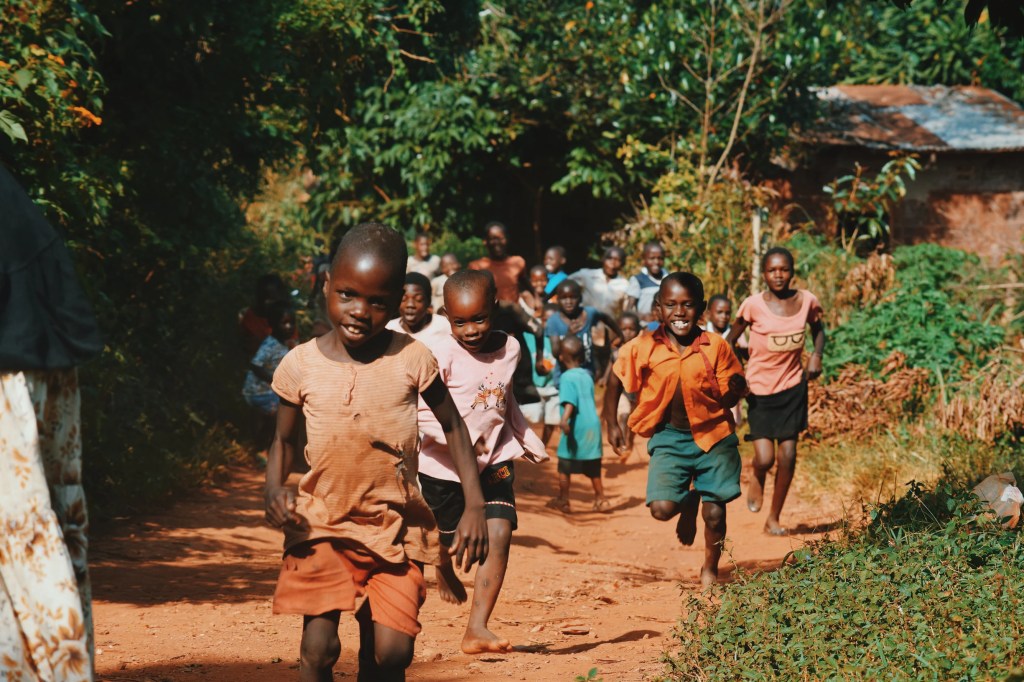
‘In Nigeria, a tyre never quite dies’: reinventing the wheel in Lagos
“The photographer Andrew Esiebo travelled around the city capturing how car tyres otherwise destined for the dump are finding second lives as seats, fences and swings”
AFRICA CALENDAR
Week Ahead
June 12 — Kenya’s High Court will hear a case asking for the government to be held in contempt over the planned deployment of its police officers to Haiti.
June 12-14 — The African Export–Import Bank annual meetings and the AfriCaribbean Trade and Investment Forum will be held in Nassau, The Bahamas, under the theme ‘Owning Our Destiny: Economic Prosperity on the Platform of Global Africa.’
June 13 — Kenya, Tanzania, and Uganda’s finance ministers will present 2024/25 budgets to their respective parliaments.
June 13-15 — African leaders from Kenya, Algeria, Egypt, South Africa, and Tunisia will attend the G7 Summit to be held in Apulia, Italy.
June 15 — Nigeria’s statistics office will release the latest inflation data. Prices have continued to rise amid insecurity in food producing areas and exchange rate pressure.
June 15-16 — Kenya’s President William Ruto will address the Russian-Ukraine peace summit in Switzerland.
June 21 — Young founders across Africa are invited to apply to the UNDP’s Timbuktoo Africa Innovation Foundation Startup Accelerator program.
June 30 — Black and African women writers from across the world, focusing on critical ideas, are invited to submit their manuscripts for the inaugural Global Black Women’s Non-Fiction Manuscript Prize by Cassava Republic Press.
July 7 — African fintech startups are invited to apply for the 7th Ecobank Fintech Challenge for a chance to join its fellowship program. The winner will receive a prize of $50,000.
PODCAST OF THE DAY
Why South Africa won’t elect a female president?
Despite women’s significant contributions to South Africa’s development, the political elite has sidelined them in key decision-making positions, like the presidency. This exclusion has had a profound impact on ordinary South Africans, who are left without the experiences that women could bring to the table. Women now want to play a vital role in the management of state affairs,
AFRICA – ANALYSIS, EDITORIAL/OPINION
Africa doesn’t have a choice between economic growth and protecting the environment: how they can go hand in hand
Foreign healthcare volunteers in Africa can harm local relationships
Algeria/Morocco
Algeria’s Morocco obsession has killed reconciliation prospects
Ethiopia
What to Expect from the Ethiopian “National Dialogue”?
Madagascar
Baobab trees all come from Madagascar – new study reveals that their seeds and seedlings floated to mainland Africa and all the way to Australia*
Sierra Leone
Death of a liberation movement: how South Africa’s ANC became just a regular political party – with some help from Jacob Zuma
South Africa
Death of a liberation movement: how South Africa’s ANC became just a regular political party – with some help from Jacob Zuma
ANC’s flirtation with the DA imperils foreign policy positions
Tanzania
Samia Suluhu Hassan’s hesitant reforms
Having initiated democratic change, Tanzania’s president appears to be fighting a rearguard action by Magufulist hardliners.
 The Africa Edition ©️
Leave a comment