News That Matters To Africa©️
FRIDAY’S FOCUS EDITION
Light On News But Heavy On Analysis, Commentary and Opinion
and
Good News Africa
QUOTE OF THE DAY
“Women will never be equal to men until they can walk down the street with a bald head and a big stomach, and still think they are sexy.”
HIGHLIGHTS
Tanzania given ultimatum over death penalty
Methodist church splits with Ivory Coast over LGBTQ ban
Africa moves for a ‘Unity’ government
Chinese nationals plead guilty over cybercrime in Zambia.
TOP NEWS
Eastern Africa
At least 16 killed by suspected Islamists in eastern DRCongo
Release of detainees urged following end of ‘State of Emergency’ in Ethiopia’s Amhara region
The ‘Rutos’ enlist evangelical pastors to guide Haiti mission
Release of detainees urged following end of State of Emergency in Amhara region
Kenya to submit Raila’s AUC candidature by June 30
Kenya’s Kipruto handed 6 years ban, stripped off 10km world record
Union says UK’s Rwanda deportation policy makes officials break law
Somaliland’s first all-girls basketball team shoot for recognition
At least 150 villagers feared dead in Sudan massacre
EU expected to impose sanctions on six Sudanese military figures fuelling war
African court gives Tanzania ultimatum to scrap death penalty
West Africa
Russia’s top diplomat promises more military support for Burkina Faso
Cape Verde president says governments must discuss colonial reparations
Methodist church regrets Ivory Coast’s split over LGBTQ ban
Nigeria may spend 50% more on fuel subsidies in 2024
Southern Africa
Botswana may raise De Beers stake as Anglo weighs spin-off
Namibia to impose visa requirements on non-reciprocal countries
SAfrica’s post-election coverage
ANC leaning towards government of national unity
Toward a ‘unity’ government that evokes Mandela
SAfrica minister Kodwa charged with corruption
SAfrica’s ‘Facebook rapist’ asks for death
Spain applies to join South Africa’s case at top UN court accusing Israel of genocide
Chinese nationals plead guilty over cybercrime in Zambia
GOOD NEWS AFRICA
VIDEO (S) OF THE DAY
GALLERY OF AFRICA NEWS IN PICTURES
(6)ARTICLES ON ANALYSIS, EDITORIAL & OPINION
EASTERN AFRICA

DR CONGO
At least 16 killed by suspected Islamists in eastern DRCongo
At least 16 people were killed by a suspected Islamist rebel group based in eastern Democratic Republic of Congo’s North Kivu province, an official from the local administration said on Wednesday. The Allied Democratic Forces (ADF), allied to Islamic State, started as a Ugandan insurgency but has operated from the jungles of eastern Congo for almost three decades. “We believe that the ADF are the perpetrators of this attack, they took advantage of the departure of the military in the area to come and kill the population,” said local official Fabien Kakule Viriro. The victims were hacked to death with machetes while they were in their homes or in the fields, the official said, adding that some were executed while they were trying to escape.
ETHIOPIA
Release of detainees urged following end of State of Emergency in Amhara region
Following the expiration of the state of emergency in the Amhara region, the Ethiopian Human Rights Commission (EHRC) has called for the “continued release of individuals” imprisoned under the decree. Reports indicate that nineteen prisoners detained at the Awash Arba military camp were released last Saturday following the completion of “rehabilitation training.” For the past ten months, the EHRC has been monitoring the impact of the state of emergency on human rights, investigating violations and gaps in its implementation. The findings have been published in a series of reports. With the state of emergency now concluded, the EHRC emphasizes the need to release detainees held under the decree, return to regular law enforcement procedures, lift movement restrictions in various areas, and restore social services. Prominent figures like Christian Tadele, a member of the House of People’s Representatives; Yohannes Buayalew, a member of the Amhara Region Council; and Kassa Teshager, a member of the Addis Ababa City Council, were among those detained under the state of emergency. The state of emergency in Amhara was declared on 04 August, 2023, following intensifying clashes between the federal government and the Fano militia. The parliament extended the initial six-month period by an additional four months on 02 February.
KENYA
The ‘c’ enlist evangelical pastors to guide Haiti mission
In the months leading up to Kenya’s deployment of police officers to Haiti, President William Ruto has consulted political advisers, security officials and foreign leaders about the high-profile anti-gang mission. He also turned to less conventional counsellors: a circle of Christian evangelical pastors close to him and his wife. The pastors have issued recommendations to Ruto and served as a conduit between Haitian communities and the president, according to interviews with two of the pastors and three Haitian and American evangelical leaders. The pastors’ efforts ahead of the deployment, due to begin later this month, have included meetings with Haitians in the United States, as well as evangelical counterparts, US government officials and even Haiti’s most notorious gang leader, Jimmy “Barbecue” Cherizier…At the upscale Weston Hotel, Jean-Louis, Eppright and two other American evangelicals prayed and strategised with four Kenyan pastors before being joined on the last day by Rachel Ruto. “It was a four-day deep dive into how they would do the involvement,” said Eppright. The group drafted a white paper that Rachel Ruto presented to her husband a few days later, he said. Jean-Louis said the proposals addressed four topics: law and order, the humanitarian situation, political leadership and a spiritual component.
Raila’s AUC candidature to be submitted by June 30
Kenya will submit former prime minister Raila Odinga’s African Union Commission (AUC) candidacy by June 30, Prime Cabinet Secretary Musalia Mudavadi announced. Mr Mudavadi, who is also the Foreign and Diaspora Affairs CS, said the government was also working on a secretariat to spearhead the ODM leader’s campaigns. Mr Mudavadi said the Government backed Mr Odinga because “he is competent, and we are looking at Kenya and Africa’s interest.“It’s not about our local issues. We must protect Kenya’s national interest. It will be a first for Kenya and will be an opportunity for Kenya to offer leadership to the African Union,” he said, adding that Mr Odinga has the requisite experience for the job. The ODM leader previously served as AU’s High Representative for Infrastructure Development.
Kipruto handed 6 years ban, stripped off 10km world record
Kenyan athlete Rhonex Kipruto will lose his 2019 world 10,000m bronze medal and the 10km world record from 2020 after he was handed a six-year ban for doping. Kipruto’s result from September 2018 will henceforth be expunged and will only remain with the world under-20 10,000m title from July 2018 in Tampere, Finland. Kipruto’s ban came a day after the Anti-Doping Agency of Kenya (Adak) provisionally suspended 33 Kenyan athletes for various doping offences. It also came nine days after Athletics Integrity Unit (AIU) also banned Kenya’s Josephine Chepkoech for seven years as a repeat offender and for the use of a prohibited substance Testosterone.
RWANDA
Trade union says UK’s Rwanda deportation policy makes officials break law
Government officials would be acting unlawfully by implementing Britain’s plan to deport asylum seekers to Rwanda in breach of an order from Europe’s human rights court, a civil servants’ trade union told London’s High Court. The FDA union is taking legal action against the government over guidance issued to civil servants on how to implement decisions to remove people to Rwanda. It says this would mean its members breaking international law. The guidance tells officials to obey ministers if they decide to ignore temporary injunctions – known as interim measures – issued by the European Court of Human Rights (ECHR), which is based in Strasbourg. The FDA’s lawyers say this unlawfully involves civil servants in “a clear violation of international law” in breach of their code of conduct. Government lawyers argue that the guidance simply follows the new law and that civil servants following ministers’ decisions would be complying with domestic law.
SOMALILAND
Somaliland’s first all-girls basketball team shoot for recognition
Wrapped in the tricolour flag of her homeland, 21-year old captain Hafsa Omer bounces the basketball between her legs, dribbles, lays it up off the backboard, and watches it clatter into the hoop. Her dream is to one day play for her nation, but there is a catch – Somaliland is not a country. The breakaway territory has struggled to gain international recognition from any foreign government, despite governing itself and enjoying comparative peace and stability since declaring independence in 1991. Omer and her two sisters, who also play for Hargeisa Girls Basketball, the first all-girls team in the incipient country, are determined to put Somaliland on the map, by mobilising their more than 10,000 followers on social media. “Somaliland is looking for their recognition and we believe that we could be part of bringing the recognition… by wearing the flags, by talking about our country, by promoting it through the short video TikToks or Instagram pictures,” she said. Somaliland officials say they have a strong case to become Africa’s 55th nation. The former British protectorate has its own coast guard – run by a female admiral – police force, passports, currency and a functioning democratic political system and government institutions. That record stands in contrast to large portions of the rest of Somalia where government forces have been fighting a bloody counterinsurgency against al Qaeda-linked militants from al Shabaab.
SUDAN
EU expected to impose sanctions on six Sudanese military figures fuelling war
The EU intends to impose sanctions on six Sudanese military figures who are fuelling the conflict that has led to one of the world’s worst humanitarian crises, European diplomats have said. EU foreign ministers meeting later this month are expected to approve sanctions against six individuals from the rival forces who have been fighting for control of Darfur, the vast, largely arid region of western and south-western Sudan. The list includes three people from the Rapid Support Forces (RSF) paramilitary group and three from the Sudanese Armed Forces (SAF), according to three EU diplomats. They would be subject to asset freezes and travel bans. EU officials approved the names on Tuesday, but the final list could still change…The EU’s move to impose sanctions on the six people follows asset freezes against six mostly military equipment companies controlled by the RSF and SAF in January. The bloc has faced criticism from human rights defenders of being slow to act in the face of horrifying atrocities.
At least 150 villagers feared dead in Sudan massacre
At least one hundred and fifty people are feared dead in a massacre in a village in central Sudan blamed on the Rapid Support Forces (RSF), the paramilitary group fighting the army. The rivals have been battling over control of the country for more than 13 months. The RSF has not commented on the accusations, but on Thursday boasted of attacking two army positions. Footage circulating on social media after Wednesday’s raid showed dozens of bodies wrapped in white shrouds prepared for burial in Wad al-Nourah in Gezira state. That video was filmed by activists from a neighbourhood resistance committee, part of a network of local groups across the country which back a return to civilian rule. The Madani Resistance Committee said it was now “waiting for a confirmed toll of the dead and injured”.
TANZANIA
African court gives Tanzania ultimatum to scrap death penalty
The African Court on Human and Peoples’ Rights has reiterated its longstanding order to Tanzania to revoke the death penalty in line with the continental charter on the right to life. Delivering judgment on two separate cases, the court sitting in Arusha emphasised again that mandatory capital punishment was a violation of the African Charter and gave the country six months to remove it from its legal statutes. Nzigiyimana Zabron, a Burundi national, and Tanzanian Dominick Damian are convicted murderers who have been languishing on death row at Mwanza’s Butimba Central Prison for the last 12 years awaiting execution. While the continental court has issued several similar orders for Tanzania to scrap the death penalty in recent years, the punishment has remained enshrined in the country’s Penal Code despite growing opposition against it as a colonial era legacy.
WEST AFRICA
BURKINAFASO
Russia’s top diplomat promises more military support
Russia’s foreign minister on Wednesday pledged more support to Burkina Faso in fighting militant groups as he pressed his whirlwind tour of West Africa in an attempt to fill a vacuum left by the region’s traditional Western partners. Burkina Faso, a landlocked nation of 20 million, has been ravaged in the past eight years by violence from extremist groups loosely affiliated with al-Qaida and the Islamic State group, and from the fighting between government forces and the militants…However, the junta has struggled to contain the security and humanitarian crisis. Burkina Faso has topped the list of the world’s biggest neglected crises for the second year in a row, according to the Norwegian Refugee Council. A record 6.3 million out of 20 million people will need humanitarian assistance in 2024, the aid organization said, with many on the brink of starvation. Two million people remain internally displaced, about 60% of them children. Many have been traumatized, but resources to help them are scarce.
CAPE VERDE
President says governments must discuss colonial reparations
President Jose Maria Neves said the rise of right-wing populism has made it difficult to hold a serious debate over colonial reparations but argued that should not stop governments from having those conversations behind closed doors. In an interview with news site Brasil Já, published online on Wednesday, Neves said debating reparations in the “public arena” could potentially lead to more political polarisation in countries such as in Cape Verde’s former coloniser, Portugal, where the far-right is on the rise. “We see extremist, xenophobic, anti-immigration groups growing in former colonising powers,” Neves said. “There are no political conditions to publicly discuss these questions at the moment. He said it was possible to “build solutions” for conversations to take place without contributing to the growth of such groups, adding there were “diplomatic corridors” that could be used instead. In April Portugal’s President Marcelo Rebelo de Sousa, questioned by Reuters, said his country was responsible for crimes committed during transatlantic slavery and the colonial era, and suggested there was a need for reparations. His comments sparked a national debate and strong criticism from right-wing parties.
IVORY COAST
Methodist church regrets Ivory Coast’s split over LGBTQ ban
Leaders of the United Methodist Church expressed regret over last week’s decision by the branch in Ivory Coast to leave the union following the church’s decision to repeal a long-standing ban on LGBTQ+ clergy but pledged to accept it. In early May, delegates at the church’s first legislative gathering in five years voted overwhelmingly to remove a rule forbidding “self-avowed practicing homosexuals” from being ordained or appointed as ministers. On May 28, Ivory Coast’s church voted to split from the United Methodists. With over 1.2 million members, the West African country’s church has one of the denomination’s largest overseas followers. The United Methodist Church has about 5.4 million members in the United States, and about 4.6 million in Africa, Europe and the Philippines, according to church figures. Elsewhere in Africa, hundreds of United Methodist Church members gathered at the church’s local headquarters in Zimbabwe’s capital, Harare, last Thursday to protests the church’s move to welcome LGBTQ+ members.
NIGERIA
Nigeria may spend 50% more on fuel subsidies in 2024, draft document shows
Nigeria will likely spend 5.4 trillion naira ($3.7 billion) in 2024 – 50% more than in 2023 – to keep petrol prices fixed, while borrowing an extra 6.6 trillion naira to plug gaps in its budget, a draft document showed on Thursday. The “Accelerated Stabilisation and Advancement Plan” (ASAP), drafted by the finance ministry with private sector executives and some economists, aims to address challenges related to reforms aimed at boosting growth. President Bola Tinubu last May axed a popular but costly subsidy on petrol in a landmark reform cheered by investors, to try to kick-start growth. But the move caused petrol prices to triple, increased transport cost and stoked inflation, angering motorists. Tinubu has faced pressure from labour unions over the rising cost of living due to his reforms, but he has vowed not to roll them back.
SOUTHERN AFRICA
BOTSWANA
Botswana may raise De Beers stake as Anglo weighs spin-off
The Botswana government may raise its shareholding in global diamond miner De Beers, President Mokgweetsi Masisi told JCK News, after parent company Anglo American said it plans to spin off or sell the business. The government owns a 15% stake in De Beers and Botswana accounts for 70% of the company’s annual rough diamond supply. Masisi told JCK in Las Vegas that Anglo’s sale of De Beers would be “the best thing” if it happens. The government could raise its shareholding in De Beers “if it’s attractive to,” Masisi told the online diamond news channel. The president in May told CNBC Africa that government would defend its interests in the diamond miner…Masisi told JCK News Botswana’s ideal partner in De Beers would be a long-term investor. The government will try to keep the “bad guys out” and wants investors whose vision is aligned with the government’s. “One of the characteristics of a bad owner is someone who has impatient capital,” Masisi said. “This industry requires somebody who is in it for the long-haul, because it has its ups and downs.”
NAMIBIA
Visa requirements to be imposed on non-reciprocal countries
Cabinet has approved that the Ministry of Home Affairs, Immigration, Safety and Security imposes a visa regime on all countries that have not reciprocated the good gesture granted to their nationals by Namibia. This policy will be applied to 31 countries, including Belgium, Canada, Denmark, Finland, France, Germany, Britain and the United States. The visitors from 31 countries can obtain visas upon arrival in Namibia after completing an online application and paying the necessary fee. the implementation date and application procedures will be announced through diplomatic channels at a later time. This decision comes after years of Namibia extending goodwill gestures and providing favorable treatment to citizens of several countries without receiving reciprocal treatment…that this policy aims not to impede legitimate travel but to maintain the principle of reciprocity in international relations.
SOUTH AFRICA
Minister Kodwa charged with corruption, announces resignation
South Africa’s minister of sports, arts and culture Zizi Kodwa was arrested on corruption charges on Wednesday and later appeared in court before issuing a statement to announce his resignation. A spokesperson for Kodwa said in a statement that he strongly denied the charges against him. Kodwa was given the sports, arts and culture portfolio in President Cyril Ramaphosa’s cabinet last year after being deputy minister of state security. He was spokesperson of the African National Congress (ANC) party from 2014 to 2017. The charges against Kodwa stem from a judicial inquiry into alleged corruption during former president Jacob Zuma’s time in office. Kodwa allegedly received a bribe of about 1.7 million rand ($90,000) from an executive of a local technology company that received tenders from government departments. The Hawks said the money was reportedly used to buy a luxury car among other things.
The ‘Facebook rapist’ asks for death penalty
Convicted rapist and murderer Thabo Bester has made a startling plea in court, asking that he gets capital punishment – the death penalty on him. Death penalty was abolished in South Africa in 1995 although the courts had largely avoided it from 1990 amid the clamour for the end of the then apartheid rule. Mr Bester’s request to a judge in the Free State High Court didn’t end there. The famous criminal is also seeking the release of his co-accused, who are facing charges related to his prison escape. Mr Bester is known as the “Facebook rapist”, for using the social media site to lure his victims by pretending to be an agent who was going to help girls find jobs on television. Mr Bester went on to quote legislation that has since been repealed in South Africa, requesting that he be given the death penalty via a petition that the public will sign.
Post-Election Coverage
”ANC leaning towards government of national unity”
The African National Congress (ANC), still the largest party but no longer able to govern alone after the May 29 vote, has been talking to five parties, ranging from the free-marketeer Democratic Alliance (DA) to the Marxist Economic Freedom Fighters (EFF), its spokesperson Mahlengi Bhengu-Motsiri told a press conference in Johannesburg. “At this point in time the conversation is looking at the government of national unity because this is what the people of South Africa said to us,” she said, adding that the party’s National Executive Committee would discuss options on Thursday. She also said that President Cyril Ramaphosa, the ANC leader, would stay in the post. Voters, politicians and financial markets have been on tenterhooks for clues as to which party or parties will form the next national government. The ANC will have 159 seats out of 400 in the new National Assembly, while the DA will have 87. The populist uMkhonto we Sizwe (MK), led by former president Jacob Zuma, will have 58 seats, the EFF 39, the socially conservative Inkatha Freedom Party 17 and the far-right Patriotic Alliance nine.
Toward a ‘unity’ government that evokes Mandela but divisions are there
President Cyril Ramaphosa was meeting with senior officials of the African National Congress on Thursday to decide how to go about forming a government after the party lost its 30-year grip on power and left a post-election deadlock. The party’s National Executive Committee was meeting in Johannesburg to work through a split within the party’s ranks over which direction to take. ANC lost its long-held majority in last week’s vote but remained the biggest party, and now needs some form of agreement with others to run Africa’s most industrialized country. ANC has indicated it’s leaning toward a government of national unity that would bring together many of the political parties in a broad agreement, rather than a direct coalition with the main opposition, the Democratic Alliance, or DA…The National Executive Committee that includes more than 80 of the ANC’s top officials is expected to be the body to decide on which direction it will take.
Spain applies to join South Africa’s case at top UN court accusing Israel of genocide
Spain became on Thursday the first European country to ask a United Nations court for permission to join South Africa’s case accusing Israel of genocide in Gaza. South Africa filed its case with the International Court of Justice late last year. It alleged that Israel was breaching the genocide convention in its military assault that has laid waste to large swaths of Gaza. The court has ordered Israel to immediately halt its military offensive in the southern Gaza city of Rafah but stopped short of ordering a cease-fire for the enclave. Israel has not complied and shows no sign of doing so. Mexico, Colombia, Nicaragua, Libya and the Palestinian are waiting for the International Court of Justice in The Hague, Netherlands, to grant approval to their requests to join the case.
ZAMBIA
Chinese nationals ran cybercrime syndicate
Twenty-two Chinese nationals have pleaded guilty to committing cyber-related crimes in Zambia. They are among 77 suspects who were arrested in April. The swoop on a Chinese-run company in the capital, Lusaka, followed an alarming rise in internet fraud cases in the country, targeting people in countries around the world. The Chinese nationals are set to be sentenced on Friday, local media report. There have been increasing cases of Zambians losing money from their mobile and bank accounts through money-laundering schemes which extend to other foreign countries. People in countries including Singapore, Peru, the United Arab Emirates (UAE) and others across Africa have also been targeted in the online scam, Zambian authorities said. Dozens of young Zambians were also arrested after allegedly being recruited to be call-centre agents in the fraudulent activities, including internet fraud and online scams.
GOOD NEWS AFRICA
A growing community of breast milk donors in Uganda gives mothers hope
A community of breast milk donors has formed in Uganda after women struggled with finding ways to keep their babies with health issues alive. ATTA Breastmilk Community was launched in 2021 in the Ugandan capital, Kampala, by a woman who had struggled without getting support. The registered nonprofit, backed by grants from organizations and individuals, is the only group outside a hospital setting in Uganda that conserves breast milk in substantial amounts. ATTA, as the group is known, receives calls for support from hospitals and homes with babies born too soon or too sick to latch onto their mothers’ breasts. More than 200 mothers have donated breast milk to support over 450 babies since July 2021, with over 600 liters of milk delivered for babies in that period, according to ATTA’s records. In a measure of efforts to build a reliable community, many donors have given multiple times while others help to find new ones, said ATTA administrator Racheal Akugizibwe. ATTA makes calls for donors via social media apps like Instagram. Women who want to donate must provide samples for testing, including for HIV and Hepatitis B and C, and there are formal conversations during which ATTA tries to learn more about potential donors and motivations. Those who pass the screening are given storage bags and instructed in safe handling.
Inspired by Europe’s Schengen Visa, African nations are expanding their regional visa programs
Africa is moving towards a multi-country visa system, with individual countries and regional blocs working to remove their borders to promote intra-Africa tourism. The Schengen area includes 29 European countries that have eliminated border controls between each other, allowing non-EU nationals to visit any of these countries for up to 90 days within a 180-day period without needing a separate visa for each country. Southern African countries are the latest to signal their intent to allow tourists to explore more diverse offerings across multiple destinations using a single visa. Leaders from Angola, Botswana, Namibia, Zambia, and Zimbabwe, which comprise the Kavango-Zambezi (KAZA) Transfrontier Conservation Area, have expressed their intention to expand the application of their unified visa- currently under pilot in two countries…In the West Africa region, efforts are being made towards the full implementation of ECOVISA, which aims to allow visitors from outside The Economic Community of West African States (ECOWAS) to travel to all of the bloc’s member states. ECOWAS also maintains the highest visa-free reciprocity rate among its member states, with citizens able to enter 97% of all country destinations within ECOWAS visa-free. Moreover, citizens of ECOWAS member states’ host countries can do the same, underlining ECOWAS’s leadership in visa-free reciprocity. This places ECOWAS significantly ahead of the East African Community (EAC), the continent’s runner-up, where visa-free reciprocity is at 71%…The East African Community has also been making efforts to have this Europe’s Schengen-style of visa for its 8-member states. However, currently, the common visa has been adopted by Kenya, Uganda, and Rwanda only.
Inside the Factory Supplying Half of Africa’s Syringes
In Kenya, Revital Healthcare is manufacturing medical products that Africa needs to take charge of routine health care and respond to outbreaks. In the throes of the coronavirus pandemic, when governments were faced with vaccinating millions of people amid severe shortages, Revital shipped syringes to Sri Lanka, Sweden, the United Arab Emirates and Uzbekistan — and even sent 15 million syringes to India, said Roneek Vora, the company’s director of sales and marketing. “This is the first time ever in the life of Africa that a medical industry is exporting syringes to India, when we know India is a powerhouse of syringe manufacturing,” Mr. Vora said. “This was a very big deal for us — it broke a lot of barriers,” he added. Revital is richly funded through grants and contracts from many donor organizations, including the U.S. Agency for International Development, the Save the Children Foundation and multiple arms of the United Nations, and the company has lofty ambitions. Many of Africa’s attempts at medical self-reliance have been hampered by limited funds, the lack of a robust regulatory system and the challenges in transporting drugs and vaccines. Against that backdrop, Revital’s success offers hope that an African company can manufacture essential products — not just for the continent, but also for export to other countries. Countries in sub-Saharan Africa require 500 million syringes each year just for routine immunizations. And these nations are frequently hit by outbreaks that require mass vaccinations in short order. Syringes are often the limiting factor. Revital is the only African company approved by the World Health Organization to make early-activation syringes.
Africa gets first ‘one-stop’ nuclear medicine facility
An advanced nuclear medicine facility was officially opened at the Steve Biko Academic Hospital (SBAH), a clinical training site for the University of Pretoria’s faculty of health sciences, in South Africa’s capital on 21 May. According to government news agency SAnews, the Nuclear Medicine Research Infrastructure (NuMeRI) facility is the first of its kind in Africa – a ‘one-stop-shop’ that will not only advance drug development and clinical research, but also provide cutting-edge diagnostics and treatment in relation to cancer, tuberculosis (TB) and other major diseases that are burdening public health. NuMeRI brings together “consolidated expertise in nuclear technologies in medicine and biosciences, creating significant research, development and innovation capacity in South Africa”, the agency said in a statement. Professor Themba Mosia, interim vice-chancellor and principal of the University of Pretoria, said the facility is “magnificent” and “a flagship for the use of nuclear for good”…The South African government, through the DSI, has expressed a commitment to expanding nuclear medicine infrastructure in the country. While NuMeRI stands out as a flagship facility for nuclear medicine research and development in South Africa, there are other notable centres contributing to the field in the country. Besides Steve Biko and Tygerberg, several other academic hospitals in South Africa have nuclear medicine departments offering clinical services and participating in research. This includes Groote Schuur in Cape Town and Charlotte Maxeke in Johannesburg.
Kenyan woman becomes first black mayor in Northern Ireland
Kenya’s Senate Minority Whip Olekina Ledama’s sister Lilian Seenoi-Barr has become the first black mayor of Derry City and Strabane District Council in Northern Ireland. Derry, officially known as Derry/ Londonderry, is a city steeped in history and rich cultural heritage, nestled in the northwest of Northern Ireland. Seenoi-Barr’s inauguration ceremony was in the Guildh all in Derry on June 3, 2024. “This is a reflection on Lillian’s outstanding achievements as a human rights activist, her hard work for the entire community and her unstinting dedication to the SDLP,” SDLP leader Colum Eastwood said. Seenoi-Barr is a Maasai woman and a Derry girl originally from Oloombiokishi in Narok County. “We could not be more delighted that Lillian will also make history as the first black mayor in Northern Ireland,” Eastwood added. Seenoi-Barr historic appointment as mayor signifies a significant step forward for Derry and Strabane, reflecting the region’s evolving diversity and commitment to inclusivity. Her tenure is expected to bring fresh perspectives and a renewed focus on building a more inclusive and equitable society for all residents.
Rwandan women entrepreneurs win international Awa Prize for impactful, innovative ventures
Among 12 winners in 19 countries, two women entrepreneurs from Rwanda won the Awa Prize, an event that recognises companies that make a positive impact on their environment and community. Launched by Enabel, the Belgian development agency, the Awa Prize is an international award honouring women in entrepreneurship in Belgian cooperation partner countries. The awards aim to recognise and reward promising female entrepreneurs in four categories, namely, start-ups, scale ups, innovation and the people’s choice. This edition of the Awa Prize marks the second time the awards are being held. Winners will receive support in the form of coaching, training, and international travel opportunities. At the event, Raissa Ikuzwe received the second Awa Prize in the start-up category for her company Ino Coffee. She strives to offer Rwandans a taste of local high-quality organic coffee, while also providing training and employment opportunities for young women. Mireille Niyonkuru, a Burundian entrepreneur and the founder of BUIM Rwanda based in Rwanda and Burundi, received the third prize. With her company, Niyonkuru wants to bring electricity and light to rural areas in Rwanda and Burundi.
Tanzania unveils high-tech railway station, electric train
Tanzania unveils its state-of-the-art Standard Gauge Railway Station and electric train, enhancing connectivity and boosting trade with neighbouring countries. The new Standard Gauge Railway (SGR) Station in Dar es Salaam, Tanzania, stands as an architectural marvel with its sky-blue glass facade and airport-like opulence. Inside, passengers navigate through escalators and state-of-the-art amenities, including modern ticketing counters and plush waiting lounges with charging ports. Built by Turkish company Yapi Merkezi, the SGR electric train project, costing nearly $2bn, marks a significant advancement in Tanzania’s transportation infrastructure. The project aims to enhance domestic connectivity, trade, and economic opportunities with neighbouring countries like Uganda and Rwanda. The completed section from Dar es Salaam to Dodoma spans approximately 460 kilometres (285 miles) and will be officially inaugurated on July 1. Prime Minister Kassim Majaliwa, during a recent trial run, hailed the electric rail as an ‘historic moment’ for the nation. ‘The electric rail will reduce traveling time for people, boost trade connectivity, and help in environmental conservation efforts,’ Majaliwa stated. The SGR’s entire route will eventually cover nearly 1,300 kilometres (810 miles) from Dar es Salaam to Mwanza and Kigoma, connecting to Lake Victoria and Lake Tanganyika, respectively. The SGR is also part of the Central Corridor initiative, linking the Democratic Republic of the Congo and landlocked countries like Rwanda, Burundi, and Uganda to Tanzania’s key port of Dar es Salaam.
Morocco: One of the world’s oldest universities draws global students
Indonesian student Kamel Tahdhib traveled thousands of miles to study at a Moroccan university with such a rich history, that its renown continues to draw learners more than 1,000 years after it was founded. The university hosts one of the world’s oldest libraries, home to unique Islamic manuscripts treasured by historians. It was founded 12 centuries ago by a pioneering woman and nestled in the old medina of Fez in Morocco. A devout and wealthy Muslim woman from the Tunisian town of Kairaouan, Fatima al-Fihri, provided the endowment for building al-Qarawiyyin in the 9th century. Originally a mosque, it expanded in the 10th century to become a university when madrassas or Islamic religious school were built around it. Today, the university is home to 10 of these madrassas. As of 2015, it has become specialized in Islamic teaching and religious education. Through the ages, the university played a crucial role in the preservation and transmission of Islamic knowledge. However, the teaching institution was not always focused on Islamic teaching alone, says Driss Fassi Fihri, the vice-president of al-Qarawiyyin University. “It was historically a university with specializations in all areas of education,” he added. The university’s library houses a collection of manuscripts written by renowned thinkers from the region, including Ibn Khaldun’s “Muqadimmah.” Other texts include a 9th-century Quran written in Kufic calligraphy, and a manuscript on the Maliki school of Islamic jurisprudence by Ibn Rochd, also known as Averroes. Guinness world records list this university as the “oldest existing, and continually operating educational institution in the world.”
Mozambique seaport of Quelimane, population 350,000, comes out as the most foot-friendly in the globe – survey
Few things in life are as delightful as ambling around a new neighborhood in a new city, chancing upon cute stores, bars, eateries and public spaces. But decades of car-centric policies means lots of cities around the world lack an abundance of pedestrian-friendly streets, a new study called “The ABC of Mobility” has found. The bigger and richer the city, the less likely it is to be easily walkable. But there are plenty of exceptions. The Mozambique seaport of Quelimane, population 350,000, comes out as the most foot-friendly of the 794 cities surveyed in the study, but there are some less off-the-radar destinations in Europe (whose metropolises rank considerably higher than those of the United States). In the Netherlands, the tree-lined canals of Utrecht (No. 3) and the monumental splendor of The Hague (No. 27) are quieter alternatives to tourist favorite Amsterdam (No. 66). In northern Spain, the port city of Bilbao (No. 8) is famous for its Frank Gehry–designed Guggenheim Museum, and León (No. 9) boasts Roman ruins and Gothic cathedrals.
‘Africa has zero PR in the west’: the Nigerian influencer using sarcasm on the clueless
Within months (of joining TikTok), Charity Ekezie began to realise from the comments underneath her posts that some people knew nothing about Africa. Commenters from the US, as well as the UK and other European countries, would ask her how she had a phone or whether there was water in Africa. “Wait, are you serious?” Ekezie remembers thinking at the time. “This is not the Africa I live in. I mean, we have phones in Africa. There is water here. I decided to start responding.” Armed with humour and some heavy sarcasm, Ekezie’s sharp and witty rebuttals to a series of questions – from “Does Africa have aeroplanes?” to “Do you have shoes in Africa?” – has gained the 32 year-old a combined following of more than 4.5 million across TikTok, Instagram, YouTube and Facebook, with some posts viewed tens of millions of times. In one TikTok post, responding to a question asking how Africans can afford phones but not water, she stands holding a bottle of water with more stacked behind her, and explains that every month people gather for a spitting festival. “All the men do a spiritual chant led by the wizard of the community and all the women and girls take turns to spit in a drum … After two days, we go and the saliva is purified. We can now take it and drink,” she jokes.
Inspired by a Nigerian influencer, Emily Wangui is crafting success at the Furniture Zoo
Emily Wangui – who goes by the name of Wakeji Kamore on her social media sites – is a ball of excitement as she moves around from workstation to workstation, adding an extra layer of energy to the already bustling room. While Wangui says she has always been an interior designer at heart, everything she has built at Furniture Zoo is the result of a serendipitous moment online, when she came across 26-year-old Jumako Dada, a Nigerian, who built her successful furniture store, Taellio, from scratch. “I happened to search Furniture Manufacturing on YouTube and I bumped into her interview. The fact that she is a young lady in the wood and carpentry sector was so inspiring, what she has achieved is exactly what I was dreaming of doing, and in that moment, I realised that every dream I have is already someone else’s reality and it can also be mine,” Wangui explained. Driven by an insatiable need for creation, Wangui knew she had to find an outlet. Dada’s vision was her answer. However, starting a furniture business from scratch required more than just a dream.
The El-Baset family has been making fezzes for generations, keeping an almost-forgotten part of Cairo’s rich heritage alive.
Even though the fez gets its name from the Moroccan city of Fez, home to a crimson-coloured berry used to create the dye that gives fezzes their vivid red colour, the hat has been a part of Cairo’s identity and culture for generations. El-Baset is determined to keep it that way. The men of the El-Baset family – Muhammad, Badr, and their father Nasser – are not just milliners. They are custodians of oral tradition and local history. Cairo, home to the pyramids of Giza, some of the oldest and most splendorous mosques in Africa, and Al Azhar University – opened in 970 CE and still operational – is one of the most storied cities in Africa. It is possible to drink coffee at a cafe that dates back to 1797, dine at a restaurant that inspired Naguib Mahfouz, Egypt’s first recipient of the Nobel Prize for literature, shop at Khan el Khalili market that was established in the 14th century, and stroll down one of Cairo’s oldest streets, Al Moez, that brims with UNESCO World Heritage sites. Just as it is known as the city of a thousand minarets, it can also be said that Cairo is a city of thousands of stories. Even the brother’s shop location in Old Cairo’s al-Ghoureya street is a connection to the city’s past. Fezzes were introduced to Egypt by the Ottoman Empire’s General Mohammed Ali Pasha when he became the country’s ruler in 1805. His grandson, Khedive Abbas I, made them the headgear of the day, worn by military officials, the political elite, religious leaders and scholars at Al Azhar University. At the height of their popularity, there were 2,000 fez shops supporting families like the El-Basets. It was common to sell up to 500 fezzes daily. Even French designer Coco Chanel was a fan and famously bought 2,000 hats. They fell out of style in 1952 when President Gamal Abdel Nasser banned them. He considered them a symbol of the Ottoman Empire’s colonial ruling class. However, Muhammad and his family are determined to keep the tradition alive. His father operated the shop for more than 40 years after inheriting it from his father. Every interior wall is a tribute to the store’s iconic status, with any surface not occupied by newspaper and magazine articles about Nasser and the shop pasted over by pictures of Nasser with some of his clients and their business cards.
The artist ‘not surprised’ to be a best-seller
Back in September, global art experts were taken aback by the name topping a fresh list of the world’s best-selling artists. Aboudia, a graffiti-inspired artist from Ivory Coast, had beaten well-known names, like Damien Hirst and Banksy, to sell the most pieces at auction the previous year. According to the Hiscox Artist Top 100, Aboudia, real name Abdoulaye Diarrassouba, had flogged 75 lots. One of these canvasses had gone for £504,000 ($640,000). Leading online marketplace Artsy called Aboudia’s triumph “striking”, while The Guardian said market experts were “blinded” by the ranking. Months later, sitting in a London gallery plastered with his paintings, Aboudia tells me the survey results were “no surprise” to him. “Because if you work hard, the success is going to come,” he says, dressed entirely in black save for wristfulls of beaded bracelets. Oliver Durey, who has now known Aboudia for over a decade, tells the BBC: “There is something we can all relate to in his paintings; hiding amidst the uncertainty and horror there are balanced moments of strength and beauty.” African art expert Henrika Amoafo says Aboudia’s art “kind of fits the international idea of Africa representing war” and other forms of strife. Aboudia’s rise also coincides with that of the African art market. In 2021, art analysis firm ArtTactic reported that the auction sales value of contemporary and modern African art surged by 44% to a record high of $72.4m (£56.9m). ArtTactic has also found that while the global art market declined by 18% last year, Africa’s only shrank by 8.4%. However, it named Aboudia as the sixth most successful artist when it comes to pieces sold for less than $50,000 (£39,300).
Inside David Tlale’s NYC Showroom
The award-winning South African designer, David Tlale, who has a long history with New York City, opens his first U.S. outpost in the heart of the city’s Garment District. The proudly South African designer, who made his debut at NY Fashion Week in 2012, now boasts a permanent presence in the fashion capital. “This journey started out actually in 2023. We were looking for space in the city. New Jersey, Queens, and everything else. And for me it was like, you’ve got to be in the heart of the fashion industry. You’ve got to be in the Garment District,” Tlale says, while speaking at the unveiling. Over the past two decades, Tlale has established himself as a prominent figure on the local and international stage, winning prestigious awards and showcasing exquisite collections at prestigious runways around the world. While his head office remains in South Africa, he views his New York showroom as an extension of his operations. “I commute between New York and South Africa and many other parts of the world where we’re doing business. For me, this is the first step. We are now here, we have an address in New York, and let’s see what God unveils,” he says.
A Nigerian Filmmaker Hungry to Elevate Nollywood’s Thrills
The director Daniel Oriahi is capturing the audience’s attention with his latest film, “The Weekend,” which will premiere at the Tribeca Festival. The bustling Nigerian film industry known as Nollywood certainly keeps directors busy: In the past decade, Oriahi has made over 25 movies. But the filmmaker hit a new career breakthrough when the Tribeca Festival accepted his latest, “The Weekend”, a simmering thriller about in-laws with nightmarish appetites. The selection brings the 41-year-old director welcome recognition after years of churning out movies. “You’re like, ‘Where does it end?’” Oriahi said of the relentless pace. “The Weekend,” premiering (last) . Sunday, is intended as a polished, genre-bending departure from Nollywood quickies, and it screens in the mature-themed Midnight section of the festival. Oriahi’s debut feature in 2013 was a psychological thriller called “Misfit,” and he scored a breakthrough hit in 2015 with the action comedy “Taxi Driver: Oko Ashewo,” set in the Nigerian capital, Lagos.
Player adds a string to women’s bows
For Sona Jobarteh, Africa’s first woman to play the sacred kora professionally, breaking with tradition has not been easy. At Abidjan’s Femua urban music festival, last weekend in the Ivorian city, Jobarteh went on stage with percussionists, guitarists and a balafon player. In her hands, the 21 strings of the kora — an instrument shaped like a lute and plucked like a harp — were used to create captivating melodies over repeated rhythms. “The process of getting to learn the kora was different for me than it was for male members of the family,” she said. “The kora is the social instrument that you learn in a community … but being different to everybody else it became difficult for me to be someone that is accepted,” she said. “It became a very private journey for me, which is very different … to the normal way of learning kora in a family context.” Jobarteh comes from a family of Gambian griots, respected musical storytellers who pass on West African traditions. Her grandfather Amadu Bansang Jobarteh was a kora master. Her Malian cousin Toumani Diabate was another kora star…when I really started to study very hard with my dad, as with an aim and a goal of becoming as good as I could on the instrument.” Her perseverance paid off with international success, working with famous artists as well as a hit with the song Gambia. “It’s difficult to tell the level of impact that I’ve had on the tradition in terms of other women being able to come through,” she continued. “Even for me, being a female … it’s still unusual to see and it’s incredibly inspiring for me. “I feel that something very special is happening when I’m witnessing these classes going on” at her music academy in The Gambia. “Wow, this is the change that we are starting to see.”
African Music to the World
Artists from the continent are breaking into the Western mainstream. The NY Times published a profile of Tems, a 28-year-old Nigerian singer-songwriter who, in recent years, has: become the first African artist to debut at No. 1 on the Billboard Hot 100, appeared on the Beyoncé album “Renaissance” and earned an Oscar nomination for co-writing “Lift Me Up” for “Black Panther: Wakanda Forever.” She will release her debut album next month. Tems is one of several artists from nations in Africa who have crossed into the Western mainstream. Burna Boy sold out Citi Field in New York last year; in February, the inaugural Grammy for Best African Music Performance went to the South African singer Tyla for “Water.” And Western artists — including Beyoncé, Drake, Usher, Justin Bieber and Selena Gomez — have featured African artists in their music or appeared on remixes of already-popular songs. There are several reasons for the global interest — talented artists, the border-melting power of the internet, collaborations with Western stars — but one is the role of the diaspora. There is a vibrant cultural exchange between the continent and its diaspora. Young Africans in the diaspora attend concerts and music festivals, and many travel to Nigeria and Ghana to party during the holiday season…
Cannes Film Festival: How ‘The Brink of Dreams’ reveals much about Egyptian Coptic life
This documentary, which won the coveted Cannes L’Oeil d’Or award, tells the story of an all-female theatre troupe in Minya, a town in Upper Egypt. Having the distinction of being the first Egyptian non-fiction film to be screened at the festival since Tahani Rached’s El-banate Dol in 2006, Riyadh and El Amir’s sophomore feature is a coming-of-age story, an endearing portrait of female solidarity and an astute study of small-town Egyptian life. Most importantly, it is one of the most revealing records of Coptic Christians, Egypt’s largest religious minority which continues to be misrepresented or deliberately discarded in both film and TV. Minya is distinguished for having one of the highest concentrations of Coptic Christians in the country, comprising half the population of the southern city. Unlike Asyut, the more affluent southern brethren, Minya is more distinctly conservative. Strict, regressive rules continue to govern gender relations; the woeful economy eliminates any space for the kind of class ascension associated with progressive values. Strict, regressive rules continue to govern gender relations; the woeful economy eliminates any space for the kind of class ascension associated with progressive values. Coptic narratives provide a fascinating reflection on the cultural status of Christians in Egypt, the persistent inequalities in parts of the nation, and the church’s influential role in shaping the representation of its community. Christians, who represent roughly 15 percent of the Egyptian population, have been integral to the Egyptian film and TV industry.
Somali Filmmaker Mo Harawe makes history in Cannes
After making waves on the festival circuit with a pair of heralded short films, Somali filmmaker Mo Harawe makes his auspicious feature debut at this year’s Cannes Film Festival with “The Village Next to Paradise,” which premieres May 21 in the French fest’s Un Certain Regard section — the first feature from the African nation ever to screen on the Croisette. An intimate family drama set in a windswept Somali fishing village, “Paradise” follows Mamargade (Ahmed Ali Farah), a single father working odd jobs to provide a better life for his son, Cigaal (Ahmed Mohamud Saleban). They’re joined by his sister, Araweelo (Anab Ahmed Ibrahim), who comes back to live with the duo after her divorce. Each pursues their own ambitions in a country wracked by civil war, natural disasters and the deadly threat posed by the U.S. drones constantly buzzing overhead. Born and raised in Mogadishu, Harawe emigrated to Austria in 2009, where he taught himself the fundamentals of filmmaking before pursuing formal studies in Germany…As an immigrant, he often found himself recalling his Somali childhood to skeptical audiences. “The Village Next to Paradise” doesn’t shy away from the complexities of Somalia, an impoverished country thrust against the Indian Ocean whose precarious central government has struggled for decades to keep a violent insurgency at bay.
Together: changing times captured poolside in Cape Town
Mozambique tree loss: ‘It’s possible to regain the forest we once had’
Once lush green forests in Mozambique are being decimated at an alarming rate. Trees are cleared to make way for farmland. There is evidence of unsustainable commercial logging of protected species. But one project is working with villages alongside Chimanimani National Park in central Mozambique to try to restore the forests to their natural diversity.
Zanzibar’s ingenious solution to protect its coral
The coral reef surrounding Mnemba Island, part of Tanzania’s Zanzibar archipelago, is under threat from warmer sea temperatures, illegal fishing and damage by tourism. Now locals have come up with an ingenious solution to preserve both the reef and their own livelihoods.
Activists build an island while cleaning up Lake Kivu
Josaphat Rubenga and his fellow “Green Helmets” in the Democratic Republic of Congo collect waste from Lake Kivu. It’s choking in plastic. They’re using the bottles they collect to build a huge island in the lake, complete with hotel.
Actor with albinism breaks barriers in Nigeria’s Nollywood
Albinism is a genetic condition that causes a decrease in melanin, leaving pale skin, hair and eyes. Many Africans with albinism suffer discrimination, but one Nollywood actor is hoping to change people’s perceptions.
Nigeria: How a blind chef uses her senses to cook
Meet Halima Jibrin, a blind chef from Nigeria. Her journey in the culinary world began at the tender age of seven, despite being born with an untreatable corneal disease. Her interest in cooking has never waned, leading her to develop a unique cooking style that relies on all her senses.
OPINION
Let’s buy some disused land in Africa and create new countries for African refugees
VIDEO (S) OF THE DAY

What’s the root cause of Nigeria’s economic crisis?
A general strike demanding higher wages brings Nigeria to a standstill. Nigeria has Africa’s largest population and it’s one of the world’s top oil producers. Yet the nation of more than 200 million people has struggled with corruption, economic mismanagement and a weak currency.
What’s behind Africa’s billion-dollar illegal mining trade?
A big chunk of Africa’s mineral wealth is being looted — but how? Illegal mining, a billion-dollar shadow trade, is defying authorities from Congo to Ghana. Who and what are behind this dangerous and clandestine empire, and why can’t it be crushed?
GALLERY OF AFRICA NEWS IN PICTURES
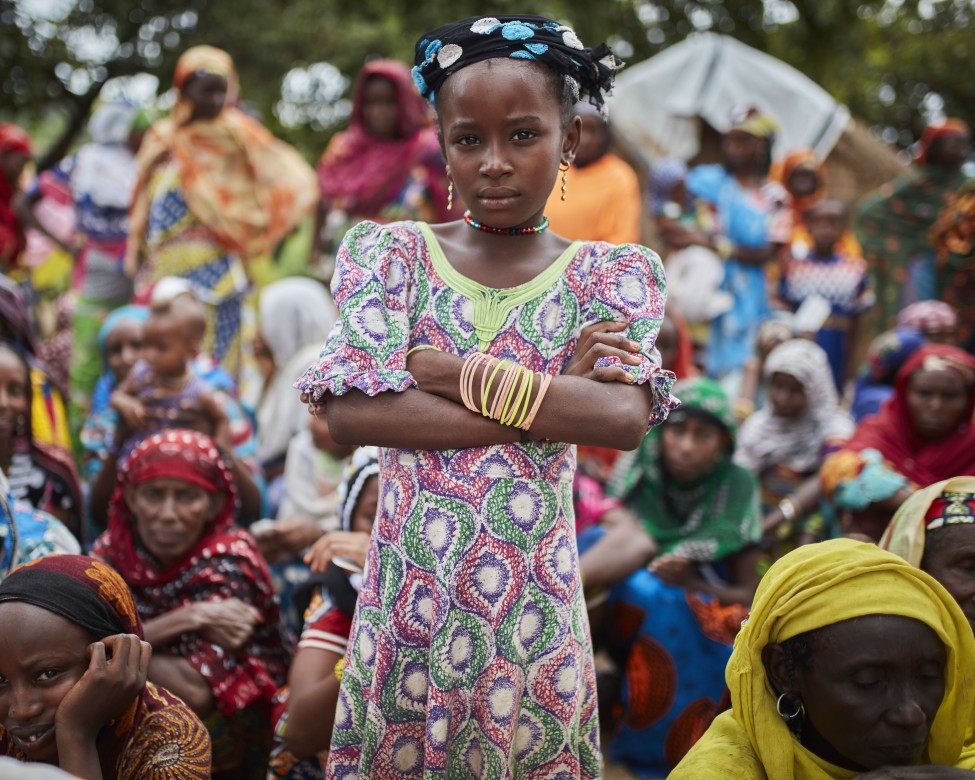
Tracing the secret, complex life of e-waste in Ghana
E-waste is one of the world’s biggest sources of waste. It is also the most valuable, containing precious metals like gold, silver, and platinum group metals. In 2022, however, only 22.3 % of it was officially documented as being collected and recycled.
AFRICA – ANALYSIS, EDITORIAL/OPINION
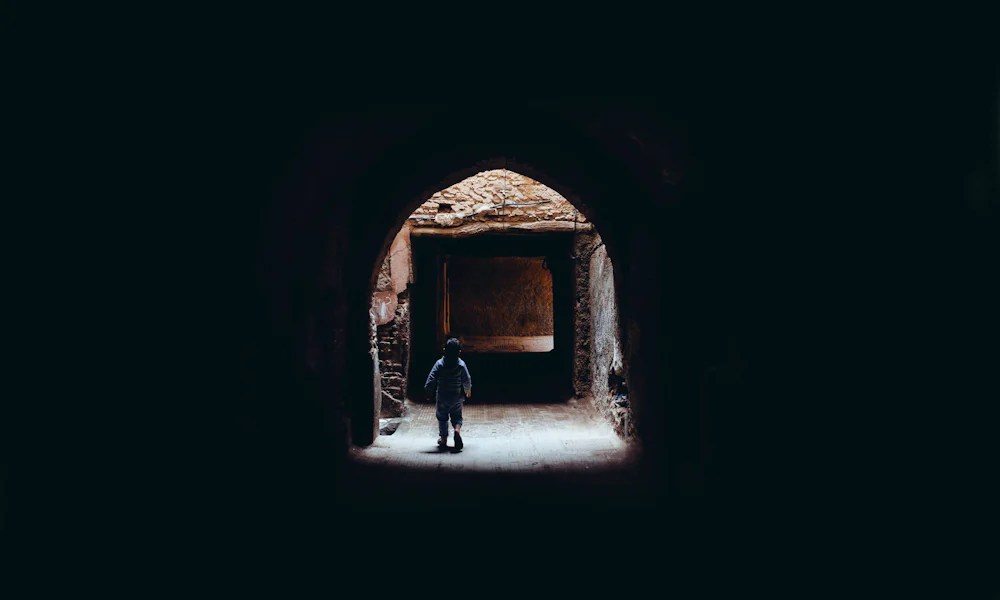
Debt relief should be the African Union’s focus at the G20
To succeed, all six of the AU’s G20 priorities depend on improving the fiscal health of indebted countries.
Kenya
Between witchcraft and terrorism: how social fears in coastal Kenya impact religious expression
Mozambique
How did Mozambique find itself in the current security crisis?
A great deal had changed since independence, and some of the changes had degraded Mozambique’s ability, even willingness, to build and maintain an effective military
Rwanda
What is behind the Western media’s obsession with Rwanda?
South Africa
Death of a liberation movement: how South Africa’s ANC became just a regular political party – with some help from Jacob Zuma
Forests are being wiped out: what’s behind this and why attempts to stop it aren’t working
South Africa’s election results present 3 options for government: all are fraught with danger
 The Africa Edition ©️
Leave a comment