News That Matters To Africa©️
QUOTE OF THE DAY
“Those who would give up essential liberty to purchase a little temporary safety, deserve neither liberty no safety.”
HIGHLIGHTS
Floods cause havoc in East Africa
Burkina Faso says it is investigating northern killings
30 years after Apartheid
What’s At Stake in the Upcoming Elections in Chad
United Methodists endorse change on LGBTQ.
TOP NEWS
Eastern Africa
Destructive Regional Floods and Rain News Coverage
Floods leave trail of death and destruction
Kenya flooding death toll climbs to 70 since March
At least 155 killed in Tanzania as heavy rains pound East Africa
In Pictures: deadly floods wreak havoc
Wait continues for Tshisekedi government to form
UN peacekeepers close key base in DRCongo
Kenya Airways says Congo is harassing airline
Ethiopia: Over 4 Million Children Out of School in Amhara Region
Somalia rising as source of remittances for Kenya and Uganda
A year Into the war, Sudanese artists are building communities of care in Nairobi
Rwanda: Let us press on with UK migrant plan
Somalia detains U.S.-trained commandos over theft of rations
Somalia PM: “We’ve lifted barriers to foreign investment”
South Sudan auditor flags spending of IMF funds
UAE firm agrees to loan $13B to South Sudan in exchange for oil
Security Council concerned over imminent attack in North Darfur
Sudan: One year of war – Writers and analysts reflect on a bitter anniversary.
How (Not) to Talk About the War in Sudan
Ugandan military court frees Kenyan herders jailed over arms
Uganda and UAE’s Alpha MBM near $4bn refinery deal
West Africa
Burkina Faso says it is investigating northern killings
Curbing feuds over water in Cameroon’s far north
Mediator: all kidnapped Chibok Girls would’ve been free
Power restored to Sierra Leone as Minister quits
Togo’s battle for democracy amid constitutional controversy
Southern Africa
USAID Administrator promotes Lobito corridor investment in Angola
Namibia says it won’t accept ‘even one’ migrant from UK after British approach
South Africa marks Freedom Day ahead of general election
Ramaphosa hails ANC record marking 30 years of democracy
The day apartheid died: South Africa’s first free elections
Explainer: 30 years after apartheid, what has changed?
Here’s why electric cars are not yet popular in South Africa
Zimbabwe’s new currency depreciates despite official bravado and crackdown
North Africa
France ready to finance Morocco’s power link to Western Sahara
Central Africa
What’s At Stake in the Upcoming Elections in Chad?
AFRICA GENERAL
UN RELATED NEWS
VIDEO OF THE DAY
TWEET OF THE DAY
PODCAST OF THE DAY
AFRICA RELATED BOOKS/PUBLICATIONS
AFRICA NEWS IN PICTURES
AFRICA CALENDAR
(11) ARTICLES ON ANALYSIS, EDITORIAL & OPINION
EASTERN AFRICA
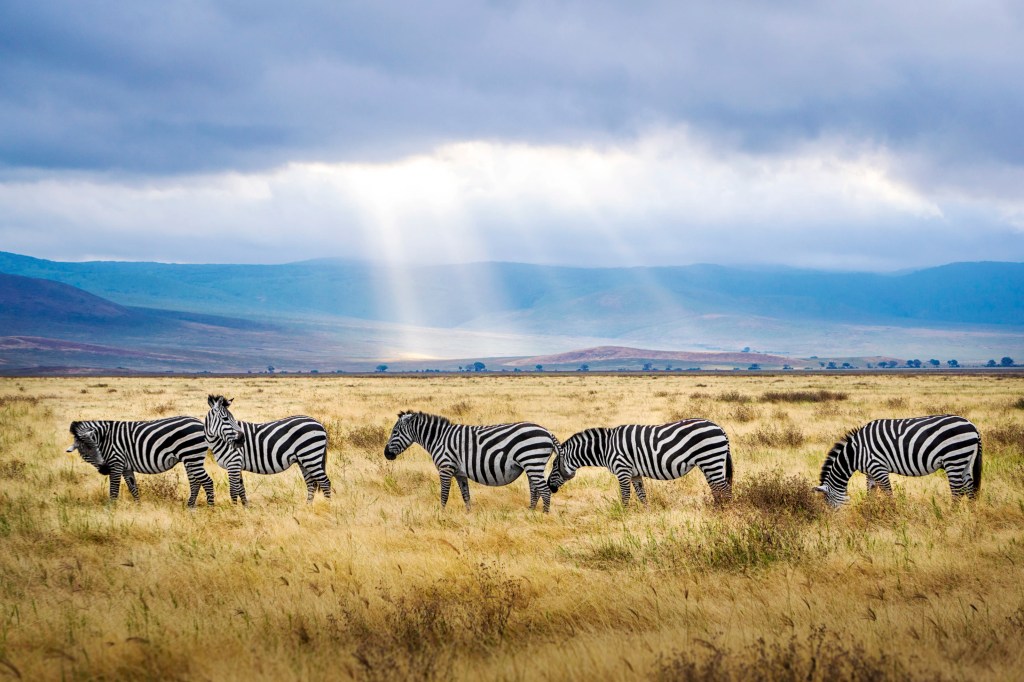
Destructive Floods and Rain News Coverage
Floods leave trail of death and destruction
The past two weeks have been disastrous in East Africa as heavy rains caused floods leading to the loss of hundreds of lives, displacement of thousands and damage to property. A spot check shows that Kenya, Uganda, Tanzania and Burundi have been worst hit by the storms, with highways and railways temporarily closed. Tanzanian Government Spokesperson said 8,532 houses have been damaged in Morogoro and Coast regions and 76,698 hectares of farms destroyed. The country’s Prime Minister told Parliament flooding had left at least 236 injured, while more than 10,000 houses had been damaged and upwards of 200,000 people affected. The rains cut off movement between Kenya and Tanzania on the Nairobi-Namanga highway for the better part of Wednesday…In Uganda, flash floods made movement on the Northern Corridor difficult. Earlier this week, the Masaka-Mbarara highway – which is also Uganda’s main trade route to Rwanda and the DR Congo – was cut off by floods, paralysing traffic and trade. The highway is one of the busiest in the country, with an estimated average daily traffic of more than 30,000 vehicles…In Burundi, Lake Tanganyika’s rising waters invaded the port of Bujumbura, disrupting business and has caused the Kanyosha River to overflow, damaging homes and other property in Bujumbura. In neighbouring Rwanda, 4,800 families, from 326 identified disaster high-risk zones have been moved to safety, as the country braced for floods.
Kenya flooding death toll climbs to 70 since March
Flooding and heavy rains in Kenya have killed at least 70 people since mid-March, according to a government spokesperson, twice as many as were reported earlier this week. Kenya and other countries in East Africa — a region highly vulnerable to climate change — have been lashed by severe downpours in recent weeks. “The official tally of fellow Kenyans who regrettably have lost their lives due to the flooding situation now stands at 70 lives,” government spokesperson Isaac Mwaura said on X on Friday, after torrential rains killed 32 people in the capital Nairobi this week. More than 120,000 people have been displaced by the floods, the report said, with 22 others injured and eight reported missing. Sixty-four public schools in Nairobi – nearly a third of the total number in the capital – have been “substantially affected” by the flooding. However, Deputy President Rigathi Gachagua said that “the schools will reopen as scheduled” following the mid-term holidays this month. Kenyans have been warned to stay on alert, with more heavy rains forecast across the country in coming days as the monsoon batters East Africa. The flooding has been compounded by the El Nino weather pattern.
At least 155 killed in Tanzania as heavy rains pound East Africa
Flooding and landslides in Tanzania caused by weeks of heavy rain have killed 155 people and injured 236 others, the country’s prime minister has said, as intense downpours continue across East Africa. Prime Minister Kassim Majaliwa told Parliament that the El Nino climate pattern has worsened the ongoing rainy season, causing the flooding and destroying roads, bridges and railways. More than 200,000 people and 51,000 households were affected by the rains, the prime minister noted. Flooded schools were closed and emergency services were rescuing people marooned by the floodwaters.
In Pictures: deadly floods wreak havoc
The East Africa region has been lashed by relentless downpours in recent weeks, as the El Nino weather pattern exacerbates the seasonal rainfall.
DR CONGO
Wait continues for Tshisekedi government to form
Nearly five months after the general election in the Democratic Republic of Congo, there is still no new government in Kinshasa. New Prime Minister Judith Suminwa says she is still consulting with the country’s political parties and other figures. President Felix Tshisekedi was sworn in on January 20, 2024, beginning his second — and last — term in office as per the law. Former Prime Minister Sama Lukonde and his outgoing government continue to “manage current affairs”, although they technically resigned in February. They are working with reduced prerogatives as a result of this. DR Congo is used to lengthy negotiations to form governments after presidential and legislative elections. In 2019, it was only in September of that year that the country was able to form a government, after difficult negotiations between Félix Tshisekedi’s coalition and his predecessor Joseph Kabila’s. Prime Minister Suminwa is not faced with two coalitions from which to form a government but must arbitrate the ambitions of more than 300 political parties grouped into different platforms within Tshisekedi’s coalition. It will be a tough task, especially as Ms Suminwa seeks to reduce the Cabinet to 45 ministers, compared with the outgoing one of 58. Of this team, only 20 ministers were not elected MPs.
UN peacekeepers close base in preparation to leave DR Congo
The United Nations peacekeeping mission in the Democratic Republic of the Congo (DRC), which has helped in the fight against rebels for more than two decades, has closed one of its key bases as it prepares to leave the Central African nation this year at the request of the government. The mission, also known as MONUSCO, closed a major base near the city of Bukavu in a ceremony on Thursday attended by Bintou Keita, the head of MONUSCO, along with DRC military and government officials. UN spokesperson Stephane Dujarric told a briefing that peacekeepers from Pakistan, who constituted the bulk of the forces deployed in South Kivu province, are leaving after more than 20 years of service. “Since 2003, when they were first deployed, more than 100,000 peacekeepers from Pakistan have served in South Kivu, including 31 Pakistani soldiers who died in the line of duty, in the service of the United Nations and the people of the Congo,” he said. The departure comes after the Congolese government, which was re-elected in a disputed vote at the end of December, said the increasingly unpopular mission has failed to protect civilians from armed groups.
Kenya Airways says Congo is harassing airline
Kenya Airways accused authorities in the Democratic Republic of the Congo (DRC) of harassment over the continued detention of two of the airline’s staff for alleged customs violations despite a court ordering their release. A senior Kenyan government official said Kenya had also objected to what he said was their arrest and detention. Officers from Congo’s military intelligence detained the pair on April 19 for allegedly failing to complete customs documentation related to valuable cargo that was meant to be transported a week earlier, the airline said in a statement. The airline workers have been granted only one short visit by Kenya’s embassy staff, Kenya’s national carrier said. Congo’s government spokesperson Patrick Muyaya said he would give a response later. “We are perturbed by this action targeting innocent staff and consider it harassment targeting Kenya Airways’ business,” the airline said. At the time of the pair’s arrest, Kenya Airways (KQ) had not taken possession of the cargo because the logistics handler was still processing documentation, the airline said.
ETHIOPIA
Over 4 Million Children Out of School in Amhara Region
Armed conflict, drought, and other compounding factors are keeping more than 4.1 million children out of school in the Amhara region, according to a United Nations Office for the Coordination of Humanitarian Affairs (UNOCHA) situation report released on April 26, 2024. It is equivalent to more than 35 percent of all students registered in the region this academic year. More than 1.5 million children desperately need school feeding services, while another 1.7 million need scholastic materials, according to the report. It also says more than 56,000 teachers and educational personnel need psycho-social support. School feeding programs support over 156,000 students in eight districts, but a significant increase in food and education support is still needed. Regional authorities are planning a six-month curriculum to recover lost learning. Several other regions in the country are also enduring serious impediments due to protracted conflicts, drought, flood and other challenges, according to the report. Since February 2024 renewed clashes between Afar and Somali-Issa communities in Garani and Madane sites in the Siti Zone of the Somali Region have resulted in heavy casualties and displacement of several thousand people. The series of communal clashes, often over territory and resources, has been ongoing since 2018, displacing more than 200,000 people from both communities and disrupting livelihoods.
KENYA
Somalia rising as source of remittances for Kenya and Uganda
Somalia has emerged as a new source of remittances for Kenya and Uganda, accounting for $180 million and $21.9 million respectively per year, diplomatic sources say. According to data at the diplomatic missions in Mogadishu, there are more than 35,000 Ugandans in Somalia, remitting between $50,000 and $60,000 per day, compared with Kenyans, whose remittances average $500,000 per day. Diplomats have recently stated that there are more than 30,000 Kenyans currently employed in Somalia, and this number is expected to grow fivefold in the next five years as a result of the Horn of Africa nation joining the East African Community, guaranteeing free movement of persons within the bloc. Robert Mugimba, Uganda’s Counsellor at the Embassy, says with 35,000 workers in Somalia, the country now ranks second to Saudi Arabia in terms of labour exports, and that the numbers have jumped in nearly two years after a joint permanent commission between Uganda and Somalia in August 2022.
KENYA/SUDAN
A year Into the war, Sudanese artists are building communities of care in Nairobi
It has been one year since the rebel Rapid Support Forces and the Sudanese Armed Forces began fighting in the tri-city of Omdurman, Khartoum, and Bahri, forcing inhabitants to make life-or-death decisions — should they, could they, evacuate their houses and flee to a safer place? Many who had the financial means to make this decision did so, making painful journeys across the desert to Egypt, Kenya, or other parts of the country. The majority fled to Cairo, assuming that Egypt would be the best place to either settle or wait out the war, since Egypt is an Arabic-speaking, Muslim-majority country with similar customs and a shared history. However, many Sudanese found that Egyptian society was unwilling to meet them with the respect they deserve. Three shared their experiences and obstacles when entering the creative industries in Egypt. “The people in Nairobi are having a much better time,” says Hadeel Osman, a creative director, cultural manager, and sustainable fashion consultant currently based in Cairo. “We’re all equally struggling with the displacement and financially, but in Nairobi they don’t feel like the others; Sudanese in Kenya are Kenyan by proximity. They’re not looked down on, the artistic spaces over there are very open and inviting, in contrast to the Egyptian spaces. Whether you’re a visual artist or in the corporate world, you’ll find your environment and galleries to believe in you and invest in you.”…The community in Nairobi has organized film screenings, exhibitions, concerts, fundraising events, and formed an initiative called The Rest which supports artists through small monthly stipends and workshops for mental wellbeing and English courses. “…Still, there’s a shared sense of gratitude to how Kenya has allowed space for Sudanese communities to form, since before, but especially after the war.
RWANDA
Let us press on with UK migrant plan, Rwanda tells critics
Rwandan President Paul Kagame’s government said on Friday it would take as many migrants as Britain sends its way and urged “shouting” critics of the deportation plan to now let both nations proceed. British PM Rishi Sunak expects first flights to leave in 10-12 weeks after parliament passed legislation this week to sidestep legal objections that the migrants could be sent back to nations where they may face mistreatment. Kagame won plaudits for rebuilding Rwanda after the 1994 genocide that killed more than 1 million people, turning it into one of Africa’s fastest-growing economies. But his government has been accused by Western nations and rights activists of muzzling the media, repressing critics, and backing rebel groups in neighbouring Democratic Republic of Congo. Rwanda denies those allegations. “For two years, critics have just shouted without proposing another solution,” government spokesperson Alain Mukuralinda said of the UK migrant plan. “Today, I would say, now the shouting is over … We don’t claim this solution is a miracle solution but at least let these two countries implement it.” Asked how Rwanda would respond if the European Court of Human Rights (ECHR) imposed an injunction on deportations but Britain ignored it, Mukuralinda said problems around the plan were for London to resolve. “We don’t have anything to say or criticise … on the internal affairs of the British government,” he said. “If they lose before the courts … Rwanda will accept that decision.”
SOMALIA
U.S.-trained commandos detained over theft of rations.
Somalia’s government said it had suspended and detained several members of an elite, U.S.-trained commando unit for stealing rations donated by the United States, adding that it was taking over responsibility for provisioning the force. The Danab unit has been a key pillar of U.S.-backed efforts to combat the Al Qaeda-linked militant group Al Shabaab. The United States agreed in February to spend more than $100 million to build up to five military bases for Danab. Somalia’s defence ministry said in a statement late on Thursday that it had notified international partners of the theft and would share the outcome of its investigation. A U.S. official said in a statement that Washington takes seriously all accusations of corruption. Danab has been heavily involved in a military offensive by the Somali military and allied clan militias since 2022 that initially succeeded in wresting swathes of territory from Al Shabaab in central Somalia. However, the campaign has lost momentum, with the government-allied forces struggling to hold rural areas and al Shabaab continuing to stage large-scale attacks, including in the capital Mogadishu.
PM: “We’ve lifted barriers to foreign investment”
Somalia has removed a number of investment screening regimes that barred deployment of capital, giving foreigners the green light to wholly own their investments, repatriate capital and enjoy full protection in the country. Somalia Prime Minister said trade and investment restrictions arising from foreign investment regimes, cause output losses of about two per cent, hence Somalia’s decision to enact the Investments and Investors Protection Law, 2023, to attract foreign capital. He said that despite its socioeconomic and political challenges, Somalia has turned a new page into an era anchored on the attraction of foreign direct investment while mobilising, consolidating and streamlining local business processes…The admission of Somalia to the East African Community (EAC) in 2023 opened a host of investment and trade opportunities for the region. As an EAC member, it gains access to a larger market, facilitating trade and investment across borders and also presents a market of 18 million people. Somalia has abundant natural resources, including oil, gas and fisheries, a strategic location, and a youthful population. It has untapped potential in agriculture, renewable energy, telecommunications and tourism.
SOUTH SUDAN
Auditor flags spending of IMF funds
South Sudan’s National Audit Chamber wants the Ministry of Finance and Planning to account for the use of $114.4 million received from the International Monetary Fund (IMF) for budget and balance of payments support in 2023. The funding was part of the emergency funding through the IMF’s Rapid Credit Facility-Food Shock Window (RCF-FSW) received in January 2023 to bolster Juba’s dwindling foreign exchange reserves and address the deepening humanitarian crisis…Auditor-General Steven Kiliona Wondu, in his Compliance Audit Report dated April 3, 2024, outlined irregular award of tenders to unqualified bidders, single-sourcing in the award of procurement contracts, irregular disbursement of funds, irregular advance payments to contractors, implementation of projects not budgeted for and failure to withhold tax on payments made to contractors…To mitigate the impact of food prices and climate shock on vulnerable groups, $15 million from the disbursement was to be transferred to the World Food Programme, $5 million to the International Organisation for Migration and the remainder to finance the ministries of General Education and Instruction and Health through conditional transfers in line with the allocations made in the 2022/2023 budget.
UAE firm agrees to loan $13B to South Sudan in exchange for oil
A company run by the distant relative of Abu Dhabi ruling family has agreed to lend 12 billion euros ($12.9 billion) to South Sudan in exchange for oil, according to a report, in one of the largest-ever crude-for-cash deals worth nearly double the yearly GDP of the conflict- and famine-hit African country. The deal was negotiated on the sidelines of the COP28 climate change summit in Dubai in December, whose presidency at the time came under fire for allegedly looking to use the event as an opportunity to agree to lucrative new fossil fuel deals. It was reported on Friday, citing an unpublished report by the United Nations Security Council-appointed panel of investigators, that the Dubai-based Hamad Bin Khalifa Department of Projects (HBK DOP) and South Sudan’s then-Finance Minister Bak Barnaba Chol had seemingly agreed to the loan in documents signed between December and February. The HBK DOP loan would see South Sudan produce oil until at least 2043, years after the country’s current oil wells are expected to dry up. South Sudan is heavily dependent on oil, with the commodity being responsible for 90% of the country’s revenue and nearly all of its exports, according to the World Bank. The country, which gained independence from Sudan in 2011, has been severely impacted by the Sudanese civil war…The loan will give the UAE discounted oil from South Sudan for up to two decades.
SUDAN
Security Council concerned over imminent attack in North Darfur
The U.N. Security Council on Saturday expressed its “deep concern” over an imminent attack on al-Fashir in Sudan’s North Darfur region by the Rapid Support Forces (RSF). War erupted in Sudan one year ago between the Sudanese army and the paramilitary RSF, creating the world’s largest displacement crisis. Al-Fashir is the last major city in the vast, western Darfur region not under control of the RSF. The RSF and its allies swept through four other Darfur state capitals last year, and were blamed for a campaign of ethnically driven killings against non-Arab groups and other abuses in West Darfur. The Security Council, in a statement, “expressed their deep concern over an imminent offensive by the Rapid Support Forces and their allied militias” against the city of al-Fashir. “They called on the Sudanese Armed Forces and Rapid Support Forces to end the build-up of military forces and to take steps to de-escalate the situation,” the statement said. Top U.N. officials warned the Security Council last week that some 800,000 people in al-Fashir were in “extreme and immediate danger” as worsening violence advances and threatens to “unleash bloody intercommunal strife throughout Darfur.”
How (Not) to Talk About the War in Sudan
Reporting about the war in Sudan is clouded by three oversimplified narratives – “forgotten conflict”, “war of two generals” and the “proxy war classification. International reporting and political statements about the war in Sudan often echo three misconceptions about the origin, dynamics, and impact of the conflict. These biased views concern the lack of international attention, the role of the security sector and the interference of external actors – all important aspects of the ongoing conflict that should be highlighted. However, the chosen narratives often oversimplify and twist the discourse in problematic ways. It is understandable, and necessary even, that journalists and international policymakers use shortcuts to make the complex war in Sudan more comprehensible to non-experts. And, of course, there have been excellent reports and carefully considered statements. But biased narratives risk twisting the agency of national and international actors as well as their respective options to silence the guns in Sudan. “Forgotten Conflict” – That the fighting in Sudan has received relatively scant international attention is incontestable. However, this has less to do with forgetfulness than, arguably, ignorance; “War of Two Generals” – A more accurate description would be “war of militarization”, that is, a conflict which leads ever more to take up arms, reducing the space for those who seek to pursue political goals in a non-violent manner; “It’s a Proxy War” – The third and final misconception is that the Sudan conflict can be classified as a proxy war, that is, one in which an external power indirectly engages in a conflict with another external power by supporting a warring party in a third country. This narrative risks diminishing the primary role that domestic actors are playing in the Sudan war – as well as the reasons why they are relying on international support in the first place.
Sudan: One year of war
The civil war in Sudan broke out on 15 April 2023. Two generals, who together had conspired to depose a civilian prime minister, turned on one another – with devastating consequences for everyone else. Writers and analysts reflect on a bitter anniversary.
UGANDA
Military court frees Kenyan herders jailed over arms
The General Court Martial in Uganda on Wednesday set free 32 Kenyan hereders who were jailed in April for illegal possession of firearms and ammunition. The group had been jailed for 20 years for the crimes committed in the Karamoja sub-region of Uganda. Setting them free, the Court Martial said there were procedural irregularities during the trial. The group had been arrested on April 8, 2023, during a cordon-and-search operation by Ugandan soldiers within Turkana Kraals at Lokiryaout village in Northern Uganda, where they had crossed into. They were sentenced to 10 years each for the first count of jointly, illegally owning 28 firearms and 10 more years for possessing 801 ammunition without valid firearms certificates after pleading guilty. In their appeal, they argued that the trial court erred in the law and fact when they failed to follow the procedure in trying children offenders. It had been established that seven of them were aged below 18 years.
UAE’s Alpha MBM and Uganda near $4bn refinery deal
Talks between Uganda and Dubai-based Alpha MBM Investments have “intensified” over the construction of a $4 billion refineryin the East African country, an oil executive has said. Alpha MBM was earlier picked as the preferred bidder to finance the refinery in the oil city of Hoima, with a capacity to process 60,000 barrels daily. The Hoima refinery, which will be East Africa’s first major crude processing plant, aims to reduce landlocked Uganda’s dependence on imported petroleum and diesel, which currently pass through Tanzania or Kenya. Uganda forayed into oil and gas exploration after significant crude reserves were discovered in the country’s western region, particularly in the Lake Albert Basin near the border with the Democratic Republic of the Congo. The 1,445km East African Crude Oil Pipeline, connecting those oil and gas projects to the port of Tanga in Tanzania, is set to become operational next year.
WEST AFRICA

BURKINA FASO
Burkina says it is investigating northern killings
Burkina Faso is investigating killings in two northern villages in February, a government spokesperson said on Saturday, dismissing a Human Rights Watch (HRW) report about the Burkinabe army’s alleged execution of 223 people there. Citing telephone interviews with witnesses, civil society and others, the HRW report on Thursday accused the military of executing residents of Nodin and Soro, including at least 56 children, as part of a campaign against civilians accused of collaborating with jihadist militants. Government spokesperson Rimtalba Jean Emmanuel Ouedraogo rejected HRW’s allegations as “peremptory” and denied that the ruling junta was unwilling to look into the alleged atrocities. “The killings in Nodin and Soro have led to the opening of a judicial investigation,” Ouedraogo said in a late evening communique, citing a March 1 statement by a regional prosecutor. Violence in the region fuelled by the decade-long fight with Islamist groups linked to Al Qaeda and Islamic State has worsened since respective militaries seized power in Burkina Faso and neighbouring Mali and Niger in a series of coups from 2020 to 2023.
CAMEROON
Curbing feuds over water in Cameroon’s far north
The spectre of deadly fighting between Choa Arab and Musgum groups hangs over Cameroon’s Far North, due in part to competition over water and land. A dispute over the Logone River waters sparked a round of conflict in 2021, reviving years of bitter political rivalry in a region battered by the Islamist insurgency Boko Haram, drought and flooding. The government has tried to prevent the Choa Arab-Musgum tensions from spilling over, but with only partial success. Between 2021 and 2023, a dozen other clashes linked to resources temporarily displaced some 15,000 people of other ethnicities in the area. As the war with jihadists and the fighting in Cameroon’s Anglophone regions are taxing government forces, Yaoundé would likely struggle to contain a new wave of violence. The Choa Arab-Musgum conflict is rooted in longstanding grievances. Many Musgum are fishers and farmers who often dig basins on the floodplains of the Logone River to retain fish and water, which they use to irrigate their fields; meanwhile, many Choa Arabs are cattle owners. Cows sometimes get trapped in the marshy canals, suffering injury or death. Both groups fear their livelihoods are under threat: the Musgum want to keep digging basins while the Choa Arabs want the practice stopped. This disagreement has escalated into a broader ethnic feud.
NIGERIA
Mediator: all kidnapped Chibok Girls would’ve been free
Maiduguri-born and raised lawyer Zannah Bukar Mustapha recalls his role in the rescue of 103 of the girls who were kidnapped from Chibok, Borno state, Nigeria, a decade ago. When he decided, in 2007, to create a foundation that caters to out-of-school kids, he didn’t foresee himself playing an integral, continuous role within the throes of an insurgency, and being instrumental in the negotiations that led to the release of 103 of the girls. But he strongly believes more should have been done to sustain negotiations and secure the release of the remaining girls who are said to have refused to return, instead favoring staying with Boko Haram members, some of whom they had been forcefully married to…Mustapha took a course in mediation in Switzerland which helped him in the negotiations with the Boko Haram leaders. The initial form of connection was through the mothers of the children being educated by Future Prowess, some of whom knew the wives of Boko Haram members and commanders. In partnership with the International Committee of the Red Cross (ICRC), negotiations began to bring back the abducted girls…Mustapha, who won the UNHCR Nansen Refugee Award in 2017, strongly believes that more efforts should have been made to better assimilate the rescued girls into society, especially with stories of previously kidnapped voluntarily returning to their captors.
SIERRA LEONE
Power restored to Sierra Leone as Minister quits
Electricity supplies have been restored to Sierra Leone following weeks of power cuts, after it paid off part of the $48m (£38m) bill it owed to a Turkish company. The $18m payment came as the country’s energy minister resigned, saying he took full responsibility for the crisis. Most electricity supplies to the capital, Freetown, come from a Turkish ship anchored off the country’s coast. Last week, Karpowership said it had severely cut supplies to the city – from 60 megawatts to 6 megawatts – because of the unpaid bills, but the disruption has been going on for far longer. Residents of the country’s main cities have been going for days on end without any power and hospitals have also been affected. Karpowership previously cut supplies to Sierra Leone in September over unpaid bills. It is one of the world’s biggest floating power plant operators, with several African states relying on it for electricity. In October, it briefly cut power to Guinea-Bissau, saying it had no option “following a protracted period of non-payment”. The power ships work by converting gas into electricity, which is then fed into the national grid.
TOGO
Togo’s battle for democracy amid constitutional controversy
Amid tensions and accusations of a constitutional coup, Togo heads to the polls next week. The African nation stands at a crossroads of democracy and dissent. Togo’s parliament adopted a new constitution last weekend, paving the way to transition from a presidential to a parliamentary regime in Togo. This has sparked great debate across the nation, with both opposition leader and civil society groups decrying the change in the political landscape as an attempted power grab by President Faure Gnassingbe. The shift from a semi-presidential to a parliamentary regime marks a notable departure from Togo’s political tradition. Dodji Apevon, leader of the opposition party Action Committee for Renewal, told DW that the parliamentary decision to change the constitution needs to be overturned. “Whatever it costs us, we will fight. We are all united around this ideal to save our country from the abyss into which President Gnassingbe is plunging it,” Apevon said…Many civil society groups are also siding with the opposition in criticizing the constitutional overhaul, along with university professors and human rights advocates, who have all been describing the issue as a direct challenge to democratic principles.
SOUTHERN AFRICA
ANGOLA
USAID Administrator promotes Lobito corridor investment in Angola
Samantha Power, the Administrator of the U.S. Agency for International Development (USAID), recently visited Angola, where she met with the country’s President and toured the port of Lobito and the Benguela railway. Her visit underscored the United States’ support for the Lobito corridor project, a vital component of the Global Infrastructure and Investment Partnership aimed at connecting the Democratic Republic of Congo and Zambia to regional and global markets through the port of Lobito. “To date, these successful public tenders for private sector participation have committed hundreds of millions of dollars to this region, and that number is only going to grow,” remarked Samantha Power, emphasizing the significant private sector investment facilitated by successful public tenders within the region. The Lobito corridor, managed by the “Lobito Atlantic Railway” consortium under a 30-year privatization agreement, encompasses the port of Lobito, the mining terminal, and the Benguela railway, spanning 1,344 kilometers to the eastern border of Angola in Luau. The United States and the European Union are major partners in the Lobito corridor initiative, demonstrating their commitment to promoting economic development and regional integration in Africa.
NAMIBIA
Namibia says it won’t accept ‘even one’ migrant from UK after British approach
Namibia has announced that it will not accept a single migrant from the UK despite an approach by the British Government regarding a possible deal similar to the one that has been agreed with Rwanda. “We are not accepting migrants from the UK, even if it’s just one,” said Penda Naanda, executive director of the country’s Ministry of International Relations and Cooperation (Mirco). “We are not going to have people imposed on us. Why would we take people who were going on a boat to the UK to find jobs and economic benefits? A country cannot be told to take migrants.” Mirco said it had been approached by the UK Government to be part of Britain’s asylum plans, as Rwanda had, but declined the offer. UK media reported last week that the UK had been searching for another third-country deportation dealand had been in talks with Armenia, Ivory Coast, Costa Rica and Botswana, according to leaked documents. Namibia had declined to engage in discussions in August 2021, and the Foreign Office had concluded it was “unlikely to be swayed by financial incentives”.
SOUTH AFRICA
Freedom Day News Coverage
South Africa marks Freedom Day ahead of general election
South Africa marked Freedom Day on Saturday. The day on which, 30 years ago, millions of South Africans braved long queues to vote in the country’s first democratic elections, ending decades of white minority rule. “The weight of centuries of oppression was no longer holding us down,” said President Cyril Ramaphosa in a speech marking the day, “On that day, as a united people, we stood tall as South Africans”. But any sense of celebration on the momentous anniversary was set against a growing discontent with the government of the ruling ANC party. The party’s image has been hurt by widespread accusations of corruption and its inability to effectively tackle pressing issues including crime, inequality, poor service delivery, and unemployment, which remain staggeringly high…Polls suggest support for the ANC is at an all time low, falling to around 40 per cent compared to 62 per cent in 1994. Analysts predict that the party is likely to see it lose its parliamentary majority for the first time in the elections due to take place on 29 May, forcing it into a coalition.
Ramaphosa hails ANC record marking 30 years of democracy
President Cyril Ramaphosa has hailed South Africa’s achievements under his party’s leadership as the country celebrated 30 years of democracy since the end of apartheid. April 27 is the day “when we cast off our shackles. Freedom’s bells rang across our great country,” Ramaphosa, 71, said on Saturday, reminding South Africans about the first democratic election in 1994 that ended white-minority rule. The first inclusive election saw the previously banned African National Congress (ANC) party win overwhelmingly and made its leader, Nelson Mandela, the country’s first Black president, four years after being released from prison. With the ANC winning a landslide victory, a new constitution was drawn up, and it became South Africa’s highest law, guaranteeing equality for everyone, regardless of race, religion, or sexuality. The ANC has been in government since 1994 and is still recognised for its role in freeing South Africans, but for some, it is no longer celebrated in the same way as poverty and economic inequality remain rife. Ramaphosa used the occasion to list improvements shepherded by the ANC, which is struggling in the polls due on May 29 and risks losing its outright parliamentary majority for the first time.
The day apartheid died: South Africa’s first free elections – archive, 1994
South Africans defied organisational chaos, personal hardship and long queues to throng polling stations yesterday for the historic all-race election that crowned their long march towards democracy. While the authorities were under growing pressure last night to extend the three-day poll after serious problems in the first day of voting, the momentum for freedom looked unstoppable, with a new nation coming into effect at the stroke of midnight when the old flag was lowered and the new constitution took effect. “Today is a day like no other before it … today marks the dawn of our freedom,” said Nelson Mandela, the African National Congress leader who is expected to become the country’s first black president. Mr Mandela spent 27 of his 75 years in jail for fighting apartheid. “Years of imprisonment could not stamp out our determination to be free. Years of intimidation and violence could not stop us and we will not be stopped now,” he said. Around the country, the infirm, elderly and sick defied both a rightwing bombing campaign and widespread problems at polling stations in an extraordinary demonstration of hunger for the franchise.
Explainer: 30 years after apartheid, what has changed?
South Africa’s road to freedom was long and bloody – laden with the bodies of thousands of Black activists and students who dared to protest, both loudly and quietly. The wounds of those times are still painful and visible. Black South Africans make up 81 percent of the 60 million population. But, burdened with the trauma and lingering inequalities of the past, Black communities continue to be disproportionately afflicted with poverty. Here’s how apartheid unfolded, how it collapsed, and what has since changed in South Africa:
Here’s why electric cars are not yet popular in South Africa
With petrol prices testing sanity with each monthly hike, many South Africans have fantasised about putting an electric car (EV) in their driveway. It would be the ultimate boycott. But in reality it’s not that simple, which is why only a handful of buyers are plugging into this trend. In 2023 local sales of fully electric vehicles surged by 85% versus 2022, which sounds impressive until you consider the nominal increase was from 502 to 903 units, which is just 0.16% of the overall market. These numbers will no doubt increase exponentially in the coming years, but that’s off an extremely small base. 2024 has so far ushered in a pair of more affordable electric cars, with more set to come from the likes of BYD, but these have hardly set the sales charts alight so far. But what is standing in the way of mass EV adoption? Chief among these is the cost of buying a new EV, and this is down to numerous factors. Even the most affordable battery model, the GWM Ora 3, is no cheapie at R686,950 for the base version and as great as Volvo’s new EX30 appears to be, getting one in your garage will take at least R775,900…these near silent buzzing machines are so expensive mainly down to a combination of taxes and high battery prices. Range anxiety remains a concern too, although many modern entrants are theoretically capable of covering 400km or more between charges, just not over long distances.
ZIMBABWE
New currency depreciates despite official bravado and crackdown
Despite assurances from the Reserve Bank of Zimbabwe (RBZ) governor Dr John Mushayavanhu and a crackdown on alleged currency manipulators, Zimbabwe’s new gold-backed currency, the ZiG, faces a rocky start as it experiences depreciation and skepticism. Experts remain concerned about the ZiG’s stability due to a fixed exchange rate and a lack of market-driven buying. Threats from Zimbabwe’s Vice President, Constantino Chiwenga, and a sting operation launched against money changers across the country are not solving the problem. Chiwenga, this week, vowed to crack down on speculators attempting to manipulate ZiG’s exchange rate. The Reserve Bank of Zimbabwe (RBZ) launched the ZiG on April 8th, 2024, replacing the Zimbabwean dollar that had suffered from hyperinflation. The ZiG is backed with a basket of precious metals, including gold and foreign currency reserves.
NORTH AFRICA
MOROCCO
France ready to finance Morocco’s power link to Western Sahara
France is ready to participate in funding a 3 gigawatt power cable linking the Moroccan city of Casablanca to the town of Dakhla in Western Sahara, French Finance Minister Bruno Le Maire said. Western Sahara has been disputed between Morocco – which calls it its southern provinces – and the Algeria-backed Polisario front, which demands an independent state there. “I confirm to you that we are ready to participate in funding this project,” Le Maire told a Moroccan-French business forum in Rabat. In February, French foreign minister Stephane Sejourne had said France backs Morocco’s investments in Western Sahara and reaffirmed support for Rabat’s autonomy plan for the territory, signaling a warming up of ties between the two countries after a period of diplomatic frost. Morocco wants France to recognise its full sovereignty over Western Sahara, following the example of the U.S. and many Arab and African countries. France is also willing to cooperate with Morocco in developing solar, wind and green hydrogen as well as nuclear power, Le Maire said.
CENTRAL AFRICA

CHAD
What’s At Stake in the Upcoming Elections in Chad?
Three years after the death of a former president who ruled for 30 years with an iron fist, voters in Chad are heading to the polls with limited options. Ahead of the May 6 elections, Chad’s transitional president Mahamat Déby says he’s asked the junta to remain on alert as protests and clashes have erupted since the beginning of campaigns on Sunday. Déby, a four-star general in the Chadian army, took over power against the country’s line of succession — after his father, President Idriss Déby’s death in 2021. Since then, he has been struggling with ascertaining his legitimacy among citizens, opposition, and civil society organizations. Déby is one of the ten candidates on the ballot of a long-awaited presidential election. His candidacy was ratified by Chad’s Constitutional Council, months after accepting the nomination spot for the ruling Patriotic Salvation Movement, with support from a few other political parties. Déby’s main opposition is PM Succès Masra, the leader of Les Transformateurs political party. A year ago, Masra was in exile in the U.S., alleging that he was being hunted by the government for being an outspoken critic and for playing a key role in the deadly October 2022 protests, where citizens demanded a return to democracy. He returned after signing a deal with the government and accepted the prime minister position, one of the most surprising events in Chad politics of recent. In early March, Masra indicated his interest in running for president, making him the only noteworthy candidate that can challenge Déby, who’s heading to the polls as most expected to win. Several opposition parties have already called for a boycott of the elections, saying it is a sham, and a way for Déby to continue a “dynastic dictatorship,” while pointing to the happenings of the past three years…This is the first time in Chad’s history that the president and prime minister are running against each other. Now seemingly allied with the government, and with tension brewing between him and other opposition activists, it remains to be seen if Masra will give Déby a strong contest in the latter’s quest to consolidate power.
AFRICA – GENERAL NEWS

United Methodists endorse change that could give regions more say on LGBTQ
United Methodist delegates have overwhelmingly endorsed a constitutional amendment seen by advocates as a way of defusing debates over the role of LGBTQ people in the church by giving rule-making autonomy to each region of the international church. Delegates voted 586-164 on Thursday for the “regionalization” proposal on the third day of their 11-day General Conference, the legislative body of the United Methodist Church, meeting in Charlotte, North Carolina. The plan would create multiple regional conferences — one for the United States and others covering areas ranging from the Philippines to Europe to Africa. Existing regions outside the United States — known as central conferences — already have the flexibility to adapt church rules to their local contexts, but the jurisdictions in the United States do not. This constitutional change would give the U.S. church that flexibility, while defining autonomy more closely for all of the regions. To become official, however, it will require approval by two-thirds of total votes cast in its annual conferences, or local governing bodies. If ratified, one effect of the change is that it could allow for the American church — where support has been growing for the ordination of LGBTQ people and for same-sex marriage — to authorize such rites, even as international churches with more conservative positions on sexuality would not.
AGOA to be expanded to all of Africa and extended to 2041
The US Congress has put forward proposals that would see the African Growth and Opportunity Act (AGOA) extended to 2041. Senators Chris Coons of Delaware and James Risch of Idaho last week introduced the bipartisan Agoa Renewal and Improvement Act of 2024, which would see AGOA cover 54 African countries. The extension is expected to integrate AGOA with the African Continental Free Trade Agreement (AfCFTA) to support the development of intra-African supply chains. Enacted in 2000, AGOA is due to expire next year. Speaking in Nairobi during the fourth edition of the regional American Chamber of Commerce Kenya (AmCham) business summit, US Secretary of Commerce Gina Raimondo said the plans to extend Agoa were on course. AGOA covers most—but not all—goods imported to the US from sub-Saharan Africa. The list of covered goods has not been substantially updated since the program was created in 2000. To participate in the expanded rules of origin, North African countries would be required to meet AGOA’s eligibility requirements related to governance, human rights, and foreign policy…The US legislators believe that AGOA would provide US businesses interested in sourcing from Africa or investing in its supply chain assurance that the region possesses long-term trade potential.
3 African countries could play host to Russian diplomatic missions
Russia is considering opening diplomatic missions in a few African nations. For the past few years, Russia has been looking to grow its influence in Africa. To which it has launched several initiatives and programs. In the country’s latest move to win over the “Mother Continent,” Russia has selected 3 African countries to launch diplomatic outposts. The three countries on Russia’s radar regarding this plan include South Sudan, Niger and Sierra Leone. A similar mission to open embassies in Burkina Faso and Equatorial Guinea has already been taken and agreed upon with the authorities in the host nations. Very recently, the Russian capital, Moscow inaugurated the House of Africa,Russia’s central platform for diplomatic, business, and cultural activities aimed at developing Russian-African relations.
Nine African migrants buried in secular ceremony in Brazil
The bodies of nine African migrants found on a boat off the northern coast of Brazil were buried Thursday (Apr. 25) during a secular ceremony in the city of Belem. The ceremony was organized by groups involved in the recovery of the bodies. The U.N. Refugee Agency, the Red Cross and the International Organization for Migration, as well as Brazilian police, navy and civil defense agencies, were among those groups. Authorities said the manner of the burial would allow for subsequent exhumations in case families of the deceased were located and wished to transfer the bodies back to their home countries. The 9 corpses likely Mauritanian and Malian migrants were found by Brazilian fishermen, on April 13, on a boat adrift. The roughly 12-meter vessel was carrying 25 raincoats and 27 mobile phones, suggesting the original number of passengers was significantly higher.
Global chains are driving a boom in Africa’s hotels
The world’s largest hotel chains, including multiple American majors, are behind the rising number of newly planned hotel and resort projects in Africa. At the end of 2023, international hospitality chains had 524 hotels with over 92,000 rooms in their pipelines across 41 African countries, due to a 9.2% increase in new deals from the previous year. It’s the largest annual increase since 2018, according to W Hospitality Group, a consultancy that has tracked hotel projects in Africa for over a decade. U.S. multinationals Marriott, Hilton, Radisson, and French chain Accor have the most newly commissioned hotel projects in Africa, to date. With IHG Hotels, a British chain, the five companies account for two in three hotel projects across the continent, W Hospitality’s latest tally shows. These hospitality groups and 42 others have active deals in 41 African countries to build hotels or resorts. Resorts have become of particular interest with new deals increasing 32%. Zanzibar typified the interest in new resorts with a doubling of new signed projects over the past year. Multinational hotel companies are drawn to large African economies, especially if they have an existing tourism industry and the underlying infrastructure required to drive it. Those metrics favor Egypt, Nigeria and Ethiopia. However, conflict, high construction costs, and difficulty accessing capital can be limitations. It could take up to five years on average after a deal is signed for a new hotel to actually be opened in Africa. In 2023, the number of chain hotels that opened in Morocco, Egypt, Ethiopia, and Nigeria was four, two, one, and zero respectively.
NBA Africa unveils a startup accelerator
NBA Africa is trying to plug gaps in the continent’s fledgling sports industry supply chain with a plan to invest and support early-stage startups focused on sports and creative industries in Africa. The Triple Double: NBA Africa Startup Accelerator program will provide selected startups with access to capital, mentorship from international industry leaders and the chance to work with NBA Africa and the Basketball Africa League (BAL). The league is particularly keen on startups in ticketing, event management, youth development, AI and digital marketing. The program was announced this week in Nairobi at the American Chamber of Commerce’s Business Summit, by NBA Africa CEO Clare Akamanzi alongside US Secretary of Commerce Gina Raimondo and US Trade and Development Agency Director Enoh T. Ebong. NBA Africa said the accelerator was “in support of” US President Joe Biden’s Digital Transformation with Africa Initiative and will be operated by ALX Ventures, an African startup incubator. Accelerator programs such as Seedstars and Silicon Valley’s Y-Combinator have played an important role in Africa’s tech ecosystem supporting companies in their early stages, including Flutterwave and Paystack. Startups have until Friday, May 31, to apply online after which the submissions will be narrowed down to the top 10, who will be paired with mentors to provide guidance on product development, business growth and go-to-market strategy. Four final winners will be selected following a demo day slated for September in New York to coincide with the United Nations General Assembly (UNGA).
UN RELATED NEWS
UN-led panel aims to tackle abuses linked to mining for ‘critical minerals’
A UN-led panel of nearly 100 countries is to draw up new guidelines to prevent some of the environmental damage and human rights abuses associated with mining for “critical minerals”. Mining for some of the key raw materials used in low-carbon technology, such as solar panels and electric vehicles, has been associated with human rights abuses, child labour and violence, as well as grave environmental damage. Cobalt mining, for instance, has led to an upsurge in illegal labour and human rights violations, particularly in the Democratic Republic of the Congo. Copper mining has also led to severe pollution and environmental damage in some regions. The global supply chain for other critical minerals, such as the rare earths needed for renewable energy production, is also increasingly a matter of concern for governments as they shift their economies to a low-carbon footing. António Guterres, the secretary general of the UN, has gathered a panel of developed and developing countries with interests in the extraction and consumption of critical minerals with instructions to draw up a set of guidelines for the industries. The guidelines drawn up by the panel will only be voluntary and are likely to rely heavily on big companies policing their own supply chains. Laura Kelly, the head of sustainable markets at the International Institute for Environment and Development thinktank, said: “This is a good first step because at the moment, each country is doing its own thing in the rush to lock in access to critical minerals.
Why African countries seek UN tax convention
African countries are pushing for a platform at the United Nations that would provide them an opportunity to discuss global tax rules on an equal footing. The tax rules would enable them to address issues such as tax avoidance, double taxation, tax evasion, and illicit financial flows. Last September during the United Nations General Assembly, developing countries pushed for the inclusion of the United Nations Framework Convention on International Tax Cooperation. The UNFCITC is a proposed new legal instrument intended to better coordinate international tax policy. The UN tax framework aims at making international tax cooperation fully inclusive and more effective. “This Convention is a fight for developing countries to reclaim their taxing rights,” said Jane Nalunga, Executive Director, Southern and Eastern Africa Trade Information and Negotiations Institute. “For now the global tax system and international rulemaking is controlled by the OECD, which is an exclusive club, inside which developing countries do not have a voice.” Countries voted 125 to 48 to adopt a resolution tabled by Nigeria in September 2023, on behalf of African member states, calling for a UN tax convention that could drastically change how global tax rules are set. Nine countries including the UK, the US, and the entire European Union bloc abstained from the vote, which was held in New York on November 22.
TWEET(s) OF THE DAY
“The UAE expresses deep concern over heightened tensions in North Darfur and urges the Sudanese parties to return to dialogue“
@mofauae
“Maybe the #UAE’s MoFA doesn’t know about all the informal networks tied to its national security advisor that ship arms to Darfur from Abu Dhabi via private logistics and aviation companies in Uganda, Chad and the UAE?!”
@andreas_krieg on X
“That thing where a city built on a swamp culls 4000 of the trees planted to help drain the swamp and builds apartment complexes with no green spaces and roads with no drainage instead.”
@Nanjala1 on X
VIDEO OF THE DAY
Has South Africa’s ANC failed to live up to its promises?
South Africa is marking Freedom Day – the historic day that changed the course of the country. Hopes were high in 1994, as years of segregation and white-minority rule came to an end, and millions of Black South Africans cast their vote for the first time. But 30 years on, many say there’s little to celebrate. Hope has been replaced by disappointment and scepticism. The African National Congress, which has been in power since the end of apartheid, is accused of not keeping its promises.
PODCAST OF THE DAY
What’s behind the recent clashes in Ethiopia?
AFRICA RELATED BOOKS/PUBLICATIONS
Izimpabanga Zomhlaba: A Zulu Translation of Frantz Fanon’s Masterpiece
Award-winning poet and translator Makhosazana Xaba is responsible for bringing Fanon’s revolutionary ideas to a new audience of African readers. This translation not only honours Fanon’s legacy but also underscores the universality of his message, transcending linguistic and cultural boundaries. It’s a testament to the enduring relevance of his ideas in the ongoing fight against injustice.
Reviving the ‘African Hercules’: The Revolutionary Thoughts of Kwame Nkrumah
This collection, edited by Vijay Prashad, offers a compelling glimpse into the visionary leadership of Nkrumah, a pivotal figure in African history. Through a curated selection of formerly out of print, speeches and essays, Nkrumah’s unwavering commitment to Pan-Africanism shines brightly.
The Construction of Terrorist Threat in Mali: Agency and Narratives of Intervention
This fascinating paper by Joe Gazeley explains how the Malian government approached the US after 9/11 and pitched that Mali was a potential new front in the War on Terror, in exchange for more international aid
The Maroons
A rediscovered classic written in 1844, and the only known novel by Black abolitionist and political exile Louis Timagène Houat, The Maroons is a fervid account of slavery and escape on nineteenth-century Réunion Island. The Maroons highlights slavery’s abject conditions under the French empire, and attests to the widespread phenomenon of enslaved people escaping captivity to forge a new life beyond the reach of so-called “civilization.” Banned by colonial authorities at the time of its publication, the book fell into obscurity for over a century before its rediscovery in the 1970s. Since its first reissue, the novel has been recognized for its extraordinary historical significance and literary quality.
AFRICA IN PICTURES
Mandela’s world: A photographic retrospective of apartheid South Africa.
AFRICA CALENDAR
Week Ahead
April 29 — Togo plans to hold delayed parliamentary and regional elections as political tensions rise over controversial constitutional changes. It is seen as an attempt to maintain President Faure Gnassingbé’s hold on power.
May 1 — United Arab Emirates’s Etihad Airways is set to resume flights from Nairobi to Abu Dhabi, four years after it ceased flights to the city due to global pandemic travel restrictions.
May 2-3 — The Mozambique Mining and Energy Conference will take place in the capital Maputo, bringing together national leadership and more than 500 industry players.
May 5 — The African World Heritage Fund will celebrate the ninth edition of the African World Heritage Day. This year’s theme is “Safeguarding Africa’s Heritage Through Education.”
May 5-8 — The 2024 Forbes Under 30 Summit Africa will be held in Gaborone, Botswana.
AFRICA – ANALYSIS, EDITORIAL/OPINION
For Africa’s poorest countries, it’s time for transformation
The great miscalculation – and exit – of multinationals in Africa…again
Wagner in Africa
Who’s Afraid of the Global South?
Revisiting two 50-year-old U.N. resolutions should help dispel fears about a shifting economic world order.
An insecure United States is a threat to humanity
How Africa’s National Liberation struggles brought democracy to Europe
African liberation struggles not only won independence in their own countries; they also defeated Estado Novo colonialism, which spurred the Carnation Revolution 50 years ago.
Is the Commonwealth still important to Africa
Ethiopia
Since 2019, no case from Boeing 737MAX crash has gone to trial
Kenya
Kenyan doctors’ strike: the government keeps failing to hold up its end of the bargain
Somalia
The Turkish-Somali Agreement: A calculated adventure or a step into the unknown?
Uganda
Uganda’s fight against cattle raiders dividing Karamoja people
 The Africa Edition ©️
Leave a comment