News That Matters To Africa©️
Friday’s Focus Edition
Light On News But Heavy On Analysis, Commentary and Opinion and Good News Africa
Quote of the Day:
“Learn not to judge people by their past. People learn. People change. People move on.”
Highlights:
Deadly cyclone hits northern Madagascar
Dangote oil refinery could accelerate European sector’s decline
Jacob Zuma barred from running in South Africa elections
French MPs condemn 1961 massacre of Algerians in Paris
Top News:
Eastern Africa
DRC, Rwanda give mixed signals in bid to end tensions
Russian warship docks in Eritrea port
Deadly clash as Amhara, Tigray regions accuse each other of provocation
Kenya starts to hand over the bodies of doomsday cult
Court Acquits police imposter arrested 11 years ago
Deadly cyclone hits northern Madagascar
UNHRC calls on UK to drop plan to deport refugees to Rwanda
Somalia’s old rivals reunite in debate on constitution
Schools to reopen in South Sudan after 2 weeks of extreme heat
US Eyes April 18 to potentially resume Sudan peace talks in Jeddah
Sudan military rejects power-sharing deal
Museveni launches Uganda’s first-ever Islamic bank
West Africa
Son of Guinea-Bissau’s Ex-president jailed in US for trafficking drugs
It’s a bittersweet Easter for chocolate lovers and African cocoa farmers but big brands see profits
French court hands former Liberian rebel leader 30-year prison sentence
How President Boakai hopes to rid Liberia of its problems
Nigeria unveils revamped economic management structure amid rising hardship
Nigeria’s Dangote oil refinery could accelerate European sector’s decline
A Nigerian woman reviewed some tomato puree online. Now she faces jail
Senegal’s President-Elect pledges to fight corruption
Southern Africa
Jacob Zuma barred from running in South Africa elections
Ramaphosa welcomes fresh measures by ICJ amidst Gaza famine
Ireland to intervene in South Africa genocide case against Israel
South Africa election 2024: When is the poll and what is at stake for the ANC?
Police link prominent SA businessman to rapper’s murder
North Africa
French MPs condemn 1961 massacre of Algerians in Paris
Tunisian journalist accused of insulting a public official to face trial
4 sentenced to death in Tunisia for a 2013 assassination of a politician
Africa General
UN-Related
Good News Africa
(13) Articles on Analysis, Editorial & Opinion
Eastern Africa
DR CONGO/RWANDA
Rwanda, DRC give mixed signals in bid to end tensions
The Democratic Republic of Congo (DRC) President Félix Tshisekedi and his Rwandan counterpart Paul Kagame have both agreed, or at least publicly pledged, to meet and discuss how to end war in the east of the Democratic Republic of Congo. But then, they accuse one another of being the problem to those very efforts to end the conflict that has raged Eastern DRC for the last 30 years but most recently centred on their tensions. Angolan President João Lourenço, AU’s envoy for the Great Lakes and the region’s mediator into the tensions, has recently tried to implore on both sides to choose dialogue. On Thursday March 21, high-level Congolese and Rwandan delegations met in Luanda to prepare for the meeting between Félix Tshisekedi and Paul Kagame. But on Monday in an interview with Pan-African media outlet Jeune Afrique, President Kagame accused his Congolese counterpart of having “created misunderstandings in the region between the leaders and between Southern African Development Community (SADC) and the East African Community (EAC).” Paul Kagame was critical of his Congolese counterpart’s approach to peace, which has included refusing some rebel groups like M23 from a dialogue possibility and instead going for their throats in force in collaboration with SADC troops…Meanwhile, authorities in Kinshasa denounced “Rwanda’s support for M23 rebels.” On the diplomatic front however, DRC authorities welcomed the “progress” made in the search for peace. Tshisekedi while hosting a press conference alongside Salva Kiir in Kinshasa declared: “The crisis with Rwanda has nothing to do with the people. The Rwandan people have not come to invade DRC. It is a regime led by an individual who has become fond of these kinds of crimes. And it is this regime that is attacking the DRC…”
ERITREA
Russian warship docks in Eritrea port
In a rare visit, a Russian navy warship has arrived at Eritrea’s main Red Sea port of Massawa, amid tension in the region caused by Iran-backed Houthi militants.
Senior Eritrean military chiefs and officials were there to welcome the ship, the Marshal Shaposhinkov, as it docked on Thursday, Russia’s ambassador to Eritrea was also present. According to Eritrea’s Minister of Information Yemane Gebre Meskel, the frigate belongs to Russia’s Pacific Fleet. He said, in a post on X, that it was there to mark the “30th anniversary of diplomatic ties between Russia and Eritrea”. A US naval task force is deployed in the Red Sea and the Gulf of Aden to protect commercial and military ships sailing up and down the vital trade route from Houthi attacks. Eritrea has always viewed Western military presence in the region with suspicion. The Horn of Africa nation has recently forged closer ties with Moscow.
ETHIOPIA
Deadly clash as Amhara, Tigray regions accuse each other of provocation
Earlier this week, violent confrontations occurred in Raya Alamata, situated in the South Tigray Zone currently under the control of Amhara forces. Accusations have been exchanged by both parties regarding the provocation, further escalating tensions in the vicinity.
In a statement released earlier today, the Amhara regional administration vehemently criticized the recent reaction of the Tigray interim administration concerning the purported incorporation of specific regions in Amhara’s “educational maps and curricula.”This statement comes after the Tigray interim administration expressed concerns over the Amhara regional government’s alleged attempts to “incorporate Tigray lands into its educational curriculum and maps,” claiming them as its own…The recent strife in South Tigray is not an unprecedented occurrence. As indicated in a recent report by the Armed Conflict Location and Event Data Project (ACLED), clashes between Amhara and Tigray forces in the area commenced in mid-February 2024. The latest tensions are intensifying despite a warning in the 2024 Annual Threat Assessment of the U.S. Intelligence Community released on 11 March warned that that despite the Pretoria Cessation of Hostilities Agreement (CoHA) signed in November 2022 between the Ethiopian Government and the Tigrayans that ended a two-year war, the “unresolved territorial issues could lead to a resumption of conflict.”
KENYA
Court Acquits Police Imposter Joshua Waiganjo Arrested 11 Years Ago
The Chief Magistrate’s Court in Naivasha has acquitted Joshua Waiganjo of close to 10 charges against him. The offenses included two charges of robbery with violence, illegal possession of police uniform and four counts impersonating senior police officers. Waiganjo hit the headlines in 2013 for impersonating senior police officers and even issuing orders to juniors in Rift Valley and parts of Nairobi. Waiganjo who at one time purported to have been stationed at the Anti-Stock Theft Police Headquarters in Gilgil was first charged in 2013 but the case collapsed as some witnesses failed to appear in court. Some of the evidence also went missing as the case which involved senior police officers in Rift Valley moved from one court to another. Former Rift Valley Provincial Commissioner, John M’Mbijiwe and former Anti-Stock Theft Police Commander, Michael Ngugi were largely mentioned in the matter. It was said that they allowed Waiganjo to dress in police uniform, allowed him unlimited access to police vehicle and even assigned him a police driver.
Authorities hand over the bodies of 429 members of a doomsday cult
The government on Tuesday began handing over to relatives the bodies of 429 members of a doomsday cult at the center of a legal case that has shocked the country. Exhumed bodies from a vast rural area in coastal Kenya have shown signs of starvation and strangulation. Cult leader Paul Mackenzie is accused of asking his followers to starve themselves to death to meet Jesus and now faces charges that include murder. Authorities are using DNA testing to help identify bodies and their families. On Tuesday, the first bodies were handed over to relatives. Emotions ran high at the Malindi mortuary as families collected loved ones for reburial. Some wailed, overwhelmed. Francis Wanje, a father who lost his daughter and seven other family members, pointed at a hearse carrying four bodies. “We lost eight members of our family,” Wanje said. “We were supposed to get five, but were told that one of the children did not match the DNA.” Mackenzie and dozens of his associates were charged in February with the torture and murder of 191 children. The trial begins on April 23. Interior Minister Kithure Kindiki has declared Mackenzie’s Good News International Ministries a criminal organized group. Mackenzie is serving a separate one-year prison sentence after being found guilty of operating a film studio and producing films without a valid license. Some outraged Kenyans have asked how authorities didn’t notice any sign of the mass deaths much earlier. The Kenya Human Rights Commission last week said police failed to act on reports that could have prevented the deaths in the remote Shakahola area. Several reports had been filed at police stations by people whose relatives had entered the forested area.
MADAGASCAR
Eleven dead, thousands affected as Cyclone Gamane batters Madagascar
At least 11 people have been killed and hundreds of homes destroyed as Cyclone Gamane smashed into northern Madagascar, according to officials. The storm was projected to skim the Indian Ocean island, but changed course and hit the island’s Vohemar district in the early hours of Wednesday. Video images showed torrents of water rushing through villages and people making human chains in waist-deep water while trying to help those trapped in their houses escape the deluge. Numerous routes and bridges were flooded and cut off. Six people drowned and five others were killed by collapsing houses or falling trees, with some 7,000 people affected overall.
“It’s rare to have a cyclone like this. Its movement is nearly stationary,” General Elack Andriakaja, director general of the BNGRC national disaster management office, said in a statement. “When the system stops in one place, it devastates all the infrastructure. And that has serious consequences for the population. And significant flooding”, he said. The full extent of the damage is still unclear, because many villages in the region were cut off from the rest of the country, making access difficult for rescue teams. The cyclone moved across the island with an average wind speed of 150km/h (93mph) and heavy rainfall. In some places, winds of 210km/h (130mph) were measured.
RWANDA
UN Human Rights Comm calls on UK to drop plan to deport refugees to Rwanda
The United Nations Human Rights Committee urged Britain on Thursday to abandon a contentious bill to deport refugees to Rwanda, which could become law next month. In its review of the United Kingdom, the committee said it regretted the arrangements made with some with third countries, particularly Rwanda, to transfer asylum seekers, as well as “efforts to adopt the Safety of Rwanda (Asylum and Immigration) Bill despite the UK Supreme Court’s ruling that the arrangement would not be compliant with international law”. The committee said it was calling on the British government to withdraw the bill or repeal it if it passed. Prime Minister Rishi Sunak’s Conservative government wants to relocate thousands of asylum seekers who arrive in Britain on small, inflatable boats each year to live in Rwanda, but legal challenges have so far prevented anyone being sent to the country. The government suffered a setback to its Rwanda plan – which it hopes would also act as a deterrent to people trying to cross in small boats – when the UK’s Supreme Court ruled last year the policy was unlawful because there was risk that people sent there could be sent back to their country of origin and their safety jeopardised.
SOMALIA
Old rivals reunite in debate on constitution
Former Somali presidents Mohamed Abdullahi Farmaajo and Sharif Sheikh Ahmed are showing rare unity as the country debates how to write its new constitution. On Saturday, they converged in Garowe town, the capital of Puntland, one of the Somalia’s Federal Member States. The two former leaders held meetings with Puntland President Said Abdullahi Deni and other politicians including legislators from the bicameral parliament in Mogadishu. The move was significant especially since they were on opposing sides during the 2022 presidential election in Somalia…After the meeting, Farmaajo and Ahmed issued a nine-point statement on Sunday, expressing firm opposition to current Somali President Hassan Sheikh Mohamud. They blame his administration of initiating changes to the provisional constitution without consulting…Farmaajo and Ahmed saw security as the most pressing issue for Somalia, especially in the face of feared terrorists.
SUDAN
US Eyes April 18 to potentially resume peace talks in Jeddah
The United States is eyeing April 18 for the potential resumption of Sudan peace talks in Jeddah, Saudi Arabia, as part of Washington’s efforts to mitigate a dire humanitarian disaster and prevent the conflict from escalating into a regional war. Nearly a year into Sudan’s civil war, the country is grappling with the world’s largest internal displacement crisis. Tom Perriello, U.S. special envoy for Sudan, told reporters on Tuesday that these talks need to be “inclusive,” involving the African Union, the East African bloc IGAD, Egypt and the United Arab Emirates…The United States and Saudi Arabia have brokered multiple cease-fires between Sudan’s warring parties and facilitated talks in Jeddah last year, but the negotiations stumbled amid competing international peace efforts…U.S. officials have said their priority in Sudan is to secure a peace deal that immediately ends the violence, ensures full humanitarian access to all citizens and facilitates the country’s return to civilian governance.
Military rejects power-sharing deal
Lieutenant General Ibrahim Jaber, a member of Sudan’s Sovereign Council and the military’s second-in-command, declared the armed forces’ refusal to participate in any power-sharing agreement with civilian political groups. Despite regional and international efforts to resolve the year-long conflict and return to a civilian-led transition, Jaber outlined the military’s stance: they firmly refuse to share power again with political parties that stand accused of aligning themselves with the rebellious paramilitary forces. In a speech to soldiers and an officer of the 2nd Infantry Division in Gedaref State on Monday, Ibrahim Jaber declared: “The armed forces are no longer party to any agreements with politicians, effective immediately. Secondly, the armed forces stand as the sole national army of Sudan, and we will accept no alternatives.” “Our message to politicians is clear: a non-political transitional period will be established with a government of technocrats. This government will manage the affairs of the Sudanese people and prepare for elections in which the people will choose their leadership.”
SOUTH SUDAN
Schools to reopen in after 2 weeks of extreme heat
South Sudan’s government on Tuesday said schools will reopen next week following a two-week closure due to extreme heat across the country. The health and education ministries said temperatures were expected to steadily drop with the rainy season set to begin in the coming days. South Sudan in recent years has experienced adverse effects of climate change, with extreme heat, flooding and drought reported during different seasons. During the heat wave last week, the country registered temperatures up to 45 degrees Celsius (113 Fahrenheit). Teachers have been urged to minimize playground activities to early morning or indoors, ventilate classrooms, provide water during school time and monitor children for signs of heat exhaustion and heatstroke.
UGANDA
Museveni launches Uganda’s first-ever Islamic bank
President Yoweri Museveni has officially launched the country’s first-ever interest-free commercial Islamic bank. Salaam Bank Limited, a subsidiary of a Djibouti-based bank, is the first institution to offer Islamic financing in the country. Mr Museveni said the institution had a potential to significantly contribute to the development of the country’s financial sector and attract more Muslim investors. “I encourage you to fight poverty and create wealth,” the president said shortly after launching the bank on Wednesday in the capital, Kampala. In September last year, the Salaam bank was granted its first Islamic banking license after the Ugandan parliament passed legislation authorising Islamic banking, which Mr Museveni signed into law. It is not allowed to pay and receive interest in Islamic banking, but rather it is based on profit sharing.
West Africa
GUINEA-BISSAU
Son of Ex-president jailed in US for trafficking drugs
The son of Guinea-Bissau’s ex-president [Malam Bacai Sanha] has been sentenced to over six years in prison by a US court for leading an international heroin trafficking ring. Malam Bacai Sanha Jr, 52, planned to use the proceeds to fund his ambitions to become Guinea-Bissau’s president through a coup, authorities say…Sanha Jr was also linked to the February 2022 foiled coup attempt. He was extradited to the US in August 2022, following his arrest in Tanzania a few weeks earlier. His trial began soon afterwards and in September last year, he pleaded guilty to conspiring to illegally import drugs…Guinea-Bissau is a notorious drug trafficking hub and a key conduit for narcotics destined for Europe and the US, which led to the US and the UN designating it as a “narco-state” more than a decade ago. Experts say that drug traffickers and networks are highly influential and well-entrenched in the country’s government, often funding election campaigns for politicians they can rely on to protect the illegal trade.
IVORY COAST/GHANA
It’s a bittersweet Easter for chocolate lovers and African cocoa farmers but big brands see profits
Shoppers may get a bitter surprise in their Easter baskets this year. Chocolate eggs and bunnies are more expensive than ever as changing climate patterns eat into global cocoa supplies and the earnings of farmers in West Africa. About three-quarters of the world’s cocoa — the main ingredient in chocolate — are produced on cacao trees in Ghana, Ivory Coast, Nigeria and Cameroon. But dusty seasonal winds from the Sahara were severe in recent months, blocking out the sunlight needed for bean pods to grow. The season prior, heavy rainfall spread a rotting disease. With exports from the Ivory Coast, the world’s top producer, down by a third in recent months, the global price of cocoa has risen sharply. Cocoa futures have already doubled this year, trading at a record high of more than $10,000 per metric ton in New York on Tuesday after rising more than 60% the previous year. Farmers who harvest cacao beans say the increases aren’t enough to cover their lower yields and higher production costs. Yet the high Easter demand for chocolate carries a potential treat for big confectionery companies. Major global makers in Europe and the United States have more than passed on the rise in cocoa prices to consumers. Net profit margins at The Hershey Company increased to 16.7% in 2023 from 15.8% in 2022. Mondelez International, which owns the Toblerone and Cadbury brands, reported a jump to 13.8% in 2023 from 8.6% the year before. Cocoa is traded on a regulated, global market. Farmers sell to local dealers or processing plants, who then sell cocoa products to global chocolate companies. Prices are set up to a year in advance. Many farmers blame climate change for their poor crops. Cacao trees only grow close to the equator and are especially sensitive to changes in weather.
LIBERIA
French court hands former rebel leader 30-year prison sentence
On Wednesday (Mar. 27), a French court handed former Liberian rebel commander Kunti Kamara a 30-year prison sentence for violence against civilians and complicity in crimes against humanity. The crimes were found to have happened between 1993 and 1994 during the First Liberian Civil War in Lofa county, in north-western Liberia. During the proceedings, the Court heard 22 witnesses, 9 civil parties, and 5 experts, according to Civitas Maxima. The group coordinates a network of national and international lawyers and investigators who work for the interest of victims of international crimes. Kamara had been sentenced to life in prison during a first trial in Paris in 2022. His lawyers welcomed the shorter sentence but still argued their client was innocent. The 49-year-old was arrested in France in 2018. He was a regional commander of the United Liberation Movement of Liberia for Democracy (ULIMO), a rebel group that fought the National Patriotic Front of former President Charles Taylor. Some 250,000 people are estimated to have beeen killed in the West African nation during back-to-back conflicts from the late 1980s to the early 2000s.
How President Joseph Boakai hopes to rid Liberia of its problems
He won power by promising to end corruption – but try telling that to the people who want him to just hand out jobs. “A lot of people come into government believing they are there to enrich themselves,” says Liberia’s President Joseph Boakai. “They don’t understand what public service is about.” In the three months since he defeated President George Weah and took the reins, Mr Boakai says he has been “very selective” about who he brings along with him because he blames corruption ‘”for all the crises we’ve had”. The 79-year-old is a former prime minister but does not hail from a political dynasty. Now approaching his 80s, Mr Boakai acknowledges he’s the age of most of the electorate’s grandparents – but sees his role as rooting out deep-seated problems and handing over a well-managed Liberia to the next generation. “I am here only to guide a process to bring this country to where it should be and then they can take it over.” So how successful has he been so far? “Liberians have heard this all before – where a head of state comes in and makes these large, far-ranging proclamations about the fact they’re going to make corruption public enemy number-one,” says author and activist Robtel Neajai Pailey. However, she adds, President Boakai declared his own assets as soon as he came in and made his appointees do the same. Mr Boakai has also asked for an audit of the presidential office, and beefed up integrity institutions such as the General Auditing Commission and the Liberia Anti-Corruption Commission. There is still a long way to go.
NIGERIA
Bola unveils revamped economic management structure amid rising hardship
President Bola Tinubu on Wednesday announced an overhaul of Nigeria’s economic governance intended to ease financial hardship and boost productivity, establishing a multi-layered framework to bolster coordination, planning and implementation. Tinubu, who took office last year, inherited an economy struggling with record debt, high unemployment, low oil output, and power shortages that have crimped growth. But reforms he has implemented since then, chiefly ending a costly petrol subsidy and twice devaluing the naira currency within a year, have spurred price pressures and sparked the worst cost-of-living crisis in decades in Africa’s largest economy. Central to the economic management structure is the creation of the Presidential Economic Coordination Council (PECC), chaired by Tinubu himself, his spokesperson Ajuri Ngelale said in a statement. For immediate economic challenges, the president set up the Economic Management Team Emergency Taskforce (EET) which is headed by Finance Minister Wale Edun. The taskforce, which unites cabinet ministers, the national security adviser, head of state oil firm NNPC Ltd., state governors and leading economists Bismarck Rewane and Suleyman Ndanusa, is mandated to develop and execute a six-month emergency economic plan within two weeks, Ngelale said.
Dangote oil refinery could accelerate European sector’s decline
Nigeria’s giant Dangote oil refinery could bring to an end a decades-long gasoline trade from Europe to Africa worth $17 billion a year, heaping pressure on European refineries already at risk of closure from heightened competition, analysts and traders said. The refinery started production in January and cost $20 billion to build. It can refine up to 650,000 barrels per day (bpd) and will be the largest in Africa and Europe when it reaches full capacity this or next year. It has long been touted as the turning point for Nigeria’s quest for energy independence. Nigeria is Africa’s most populous nation and its top oil producer, yet it imports almost all its fuel due to lack of refining capacity. About a third of Europe’s 1.33 million bpd average gasoline exports in 2023 went to West Africa, a bigger chunk than any other region, with the majority of those exports ending up in Nigeria, Kpler data shows. “The loss of the West African market will be problematic for a small set of refineries that do not have the kit to upgrade their gasoline to European and U.S. specification,” said a source referring to more stringent environmental standards for other markets. Around 30 European refineries have shut down since 2009, data from refining industry body Concawe show, with nearly 90 plants of various sizes and complexities still in operation…The Dangote refinery, funded by Africa’s richest man Aliko Dangote, was configured to produce as much as 53 million litres of gasoline a day, about 300,000 bpd. The drop in West African imports will coincide with new environmental laws in Northwest Europe, that will force plants to reconfigure, seek new markets for lower-quality gasoline, or close down.
A Nigerian woman reviewed some tomato puree online. Now she faces jail
A Nigerian woman who wrote an online review of a can of tomato puree is facing imprisonment after its manufacturer accused her of making a “malicious allegation” that damaged its business. Chioma Okoli, a 39-year-old entrepreneur from Lagos, is being prosecuted and sued in civil court for allegedly breaching the country’s cybercrime laws, in a case that has gripped the West African nation and sparked protests by locals who believe she is being persecuted for exercising her right to free speech. Okoli, a small-scale importer of children’s wear, said that on September 17 she asked her 18,000 followers on Facebook to share their opinions about a tomato puree she bought in place of her usual brands, saying she found it too sweet. Her post, accompanied by a photo of an opened can of Nagiko Tomato Mix, produced by local company Erisco Foods Limited, sparked varied reactions from commenters, one of whom replied: “Stop spoiling my brother’s product. If (you) don’t like it, use another one than bring it to social media or call the customer service.”Okoli responded: “Help me advise your brother to stop ki***ing people with his product, yesterday was my first time of using and it’s pure sugar.” A week later, on September 24, she was arrested. In legal filings the Nigeria Police Force alleged that Okoli used her Facebook account “with the intention of instigating people against Erisco Foods,” adding in a statement on March 7 that it had “unearthed compelling evidence” against her from its preliminary investigations. If found guilty, she could face up to three years in jail or a fine of 7 million naira (around $5,000), or both. Okoli is also being sued in a separate civil case brought by Erisco. Okoli’s case has sparked protests at Erisco’s Lagos facility…and the company’s founder, Eric Umeofia, refused to budge, however, saying that he won’t drop the lawsuit against Okoli and that he would “rather die than allow someone to tarnish my image I worked 40 years to grow.”
SENEGAL
President-Elect pledges to fight corruption
Senegal woke up Tuesday to a new president-elect, Bassirou Diomaye Faye, a former tax inspector and political newcomer who inspired voters, including many unemployed youth, with a vow to fight corruption and reform the economy…“I pledge to govern with humility and transparency, and to fight corruption at all levels. I pledge to devote myself fully to rebuilding our institutions,” he said during his first speech Monday night as president-elect, restating promises made during his campaign…Faye was considered an anti-establishment candidate, and his campaign messages of economic reform and anti-corruption resonated with the youth…On Monday night, Faye outlined some early foreign policy priorities, which included reforming the troubled West African regional bloc known as ECOWAS.
Senegal’s youth want jobs from Faye, investors wary of radical ideas
Senegal’s President-elect Bassirou Diomaye Faye rode to victory in Sunday’s poll on a wave of protest votes against the West African country’s current leader, fuelled by discontent that infrastructure-fuelled growth has failed to benefit all. While the young people who formed the backbone of Faye’s support base want jobs and more even wealth distribution, investors expressed hope that pledges to create a new currency and renegotiate energy contracts won’t be followed through. During outgoing President Macky Sall’s 12 years in power, economic growth averaged almost 5%, boosted by spending on roads, railways, ports and airports, while Senegal had a reputation for being economically liberal and open to international business. In contrast, Faye, 44, a former tax inspector who stepped up as presidential candidate in November when populist firebrand Ousmane Sonko was disqualified, has an interventionist outlook, including supporting local industrialization. “Macky Sall’s administration prioritised infrastructure development, which, while important, overshadowed more immediate economic concerns of the people,” said Abdoulaye Ndiaye, an assistant economics professor at New York University. Mass youth unemployment was a key factor driving the 2021 protests, he said. “There is a collective yearning for policies that will enhance job creation, improve public education quality, and revitalise the agriculture sector to be more productive and sustainable. In rural areas, more than half of the population lives below the poverty line,” Ndiaye said. Faye’s party has pledged to renegotiate oil and gas contracts, although he also sought to reassure investors, that “any commitments the (Senegalese) people have made with external partners will be respected.” Faye also rowed back a pledge to drop the CFA franc currency, which is pegged to the euro, and added that Senegal would first seek to reform the West African Monetary Union in collaboration with its seven other members.
Southern Africa

SOUTH AFRICA
Jacob Zuma barred from running in South Africa elections
Former President Jacob Zuma has been barred from running in South Africa’s general election in May. The country’s electoral commission has not given a reason. However, his 2021 conviction, and jailing, for contempt of court would appear to disqualify him. His backing of the new uMkhonto weSizwe (MK) party has been seen as a possible threat to the governing African National Congress (ANC), which has suspended Mr Zuma. He served as president from 2009 to 2018. Mr Zuma has until 2 April to appeal against the decision. The former president received a 15-month prison sentence in 2021 for contempt of court and the constitution says anyone who has had a prison sentence of longer than 12 months is not eligible to run for election.
Ramaphosa welcomes fresh measures by ICJ amidst Gaza famine
President Cyril Ramaphosa has welcomed fresh measures ordered by the International Court of Justice for Israel to ensure food supplies were delivered in Gaza.The United Nations has warned of an impending famine in Gaza following the lack of food, water and other essential supplies since the war began in October. Ramaphosa’s spokesperson Vincent Magwenya said the latest measures ordered by the World Court followed an application by South Africa.The ICJ has ordered Israel to act without delay in ensuring food supplies. Palestinians in Gaza are no longer facing only a risk of famine, as noted in the Order of January 26, 2024, but that famine is setting in, with at least 31 people, including 27 children, having already died of malnutrition and dehydration,” said judges of the court. They ordered Israel to ensure the supply of basic services to the people of Gaza. “Take all necessary and effective measures to ensure, without delay, in full co-operation with the United Nations, the unhindered provision at scale by all concerned of urgently needed basic services and humanitarian assistance, including food, water, electricity, fuel, shelter, clothing, hygiene and sanitation requirements, as well as medical supplies and medical care to Palestinians throughout Gaza, including by increasing the capacity and number of land crossing points and maintaining them open for as long as necessary,” said the judges.
Ireland to intervene in South Africa genocide case against Israel
Ireland said on Wednesday it would intervene in South Africa’s genocide case against Israel, in the strongest signal to date of Dublin’s concern about Israeli operations in Gaza since Oct. 7. Announcing the move, Foreign Minister Micheal Martin said that while it was for the World Court to decide whether genocide is being committed, he wanted to be clear that Hamas’ Oct. 7 attack and what is happening in Gaza now “represents the blatant violation of international humanitarian law on a mass scale…. The view of the international community is clear. Enough is enough.” In January the International Court of Justice (ICJ), also known as the World Court, ordered Israel to refrain from any acts that could fall under the Genocide Convention and to ensure its troops commit no genocidal acts against Palestinians, after South Africa accused Israel of state-led genocide in Gaza. Israel and its Western allies described the allegation as baseless. A final ruling in South Africa’s ICJ case in The Hague could take years. Martin did not say what form the intervention would take or outline any argument Ireland plans to advance, but added that the step was decided following legal and policy analysis and consultation with several partners including South Africa. Martin’s department said such third party interventions do not take a specific side in the dispute, but that the intervention would be an opportunity for Ireland to put forward its interpretation of one or more of the provisions of the Genocide Convention at issue in the case.
South Africa election 2024: When is the poll and what is at stake for the ANC?
South Africa is heading for a general election in late May, with some polls suggesting the governing African National Congress (ANC) could get less than 50% of the vote for the first time in 30 years. Mounting criticism of the party that led the fight against apartheid under the late Nelson Mandela has chipped away at its support, raising the possibility of a coalition government. On 29 May, nearly 28 million South Africans will vote in the country’s seventh democratic general election. The ANC, now led by President Cyril Ramaphosa, is under growing pressure. Stubbornly high unemployment, which hit 32% last year, persistent economic inequalities, corruption allegations and frequent power cuts have reduced its popularity. High levels of violent crime have also dented confidence in the authorities. But the ANC says it is working to fix these problems. The main opposition Democratic Alliance (DA) says the “country is in crisis”. It wants to liberalise the economy, including a move towards greater privatisation. It has pledged to create two million new jobs, end power cuts and “halve the rate of violent crime”. To address unemployment and inequality, the Economic Freedom Fighters (EFF) – the third largest party in parliament – has radical economic solutions. It plans to redistribute land to the less well off. The EFF also wants to nationalise mines, banks and other key parts of the economy, arguing that the wealth of the country would then be used to benefit the majority of the population. South Africans will cast three votes: National parliament: One for 200 of the seats with just political parties named on the ballot; National parliament: One for the remaining 200 seats with a different ballot paper for each of the nine provinces, listing the parties in that region and independent candidates; Provincial assembly: One for the independent candidates or parties in the regional legislature.
Police link prominent SA businessman to rapper’s murder
A businessman who is a member of a powerful South African family has been linked to the murder of popular rapper AKA, real name Kiernan Forbes, and his close friend, Tibz Motsoane, gunned down outside a restaurant in Durban on 10 February last year. A statement presented to court by the investigating officer said that a company owned by businessman Sydney Mfundo Gcaba allegedly sent over 800,000 rand ($42,000; £33,000) to the bank account of one of the suspects currently on trial over the rapper’s killing. The payment was allegedly made a day after AKA’s murder. The prosecutor, citing phone records, also said that the suspect who received the money, Mziwethemba Harvey Gwabeni, allegedly made a call to Mr Gcaba before the transaction was completed. Mr Gcaba is yet to comment on the prosecutor’s statement. Mr Gcaba is a member of the powerful Gcaba family, which owns a taxi empire and several other businesses in the coastal KwaZulu-Natal province and across South Africa. A motive for his alleged involvement in AKA’s murder is yet to be established.
North Africa
ALGERIA
French MPs condemn 1961 massacre of Algerians in Paris
The French National Assembly has overwhelmingly approved a resolution condemning the 1961 Paris massacre of Algerians.Some historians say up to 300 protesters were killed when police broke up a demonstration in support of Algerian independence. Some were beaten to death, others drowned in the River Seine.The resolution also calls for an official day of commemoration. The massacre happened in the context of the Algeria’s independence war. The police prefect in charge, Maurice Papon, was later convicted of crimes against humanity for collaborating with the Nazis.
How a massacre of Algerians in Paris was covered up
An infamous but little-known massacre in the French capital 60 years ago occurred after 30,000 Algerians had taken to the streets of Paris in a peaceful protest against a curfew, and calling for independence nearly seven years into the war against French rule in North Africa, which had occasionally spilled onto the streets of the French capital. On 17 October 1961, the police killed at least 100 protesters, some of whom were thrown into the River Seine, making it one of the darkest pages of France’s chequered colonial history. The government of the day censored the news, destroyed many of the archives and prevented journalists from investigating the story. Contemporary news bulletins reported three deaths, which included a French national. It was not covered in the international press. The precise number of those killed has never been confirmed but some historians believe that between 200 and 300 Algerians died that day. Historians say that a total of 110 bodies washed up on the banks of the River Seine over the following days and weeks. Some were killed then dumped, while others were injured, thrown into the cold waters and left to drown.
TUNISIA
Journalist accused of insulting a public official to face trial
A prominent Tunisian journalist was put under pre-trial detention on a judge’s order after a Tuesday hearing in which he dangled the prospect of publishing reporting on corruption and the misuse of public funds by several ministers and public institutions. Mohamed Boughalleb’s court hearing came four days after he was arrested in Tunis on suspicion of insulting a public official on social media. As Tunisia heads to a presidential election later this year, Boughalleb’s arrest was the latest to earn condemnation from free speech advocates in the country where pro-democracy demonstrators sparked the Arab Spring last decade…His arrest is the latest example of officials in Tunisia referring complaints to public prosecutors using a controversial 2022 law that free expression and civil liberties advocates have said is increasingly being misused to silence journalists and opponents of the government. The law, known as Decree 54, was intended to combat cybercrime but rights activists say it has been used to prosecute high-profile journalists and opposition figures.
4 sentenced to death in Tunisia for a 2013 assassination of a politician
A Tunisian court sentenced four people to death and two to life in prison on charges stemming from the murder of a left-wing politician, a public prosecutor said Wednesday. Chokri Belaid, the 48-year-old leader of the Popular Front coalition, was shot in his car outside his home in Tunis in February 2013. His assassination, the country’s first in decades, prompted mass protests and helped lead to the resignation of the then-prime minister. The case was reopened last month after a former investigating judge was arrested on suspicion of concealing certain files…Before his death, Belaid had earned a following for his forceful criticisms of Ennahda, the Islamist party that rose to power after President Zine El Abidine Ben Ali became the first dictator toppled in the 2011 Arab Spring uprisings…Two dozen defendants were ultimately charged in a sprawling case that took years to investigate and bring to trial. One died in prison. Of the 23 defendants sentenced on Wednesday, five were acquitted while others received sentences ranging from two to 120 years.
AFRICA – GENERAL NEWS
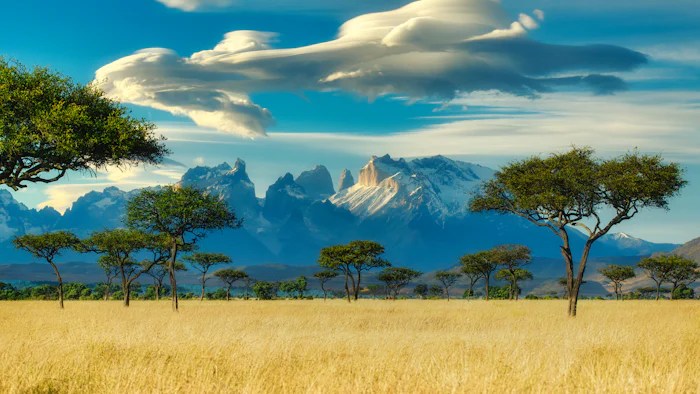
Ukraine is making a big push to woo African governments
Ukraine is pushing to strengthen its alliances with African countries through an expansion of its grain shipments program, roughly doubling its embassies in Africa, and President Volodymr Zelenskyy making his first state visit to the continent in the coming months. Now in the third year of a brutal war, following a full-scale invasion by Russia in February 2022, Ukraine faces an existential battle to build geopolitical ties globally as its key ally in the United States wavers in its support. The move to ramp up the grain program coincides with broader moves to foster closer ties with African nations. A Ukrainian government spokesperson, responding to Semafor Africa’s questions about plans to expand its diplomatic reach, said Kyiv intends to roughly double its 12 embassies in Africa by adding between 10 and 12 more this year…Ukraine hopes that with its expanded program of grain shipments, it can counter the impression that Russia is the only side in the conflict trying to address the impact on Africans. At the same time, Zelenskyy’s visit to South Africa offers a high profile opportunity to show an affinity with the continent’s most influential country in geopolitical terms.
Putin discusses security cooperation with West, Central African leaders
Russian President Vladimir Putin discussed security and economic cooperation with Mali’s leader Assimi Goita by phone on Wednesday, both countries said, a day after Putin held a similar call with the leader in neighbouring Niger. “We discussed bilateral issues, particularly the security and economic areas,” Goita wrote on X. “We agreed to cooperate further in the fight against terrorism.” The Kremlin confirmed the call and said the two leaders agreed to forge closer ties. Russia is seeking to strengthen relations with African countries, pitching Moscow as a friendly country without a colonial background in Africa. The Kremlin said on Wednesday Putin and the leader of the Republic of Congo, Denis Sassou Nguesso, had agreed in a phone call to deepen political, economic and humanitarian ties. On Tuesday, Putin spoke by phone with Niger’s leader Abdourahamane Tiani and discussed a need to reinforce their security cooperation, according to Nigerien state television. The call followed a decision on March 17 by Niger, former Western ally in the fight against militant insurgencies in the Sahel region, to revoke its military accord with the United States.
EU’s New Laws Link Trade, Aid, Visas to Migration Control: A Shift in Policy
In a landmark shift, the European Union is set to adopt a series of laws in April that intertwine trade, aid, and visa policies with cooperation on migration control, marking a strategic pivot in its approach to managing migration flows. This change aims to leverage Europe’s economic influence to encourage third countries to assist in stemming irregular migration, a move that has sparked debate over its implications for international relations and development aid. the heart of the EU’s revised strategy is the integration of migration control measures with its external policies towards third countries. The forthcoming set of laws, expected to be enacted in April, will formalize a practice that has been increasingly evident in recent years: the conditional offering of trade benefits, development aid, and eased visa restrictions in exchange for cooperation in reducing the number of migrants arriving in Europe. Notably, countries like Egypt and Turkey have already entered into agreements with the EU, receiving substantial financial support to bolster their border controls and prevent migrants from undertaking perilous journeys to Europe. This policy shift has garnered both support and criticism. Proponents argue that it represents a pragmatic approach to a complex issue, potentially reducing the number of dangerous crossings while encouraging countries to address the root causes of migration. However, critics, including human rights organizations and some development experts, contend that linking aid and trade to migration control compromises the EU’s commitment to supporting global development and undermines the principles of international cooperation. They also warn that such measures may prop up authoritarian regimes and inadvertently hinder long-term development in recipient countries.
Fossil fuel-focused Africa Energy Bank on track to start this year
The proposed Africa Energy Bank, which will focus investment in oil and gas projects across the continent, is set to start operations later this year with an initial $5 billion authorised capital base, a senior official said on Wednesday. The bank, a partnership between Afreximbank and the African Petroleum Producers Organisation (Appo), is meant to help plug a funding gap in Africa amid pressure on major banks from environmental groups to shift investment dollars away from climate-warming oil and gas projects. “Africa should set up its own financing capability so that we can still develop this strategic sector, that is the rationale,” Zakaria Dosso, managing director of Africa Energy Investment Corporation (AEICORP), the investment arm of Appo, said. He noted that Ghana on Friday deposited just over $20 million to AEICORP, becoming the third African country to pay after Africa’s top two crude oil producers, Nigeria and Angola, each deposited $10 million last year to help fund the bank. “Africa Energy Bank is on the verge of becoming a reality and should be operational during the second half of 2024,” Dosso said. It is envisaged that each African member country will contribute a minimum of $83 million for a total of around $1.5 billion, while Afreximbank and Appo as founder members of AFE are expected to match this amount. The outstanding $2 billion will potentially be sourced from other investors, including Middle Eastern sovereign wealth funds.
Are all cultures ready to accept pig organ transplants?
A pioneering medical procedure has thrust the centuries-old debate surrounding the permissibility of using swine parts into the limelight once again.
In a recent landmark experiment, surgeons successfully attached a kidney from a genetically modified pig to a human recipient, sparking a nuanced discussion within religious communities about the ethical and religious implications of such advancements. The use of pig organs in medical procedures has long been a contentious issue, particularly within Islam and Judaism, where consumption of pork is strictly prohibited. Dr. Mohammed Ghaly, a professor of Islam and biomedical ethics at Qatar’s Hamad Bin Khalifa University, highlighted the prevailing view among religious scholars that the use of pig parts is permissible in cases of medical necessity. “Saving a human life is viewed as a very noble gesture in Islam,” he emphasises. Dr. Muhammad Mansoor Mohiuddin, director of the cardiac xenotransplantation programme at the University of Maryland School of Medicine, implored the importance of genetic modifications which make pig organs compatible with human recipients. He and his colleagues at the National Institutes of Health successfully attached pig hearts to several baboons in 2014. One of the hearts survived for almost 3 years. Pigs have many qualities which have made them suitable for use in human-applied medicine. Their organs are of a similar size and structure to humans, they have a similar genetic composition, can grow to a suitable size in months and are economically viable. Although great apes such as chimpanzees, orangutans and gorillas have the most similar genetic make-up to humans, their endangered status disqualifies them as a viable source for xenotransplantations.
Nissan to test African demand for its e-Power hybrid vehicle
Japanese carmaker Nissan Motor plans to introduce its e-power hybrid technology car in Tunisia, its Africa head said on Tuesday, as part of plans to test demand in the African market for electric vehicles. Africa is the world’s last remaining automotive frontier due to the low level of vehicle ownership…But, like in many countries globally, electric vehicles (EVs) are currently priced out of the reach of most domestic consumers, while some countries in Africa, including South Africa, struggle with power outages and logjams on railways and at ports, making it difficult for global executives to invest in EVs on the continent…South Africa is making some inroads after it published an electric vehicle policy roadmap last year, outlining steps to support the transition to EVs, such as government incentives.
UN-RELATED NEWS
783 million people face chronic hunger. Yet the world wastes 19% of its food, UN says
The world wasted an estimated 19% of the food produced globally in 2022, or about 1.05 billion metric tons, according to a new United Nations report. The U.N. Environment Programme’s Food Waste Index Report, published Wednesday, tracks the progress of countries to halve food waste by 2030. The U.N. said the number of countries reporting for the index nearly doubled from the first report in 2021. The 2021 report estimated that 17% of the food produced globally in 2019, or 931 million metric tons (1.03 billion tons), was wasted, but authors warned against direct comparisons because of the lack of sufficient data from many countries. The report is co-authored by UNEP and Waste and Resources Action Programme (WRAP), an international charity. Researchers analyzed country data on households, food service and retailers. They found that each person wastes about 79 kilograms (about 174 pounds) of food annually, equal to at least 1 billion meals wasted worldwide daily. Most of the waste — 60% — came in households. About 28% came from food service, or restaurants, with about 12% from retailers. The report comes at a time when 783 million people around the world face chronic hunger and many places facing deepening food crises. The Israel-Hamas war and violence in Haiti have worsened the crisis, with experts saying that famine is imminent in northern Gaza and approaching in Haiti. Food waste is also a global concern because of the environmental toll of production, including the land and water required to raise crops and animals and the greenhouse gas emissions it produces, including methane, a powerful gas that has accounted for about 30 percent of global warming since pre-industrial times.
GOOD NEWS AFRICA
What African architecture can teach the world
Salt bricks and sweeping mud walls – as recently showcased by some African architects – may be the building blocks for innovative designs of the future.
Such ideas were explored by Nigerian architect Tosin Oshinowo in a major exhibition she recently curated in the United Arab Emirates (UAE). She wanted to look at how regions such as Africa are able to function with scarce resources. “I think ultimately the big elephant in the room for most of us is climate change,” said Ms Oshinowo about the show The Beauty of Impermanence: An Architecture of Adaptability. For Ethiopian designer Miriam Hillawi Abraham, this meant building what looked like a church out of salt. She called the work Museum of Artifice – and it was a nod to Ethiopia’s famous rock-hewn churches in Lalibela as well as the remote northern village of Dallol. This is in the Danakil Depression, more than 330ft (100m) below sea level, and arguably the hottest place on Earth. Designers from 26 countries were invited to Sharjah to come up with works to address the issue of scarcity. Largely abandoned now, Dallol still has single-storey buildings made out of blocks cut from the nearby salt lakes…Ms Oshinowo hopes the exhibition gave those attending an opportunity to pause and reflect on sustainability and design. And the exhibits from Africa, a continent disproportionately affected by the climate crisis, showed how designers were starting to work in “better balance with ecology”.
The scent of orange blossoms is bringing the world to a spring tradition in Morocco
Orange blossoms are among Morocco’s quintessential fragrances. Moroccan women are welcoming spring by collecting the waxy white blossoms in copper pots used to distill the scent that’s folded into honey-laden pastries, sprinkled on mint tea and used in religious ceremonies as an ode to paradise. The annual ceremony in homes across the North African kingdom has attracted international attention. It is now being showcased at the Zahria Festival in Marrakech. Between 400 and 600 people gathered over the weekend for the festival hosted by Al Muniya Association, celebrating the blooms and savoring the rainfall that is infrequent the rest of the year. “It’s an old tradition, and it was necessary to give it new life after it was a little bit forgotten in the 1980s and 1990s,” said Jaafar Kansoussi, the association’s co-founder. Orange blossoms bloom throughout Morocco but are especially common in Marrakech, home to a particularly fragrant sour and bitter orange tree. As Morocco’s status grows as a tourist destination, the orange blossom fragrance is increasingly known among visitors and professional perfumers. The distillation has been recognized as part of Morocco’s heritage by the government and the Islamic World Educational, Scientific and Cultural Organization. The event now seeks recognition from UNESCO, Kansoussi said.
How a South African village turned an alien tree into superfood coffee
A caffeine-free ‘coffee’ in South Africa turns a problem plant into a healthy drink – and income for a remote community.
Kenya Airways reports profit for first time since 2017
Kenya Airways swung to an operating profit of 10.53 billion shillings ($80.38 million) last year, it said on Tuesday. One of Africa’s three biggest carriers, Kenya Airways slid into insolvency in 2018 after an expansion drive left it with hundreds of millions of dollars in debt. Last year’s operating profit was the airline’s first since 2017, it said, buoyed by a 53% increase in revenue to 178.5 billion shillings. “It is an indication that we are well on our path to recovery,” CEO Allan Kilavuka told an investor briefing. The revenue growth was underpinned by a 35% increase in passenger numbers, he said, adding that it will increase flights on popular routes such as Nairobi to London and secure new planes to take advantage of that momentum in demand. The airline expects to receive an additional cargo freighter soon and it will receive another Boeing 737-800 passenger jet by the third quarter of this year to boost capacity, Kilavuka said. Kenya Airways posted a pretax loss, however, as a steep weakening of the Kenyan shilling led to loan revaluation losses. The shilling has started to strengthen against the dollar, meaning the outlook for this year is more positive, Kilavuka said. “The FX situation is improving … We do expect this will work in our favour this year,” he said, adding that it would help the company to attain bottom line profitability.
Cape Town Metro secures top spot in Good Governance Africa Index 2024
In a resounding victory for governance excellence, Cape Town has emerged as the undisputed leader in Good Governance Africa’s latest Governance Performance Index (GPI) for 2024. Mayor Geordin Hill-Lewis hailed the city’s achievement, praising its exemplary performance across critical governance indicators and reaffirming its commitment to driving economic prosperity and enhancing service delivery for all residents. The GPI 2024, which assesses South Africa’s cities, local, and district municipalities based on five key governance indicators, bestowed Cape Town with the prestigious top ranking among the country’s metros.Notably, Cape Town stands as the sole metro to achieve a minimum score of four out of five for every measure, solidifying its reputation as a paragon of good governance. Along with the Cape Town Metro, Western Cape local municipalities dominate the upper percentiles of municipal performance in South Africa. The province hosted 13 of the top 20 highest ranked municipalities in 2021 and 15 in 2024. The index evaluates municipalities across five categories, including Administration and Governance, Economic Development, Leadership and Management, Planning, Monitoring and Evaluation, and Service Delivery – with the latter being the most weighted category. Among the key highlights of Cape Town’s performance in the GPI 2024 is its top-ranking position for service delivery, a critical aspect of municipal governance.
’Women Farmers Are Invisible’: A West African project helps them claim their rights — and land
The Casamance village of Niaguis, Senegal is the headquarters of a 115,000-strong rural women’s rights movement in West Africa, We Are the Solution. Mariama Sonko, its president, is training female farmers from cultures where women are often excluded from ownership of the land they work so closely…Her movement is training women farmers who traditionally have no access to education, explaining their rights and financing women-led agricultural projects. Across West Africa, women usually don’t own land because it is expected that when they marry, they leave the community. But when they move to their husbands’ homes, they are not given land because they are not related by blood…In a recent week, Sonko and her team trained over 100 women from three countries, Senegal, Guinea-Bissau and Gambia, in agroforestry – growing trees and crops together as a measure of protection from extreme weather – and micro gardening, growing food in tiny spaces when there is little access to land.
Hanging tough: the free climbing sessions for refugees and asylum seekers
Refugees Rock is a free climbing club for people fleeing war, persecution and exploitation. Next month marks Refugees Rock’s third year in operation. Starting with just a handful of anxious newbies at The Climbing Hangar’s Liverpool branch, it now hosts hundreds of refugees and asylum seekers at 14 centres across the UK. Camaraderie is a huge draw. In a show of solidarity, local climbers have been recruited as volunteer ‘boulder buddies’ to show asylum-seeking newcomers the ropes, and extend a warm hand of friendship. “It’s just wonderful,” said a participant. “You leave your problems behind. You’re not thinking about your asylum case, or the fact that you’re separated from your family and the trauma you’ve gone through – you’re thinking about the problem on the wall in front of you. “But the biggest difference I notice in people is in their confidence – up on that wall, they’re basically finding themselves again.”
UK’s first African female Michelin-starred chef
Adejoké Bakare, who received the accolade last month, hopes she might inspire a new generation of chefs from diverse backgrounds. From a fish and chip stall in Nigeria, Bakare has come to be the toast of London’s foodie scene. She has been recognised by the world’s most coveted culinary award, becoming the UK’s first black female chef – and only the second black female chef on the planet – to win a Michelin star. “It’s still sinking in,” Bakare said. “It’s been my lifelong dream to have my own restaurant, and to win a Michelin star is the cherry on the cake. There’s been an immense social media reaction. 20,000 likes for the photo of me in my new Michelin star chef’s jacket – I didn’t see that coming!” Bakare’s restaurant, Chishuru, specialises in modern west African cuisine and culinary styles typical of Nigeria’s Hausa, Yoruba and Igbo ethnic groups. “Chishuru brings together all three culinary traditions in one place,” she explains. “For diners who don’t know the food, it’s an adventure. I’m fascinated by the history of our food and what dishes mean. We’ve served a black sauce for fish that is traditionally given as a postpartum meal for new mothers, and a fermented tomato sauce whose development can be tracked with the movement of enslaved peoples from west Africa to Brazil, and back again.”
Global child deaths reached a historic low
The number of children who died before their fifth birthday reached an all-time low in 2022, according to fresh data from the United Nations. It showed that the global under-five mortality rate has declined by 51% since 2000. Some countries outpaced this fall, including Cambodia, Malawi, Mongolia, and Rwanda, which reduced under-five mortality by more than 75%. “Behind these numbers lie the stories of midwives and skilled health personnel helping mothers safely deliver their newborns, health workers vaccinating and protecting children against deadly diseases, and community health workers who make home visits to support families,” said UNICEF executive director Catherine Russell. Despite the encouraging figures, the UN said that 4.9 million children under five died in 2022. Most of these deaths were in sub-Saharan Africa and southern Asia, and were due to preventable or treatable causes, such as pneumonia, diarrhoea, and malaria. “It is critical to improve access to quality health services for every woman and child,” said Dr Tedros Adhanom Ghebreyesus, director general of the World Health Organization.
Community clean-up initiative removes 4.5 million kilograms of trash from river!
In an inspiring display of community spirit and active citizenship, a remarkable clean-up initiative, Hennops River Revival, an hour from Johannesburg, has successfully collected and diverted an astounding 4.5 million kilograms of trash from polluting our dams and oceans in just four years. This outstanding achievement highlights the positive impact that collective action can have on environmental conservation. The brainchild behind this transformative initiative is Tarryn Johnston, who founded “Hennops Revival” in November 2019 following a devastating flood that wreaked havoc on large areas surrounding the Hennops River. Driven by a deep-seated passion for the environment, Johnston embarked on a mission to clean up the river and its surroundings, and her efforts have since garnered global recognition. Despite facing scepticism and naysayers along the way, Johnston remained steadfast in her commitment to making a difference. In just four years, Hennops Revival has cleaned up over 4.5 million kilograms of trash, logged 26,000 volunteer hours, created over 8,000 job opportunities, and impacted over 207 million Kilolitres of water.
The popular TV show that’s changing farming in Kenya
It’s lively, fun and intensely practical: For more than a decade, the pioneering TV series Shamba Shape Up has helped farmers increase their yields and adopt eco-friendly methods. Some viewers have even been inspired to take up farming themselves!
All About South Africa’s Most Trusted “Don’t Panic” Panic App!
Africa’s marketplaces are not just a hub for commerce, but also a perfect place for human interactions. Africans typically congregate at marketplaces to discuss ideas and challenges, outside of purchasing their essentials. Furthermore, roaming throughout the market helps one to measure the economy through product pricing while also investigating the numerous options for preference. 12 of the top 20 marketplaces in Africa are found in South Africa. In the top 10, outside of South Africa, there is Cairo’s Street of the Tentmakers (Sharia Khayamiya) and Morocco’s Rue Bab Doukkala Market in Marrakesh.
From Lagos to Lima: 7 striking photos from mental health series
How does it feel to photograph people when the portraits relate to their mental health? Skilled snappers from across the world, who we commissioned for our Developing Mental Wealth series, tell the stories behind their best shots.
AFRICA – ANALYSIS, EDITORIAL/OPINION
TotalEnergies at 100: A legacy of destruction in Africa
Kwame Nkrumah, neo-colonialism, and the false promises of ‘Global Britain’ in Africa
Water security in Africa is gender dependent
Urbanisation and arms trafficking: a deadly mix in Bamako and Lagos
Growing populations, established criminal networks and thriving gangs make these cities the perfect market for smugglers.
Red gold: the rise and fall of West Africa’s palm oil empire
Exploring the roots of stupidity: first understand the psychology of what lies behind irrational opinions
GAMBIA
The Gambia may allow female genital mutilation again – another sign of a global trend eroding women’s rights
KENYA
Kenya has tightened its laws to stop money laundering: why banks are the focus
Organ harvesting syndicates prey on Kenya’s desperate youth
Impoverished young men are selling their kidneys in return for cash to start their own businesses.
NIGERIA
Nigerian bandits strategically target school children for kidnappings – here’s why
SENEGAL
Bassirou Diomaye Faye: from prison runner-up to president of Senegal
SOUTH AFRICA
Pretoria walks a tightrope on US relations
Biden’s administration is resisting hostility towards SA from Congress – but if Trump wins in November, all bets are off.
SUDAN
New panel on Sudan faces many obstacles
Can the African Union’s new high-level panel succeed where other diplomatic efforts over the past year have failed?
 The Africa Edition ©️
Leave a comment