News That Matters To Africa©️
Friday’s Focus Edition
Light On News But Heavy On Analysis, Commentary and Opinion and Good News Africa
Quote of the Day:
“Those who say it can’t be done are usually interrupted by others doing it.”
Highlights:
India to prosecute Somali pirates
Senegal elections underway
Jo’burg & Pretoria run out of water
40 killed in Chad intercommunal fighting.
Top News:
Eastern Africa
DRC: Why it’s hard to make cobalt mining more transparent
Ethiopian security forces arrest 50 suspects for plotting armed violence
Commercial Bank of Ethiopia head warns ‘no escape’ for clients who profited from glitch
Kenya housing levy: Ruto signs controversial law
Kenya government mulls TikTok ban to protect data
Somalia: 22 killed and 21 injured 20 in Turkish drone strike
India to prosecute 35 pirates who hijacked ship off Somalia
Youths kill 15, including Boma County commissioner in South Sudan
US pushes peace talks to avert ‘point of no return’ in Sudan
West Africa
Benin: Paulin Hountondji, revolutionary African philosopher, dies at 81
Cameroon’s Achille Mbembe becomes Africa’s first Holberg Prize laureate
Exxon’s exit marks reversal of fortune for Equatorial Guinea
Ghana parliament speaker criticises president for delaying anti-LGBTQ bill
Nigeria: Inside story of a ransom negotiator
Senegal votes Sunday in a presidential election that has fired up political tensions
Southern Africa
Angola: ‘This is not North Korea’
Taps have run dry across South Africa’s largest city in an unprecedented water crisis
South African Airways seeks new investor and listing after aborted deal
South African parliament refers failed SAA deal for investigation
North Africa
Algeria president sets presidential election for Sept 7
Central Africa
Over 40 people killed in Chad inter-communal fighting
Africa General
UN-Related
Good News Africa
(20) Articles and Video
Video of the Day
In Nigeria, student journalists act as public watchdog
What happened when a Black broadcaster visited a ‘whites-only’ town in South Africa?
Meet the Nigerian woman crossing Africa on a motorbike
Africa News Podcast
Niger and the USA
(32) Articles on Analysis,Editorial & Opinion
Eastern Africa
DR CONGO
Why it’s hard to make cobalt mining more transparent
Child labor and unsafe mines in the DRCongo’s cobalt industry tarnish the reputation of electric vehicles. Efforts to improve transparency in the cobalt supply chain face significant obstacles. DRCongo accounts for some two-thirds of the world’s cobalt, dwarfing the output of its closest competitors, Australia and Russia. Around 15-20% of Congo’s cobalt supply is dug up by artisanal miners like those working at UCK Drain. Tunneling deep into the red dirt is hard and dangerous work. However, it’s somewhat safer here than at other artisanal mines in the country. That’s because Kangenda, who works as a monitor and trainer for RCS Global, a consultancy with a focus on supply chain transparency and responsible sourcing, is there to make sure standards are being upheld. “I check what problems there are. Are there children on site? Is there violence and rape?” he says. The mine is one of eight that are part of RCS’s Better Mining program, which aims to continuously monitor and support the improvement of conditions on and around artisanal and small-scale mine sites. Cobalt is a key component of rechargeable lithium-ion batteries that power electronic devices and electric vehicles (EVs). But reports of dangerous working conditions and child labor in Congo’s informal mines have sparked an outcry over what has been referred to as “blood cobalt” in recent years. This is forcing EV manufacturers, who market themselves as sustainable, to look for ways to source ‘clean cobalt’ untainted by abusive labor practices. This is proving a difficult undertaking.
ETHIOPIA
Security forces arrest 50 suspects for plotting armed violence
The Ethiopian Joint Security and Intelligence Task Force said in a late Tuesday statement that they apprehended 50 suspects who are members of a covert armed group. According to the task force, the group had been “conspiring to perpetuate armed terror activities in Addis Ababa and its surroundings after their mission to create chaos and violence in the country’s Amhara region was foiled by the coordinated efforts of regional and federal security forces.”The task force said that the covert group has been recruiting members and organising logistics in various parts of Addis Ababa. The suspects were apprehended after a secretive operation conducted by the National Intelligence and Security Service over the past five months. They were seized in possession of various weapons, bombs and explosives, incendiary materials, resources used for the group’s sustenance, currency notes from different countries, as well as various documents. The task force further disclosed that the main coordinators of the covert group are individuals based in different foreign countries. Over the past months, the group has been working to create its own political, military, information, finance, media, and propaganda wings.
Commercial Bank of Ethiopia head warns ‘no escape’ for clients who profited from glitch
The head of Ethiopia’s biggest commercial bank has said that customers who withdrew more money than was in their accounts because of a glitch cannot “escape” the law. Commercial Bank of Ethiopia (CBE) customers rushed to take out money, or transfer it to other accounts. It took several hours for the state-owned bank to freeze transactions. Those who do not return money that is not theirs will be prosecuted, warned CBE president Abe Sano. “There is no way that they can escape because they are digital [transactions] and they are our customers. We know them. They are traceable and they are legally accountable for what they did,” he said. Mr Abe said the bank was already in the process of reporting customers to the police. He disputed reports that customers had withdrawn $40m (£31m) that was not theirs, saying the amount taken was far smaller but will be accurately determined after an audit is completed later this week. A total of 490,000 transactions had been made before the problems were noticed. Mr Abe noted that the majority of those who had withdrawn excess money were students.
News of the glitch spread across universities – largely via messaging apps and phone calls – and long lines were seen at campus ATMs on Saturday morning, Mr Abe previously said anyone returning money would not be charged with a criminal offence.
KENYA
Kenya housing levy: President Ruto signs controversial law
President William Ruto has signed into law a controversial bill, paving the way for the government to continue collecting a housing levy of 1.5% of a worker’s monthly pay. The levy is intended to pay for the construction of affordable housing for poorer Kenyans. But it sparked an outcry from the opposition and a large section of the population who feel burdened by a raft of new taxes. The law had been held up in the courts. The new law also establishes the Affordable Housing Fund, which is intended to manage the money the government will get from the levy. The authorities say the deduction will not be backdated to include the money that would have been paid had the scheme not been suspended. President Ruto is aiming to construct 200,000 affordable housing units every year and hopes to create more than 600,000 jobs. The opposition has threatened to take this new law to court, alleging the government ignored concerns of Kenyans over the increasing tax burden.
Kenya mulls TikTok ban for officials to protect data
The government will limit the use of popular Chinese social media platform TikTok by government officials in order to protect sensitive data as well as the security of Kenyans, the Interior Ministry has said. Interior Cabinet Secretary Kithure Kindiki told parliament that the National Security Council (NSC) is currently dealing with the threats posed by social media platforms including TikTok. Prof Kindiki told the National Assembly’s Public Petitions committee that the NSC is toying with the idea on whether or not to ban public officials from using TikTok to protect sensitive data. Prof Kindiki said the outcome of the NSC deliberations will inform the policy on whether or not to limit certain aspects of the TikTok for use by government officials and certain ages in Kenya. “This matter is so complex, so consequential that it is not easy to look in one direction and decide whether to ban TikTok or not,” Prof Kindiki said.
SOMALIA
22 killed 21 wounded in alleged Turkish drone strike
A drone strike just outside the Somali capital killed more than 22 people and wounded 21, including many children, a witness and a relative of the victims told The Washington Post. Two security sources, who spoke on the condition of anonymity because they were not authorized to speak to the media, said the strike was carried out by a Turkish drone. Witness Daud Hassan Mohamed said the strike hit a home in an agricultural area in the evening after iftar, the meal when Muslims fasting for the holy month of Ramadan break their day-long fast. “There was one airstrike that targeted the victims. But when people began rushing to the scene to save them, these same people were hit by more airstrikes,” he said. “What happened was a massacre.” About 15 children were among the casualties, he said, and several women. The wounded had sought treatment in Madina Hospital in Mogadishu, he said. There had been no fighting in the area immediately preceding the strike, although there had been clashes the previous day in a nearby village between Somali paramilitary forces and Islamist insurgents known as al-Shabab, he said. Al-Shabab fighters typically do not travel openly to government-held areas such as Mogadishu to seek medical treatment because they would be arrested. Turkey routinely carries out drone strikes in Somalia in support of Somali government forces. Turkey, a close ally of Mogadishu, is a major donor, has trained Somalia’s Gorgor, or “Eagle,” commandos, and runs the airport and port under commercial contracts. Mogadishu hosts Turkey’s largest military overseas military base.
India to prosecute 35 pirates who hijacked ship off Somalia
India will bring in and prosecute 35 Somali pirates captured on a hijacked ship off Somalia, a navy official said, in a departure from its recent practice of rescuing vessels and crew but leaving the disarmed pirates at sea. The captured pirates are due to arrive in India on Saturday and will be handed over to the law enforcement agencies, the official said. He declined to be identified as he was not authorised to speak to the media. The exact charges against the pirates were not immediately clear, he added. Indian navy commandos managed to release the Malta-flagged commercial ship MV Ruen on Saturday, which had been hijacked 450 nautical miles east of Socotra in the Northern Arabian Sea by Somali pirates on December 14. It marked the first hijacking of a merchant ship by Somali pirates since 2017. At the peak of their attacks in 2011, Somali pirates cost the global economy an estimated $7 billion, including hundreds of millions of dollars in ransom payments.
SUDAN
US pushes peace talks to avert ‘point of no return’ in Sudan
The United States hopes for a relaunch of talks aimed at ending the conflict in Sudan and opening up humanitarian access soon after Ramadan ends in mid-April, Washington’s newly appointed envoy said on Thursday. Saudi Arabia and the US led talks in Jeddah last year to try to reach a truce between Sudan’s army and the paramilitary Rapid Support Forces (RSF), but the negotiations faltered amid competing international peace initiatives. “We need to restart formal talks. We hope that will happen as soon as Ramadan is over,” Tom Perriello, who took up his role as US special envoy to Sudan late last month, told reporters.
“Everybody understands that this crisis is barrelling towards a point of no return, and that means everybody needs to put whatever differences aside and be united in finding a solution to this conflict.” Talks could build off efforts in Jeddah, Manama and Cairo and should involve African leaders, regional bodies and Gulf states, the envoy said.
SOUTH SUDAN
Youths kill 15, including Boma County commissioner in South Sudan
Young men shot dead 15 people in South Sudan’s eastern Pibor region, including a county commissioner, a senior official said on Wednesday, amid a rise in local conflict ahead of a national election due at the end of the year. The shooting happened on Tuesday when the commissioner of Boma County in Pibor was returning from a visit to a village. Among the dead were Boma’s deputy army commander, government officials and the county commissioner’s bodyguards. The attackers were suspected to be young people from the region’s Anyuak community. They were also blamed for the killing last year of another county commissioner in Pibor and a security official. Inhabited mostly by the Murle ethnic community, Boma County has experienced periodic violence between the Murle and Anyuak and with other ethnic groups from neighbouring Jonglei State. Some of the violence is motivated by cattle rustling. More than 150 people were killed in late January and early February in northern and western South Sudan in conflicts between rival groups.
West Africa
BENIN
Paulin Hountondji, revolutionary African philosopher, dies at 81
Paulin Hountondji, a philosopher from Benin whose critique of colonial-era anthropology helped transform African intellectual life, died on Feb. 2 at his home in Cotonou, Benin’s largest city. He was 81. As a young philosophy professor on a continent that was throwing off the colonial grip in the 1960s, Mr. Hountondji (pronounced HUN-ton-djee) rebelled against efforts to force African ways of thinking into the European worldview. Himself steeped in European thought — he was the first African admitted as a philosophy student at the most prestigious school in France, the École Normale Superieure — he developed a critique of what he called “ethnophilosophy,” a concoction of Europeans. His work has shaped the study of philosophy in Africa ever since. It became a kind of second declaration of independence for Africa — an intellectual one this time — in the view of the African philosophers who have followed Mr. Hountondji. It was “very important and very liberating,” the Columbia University philosopher Souleymane Bachir Diagne said in an interview. In his introduction to the book “Paulin Hountondji: Leçons de Philosophie Africaine,” by Bado Ndoye (published in 2022 but not yet translated into English), Mr. Diagne called him “the most influential figure in philosophy in Africa.”A modest man who spent his career teaching in African universities, mostly at Benin’s national university, with brief forays into the turbulent politics of his small West African coastal homeland, Mr. Hountondji knew that there was something amiss in efforts by Europeans to tell Africans how they should think about their place in the universe.
CAMEROON
Achille Mbembe becomes Africa’s first Holberg Prize laureate
Professor Achille Mbembe, Cameroonian-born scholar and an academic at the University of the Witwatersrand (Wits) in South Africa, is the first African to be awarded the Holberg Prize – a major international prize that goes annually to “an outstanding researcher in the humanities, social sciences, law or theology”, according to the prize’s secretariat. The prize, in monetary terms is valued at about US$575,000. “Mbembe’s oeuvre goes beyond a particularised notion of decolonisation to a universalist recentring of the human,” said Heike Krieger, the chairman of the Holberg committee, in a statement announcing the Wits academic as the 2024 laureate for the prize. Mbembe is attached to the Wits Institute for Social and Economic Research (WISER). “For him, this involves a dedication to facing historical truth while learning and remembering across South-North divides. Achille Mbembe is undoubtedly a highly worthy recipient of the 2024 Holberg Prize,” added Krieger. Hailed as one of the foremost thinkers of postcolonial Africa, Mbembe will receive the award on 6 June at the University of Bergen. Throughout his career, he has questioned the conditions for rethinking the world and explored alternative ways of inhabiting it, and nurturing a planetary consciousness. His work has been described as focusing on envisioning an open future that moves beyond the history of race, colonialism and segregation with which the present is so deeply entangled. He is one of the most read and cited scholars in Africa. His books have been printed in 17 languages.“The Holberg Prize is named after the Danish-Norwegian writer Ludvig Holberg, who excelled in all the disciplines covered by the award. Holberg played an important part in bringing the Enlightenment to the Nordic countries and is also well known as a playwright and author,” according to its website.
EQUATORIAL GUINEA
Exxon’s exit marks reversal of fortune for Equatorial Guinea
Exxon is departing Equatorial Guinea to focus on fast-growing markets that are not capital intensive, such as the South American nation of Guyana. It almost marks a reversal of fortunes for Equatorial Guinea, which was once a hotbed of promise when Mobil discovered oil there and Exxon increased production after its takeover in 1999. But oil production has been steadily declining in recent years, down more than 80 per cent from the boom years. Equatorial Guinea has struggled to attract foreign investment into its oil industry in recent years.The Exxon situation is a case in point. Equatorial Guinea wanted a foreign company to take over the assets from Exxon – none have shown any interest so far. Over the years the country’s oil wealth has mainly been utilised to the detriment of ordinary citizens. Under President Teodoro Obiang, who has ruled since 1979, it has been used to buy the loyalty of the military and other elites. There is also a geopolitical balancing act to be navigated. US officials have said China, the country’s biggest development partner, has designs on building a naval base in the coastal city of Bata where it has already constructed a commercial port; Washington has warned Equatorial Guinea not to grant that wish.
GHANA
Parliament speaker criticises president for delaying anti-LGBTQ bill
Ghana’s speaker of parliament has said President Nana Akufo-Addo’s refusal to act on an anti-LGBTQ bill for the time being was unconstitutional and that parliament would stop approving new ministerial appointments. One of Africa’s harshest anti-LGBTQ laws, unanimously passed by Ghana’s parliament last month, has been on hold since the president’s office said it would wait for the outcome of two legal challenges before the law goes to Akufo-Addo for assent. The decision to wait came after a finance ministry warning that the bill could jeopardise $3.8 million in World Bank financing and derail a $3-billion International Monetary Fund (IMF) loan package. But it has sparked backlash from supporters of the bill, who have said Akufo-Addo has in the past signed into law bills with legal challenges against them. Parliament speaker Alban Bagbin told MPs on Wednesday the president office’s refusal to receive the bill was unconstitutional and caused an impasse between the executive and the legislature. He said parliament would in turn be “unable to consider the nominations” regarding a government reshuffle in February that another opposition lawmaker has taken to court, until there is a ruling on the matter. The move will halt approval procedures for about 21 nominees to ministerial and deputy ministerial posts, including two for the finance ministry. The presidency did not immediately respond to a request for comment. If it takes effect, the anti-LGBTQ bill will intensify a crackdown on the rights of LGBTQ people and those accused of promoting lesbian, gay or other minority sexual or gender identities in the West African country. While gay sex is already punishable with up to three years in jail, the new law sets a prison sentence of up to five years for the “wilful promotion, sponsorship, or support of LGBTQ+ activities”.
NIGERIA
Inside story of a ransom negotiator
A hostage negotiator has said that paying ransoms may be illegal, yet it is the only way families can guarantee the release of relatives kidnapped by the gangs terrorising swathes of northern Nigeria. Sulaiman, whose name has been changed to protect his identity, is from Kaduna state, where 280 children were recently abducted from a school in the town of Kuriga. He has been working informally in this controversial and risky role for several years – since some of his relatives were taken hostage. “We have to negotiate. You cannot use force to get hostages back. It would put the lives of our loved ones in danger,” he insists. Sulaiman first became involved in negotiations with kidnappers, referred to locally as bandits, in 2021 – a year before the payment of ransoms became illegal in Nigeria. Over the last three years he says he has negotiated the release of more than 200 hostages – a small fraction of the thousands of people abducted over the last decade. The negotiations take patience – and courage. “The government believes I have been helping the bandits,” he says, speaking from an undisclosed location. “The bandits think I have been getting money from the government, so I am also a kidnap target.” And despite the outlawing of ransom payments, people still come to him – desperate for help. Sulaiman admits that it is a scary position for him to be in: “The government does not like negotiation with the bandits, and can send people to jail for doing that.” He puts his success down to his appreciation of the root causes of Nigeria’s kidnapping crisis, which he says is fuelled mainly by poverty and high levels of youth unemployment. Competition for land and resources between cattle herders and farmers has also contributed to the problem. The kidnappers tend to be former herders from the Fulani ethnic group, who target villages where mainly Hausa farmers reside. The gangs are often made up of gunmen on motorbikes who target areas and particular families on the word of paid informants. It is a huge, sophisticated money-making operation. Around 30,000 bandits in more than 100 gangs operate in north-western Nigeria, according to the Centre for Democracy and Development – a think-tank based in the capital, Abuja.
SENEGAL
Senegal votes Sunday in a presidential election that has fired up political tensions
Senegal votes Sunday in a tightly contested presidential election that has fired up political tensions and tested one of West Africa’s most stable democracies. The election takes place after much uncertainty following President Macky Sall’s unsuccessful effort to delay the vote until the end of the year, sparking violent protests. In the latest turn of events leading up to Sunday’s vote, opposition leader Ousmane Sonko was released from prison last week, triggering jubilant celebrations on the streets of Dakar and renewed excitement about the contest. Sunday’s election is set to be Senegal’s fourth democratic transfer of power since it gained independence from France in 1960. The country is viewed as a pillar of stability in a region that has seen dozens of coups and attempted coups in recent years. Alioune Tine, founder of Afrikajom, a Senegalese think tank, said that Sunday’s election had set a grim record in the country’s democratic history, with rights groups accusing Sall’s government of repressing the media, civil society and the opposition. There are 19 candidates in the race, the highest number in Senegal’s history. These include a former prime minister, a close ally of Sonko — who was barred from running — and a former mayor of Dakar. A runoff between leading candidates is widely expected.
Despite the violent upheavals in recent months, analysts say unemployment is the chief concern for a majority of young Senegalese. Around half of Senegal’s population of 17 million are under 18, according to Afrobarometer, an independent survey research group. Analysts say Amadou Ba, a former prime minister, and Bassirou Diomaye Faye, who is backed by Sonko, are likely to emerge among the front-runners. Faye was also freed from prison last week, in time to spend the final days of the run-up to Sunday’s vote on the campaign trail.
Southern Africa
ANGOLA
‘This is not North Korea’
The Angolan government plans to introduce a new national security law have been roundly condemned by opposition parties and human rights activists alike, who warn that it will entrench authoritarianism. The Bill, which was passed by the National Assembly in January, still requires assent from President João Lourenço. It gives sweeping new powers to security services to search homes and businesses without a warrant, surveil public places and shut down telecommunications. It also requires citizens to exercise their “patriotic and civic” duty to inform on anyone who poses a threat to national security – offering full immunity for doing so. “Expunge from the law those aspects of denouncing anyone,” opposition leader Adalberto Costa Júnior told The Continent. “Remove from the law the control of the internet.” Guilherme Neves, president of the Mãos Livres Association, a human rights group, said that the proposed measures would turn Angola into a totalitarian state. “The people will not allow Angola to become North Korea.”
Francisco Furtado, the minister of state who introduced the controversial bill, says that the new law is necessary because Angola’s current national security law does not conform with the Constitution. Angola has been ruled by the People’s Movement for the Liberation of Angola since independence in 1974. It was narrowly re-elected in 2022, in a result that was rejected by the opposition, which alleged widespread discrepancies.
SOUTH AFRICA
Taps have run dry across South Africa’s largest city in an unprecedented water crisis
Thousands of South Africans lining up for water as the country’s largest city, Johannesburg, confronts an unprecedented collapse of its water system affecting millions of people. Residents rich and poor have never seen a shortage of this severity. While hot weather has shrunk reservoirs, crumbling infrastructure after decades of neglect is also largely to blame. The public’s frustration is a danger sign for the ruling African National Congress, whose comfortable hold on power since the end of apartheid in the 1990s faces its most serious challenge in an election this year.
A country already famous for its hourslong electricity shortages is now adopting a term called “watershedding” — the practice of going without water, from the term loadshedding, or the practice of going without power. Moloi, a resident of Soweto on the outskirts of Johannesburg, isn’t sure she or her neighbors can take much more. They and others across South Africa’s economic hub of about 6 million people line up day after day for the arrival of municipal tanker trucks delivering water. Before the trucks finally arrived the day before, a desperate Moloi had to request water from a nearby restaurant. Over the weekend, water management authorities with Gauteng province, which includes Johannesburg and the capital, Pretoria, told officials from both cities that the failure to reduce water consumption could result in a total collapse of the water system. That means reservoirs would drop below 10% capacity and would need to be shut down for replenishment. That could mean weeks without water from taps — at a time when the hot weather is keeping demand for water high.
South African Airways seeks new investor and listing after aborted deal
South Africa’s troubled state-owned airline is seeking a new strategic partner to provide fresh capital, after the latest attempt to secure a deal with a private investor collapsed last week. South African Airways chief executive John Lamola said in an interview that a global “strategic or equity partner” would ideally be followed by a listing on the Johannesburg Stock Exchange. He added that the carrier last year made its first profit since 2011. The government reached an agreement in principle in 2021 to sell a 51 per cent stake to the Takatso Consortium — a private grouping led by pan-African infrastructure company Harith. But the deal unravelled last week after disagreements on price and political opposition to privatisation from within the governing African National Congress.SAA has received R50.7bn ($2.7bn) in bailouts over the past 16 years and has a history of political interference that has led to much boardroom upheaval. However, unpublished accounts for the year to March 2023, now being audited, show that SAA turned its first profit in more than a decade, Lamola said. “Some will say this is a modest profit but, given where SAA is coming from, I wouldn’t say this is a modest achievement at all.” The carrier wants fresh capital to fund an expansion that would reverse its decline amid the financial troubles of the past decade.
South African parliament refers failed SAA deal for investigation
The parliament said on Wednesday it had decided to refer to a special investigative unit the collapsed deal to sell a majority stake in South African Airways (SAA) to a consortium. The deal to sell a controlling stake in SAA to the Takatso Consortium was announced by the government in 2021 as part of efforts to end recurring bailouts of the flag carrier. Public Enterprises Minister Pravin Gordhan said last week that the government and the consortium had agreed “there was no clear path forward” for the transaction after a new business and asset valuation. Parliament’s Portfolio Committee on Public Enterprises in a statement said the issue would be referred to the independent Special Investigating Unit (SIU), which investigates corruption at state entities, to ensure “accountability and transparency. It is essential to address the sequence of events that led to the undervaluation and to investigate any potential corruption or misconduct in the process,” it said. The SIU has subpoena powers, can litigate on the state’s behalf and refers evidence suggesting criminal conduct to the country’s prosecutors. The South African government has said SAA would revert to being fully state-owned and that a new way to raise money based on the airline’s assets would be explored with financial institutions. It ruled out giving SAA money in the months ahead. The embattled airline was on the verge of being liquidated before it entered a form of bankruptcy protection in 2019.
North Africa
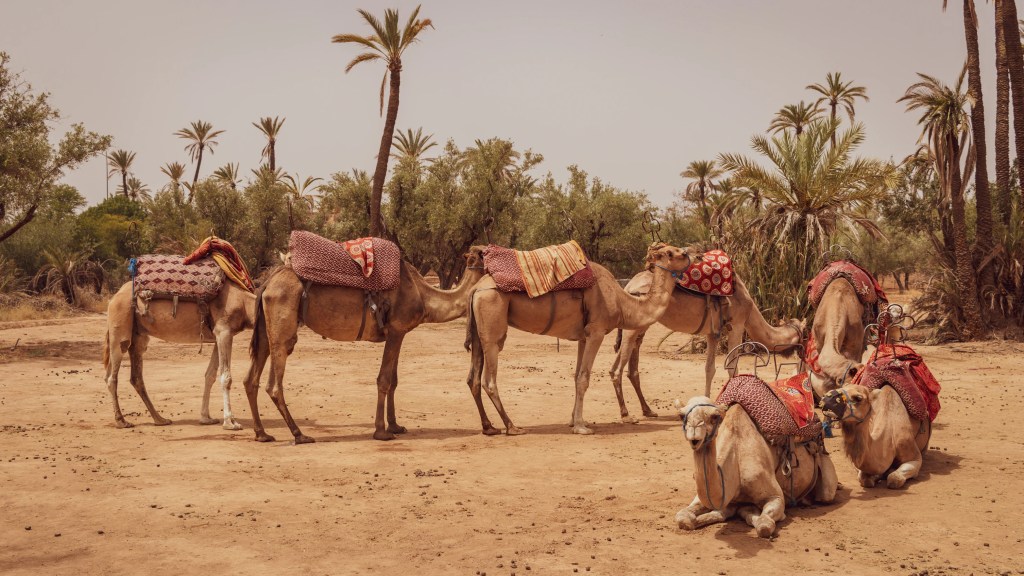
ALGERIA
The president sets presidential election for Sept 7
President Abdelmadjid Tebboune has decided to hold presidential election on Sept. 7, the presidency said on Thursday. Tebboune was elected in December 2019 for a five-year term and can run for a second and final term, according to the Algerian constitution. Last year, parliament members urged him to do so. He has not officially announced his candidacy yet.
Central Africa
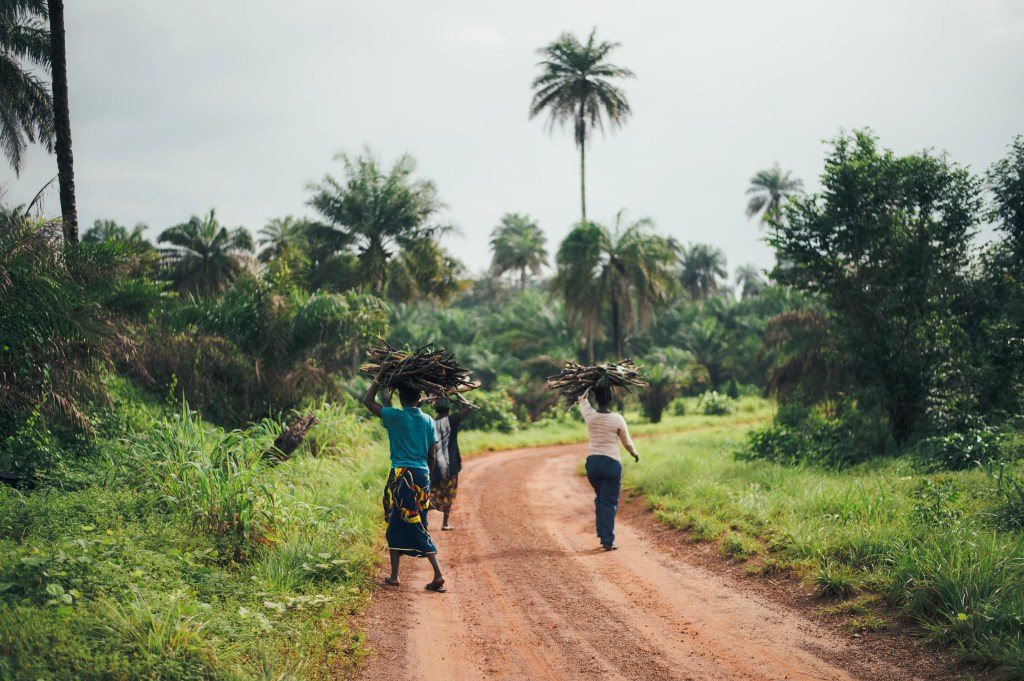
CHAD
Over 40 people killed in Chad intercommunal fighting
At least 42 people have been killed after armed clashes between rival communities in Eastern Chad, the country’s Ministry of Public Security and Immigration said in a statement on Thursday. The ministry said one village was torched in the clashes and 175 people have been arrested. It did not say what caused the violence. Local media reported that the clashes occurred Wednesday between the Mouro and Birgut communities in Quaddai Province in Wastern Chad. Violence between farmers and nomadic herders is common in eastern Chad, and the situation has worsened in recent years with droughts and population growth.
AFRICA – GENERAL NEWS
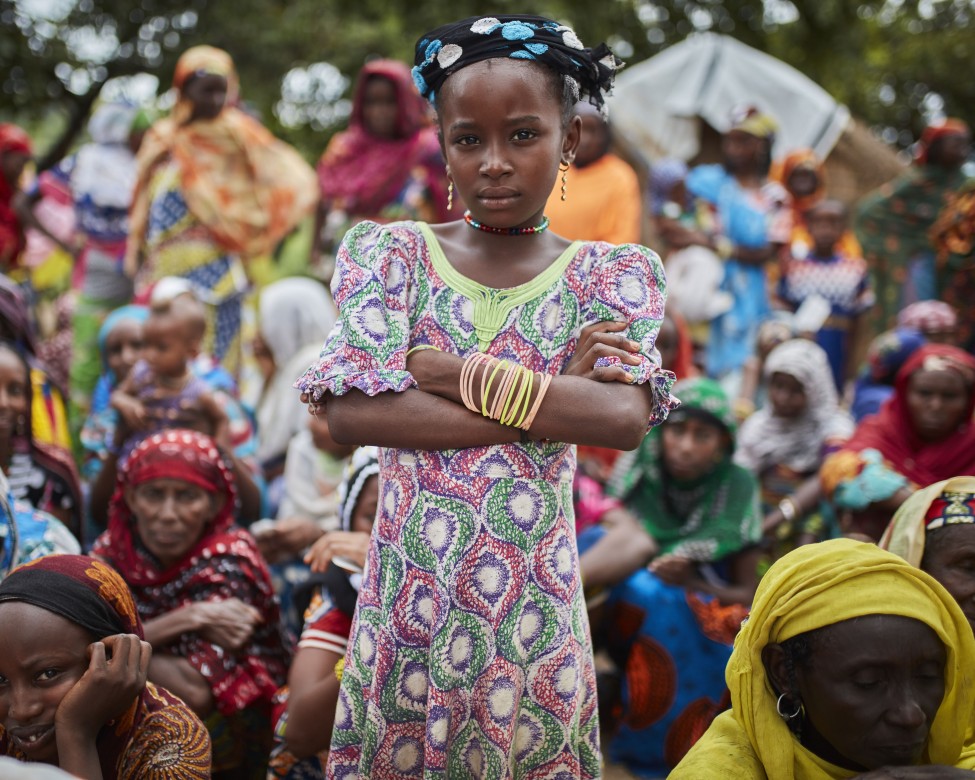
Truths through the lens: The importance of photojournalism in Africa
In recent years, the landscape of photojournalism in Africa has experienced significant transformations, propelled by technological advancements, shifts in media paradigms, and evolving social dynamics. Nevertheless, photojournalism still stands out as a powerful tool, capable of capturing the essence of a moment in a single frame. Leon Sadiki, mentor in photography at the Wits Centre for Journalism (WCJ), spoke about the importance of photojournalism in an age of AI and other digital advancements and about shaping the next generation of visual storytellers in Africa. “It means different things to different people. [However, at its core] the purpose of photojournalism is to communicate stories as simply as possible.” He emphasises that the beauty of photography lies in its universality; an image can transcend language barriers, allowing individuals from diverse backgrounds to engage with the narrative it portrays. Beyond that, photojournalism serves a deeper function – that of providing context and preserving history. “The impact that images have created [have] changed the course of history,” Sadiki explains using Sam Nzima’s photograph of Hector Pietersen during the 1976 Soweto uprising as an example. He adds that the image made the international community aware of the injustices in South Africa. Like journalism at its core, ethics forms a stable foundation of responsible photojournalism, particularly in an era marked by digital advancements. “We live in a more digitised time where people then push the boundaries, where they want to manipulate the stories,” Sadiki noted. Where technology has made images susceptible to manipulation, photojournalists are tasked with upholding the integrity of their narratives. “We need to give a true representation of the stories that we are attempting to tell,” Sadiki asserted.
UN-RELATED NEWS
Peacekeeping in Africa: from UN to regional Peace Support Operations
As UN peacekeeping missions in Africa give way to regionally led peace operations, efforts will be needed to strengthen the operational legitimacy of African initiatives.
VIDEO OF THE DAY
In Nigeria, student journalists act as public watchdog
Student journalists are leading efforts to hold public officials accountable in Nigeria. A media nonprofit is training students to investigate public construction projects and other targets of corruption and report to the community.
What happened when a Black broadcaster visited a ‘whites-only’ town in South Africa?
In the case of Whites Only: Ade’s Extremist Adventure, Ade Adepitan’s attempt to see if “racial separatism can ever be justified” becomes a cautionary tale for black people who think they can one-of-the-good-ones themselves out of white supremacy.
Meet the Nigerian woman crossing Africa on a motorbike
If all goes well, Nigerian singer Ebaide Joy will be be the first African woman to ride from Kenya to Nigeria on a motorcycle.
GOOD NEWS AFRICA
Zimbabwean rural clinic offers hope for patients priced out of the system
Zimbabwe’s public health system has all but collapsed under years of mismanagement, amid shortages of funds, staff, medicine and equipment. Zimbabwean doctors and nurses have moved abroad en masse in recent years, due to poor working conditions and pay amid runaway inflation. When in need, those who can afford it, including government ministers, fly overseas to seek treatment. Some check into private, but relatively expensive clinics in Harare. Many others make the trip to Mount Darwin, a small village in the parched countryside about 200 kilometres north of the capital and home to the Karanda Mission Hospital. Funded by the Evangelical church of Zimbabwe and run by three North American doctors, the hospital originally set up to cater to rural folks has built a reputation as one of the best in the country. The 150-bed clinic treats up to 100,000 people a year and is almost always full, says medical director, Paul Thistle, a Canadian physician who married a Zimbabwean woman. Charging affordable rates — a consultation costs around $15 compared to the average $50 asked by private hospitals in Harare — it draws patients from well beyond its catchment area. Some come from as far as neighbouring Zambia. “We never turn any patient away”, says Thistle. “Karanda has stood out not because we have the most modern medication, the highest technology in diagnostic and equipment but because we have the intangibles,” he added. That means a caring staff, something that elsewhere is also short in supply, say some patients.
A school in Rwanda built by the community
Active Social Architecture is a Kigali-based office whose Busogo School project began in 2016 and is currently in its fourth phase of construction. Located in Musanze, Rwanda, it has views of the country’s famous Volcanoes National Park, the natural habitat of endangered mountain gorillas, bordering the Democratic Republic of the Congo and Uganda. The school offers a space of play and learning that the community did not have access to previously. Since 2011, Rwanda has expanded its Early Childhood Development programmes, which the Busogo School offers, signalling an important shift in education policy. A local contractor was tasked with gathering individuals from the village, including the parents of the school’s future students, to form the onsite team. As is the case in all ASA projects, at the beginning, most of this group was largely inexperienced in construction. Taking a capacity strengthening approach, the recruits were trained on-site using ASA’s hands-on process of building a small segment with the contractor, ahead of implementation to minimise errors and ensure a smooth construction process. Training began with the construction of the guardhouse, as it is a small structure that includes many of the elements that are to be replicated across the larger buildings, from the foundation to the reinforced concrete framework and clay-fired brick to the iron sheet roof. In keeping with ASA’s usual practice, several women were trained as masons on this project, a relatively rare occurrence in Rwanda, yet one that garners community support…The design consciously prioritises community, environmental concerns and functionality over aesthetic outcomes. The beauty of this project lies in ASA’s holistic approach that is rooted in capacity-strengthening, which can lead to economic empowerment.
Senegal Creates Electoral Language For Its Deaf Citizens
In Senegal, people who rely upon sign language to communicate have largely been shut out of conversations related to elections and politics due to the lack of an established vocabulary on the subject. “Some of us don’t even know the name of the president,” says Aminata Dia, a member of the Pikine Association of Deaf People located in the capital city of Dakar. As part of USAID’s Nietti Elections program in Senegal, implemented by the Consortium for Elections and Political Process Strengthening (CEPPS), and the International Foundation for Electoral Systems (IFES), USAID is working to bridge the communications gap so that voter education is more accessible to persons with disabilities. “This is the first time that an election awareness campaign has been sensitive to the information needs of Deaf people. I am very happy that someone thought of us for a change,” added Séga Gueye, a member of the association representing the Deaf people of Rufisque. The development of the lexicon is of huge consequence — both practically and symbolically — to increasing democracy and including people who may feel invisible in their society. In March of this year, Senegal’s Deaf community will be able to participate in a presidential election for the first time en masse.
Millions of hectares of land are being restored in Africa by local environmentalists
Wanjira Maathai is the daughter of the first African woman to win the Nobel Peace Prize: Mangari Maathai, for founding the Green Belt Movement. The organization is a woman-led, grassroots initiative that has empowered women across African communities through the act of planting trees. It was this work that led to Wanjira’s own passion to protect African lands, too. She now leads the Restore Local project, which helps advance forest protection by investing in local restoration projects that already exist across the continent. Under AFR100, Africa-wide initiative to restore 100 million hectares of land by 2030, and with the help of The Audacious Project, Restore Local will spend the coming years restoring three main regions: The Lake Kivu and Rusizi River Basin, Kenya’s Great Rift Valley, and Ghana’s Cocoa Belt. “All my life I was made acutely aware of just how precious green vegetation truly is. Nature is the source of everything good, my mother would tell me all the time,” Wanjira said.
“The vision we have to re-green the African continent, it’s not only possible; it is vital.”
Idris Elba’s “Dream” to turn an Island off the coast of Sierra Leone into an ‘Eco Smart City
The actor is working with his childhood friend to develop Sherbro, which is roughly the size of the Isle of Man, after the island was given enough autonomy by the west African nation’s government to allow the work to go ahead. “Originally, we went there thinking how we could bring tourism to the most incredible 19 miles of beachfront,” Elba told the BBC. But his friend Siaka Stevens said it became apparent Sierra Leone was not yet prepared for such an influx of tourists. Instead, the pair – who grew up together in east London – decided to embark on a more ambitious project. Their company, Sherbro Alliance Partners (SAP), has reached agreements with the Sierra Leonean government, as well as several major firms, to build an eco city as a public-private partnership. They have agreed a deal with the energy company Octopus to build Sierra Leone’s first windfarm on the island, which lacks mains electricity and is a two-hour ferry trip from the mainland. Elba said a sustainable approach to developing the project would be central throughout the development. Equally important will be respecting local culture and sensibilities, with Elba expressing his hope to create a “culturally diverse international city that blends African tradition, dynamism, and pride with state-of-the-art infrastructure and services”. He and Stevens have defined three key principles for the project. Among them is developing “based on African cultural values and principles, which prioritise community, collaboration, and respect for nature”. They also said they planned to design the infrastructure in a way that was adaptable to “changing social, economic and environmental conditions” and to follow “eco city principles”, such as building in a way that is “environmentally friendly, energy-efficient, and resilient to climate change”. Last month, Lloyds of London announced it was to take up a role in the project…Elba and Stevens have said they hoped to break ground on the project within about a year of those studies starting, but they have stressed that this is a process that is likely to last decades. Feasibility is a key question for the project, for which SAP reportedly hopes to raise billions of dollars from various sources.
Botswana’s inspirational women safari guides who are navigating change
A remarkable shift is reshaping the traditional landscape of piloting iconic canoes in one of Africa’s most extraordinary places – a role that has long been the domain of men. In the early morning light, traditional mokoro canoes slide over the grass and slip gently into the glassy waters of the Okavango Delta. Eager tourists sit poised with cameras and smartphones as their mokoro guides, or “polers” as they are known, expertly cast them off from shore with their lengthy poles pushing deep into the delta’s muddy bed. Traditionally, this has been considered a man’s job, but now a handful of courageous women are challenging stereotypes and steering change in the world of guiding. Mothogaathobogwe grew up in the small village of Boro on the southern fringes of the Okavango Delta. Like many polers, she first learnt to steer a mokoro when she was just a child, as this was the only means of transport for her community. To take a ride on an iconic dugout canoe through the waters of the Okavango Delta is a truly special experience. The delta itself is undoubtedly one of Africa’s most extraordinary places – a two-million-hectare river system that’s often referred to as the jewel of the Kalahari Desert…Women in the safari industry have historically faced challenges due to the stereotypical belief that guiding is a rugged, outdoor occupation that requires huge amounts of physical strength in the wilderness – not to mention the remote working conditions that take you away from family for long periods of time. These preconceived conditions have always put women at a disadvantage. But there’s now a growing movement in Africa to empower its women. Mothogaathobogwe and her poling colleague Beauty are two of only a handful of female mokoro polers gainfully employed in the African safari industry. They are a part of the Ker and Downey Women Empowerment Scheme, a deliberate move to employ women in traditionally male-dominated roles, such as mokoro polers and mechanics.
London gallery brings African artists – and Yoruba culture – to global audience
Adenrele Sonariwo has opened her Rele gallery in Nigeria, Los Angeles and now Mayfair, to showcase the best African artists. Sonariwo, who was named one of the New African magazine’s 100 most influential Africans of 2022, remembers participating in coronation festivities and walking in a long procession before her father received the Yoruba crown, which rotates among a handful of ruling houses. Sonariwo moved back to the US to go to college at the age of 15, before again returning to Nigeria and setting up the first Rele gallery, in Lagos, in 2015. A year later, she launched an art foundation, which has a successful programme for emerging artists called The Young Contemporaries. In 2017, Sonariwo was the lead curator of the first Nigerian pavilion at the Venice Biennale. Seeing that the African country hadn’t been represented at the biennale “felt like a problem to me”, she says. Peju Alatise was among the three Nigerian artists she chose for the pavilion. Alatise’s show at Rele Gallery in London, We came With The Last Rain, is an exploration of Yoruba folklore and mythology. Some of her works revolve around the stories of rain and fertility. Few African women have established galleries across three continents. “Having a gallery that originated in Nigeria, with locations in two other continents is in itself a conversation shifter,” says Sonariwo. “It shows what is possible and achievable. It has allowed us to be able to tell inclusive, diverse stories that are not constrained to the singular narrative of what Africa is perceived to be.
Lagos Is Setting its Sights on Becoming a Major Player in the African Gaming Industry
Lagos Governor Sanwo-Olu, at the recent Africa Gaming Expo 2024, highlighted plans to make gaming a significant revenue earner and driver of economic regeneration. Lagos isn’t the only African city with its sights set on gaming glory. The sector has been developing steadily over the years, with cities like Nairobi, Cairo, and Johannesburg embracing the potential of gaming, and competing for a share of the continent’s burgeoning gaming market. Cape Town is home to more than half of South Africa’s game development studios. The city is host to Africa Games Week, making it a leading hub. Nairobi is home to studios like Kukua Games, a developer of mobile games focused on African themes and stories, while Cairo has seen a rise in gaming cafes and esports tournaments. The city hosts Africa Games Week, a premium business event for the video game industry, attracting developers, content creators, and industry leaders from across the continent. prospects for expansion. Here is how Lagos’ intent stacks up. With an estimated population of 16.3 million, and a large portion of the population falling within the prime gaming demographic of 15 to 34 years old, Lagos’ large population offers a significant potential player base for game developers and publishers. Lagos is also the powerhouse of Nigeria. The city has a seeming clout attached to it as seen with Afrobeats, Nollywood, and even tech. This means that achievements here could have a ripple effect on other states and indirectly or directly on the continent. The city’s prominent and zestful tech scene also provides a strong foundation for the gaming industry and gives it an edge in attracting developers and fostering a strong local gaming community. Established gaming hubs like Seoul and Los Angeles offer valuable lessons for Lagos’ ambitious plans. South Korea’s government actively supports the gaming industry through tax breaks and infrastructure development. While Los Angeles leverages its existing entertainment industry expertise. Similar to Los Angeles leveraging its entertainment industry, Lagos has a powerful asset in Nollywood, the world’s second-largest film industry by output. Lagos has the potential to be a gaming hub. Nigeria is one of the leading markets for iGaming in Africa, with a population of over 200 million people, with more than 60% under the age of 25 passionate about sports and entertainment.
Congolese creatives aim for renaissance of African storytelling
In the streets, in theatres or at home in Congo, a group of creatives is working to bring storytelling to life. A resource center in Pointe-Noire, the Country’s economic capital, which trains and equips storytellers has been established. On one evening, Nkombo, a comedian is sharing a story with a small but enthusiastic audience. “I chose the art of storytelling to talk about what we can contribute to society. Storytelling isn’t just about words, it’s also about the body, expression and the musicality of the text, which is what carries the audience along,” said Nkombo. Before the center was founded, there were many initiatives such as the Festival de l’oralité and Retour au mbongui. These programs were designed to revitalize storytelling at a time when the art was losing ground in many African societies. One of the architects of these initiatives, Jorus Mabiala, acknowledges the work done to mobilize people around storytelling in the Congo. “What we lacked was a laboratory, so me and my brothers set up the Resource Center to make it a laboratory for orality here in the Congo, since at the time my father already had an audience who came to hear his stories,” said Mabiala. As the world celebrates International Storytelling Day on March 20, under the theme “building bridges”, a new generation of storytellers is already in battle to perpetuate the African art of oratory.
Coca-Cola: Women empowerment good for business, good for Africa
Coca-Cola Beverages Africa (CCBA) has asked businesses to promote the inclusion of women in the private sector. In a press release dated March 8, the beverage company termed the decision as ‘good for business and Africa’. Coca-Cola noted that the company is leading by example across African nations. “We understand that our business can only thrive when the communities we serve thrive too. This is why we have made economic inclusion of women one of the pillars of our sustainability strategy,” James Bowmaker, Managing Director at CCBA in Kenya said. Bowmaker said that the company has worked to improve skills and business knowledge for women, which is in turn helping to give them access to more opportunities. CCBA rolled out Mwanamke Shujaa(“A Brave Woman”) in Tanzania, which the Managing Director says provides training and mentorship to women food vendors as well as tools of the trade to enable them to grow their businesses. The training covers key areas like bookkeeping, customer care, stress management and capital growth. In Mozambique, CCBA’s economic inclusion programme has empowered a group of women plastic waste collectors through a comprehensive 12-week training course. These women, Bowmaker says, have become advocates for recycling within their communities, spreading awareness about the positive impacts of waste management with the help of the company.
World Bank: *5 stories from Western and Central Africa that prove that when we support women and girls, we transform nations!*
- Voices from Western and Central Africa: Standing Up for the Power of Girls
- Aissata Tidiane Toure, a construction engineer turned gender activist
- Josephine Bouanga, a pioneer in organic produce committed to fighting malnutrition
- Rukayya, a soya bean trader and advocate for women entrepreneurship*
- Aissatu Injai, building roads to end gender-based violence
Jemberu Demeke is Injecting Ethiopian Influences into Hip Hop
Thanks to a roster of young artists, Meedo Records is at the forefront of the sweeping change that is transforming the Ethiopian music industry. One of their key change-makers is Jedidya Wondwossen, aka Jemberu Demeke, whose fascination with the Amharic language and innovative style fusion is bringing new energy to hip hop. Emphasizing the potency of language, Jemberu speaks about the struggle of finding his voice amidst a landscape dominated by Western influences. How he found solace and authenticity in embracing his cultural roots. “Rapping in English, I realized, was limiting my ability to connect with my audience as well as express my experience vividly,” explains Jemberu, “I began to introspect, and delve into my native language once I joined a cultural club at university.”
Zanzibar airport named one of the best in Africa
The Abeid Amani Karume International Airport in Tanzania’s Zanzibar has been declared one of the best airports in Africa, an official said on Thursday.
Seif Abdalla Juma, director general of the Zanzibar Airports Authority, said the annual Airport Service Quality awards declared by Airports Council International, an organization of airport authorities that aims to unify industry practices for airport standards, will boost foreign tourist arrivals to the Zanzibar Archipelago. Juma attributed the achievement to various efforts by the government to attract significant investment in the sector. The Abeid Amani Karume International Airport is the only airport in Zanzibar. The 25,000-square-meter terminal comprises 27 international airline counters and immigration counters, passenger boarding bridges, baggage handling systems, and security checkpoints, playing a crucial role in attracting overseas tourists.
The African tree-planting project making a difference
In a world of monoculture cash crops, an innovative African project is persuading farmers to plant biodiverse forest gardens that feed the family, protect the soil and expand tree cover. Could Trees for the Future (TREES) be a rare example of a mass reforestation campaign that actually works? The United Nations Environment Programme (UNEP) certainly thinks so and last month awarded it the status of World Restoration Flagship. Since it was founded in 2015, the programme has planted tens of millions of trees each year in nine countries ranging from Senegal and Mali to Tanzania and Kenya. In less than 10 years, it has reportedly restored a combined area of more than 41,000 hectares, which is about seven times the size of Manhattan. This includes part of the African Union’s Great Green Wall initiative, a planned 8,000km-wide barrier of vegetation to hold back the deserts that are encroaching across the Sahel region. Organisers say this will be the largest natural structure on the planet, though it is still very much a work in progress. Many governments have launched mass tree-planting campaigns, but after the initial day or two of publicity, there is rarely sufficient irrigation, protection and other follow-up to ensure seeds and saplings grow into trunks and branches. Often such national initiatives are little more than greenwashing distractions from far greater forest destruction elsewhere.
Women’s ‘Stand-Up’ breaking barriers in Africa
Germaine Ololo is a renowned Congolese comedian. Whenever on stage she raises awareness one joke at a time. Be it a scene on forced marriage, violence against women or on the complicated situation of widows in society, there is no taboo issue for her. The comedian who is a mentor to younger counterparts, welcomes them every week at the headquarters of the Fief which can be translated as the international festival of Women’s speech. Together, the women prepare workshops and shows but they also discuss ways to promote women’s empowerment in the field of art and culture. Stand up is a popular a theatrical form of comic monologue. On the continent, the number of women comedian keeps increasing by the day. Many African stars have become sources of inspirations for young women. Ivorian comedian Prissy la degammeuse was in Pointe Noire for the second edition of the Stand up au feminin festival [Editor’s Note: Women Stand Up festival] (Mar. 8-Mar. 10).
Breakthrough in Ebola treatment: Scientists target virus with new drug discovery
Researchers at the University of Texas Medical Branch have unveiled a significant breakthrough in the battle against Ebola, a virus responsible for numerous fatal outbreaks across sub-Saharan Africa. This new discovery, which centers on a specific target within the virus that could be neutralized by drug therapies, marks a promising development in the quest to control its spread. Published in PLOS Biology, the study not only sheds light on the virus’s interactions with human cells but also identifies potential chemical compounds for future treatments…This research not only advances our knowledge of the Ebola virus but also opens new avenues for therapeutic development. By pinpointing a vulnerability within the virus that can be exploited, scientists have laid the groundwork for future studies aimed at refining these compounds into drugs capable of halting Ebola’s deadly march. The implications of this discovery extend beyond Ebola, offering insights that could be applied to the treatment of other viral diseases.
The World Has More Trees Than It Did 35 Years Ago
This might come as a surprise: Worldwide tree cover has grown — not shrunk. Worldwide tree cover has grown by 2.24 million square kilometers — the size of Texas and Alaska combined — in the last 35 years, according to a paper in the science journal “Nature.” While Earth might have more trees than it did 35 years ago, the reality is that some of the planet’s most productive and biodiverse biomes have been damaged, degraded, and destroyed at our own hands. Replacing natural landscapes with crops or bare land reduces nature’s capacity for sustaining complex ecosystems. Russia leads the world when it comes to total amount of tree cover, according to a 2020 report from the Food and Agriculture Organization of the United Nations. It’s followed closely by Brazil, Canada, and the United States. Africa is represented by DRCongo at seventh place with 126m hectares as opposed to Russia with 815m hectares.
Africa’s Beacon of Bliss
Tanzania is claiming the title of Africa’s happiest country. According to the Global Mind Project’s latest report, the country has made its way up to the third spot on the global happiness leaderboard, only trailing behind the smile champions that are Sri Lanka and the Dominican Republic. This joyous revelation comes from a survey as grand as the Serengeti itself, canvassing the views of 500,000 folks across 71 countries.
Top 10 of the best marketplaces in Africa 2024
Africa’s marketplaces are not just a hub for commerce, but also a perfect place for human interactions. Africans typically congregate at marketplaces to discuss ideas and challenges, outside of purchasing their essentials. Furthermore, roaming throughout the market helps one to measure the economy through product pricing while also investigating the numerous options for preference. 12 of the top 20 marketplaces in Africa are found in South Africa. In the top 10, outside of South Africa, there is Cairo’s Street of the Tentmakers (Sharia Khayamiya) and Morocco’s Rue Bab Doukkala Market in Marrakesh.
Ramaphakela Siblings Bring South African Rom-Coms to Global Audience
Ramaphakela siblings of Burnt Onion Productions explain how they’ve parlayed the Netflix success of “Seriously Single” and “How to Ruin Christmas” into a place for South African stories on TV screens worldwide.
AFRICA NEWS PODCASTS
Niger and the USA
Monocle’s Radio Desk explains the significance of Niger cutting ties with the US military – and why it might not be happening at all.
AFRICA – ANALYSIS, EDITORIAL/OPINION
Looking away from an epidemic of rape
More guns, less grain as conflict and hunger claim African lives
Africa’s migration and brain drain revisited
In our rapidly changing world, are Africa’s highly educated and skilled still leaving their home countries in search of greener pastures…?
Reforming data regulation to advance AI governance in Africa
Youth and the rising climate threat to Africa’s coastal communities
Loss and Damage Fund: Delays leave countries waiting and wondering
Vulnerable countries are not much closer to understanding how the historic new fund agreed at COP28 will actually work.
A new champion could drive home African Union reforms
Despite some progress, many reforms have stalled. Can Kenya’s President William Ruto get the process back on track?
The West and the Hypocrisy of Democracy
The West has sold Africa a fake product called democracy. The vote is not a sign of democracy but a mere deception. Africa must find alternatives to democracy…
Will ‘Sahelexit’ encourage more coups among ECOWAS members?
Human Rights Day: The right to education remains elusive. Why is this so?
Pan Africanism must be decolonised and Africanised
It must be brought down from political and intellectual towers to the ordinary bread eaters and water drinkers of Africa in the towns and the villages.
Life was not all rosy in the pre-colonial Africa
CHAD
Chad presidential election: assassination of main opposition figure casts doubt on country’s return to democracy
EGYPT
In Sisi’s Egypt ‘laws aimed at curbing disinformation are instruments of political repression’
GAMBIA
The Gambia must invest in its future by building a sustainable housing market
GHANA/IVORY COAST
Cocoa beans are in short supply: what this means for farmers, businesses and chocolate lovers
KENYA/RWANDA/UGANDA
Press freedom in Kenya, Uganda and Rwanda: what journalists have to say about doing their jobs
MOZAMBIQUE
When debt and terrorism intersect: the case of Mozambique
Mozambique’s rocky road from grand corruption to a debt settlement offers hope, but the scars of mismanagement run deep.
NIGER
Niger has cut military ties with the US: why this is bad for the Sahel’s security
NIGERIA
Nigeria’s fuel subsidy removal was too sudden: why a gradual approach would have been better
Nigeria’s forests are fast disappearing – urgent steps are needed to protect their benefits to the economy and environment
SENEGAL
2024 Senegal election crisis points to deeper issues with Macky Sall and his preferred successor
SOUTH AFRICA
Online influence and disinformation – preparing for South Africa’s polls
The electoral commission’s ground rules alone can’t be expected to insulate the country from harmful tactics.
Elections 2024 watershed moment in SA politics
South Africa’s election management body has done a good job for 30 years: here’s why
Why we kill – the explosion of violent vigilantism
The challenges faing South Africa and how we overcome them
South Africa faces a balancing act with China over its digital transformation
ZAMBIA
Blue economies could take Zambia from landlocked to ‘land-linked’
ZIMBABWE
Linda Masarira – Zimbabwean gender activist and politician who refuses to be silenced
 The Africa Edition ©️
Leave a comment