News That Matters To Africa©️
Ramadan Mubarak
Hear greetings in different languages
Quote of the Day:
He who lets the goat be laid on his shoulders is soon-after forced to carry the cow.
Highlights:
A woman candidates could lock Odinga out of top AU job
Missing girl continues to seize South Africa’s attention
Libyan leaders agree to form new unified government
US issues sanctions on Russian, CAR entities over Wagner.
Top News:
Eastern Africa
An American mercenary resurfaces in the DRCongo
Amhara conflict causes over 15 billion birr ($265m) in damages
Ethiopia mulls dropping Somaliland recognition after uproar
A ‘homeless’ Rwanda Genocide suspect stuck at the court that freed him early
UAE withdraws most support for Somali Army
Who could have predicted the US war in Somalia would fail? The Pentagon
Turkey signs energy cooperation deal with Somalia
Sudan army general rules out UN’s call for Ramadan truce
The orphaned and disabled children forced to flee fighting in Sudan
Ugandan man behind viral fake East African currency shocked by its success
The Battle of Football Stadiums In East Africa; Who’s Winning?
West Africa
Nigerian mother cries after mass school abduction
Africa’s largest economy is battling a currency crisis and soaring inflation
Nigeria pauses controversial expatriate employment levy
Sierra Leone: As climate change wrecks homes, human traffickers profit
ECOWAS: 7,000 died in Burkina Faso, Mali, Niger terrorist attacks
Southern Africa
A girl went missing, seizing South Africa’s attention. Now her mother is charged with selling her
Zimbabwe: US condemns deportation of aid workers
North Africa
Cleopatra’s lost tomb: Archaeologist thrills with new clues
3 Libyan leaders agree to form new unified government
Morocco drought forces famous public baths to close 3 days a week
Tunisia faces influx of Sudanese immigrants
Central Africa
US issues sanctions on Russian, CAR entities over Wagner ties
French army will remain in Chad, says Macron’s envoy to Africa
The secret payments behind the deal that brought a country to its knees
Africa General
US Navy destroyer comes under attack as Red Sea crisis puts increased strain on African ports
IMF: Red Sea attacks disrupt global trade
A woman candidates could lock Odinga out of top AU job
17.2mile £25billion tunnel to link Spain and Africa under the sea
2023 African Games: Could future Olympic stars lose out as organisers row?
‘Fastest woman in Africa’ retires after 50 years in NHS
Tweet of the Day
Africa Photo Gallery
Meet Uganda’s mud wrestlers
Africa News Podcasts
South Africa-US Relations at a Crossroad
The UAE’s bloody war in Sudan
U.S. Security Assistance to Africa
Africa Related Books/Publications
Law, Order, and Empire: Policing and Crime in Colonial Algeria, 1870–1954
American Slavers: Merchants, Mariners, and the Transatlantic Commerce in Captives, 1644-1865
(11) Articles on Analysis,Editorial & Opinion
Eastern Africa
DR CONGO
An American mercenary resurfaces in the DRCongo
The UN Group of Experts monitoring the country’s arms embargo claimed they have evidence that Erik Prince, the founder of Blackwater, attempted to broker a deal to deploy 2,500 Latin American mercenaries in the country’s war-torn, mineral-rich North Kivu region. The Group presented these findings in its most recent report from December 2023, but it seems to have gotten little attention. The deal he allegedly negotiated in mid-2023 would have seen the deployment of 2,500 private military contractors from Colombia, Mexico, and Argentina in North Kivu. They would be tasked with a) halting the M23 advance and b) securing mining areas. The deal apparently stemmed from a bilateral agreement between the DRC and the UAE, which we’ll get to later. Three South Africans had scouted the region in March/April, and by July, the first batch of 250 contractors had already arrived with equipment at a base operated by Congo Protection (which we’ll also get to). On top of that, Prince was also allegedly collecting evidence against MONUSCO that could be used to hasten its exit. The UN Group reported that the deal had been halted, though it isn’t clear whether permanently or temporarily. Other key details aren’t clear. When did the negotiations begin? How would the contractors have been armed? Would their role include offensive operations? Was the US involved in these negotiations? What is clear are the corruption and arms trafficking risks behind the alleged deployment, and the spiraling private and foreign interests likely behind them.
ETHIOPIA
Amhara conflict causes over 15 billion birr ($265m) in damages
The Amhara Regional Government has disclosed that the destruction of numerous social and economic institutions in recent months, attributable to conflict, resulted in the loss of property valued at over 15 billion birr ($265m). During a press briefing, Desalegn Tasew, the Chief of the Amhara Peace and Security Bureau, asserted that the region substantiated the stated figure through a survey. He attributed the destruction to an “extremist group” involved in “looting and kidnapping individuals.” Desalegn stated that while security forces have “thwarted the extremist group’s attempts to commit damage,” he acknowledged that “extensive work is still required to ensure complete peace in the region.” He further accused the group of “stealing fertilizers imported by the government with scarce foreign currency for their personal gain.” In recent times, intense fighting has taken place between government security forces and the non-state militia, Fano, spanning various urban areas within the Amhara region.
ETHIOPIA/SOMALILAND
Ethiopia mulls dropping Somaliland recognition after uproar
Ethiopia is considering scrapping a plan to recognize the breakaway state of Somaliland, amid international pressure to defuse regional tensions over the proposal, according to people familiar with the matter. Landlocked Ethiopia signed an initial agreement with Somaliland in January that would make it the first nation to recognize the sovereignty of the semi-autonomous region of Somalia, in return for 50 years of access to the Gulf of Aden. The accord triggered an uproar in neighboring countries, with Somalia saying it would defend its territorial integrity and Egypt and other nations urging caution.
Ethiopian Prime Minister Abiy Ahmed and his Kenyan counterpart, William Ruto, held talks last week in Nairobi where the matter was discussed. Abiy expressed his willingness to step back from the deal’s most controversial elements in an effort to restore relations with Somalia, said the people who asked not to be identified as they’re not authorized to discuss the matter publicly. Ethiopian officials privately told foreign officials that the country may be willing to drop its recognition of Somaliland, according to five foreign officials who were briefed on Addis Ababa’s stance. Ruto also raised the matter in a meeting with Somalian President Hassan Sheikh, who was visiting Kenya at the same time as Abiy.
RWANDA/ICC
A ‘homeless’ Kabuga stuck at the court that freed him early
Rwanda’s genocide suspect Félicien Kabuga may have been freed early by the United Nations Mechanism for International Criminal Tribunals (MICT), but his freedom has not actually come, as he remains detained at the temporary facility even though he is not awaiting trial, or relocation to a new prison. A panel of 20 judges of the Mechanism, formed as a conclusion institution for various UN-endorsed tribunals on various past conflicts around the world, last week held a two-day plenary in Arusha seeking a final solution to the matter. His final destination depends on which country agrees to host him. At the plenary from February 26, the judges directed the Registrar of MICT to continue seeking possible hosts. The judges were informed that all the nine countries that were approached to offer him a home in South America and Europe rejected the requests. Kabuga was one of the most wanted suspects of the 1994 Genocide against the Tutsi in Rwanda in which more than one million people died. He went on the run for years, slipping through a global search, until May 16, 2020, when he was arrested in France. Kabuga does not want to go back to Rwanda.
SOMALIA
UAE withdraws most support for Somali Army
The United Arab Emirates (UAE)’s plan to scale back and eventually halt its financial support to the Somali National Army (SNA). The Emiratis have ceased payments for 5 brigades positioned outside Mogadishu, maintaining financial support only for 2 brigades safeguarding the city and one special brigade assigned to protect vital installations. Notably, an assailant from this special brigade launched the attack against the Emiratis last month. Late last year, the Emiratis communicated their decision to halt payments directly to Defense Minister Abdulqadir Mohamed Nur, a warning that he seems to have underestimated. The withdrawal of UAE support to the SNA is attributed to multiple factors. These include an attack on UAE officers in Mogadishu, which has strained bilateral relations, and Somalia’s diplomatic efforts to maintain amicable relations with a spectrum of regional powers, including the UAE’s rival, Qatar. Moreover, perceived lack of tangible returns on the UAE’s investments in Somalia, especially in light of Turkiye’s advantageous Blue Economy Pact and Hydrocarbons Agreement, and allegations of corruption involving “ghost soldiers” within the UAE-supported troops, have further strained relations.
Turkey signs energy cooperation deal with Somalia
Turkey signed an offshore oil and natural gas cooperation deal with Somalia, further strengthening bilateral ties after agreeing a defence deal last month. The energy ministry said the deal, which it described as an inter-governmental agreement, includes exploration, evaluation, development and production of oil in Somalia’s land and sea blocks. Turkey has become a close ally of the Somali government. It has built schools, hospitals and infrastructure and provided scholarships for Somalis to study in Turkey. In 2017, Turkey opened its biggest overseas military base in Mogadishu. Turkey also provides training to Somali military and police. In February, Turkey signed a defence and economic cooperation agreement with Somalia and will provide maritime security support to help the African country defend its territorial waters.
Who could have predicted the US war in Somali was a would fail? The Pentagon.
The Pentagon has known of fundamental flaws with U.S. military operations in the Horn of Africa for nearly 20 years but has nonetheless forged ahead, failing to address glaring problems, according to a 2007 study obtained exclusively by The Intercept…The 50-page analysis, conducted by the Institute for Defense Analyses (IDA), found America’s nascent war in the Horn of Africa was plagued by a failure to define the parameters of the conflict or its aims; an overemphasis on military measures without a clear definition of the optimal military strategy; and barriers to coordination between the military and other government agencies like the State Department and local allies like the Somali government. After more than 20 years of US efforts, the Pentagon’s own metrics show that America’s war in the region was never effectively prosecuted, remains in a stalemate or worse, and has been especially ruinous for Somalis…America’s “objective is to produce a level of security and stability that denies sanctuary and opportunity to our enemies,” said the IDA study. But two decades into the conflict, security and stability have been in short supply for Somalis. Death and destruction have, however, been on the rise. Last year, deaths in Somalia from Islamist violence hit a record high of 7,643 — triple the number in 2020, according to the Africa Center for Strategic Studies, a Pentagon research institution.
SUDAN
Sudan army general rules out UN’s call for Ramadan truce
A top general from Sudan’s army has ruled out a truce in the Islamic holy month of Ramadan unless the paramilitary group it is battling leaves civilian and public sites. The statement by Yasser al-Atta, a deputy commander of the army, comes after the army claimed advances in Omdurman, part of the wider capital, and an appeal by the United Nations Security Council for a truce during Ramadan, which begins this week. The paramilitary Rapid Support Forces (RSF) said it welcomed the ceasefire call. The army has been on the back foot militarily for much of the conflict, which has devastated swathes of the capital, triggered ethically driven killings in Darfur, and led to the world’s biggest displacement crisis. The RSF seized large parts of the capital in the first days of fighting. However, the army has recently recovered some ground in Omdurman, which along with Khartoum and Bahri makes up the wider capital divided by the Nile.
The orphaned and disabled children forced to flee the fighting
The road to Kassala is infamously hard to traverse. For the healthy traveller, the journey is a source of pain and discomfort. For those suffering from illness and living with disabilities, it can be lethal. This difficult trek was endured by hundreds of vulnerable disabled civilians and orphaned children searching for some semblance of safety in Sudan’s eastern state. On 18 December, the RSF captured Wad Madani and testimonies of terror, looting and murder echoed out of the former safe haven. The hundreds of orphans, alongside adults and children with disabilities, had no choice but to embark on the arduous journey to Kassala.
UGANDA
Ugandan man behind viral fake East African currency shocked by its success
To the casual observer, it seemed like the long-cherished dream of a new single currency for East Africa had come to fruition. An account on X, called “Government of East Africa”, complete with a grey tick suggesting it was the real deal, released an image of a specimen note worth five sheafras, featuring a coat of arms and a space for a signature from a central bank governor. The name sheafra was coined by combining shilling of East Africa and franc – currencies in use in the region…Finally, the East African Community (EAC) – a bloc of eight countries – stepped in to say it was not true. The man behind what turned out to be a fake single currency said he was surprised at how the news spread and the attention it received. Ugandan Moses Haabwa said that he wanted to offer hope to people in the region. He is the self-styled overseer of what he calls the “Federal Republic of East Africa Government”, which does not exist.
The Battle of Football Stadiums In East Africa; Who’s Winning?
The battle of the stadiums (covered/partially covered) is fully on in East Africa, with Rwanda playing hard tackle with its upgraded Amahoro Stadium, Kigali, putting it in the lead – for now. It will host the Veteran Clubs World Championship later in the year. With AFCON 2027 being hosted by Tanzania, Kenya, and Uganda, they are already refurbishing or promising to throw money at their stadia. Benjamin Mkapa Stadium (aka National Stadium), in Dar es Salaam, is getting pimped up, and Dodoma Stadium, is under construction. With a facelift Kasarani Stadium, Nairobi, will likely be the pride of the show in 2027. Kenya is also planning to redevelop other stadiums for 2027. Nelson Mandela, Namboole, in Kampala – like the Martyrs of Pentecost Stadium/Stade Des Martyrs in the DRC capital Kinshasa – as Ugandans say, has “potenso”, and is being refurbished by the military’s Construction Brigade. Some will stumble, but the stadia ecosystem in the region will be a very different game within the next 5 years.
Charles Onyango-Obbo @cobbo3 on “X”
Western Africa
SIERRA LEONE
As climate change wrecks homes, human traffickers profit
While official data is scant, experts say the human trafficking problem is rife in Sierra Leone. With youth unemployment at nearly 60 per cent and the majority of the population surviving on less than $3 a day, there are thousands of people for traffickers to prey on, who long for better opportunities overseas. They often target women, touting well-paid jobs in the Middle East. The agents offer jobs as nannies, hairdressers, maids or shop assistants in countries including Lebanon, Oman, Dubai, Kuwait and Turkey. But when their clients arrive in the destination country, their passports are often seized and they are forced into unpaid labour in people’s houses. Many young women report being sexually abused. Those monitoring the problem say it has worsened in the last three years. Climate change is exacerbating the problem. Sierra Leone is ranked in the top 10 per cent of countries vulnerable to climate change. A third of its population lives on the coast, making their homes vulnerable to worsening floods. Some of the country’s islands are going underwater, forcing residents onto ever-shrinking sandbanks. There is a “serious increase” in the number of people who have been trafficked after their houses have been destroyed by floods or mudslides. Additionally, bad harvests brought on by unpredictable rainfall are driving farmers into the city, where overcrowded settlements on precipitous hillsides are increasingly vulnerable to mudslides…Sierra Leone passed a new law in 2022 introducing a minimum sentence of 25 years for anyone convicted of human trafficking…
ECOWAS
7,000 died in Burkina Faso, Mali, Niger terrorist attacks
The Economic Community of West African States recorded over 3,500 terrorist attacks in Burkina Faso, Mali, and Niger Republic in 2023 which resulted in nearly 7,000 deaths. The Commissioner of Political Affairs, Peace and Security, ECOWAS Commission, Ambassador Abdel-Fatau Musa, disclosed this during the weekly press briefing of the ECOWAS Commission on Friday in Abuja. Fatau noted that nearly 2,000 attacks were recorded in Burkina Faso, over 1,044 in Mali, and 500 in Niger Republic, noting that the regional bloc would establish a terrorism force to address the challenge. “In the three Sahel countries, a total of 4.8 million people faced food insecurity, 2.4 million people were internally displaced and close to 9,000 schools remain closed in the region. Burkina Faso has already taken over from Afghanistan.” The 15-nation bloc ECOWAS, formed in 1975 to promote economic integration in member states, has struggled in recent years to reverse a wave of military takeovers in the region, including Mali in 2020 and 2021, Burkina Faso in 2022 and Niger last year.
NIGERIA
Nigerian mother cries after mass school abduction
Seven-year-old Safiya Kuriga complained she was feeling feverish but her mother still made her attend class on Thursday. Within two hours, gunmen entered her school and kidnapped Safiya and some 300 other students in Nigeria’s northern Kaduna state. “I forced her to go to school that morning despite her complaining to me of a fever,” a sobbing Khadiya Kuriga said by phone from Kuriga town. Gunmen seized more than 300 primary and secondary school children between the ages of seven and 15, school authorities and parents said on Friday. Some students were later released while a few others escaped, leaving at least 286 missing, said Salisu Abubakar, a teacher at the Local Government Education Authority School. No one has claimed responsibility for the kidnappings, the first mass school abduction in Nigeria since July 2021, when gunmen seized some 150 children. President Bola Tinubu said he had directed security and intelligence agencies to rescue the children “and ensure that justice is served against the perpetrators.” Kidnappings at schools in Nigeria were first carried out by jihadist group Boko Haram, who seized more than 200 students from a girls’ school in Chibok in Borno state a decade ago. But the tactic has since been adopted by criminal gangs without any ideological affiliation seeking ransom payments, according to authorities.
Africa’s largest economy is battling a currency crisis and soaring inflation
With inflation nearing 30% and its currency hitting an all-time low, Nigeria is facing one of its worst economic crises in years. The Nigerian naira hit a new all-time low against the U.S. dollar on both the official and parallel foreign exchange markets, sliding to almost 1,600 against the greenback on the official market from around 900 at the start of the year. The currency is down around 70% since May 2023 when Tinubu took office, inheriting a struggling economy and promising a raft of reforms aimed at steadying the ship. In a bid to fix the beleaguered economy and attract international investment, Bola Tinubu unified Nigeria’s multiple exchange rates and enabled market forces to set the exchange rate, sending the currency plunging. In January, the market regulator also changed how it calculates the currency’s closing rate, resulting in another de facto devaluation. The surging cost of living and economic hardship prompted protests across the country over the weekend. The plummeting currency has added to the negative impact of government reforms such as the removal of gas subsidies, which tripled gas prices. Alongside soaring inflation and a plunging currency, Nigeria is also battling record levels of government debt, high unemployment, power shortages and declining oil production — its main export. These economic pressures are compounded by violence and insecurity in many rural areas.
Nigeria pauses controversial expatriate employment levy
Nigeria has paused a controversial annual levy that would require businesses employing expatriates to pay $15,000 for a director and $10,000 for other workers. It currently costs companies in Nigeria $2,000 a year to obtain a residency permit for each foreign employee. President Bola Tinubu imposed the tax over a week ago, but it was met with widespread condemnation. The Ministry of Interior said on X the levy would be paused for “dialogue among stakeholders”. The Ministry of Interior said the tax was intended to “discourage abuse” of the expatriate quota. It said it hoped the levy would create “employment opportunities for Nigerians while closing wage gaps between expatriates and local workers”. When the Expatriate Employment Levy (EEL) was imposed many organisations hit back against it. The Nigeria Employers’ Consultative Association (Neca) raised alarm over the policy, especially as Nigeria faces its worst economic crisis in a generation. There are more than 150,000 expatriates in Nigeria, according to local media citing data from the interior ministry. They mostly work in the oil and gas, construction, telecommunication and hospitality sectors.
Southern Africa
NAMIBIA
Namibian communities affected by German genocide demand return of land
Namibian communities whose ancestors were massacred by German colonial forces and had their property seized more than a century ago are calling for fresh talks with Berlin to negotiate the return of ancestral land. Germany agreed in May 2021 to fund projects worth $1.2 billion over 30 years to make up for the property seizures and killings of thousands of Herero and Nama people by German colonial forces between 1904 and 1908, after the tribes rebelled against German rule. Germany also apologised for its role in the slaughter, officially describing the massacre of some 65,000 Herero and 10,000 Nama people as genocide for the first time. But critics have said Germany should not have directed its apology to the Namibian state, which did not exist at the time of the genocide and had no mandate to speak to Berlin on behalf of traditional Herero and Nama authorities. The communities also argue that the issue of land ownership was not addressed in the 2021 joint declaration after German colonial forces took over ancestral land, which has not been returned. “Germany must come to the table, discuss with us, negotiate with Hereros and Namas, and together we agree on what is appropriate to repair the damage (caused),” Katjiua said. The joint declaration was subject to ratification by the Namibian parliament but the process that has been put on hold as the two governments discuss amending the joint declaration, according to Harald Hecht, chairman of the Forum of German-speaking Namibians.
SOUTH AFRICA
A girl went missing, seizing South Africa’s attention. Now her mother is charged with selling her
The mother of a 6-year-old girl who has been missing in South Africa for nearly three weeks was arrested and charged Thursday with kidnapping and selling or trafficking her daughter, a shocking twist in a case that has seized the country’s attention and sparked deep anger in the small, poor coastal community where the family lives. The girl, Joslin Smith, has still not been found and…local media reported that neighbors had accused her mother of selling her for just over $1,000. Her mother, Kelly Smith has now been charged with kidnapping and human trafficking offenses along with three others, one of whom was Smith’s boyfriend. She claimed she left Joslin with him on Feb. 19 while she went to work. Joslin hasn’t been found despite a major search operation involving police, firefighters, city authorities and specialized sniffer dog units around the family home near Saldanha Bay, about 120 kilometers (75 miles) north of Cape Town on South Africa’s west coast. The four suspects left the courthouse in an armored police van as a large crowd gathered outside, repeatedly shouting “Justice for Joslin.”
ZIMBABWE
US condemns deportation of aid workers
The US has accused Zimbabwe of harassing, detaining and deporting several of its nationals who were in the country as aid workers. USAID’s Administrator, Samantha Power, said that some of its members had been subjected to “overnight detention, transportation in unsafe conditions, prolonged interrogation, seizure of and intrusion into personal electronic equipment”. Ms Power went on to say that this event followed other “serious incidents” over the past two years, in which US government officials and citizens were subjected to “harassment and improper treatment” from Zimbabwean authorities. The Zimbabwean government has not yet commented on USAID’s allegations. On Monday, the US announced fresh sanctions on Zimbabwe’s President Emmerson Mnangagwa and other senior government officials, whom it accuses of corruption and human rights abuses. These replaced existing sanctions imposed two decades ago. A spokesperson for President Mnangagwa condemned the sanctions as “hostile” actions and accused the US government of “gratuitous slander”. USAID says its work in Zimbabwe is to help “strengthen health services, increase security, support economic resilience and promote democratic governance”.
North Africa
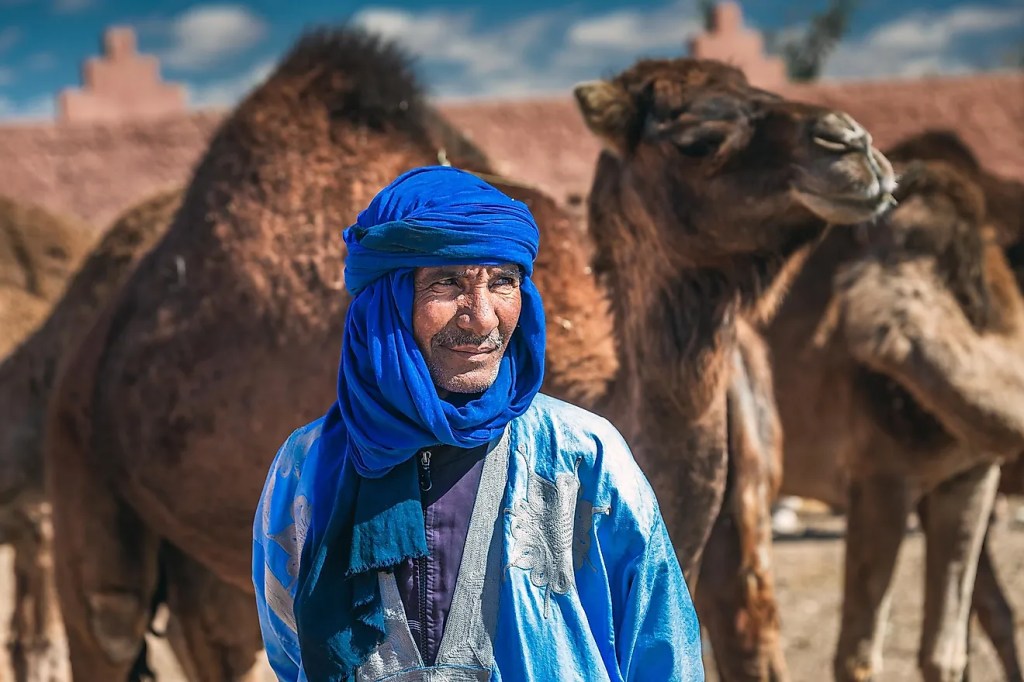
EGYPT
Cleopatra’s lost tomb: Archaeologist thrills with new clues
After two years of new excavation work, Dr Kathleen Martinez, a determined archaeologist who has been searching for Cleopatra’s tomb in Egypt since 2005 has released a new update on the whereabouts of the ancient Egyptian queen’s resting place. In 2022, Dr Kathleen Martinez told the world she and her team had discovered a tunnel in the Mediterranean Sea which may potentially lead to the tomb of Cleopatra. Her most recent update came on February 13 2024…and explains in her presentation that all 14 Ptolemy pharaohs from Alexander to Cleopatra are still yet to be located. The general consensus among Egyptologists is that they are all buried in the ancient city of Alexandria, which is now submerged in the Mediterranean Sea. Dr Martinez has narrowed down options for the location of Cleopatra’s tomb, concluding that it is most likely in the Taposiris Magna temple, which translates to ‘great tomb of Osiris’. The researcher had been searching for a specific item to substantiate her theory that the temple had been dedicated to the goddess Isis for 500 years, whom Cleopatra proclaimed herself to be the reincarnation of. The artifact in question was a ‘foundation plate’ – an iPhone-sized stone tablet that was placed under major structural stones – which would have etched upon it key information about when and why the temple was built.
LIBYA
3 Libyan leaders agree to form new unified government
Three key Libyan leaders said on Sunday they had agreed on the “necessity” of forming a new unified government that would supervise long-delayed elections. A political process to resolve more than a decade of conflict in Libya has been stalled since an election scheduled for December 2021 collapsed amid disputes over the eligibility of the main candidates. The leaders are the president of the Presidential Council (PC) Mohamed Menfi, the head of High State Council (HSC) Mohamed Takala, who are both based in Tripoli, and Aguila Saleh, speaker of the House of Representatives (HoR) in Benghazi. Menfi came to power when the Government of National Unity (GNU) under Prime Minister Abdulhamid al-Dbeibah was installed through a U.N.-backed process in 2021, but the parliament no longer recognises its legitimacy. Dbeibah has vowed not to cede power to a new government without national elections. The House of Representatives was elected in 2014, while the High State Council was formed as part of a 2015 political agreement and drawn from a parliament elected in 2012. Libya has had little peace since a 2011 NATO-backed uprising, and it split in 2014 between eastern and western factions, with rival administrations governing in each area.
MOROCCO
Drought forces famous public baths to close 3 days a week
The public baths — hammams in Arabic — for centuries have been fixtures of Moroccan life. Inside their domed chambers, men and women, regardless of social class, commune together and unwind. Bathers sit on stone slabs under mosaic tiles, lather with traditional black soap and wash with scalding water from plastic buckets. But they’ve become the latest casualty as Morocco faces unprecedented threats from climate change and a six-year drought that officials have called disastrous. Cities throughout the North African nation have mandated that hammams close three days a week this year to save water. Little rainfall and hotter temperatures have shrunk Morocco’s largest reservoirs, frightening farmers and municipalities that rely on their water. The country is making painful choices while reckoning with climate change and drought. The closures affect the roughly 200,000 people directly or indirectly employed in the hammam sector, which accounts for roughly 2% of the country’s total water consumption, according to Morocco’s national statistics agency. The decision to place restrictions on businesses including hammams and car washes has angered some. A chorus of hammam-goers and politicians are suggesting the government is picking winners and losers by choosing not to ration water at more upmarket hotels, pools, spas or in the country’s agricultural sector, which consumes the majority of Morocco’s water.
TUNISIA
Tunisia faces influx of Sudanese immigrants
Thousands of Sudanese refugees and asylum seekers have arrived in Tunisia over the past several months. According to the United Nations High Commissioner for Refugees (HCR) in Tunisia who shared its last survey (dated January 14, 2024), there are over 13 thousand refugees and asylum seekers in the country; 40% of these individuals are from Sudan. In 2023, the HCR recorded 7,381 new asylum seekers, including 4,676 Sudanese nationals. A significant increase from the 868 Sudanese asylum seekers accounted for in 2022. According to the IOM, 7.7 million citizens have been displaced within Sudan, while over 1.2 million have sought refuge in other countries. A number of Sudanese refugees in the camp have come to Tunisia from Libya…A climate of fear has washed over Tunisia, to the extent that some citizens want nothing to do with migrants. Evicted from housing by landlords, dismissed by employers, many migrants are left to fend for themselves. The organization also highlights that resettlement quotas are limited. Less than 1% of refugees are resettled each year. Of the total 21.3 million refugees registered by the HCR worldwide, only 57,500 were resettled in 2021. Sudanese refugees thus find themselves trapped in Tunisia, where a climate of hostility ignited by President Kais Saied stifles the country’s sub-Saharan immigrant population. In the absence of national reintegration policies, refugees in Tunisia seem fated to a miserable existence. Unless, that is, they opt once again for the perilous journey across country borders, this time pursuing their trajectory by sea.
Central Africa
CENTRAL AFRICA REP (CAR)
US issues sanctions on Russian, CAR entities over Wagner ties
The United States imposed sanctions on two entities it accused of advancing Russia’s “malign activities” in the Central African Republic (CAR) and enabling the Wagner mercenary group. The entities, a CAR-based timber company and a Russia-based company, sought to benefit financially “from illicit natural resource extraction and provided material and financial support to the Wagner Group and other organizations” tied to Wagner’s former owner Yevgeniy Prigozhin, who died in a 2023 plane explosion in Russia. The action targets CAR-based Bois Rouge SARLU for its ties to Wagner and St. Petersburg-based Broker Expert for its support of Bois Rouge. The Central African Republic, a former French colony, has become one of Russia’s closest African allies in recent years, playing host to one of the Wagner Group mercenary army’s largest foreign operations. The United States has previously imposed sanctions on Wagner and has repeatedly warned of what it says are Wagner’s destabilizing activities and human rights abuses as Washington has ramped up sanctions against the private army following Russia’s invasion of Ukraine last year.
CHAD
French army will remain in Chad, says Macron’s envoy to Africa
The French army will remain in Chad, said Emmanuel Macron the envoy for Africa on Thursday in N’Djamena, expressing the “admiration” of France to the president and head of the junta in power for three years, General Mahamat Idriss Déby Itno, for his transition process. “We have to stay and of course we will stay,” Jean-Marie Bockel, the French president’s “personal envoy”, told the presidential press in charge of discussing the new forms of French military presence on the continent, which Paris intends to significantly reduce. There are currently about 1,000 French soldiers in Chad. After a series of coups in Mali, Burkina Faso and Niger, the military juntas pushed out the French army, marking the end of a decade of anti-jihadist intervention in the Sahel. “I expressed to the President of the Republic both our admiration for the process he has initiated within his country, and also for Chad’s ability to face a certain number of threats at the same time thanks to committed armed forces,” the French envoy concluded. The statement comes two months before a presidential election in which 39-year-old Déby is a clear winner in the absence of serious rivals in an opposition that has either rallied to the junta or is being violently repressed, according to international human rights NGOs. But also eight days after the death of Mahamat Déby’s main political rival and cousin, Yaya Dillo Djérou, in an army assault on his party’s headquarters.
The secret payments behind the deal that brought a country to its knees
Even in an industry noted for audacious deals, this one was notorious. Chad, one of Africa’s poorest countries, borrowed one and a half billion dollars—equivalent to half its national budget—from the world’s biggest commodities trader, Glencore. The loan was to be repaid in oil.
When suddenly, just weeks after the agreement in 2014, oil prices crashed, Chad was plunged into crisis. Instead of using a fraction of its oil output to pay Glencore back, the state was now handing over almost all of its national production. With little left over to pay the bills, the government enacted swingeing austerity measures to stay solvent. Student fees doubled. The health budget was slashed in half. In 2018 police beat and tear-gassed hungry protesters on the streets of the capital, N’Djamena. Chad had made a “fool’s bargain”, said the president at the time, Idris Déby, questioning publicly whether illegal commissions had been paid to usher through the ruinous deal. Now an investigation by SourceMaterial suggests that this may have been the case. Leaked documents reveal millions of dollars in secret payments to a middleman who for official purposes was Chad’s representative in negotiations—but was secretly working for Glencore.
AFRICA – GENERAL NEWS
US Navy destroyer comes under attack as Red Sea crisis puts increased strain on African ports
The US Navy’s guided-missile destroyer USS Carney was the latest vessel to come under attack by an anti-ship ballistic missile and three one-way attack unmanned aerial systems, otherwise known as suicide drones, the US Central Command (Centcom) has reported. The missile and three drones, which were launched from Iranian-backed Houthi-controlled areas of Yemen, were shot down before they could impact the warship, Centcom said in a social media post. There were no injuries or damage to the USS Carney, which is part of a multinational fleet of vessels patrolling the region. The attacks have forced operators to reroute their vessels via the longer Cape of Good Hope. Ships travelling via the Suez Canal were down 56% year on year in February…(however) the diversions caused by the Red Sea crisis are highlighting the “wide gap in efficiency between ports in Africa and other world regions”, despite heavy investment in port infrastructure on the continent over the past decades, particularly under China’s Belt and Road Initiative. “With some exceptions, terminals in Africa struggled to cope with the rising calls and container volumes, resulting in extended ship waiting times, and lower ocean and yard productivity at many of Africa’s main ports,” S&P Global said.
IMF: Red Sea attacks disrupt global trade
In the early months of 2024, global trade has encountered significant setbacks as a result of disruptions at two crucial shipping routes, according to the International Monetary Fund (IMF). Attacks on vessels in the Red Sea area have notably impacted traffic through the Suez Canal, a pivotal maritime route connecting Asia and Europe. Approximately 15 percent of the global maritime trade volume normally traverses this waterway. Simultaneously, a severe drought at the Panama Canal has led to restrictions, substantially reducing daily ship crossings since October, impeding maritime trade through another vital chokepoint. In response to the Red Sea attacks and subsequent delays in the Suez Canal, several shipping companies rerouted their vessels around the Cape of Good Hope. This alternative route experienced a remarkable surge of approximately 74 percent compared to the previous year’s level. One significant implication of these shipping disruptions is the potential impact on official statistics related to recorded imports and exports. Customs records, upon which official trade statistics are based, may be influenced by the temporary rerouting of ships. This could complicate the accurate assessment of the underlying momentum of global trade and economic activity in the months to come.
A woman candidates could lock Odinga out of top AU job
Law drafters at the African Union are making another bid that could lock out Kenya’s opposition leader Raila Odinga by proposing to restrict the next race for the Commission chairperson’s seat to female contenders. Mr Odinga is the Kenya government-endorsed candidate to replace Chadian diplomat Moussa Faki Mahamat. But a proposal circulated to member states on Tuesday says only female contenders should be eligible in the next contest, even though the seat will be rotating to the Eastern Africa region. The proposal is contained in the revised draft report — Preparations for the Election of Senior Leadership of the African Union Commission in February 2025. The report is the work of the AU’s Legal Counsel and Deputy Commission Chairperson’s Office, in conjunction with the Committee of Permanent Representatives, which must be submitted to the African Union Executive Council for approval before it is adopted by the Assembly. It argues that the positions of chairperson and deputy chairpersons must be restricted to the principle of gender parity, meaning that holders of the two posts cannot be from the same gender at any time, a practice introduced in 2021. But it also argues, for the first time, that an incumbent of one gender should be replaced by an opposite gender at subsequent elections.
17.2mile £25billion tunnel to link Spain and Africa under the sea
Spain’s Transport Minister, Oscar Puente, has raised hopes for a 17.2-mile underwater tunnel linking Spain with Africa to become a reality in the coming years. This Fixed Link Project for the Strait of Gibraltar was first discussed 40 years ago and is seen as a strategic key for both Spain and Morocco, as well as Europe and Africa. Spain and Morocco are joining forces to create special groups to work on the project to connect the two countries…They hope this project will solve some problems before the 2030 FIFA World Cup, which Morocco, Spain and Portugal are hosting together. Last year, the Spanish newspaper La Razon reported that the project might include a high-speed rail link stretching about 26 miles. The project reportedly includes a 17.2-mile-long underwater tunnel and a 6.3-mile underground tunnel. Moroccan state-owned media SNRTNews said last year the tunnel would reach a maximum depth of 1,558 feet.
2023 African Games: Could future Olympic stars lose out as organisers row?
The African Games begin in Accra, Ghana on Friday – but even before the starting pistol is fired on the 13th edition of the Games, there are those who worry their race could be run. A multi-sport event featuring 16 sports, they were first held in Congo-Brazzaville in 1965. Formerly known as the All-African Games, down the years they have provided some of the continent’s biggest names with an early platform to show off their talents on an international stage. Since 2019, the Games have also acted as a way to qualify for the Olympics – but a row between organisers could now see that particular carrot taken off the menu, while concerns about financial viability have also marred the build-up to Ghana 2023. The dispute over Olympic qualification stems from a disagreement between two of the bodies involved in organising the Games – the African Union (AU) and the Association of National Olympic Committees of Africa (Anoca). While the AU is a bloc designed to support political and economic integration, Anoca represents the continent’s 54 separate national Olympic committees and is responsible for setting Africa’s Olympic qualification protocols.
Anoca has said it is unhappy with a demand that nations pay $2m (£1.56m) for the right to host, arguing there should be no such charge. It has also criticised Ghana’s preparations for hosting an event which was postponed from August 2023 because of a disagreement over marketing rights which prevented the required facilities from being completed on time.
’Fastest woman in Africa’ retires after 50 years in NHS
A London nurse once described as the “fastest woman in Africa” is retiring after almost five decades in the NHS. Former international sprinter Rose Amankwaah, 72, represented Ghana at the 1972 Olympics and started working in the NHS in 1975. She was initially given weekends off so she could continue her athletics training, where she ran alongside a young Linford Christie. Mrs Amankwaah spent her whole medical career at Central Middlesex Hospital. Mrs Amankwaah, then Rose Asiedua, won a bronze medal at the 1974 Commonwealth Games in New Zealand. She added another medal to her haul in 2023 when she was given the NHS Silver Medal Award by England’s chief nurse, Dame Ruth May. She moved to England in 1974 aged 22, and shortly afterwards started training to be a nurse. After finishing her training she was employed by the hospital as a staff nurse and finishes her career as theatre matron.
TWEET OF THE DAY
“I have already issued a statement alerting those from South Africa who are fighting along side or in the Israeli Defense Forces. We are ready, when you return home, we will arrest you.” – Naledi Pandor, Minister of International Relations and Cooperation.
Elizabeth Ferrari @48thAve on “X”
AFRICA PHOTO GALLERY
Meet Uganda’s mud wrestlers
In Mukono, a town outside the Ugandan capital, there’s a 200-square-foot box of raked mud, cordoned off with yellow rope and bamboo posts. There are no bright lights, no jumbotron, no stands of rowdy spectators. But the humble arena hosts a nascent group of athletes that have become a spectacle in their own right.
Soft Ground Wrestling Uganda is a group of about 80 young men and women, most of them orphans, brought together last March to train and become potential professional wrestlers. In the ring, wrestlers tussle as they try to body slam, twist or flip their opponent into the mud. And in the corner: a wooden staircase grants wrestlers the opportunity to leap onto their opponent.
AFRICA NEWS PODCASTS
South Africa-US Relations at a Crossroads
The recent decision by South Africa to take Israel to the International Court of Justice (ICJ) on accusations of genocide sent shock waves through the global community. Following South Africa’s case at the ICJ, U.S. lawmakers John James and Jared Moskowitz introduced a bill that seeks to reevaluate the bilateral relationship between the U.S and South Africa. South Africa’s response to the Russia-Ukraine conflict has also made some doubt its assertion of being nonaligned…
The UAE’s bloody war in Sudan
At the time where our attention is fixed on Gaza, another conflict is taking place with horrendous cost to human life. Sudan is burning. There are 8 million people on the move, escaping the indiscriminate murder, rape and pillage of what can only be described as two warlords that thwarted a people’s revolution – aided by external powers.
U.S. Security Assistance to Africa
In this episode Elizabeth Shackelford, former U.S. diplomat and current foreign affairs columnist for The Chicago Tribune, talks about U.S. involvement across Africa; about Elizabeth’s own history in Somalia and South Sudan, America’s understanding of the places in which it’s involved, the generational timeline needed to change the trajectory of foreign policy, where the securitized view of Africa began, how the U.S. has approached places like Burkina Faso and Cameroon, and what a better U.S. policy in Africa might look like.
AFRICA RELATED BOOKS/PUBLICATIONS
Law, Order, and Empire: Policing and Crime in Colonial Algeria, 1870–1954
Samuel Kalman examines a critical component of the construction and maintenance of a racial state by settlers in Algeria from 1870 onward, in which Arabs and Berbers were subjected to an ongoing campaign of symbolic, structural, and physical violence. The French administration encouraged this construct by expropriating resources and territory, exploiting cheap labor, and monopolizing government, all through the use of force.
American Slavers: Merchants, Mariners, and the Transatlantic Commerce in Captives, 1644-1865 (Yale UP, 2023), Sean M. Kelley
A total of 305,000 enslaved Africans arrived in the New World aboard American vessels over a span of two hundred years as American merchants and mariners sailed to Africa and to the Caribbean to acquire and sell captives. Kelley examines the experience of captivity, drawing on more than a hundred African narratives to offer a portrait of enslavement in the regions of Africa frequented by American ships. Kelley also provides a social history of the two American ports where slave trading was most intensive, Newport and Bristol, Rhode Island. In telling this tragic, brutal, and largely unknown story, Kelley corrects many misconceptions while leaving no doubt that Americans were a nation of slave traders.
AFRICA – ANALYSIS, EDITORIAL/OPINION
NIGERIA
Nigeria’s ancient Ilorin city – archaeologist uncovers over 1,000 years of history
SOMALIA
Somalia’s Mirage of Progress
Domestic turmoil underscores a troubling narrative of a nation struggling to reconcile its aspirations for progress with the deep-seated divisions that thwart its path to unity and stability.
Why Did Turkey Sign a Defense Agreement with Somalia?
Turkey has a multi-dimensional presence throughout the Horn of Africa and repeatedly emphasizes the paramount importance of regional peace.
SOUTH AFRICA
South Africa struggles to get off the FATF grey list
While smaller African countries have been removed, South Africa – with its advanced economy – remains greylisted.
Mandela for sale
Are Nelson Mandela’s personal belongings sellable family heirlooms or heritage artifacts of national significance?
Dry weather hits southern Africa’s farmers, putting key maize supplies at risk: how to blunt the impact
The government must prosecute apartheid-era crimes
TUNISIA
Smuggling In Tunisia: Fact, Fiction And Future
Smuggling in Tunisia is often presented as a field of mystery and conspiracy. But we actually know a lot about how it works, and that engaging with it effectively requires strengthening rather than alienating border communities.
Oscars 2024: Four Daughters is a Tunisian masterpiece – what makes the film groundbreaking
Four Daughters is the story of a Tunisian family torn apart by an extremist Islamic group. It’s won several major documentary awards and is nominated for a Best Feature Documentary Oscar. This makes its director Kaouther Ben Hania the first Arab woman ever to receive two Oscar nominations.
UGANDA
Bobi Wine: The People’s President
An Oscar-nominated film about Uganda’s fight for freedom.
ZIMBABWE
Happy smiling African children: why school tourism in Zimbabwe shouldn’t be encouraged
 The Africa Edition ©️
Leave a comment